Introduction: The Relevance of Butter Oil in Contemporary Functional Lipid Science
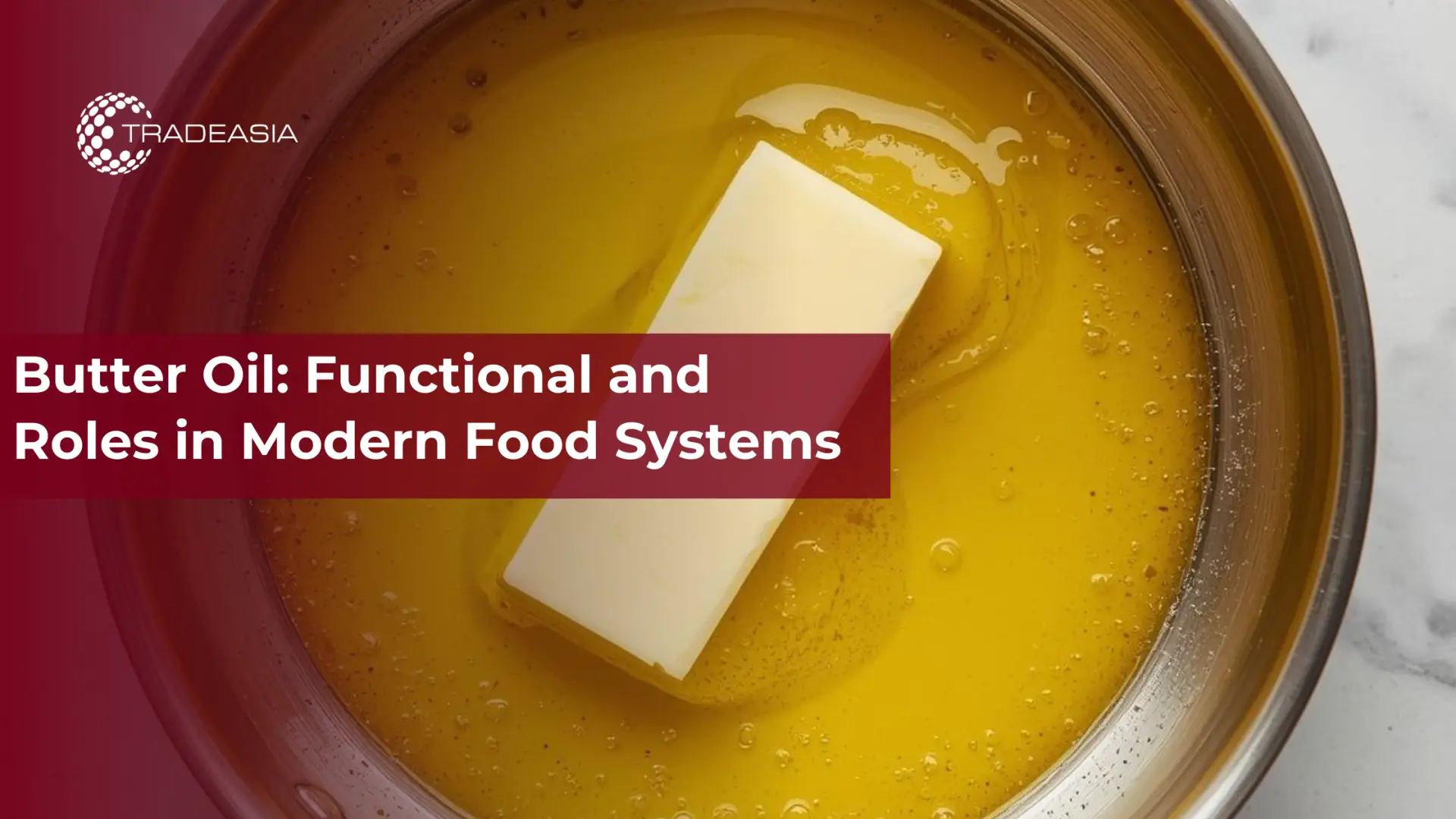
Butter oil, also known as anhydrous milk fat (AMF), represents one of the most concentrated and functionally complex natural lipid systems available in the food and nutrition industry. Derived from butter through the removal of moisture and non-fat milk solids, butter oil contains nearly pure milk fat, typically above 99%. While traditionally valued in culinary systems and heritage diets, recent scientific evaluations comparing butter oil with selected vegetable oils have brought renewed attention to its functional characteristics, oxidative stability, structural behavior, and nutritional role.
Modern formulation science increasingly demands lipid ingredients that provide structural performance, thermal resilience, nutritional value, and clean-label positioning. Butter oil fulfills these criteria due to its diverse fatty acid composition, natural antioxidant content, and inherent plasticity. At the same time, high-vitamin butter oil sourced from pasture-raised cows offers enhanced concentrations of fat-soluble vitamins and bioactive lipids, linking agricultural practice directly to functional quality. This article comprehensively explores butter oil from a scientific and application-based perspective, focusing on its physicochemical properties, functional performance, nutritional significance, industrial role, and broad application potential.
Understanding Butter Oil: Composition and Structural Complexity
Butter oil is produced by gently heating butter to evaporate water and separate residual milk solids, resulting in a clarified lipid fraction. The removal of moisture significantly enhances shelf stability while concentrating the triglyceride matrix that defines milk fat. Unlike most vegetable oils that contain predominantly long-chain fatty acids with limited compositional diversity, butter oil possesses a highly complex fatty acid profile that includes short-chain, medium-chain, and long-chain fatty acids in varying proportions.
This diversity is central to butter oil’s functional behavior. Short-chain fatty acids such as butyric acid contribute to distinctive aroma and digestive properties, while medium- and long-chain fatty acids provide structural integrity and energy density. In addition, butter oil contains naturally occurring conjugated linoleic acid (CLA), phospholipids in trace amounts, cholesterol, and fat-soluble vitamins including vitamins A, D, E, and K. The presence of these minor bioactive components differentiates butter oil from refined vegetable oils, which often lose micronutrients during processing.
High-vitamin butter oil, particularly that derived from cows grazing on nutrient-rich green pastures, is characterized by elevated levels of vitamin K2, historically referred to as “Activator X.” The nutritional profile of butter oil is therefore not only a function of dairy processing but also of animal feeding systems, seasonal variation, and pasture quality.
Physicochemical Properties and Functional Performance
The physicochemical characteristics of butter oil are strongly influenced by its triglyceride composition and fatty acid distribution. One of its defining features is its complex melting behavior. Because milk fat contains a broad range of triglycerides with different melting points, butter oil exhibits a gradual melting curve rather than a sharp melting point. This property contributes to its smooth mouthfeel and desirable melting sensation in food systems. It also allows butter oil to function effectively as a structuring fat without requiring chemical modification such as hydrogenation.
Oxidative stability is another critical parameter when evaluating lipid ingredients. Comparative assessments between butter oil and selected vegetable oils have demonstrated that butter oil generally exhibits favorable oxidative resistance under controlled conditions. This stability is partially attributed to its relatively lower polyunsaturated fatty acid content compared to many vegetable oils, as well as the presence of natural antioxidants such as tocopherols. Vegetable oils rich in polyunsaturated fatty acids tend to be more susceptible to lipid peroxidation, particularly under high-temperature processing. In contrast, butter oil’s balanced fatty acid composition contributes to improved thermal resilience in specific applications.
Butter oil also demonstrates distinct crystallization behavior. The polymorphic transitions of milk fat influence texture, spreadability, and structural stability in finished products. Because of its natural solid fat content profile, butter oil can provide plasticity in bakery shortenings, laminated dough systems, and confectionery fats without industrial hydrogenation. This makes it attractive in formulations where trans-fat elimination and clean-label positioning are priorities.
Nutritional Significance and Bioactive Role
Butter oil plays a meaningful role beyond its structural and technological functions. It serves as a natural carrier of fat-soluble vitamins and bioactive lipids that contribute to its nutritional relevance. Vitamin A in butter oil supports vision and immune function, while vitamin D plays a role in calcium metabolism. Vitamin E contributes antioxidant activity, and vitamin K2 is involved in bone mineralization and cardiovascular health through regulation of calcium deposition.
The presence of conjugated linoleic acid in butter oil distinguishes it from most plant-derived oils. CLA has been studied for its potential metabolic and immunomodulatory effects, adding functional value to dairy-derived lipids. Butyric acid, another notable component, serves as an energy substrate for colonocytes and has been associated with maintaining intestinal barrier integrity. Although present in relatively small concentrations, these components contribute to butter oil’s positioning as a bioactive lipid source rather than a neutral fat.
The nutritional quality of butter oil is influenced significantly by the feeding practices of dairy cows. Grass-fed systems often result in higher concentrations of certain micronutrients and CLA compared to grain-fed systems. Therefore, butter oil sourced from pasture-based agriculture may offer enhanced nutritional attributes, linking farm-level management to downstream functional value.
Functional Role in Bakery and Confectionery Applications
Butter oil is widely utilized in bakery systems due to its ability to enhance texture, flavor, and structural integrity. In baked goods, the incorporation of butter oil contributes to crumb tenderness, moisture retention, and improved sensory richness. Its natural melting profile ensures that it softens appropriately during baking, facilitating aeration and dough expansion. Unlike many vegetable shortenings, butter oil does not require hydrogenation to achieve plasticity, making it suitable for formulations targeting reduced trans-fat content.
In laminated dough products such as croissants and puff pastries, butter oil supports layer formation and flakiness through controlled melting and steam generation during baking. Its flavor profile further enhances consumer acceptance, particularly in premium bakery segments.
Within confectionery systems, butter oil contributes to smooth mouthfeel and controlled fat crystallization. Its compatibility with cocoa butter requires careful management due to polymorphic behavior; however, when properly formulated, butter oil can enhance creaminess and sensory depth in chocolate-based products. The lipid matrix also influences flavor release kinetics, allowing for prolonged aromatic perception.
Role in Dairy and Recombined Milk Systems
Butter oil serves a critical function in recombined dairy formulations where standardized milk fat content is required. In regions where fresh milk fat supply fluctuates seasonally, butter oil provides a stable and transportable fat source that can be blended into reconstituted milk, cream, or dairy beverages. Its consistent composition allows for precise fat standardization, ensuring uniform product quality.
In processed cheese systems, butter oil contributes to smooth texture and stable emulsion formation. The melting properties of milk fat influence stretchability and melt characteristics, which are key attributes in cheese-based applications.
Comparison with Vegetable Oils in Industrial Context
Scientific evaluations comparing butter oil with selected vegetable oils highlight meaningful differences in functional behavior. Vegetable oils rich in polyunsaturated fatty acids are generally more prone to oxidative degradation, especially under prolonged heat exposure. Butter oil, with its mixed fatty acid composition and lower PUFA content, often demonstrates greater oxidative resilience under moderate thermal conditions.
Furthermore, many vegetable oils require chemical modification, such as hydrogenation or interesterification, to achieve desired solid fat content and structural properties. Butter oil naturally possesses a broad triglyceride spectrum that provides inherent plasticity and structural functionality. This reduces the need for extensive processing and aligns with consumer demand for minimally modified ingredients.
However, it is important to recognize that vegetable oils may offer advantages in specific nutritional or economic contexts. The selection between butter oil and plant-derived lipids ultimately depends on application requirements, sensory expectations, cost considerations, and regulatory positioning.
Applications in Nutraceutical and Specialty Nutrition
Beyond conventional food systems, butter oil has gained attention in nutraceutical formulations, particularly in high-vitamin variants. Its ability to serve as a carrier for fat-soluble nutrients enhances bioavailability in capsule and oil-based supplement systems. The natural presence of vitamin K2 in grass-fed butter oil has supported its use in formulations targeting bone and cardiovascular health.
In specialty nutrition, butter oil may contribute to structured lipid systems designed to mimic human milk fat characteristics. While further technological refinement is required for specific applications, the compositional similarity of certain milk fat fractions to human milk lipids provides a foundation for ongoing research.
Sensory and Culinary Advantages
Butter oil offers a distinctive sensory profile characterized by rich dairy aroma and smooth mouthfeel. Unlike neutral vegetable oils, butter oil contributes to flavor development during cooking through Maillard reactions and lipid-derived aromatic compounds. This makes it particularly valuable in premium culinary applications where flavor authenticity is paramount.
Its gradual melting curve enhances palatability by ensuring a smooth transition from solid to liquid at body temperature. This characteristic contributes to the luxurious mouthfeel often associated with dairy-based fats.
Stability, Storage, and Shelf-Life
The removal of water and milk solids during butter oil production significantly improves its storage stability. With minimal moisture content, the risk of hydrolytic rancidity is reduced. When stored under appropriate conditions protected from light, oxygen, and excessive heat, butter oil maintains quality over extended periods.
Oxidative stability remains a function of exposure to environmental factors. Proper packaging and controlled storage are essential to preserve flavor integrity and nutritional components.
Sustainability and Agricultural Influence
The functional and nutritional attributes of butter oil are closely linked to dairy farming practices. Pasture-based systems influence fatty acid composition, vitamin levels, and overall bioactive profile. As sustainability and traceability become increasingly important in global food supply chains, butter oil sourced from well-managed grazing systems may offer enhanced market positioning.
Sustainable dairy management not only affects nutritional outcomes but also contributes to environmental stewardship and rural economic resilience. The intersection of agricultural practice and ingredient functionality underscores the multidimensional value of butter oil.
Conclusion: Butter Oil as a Multifunctional and Technologically Relevant Lipid Ingredient
Butter oil represents a scientifically validated and functionally versatile lipid ingredient bridging traditional nutrition and modern formulation science. Its complex triglyceride structure, favorable melting behavior, oxidative resilience, and bioactive composition differentiate it from many vegetable oils. In bakery, confectionery, dairy, and specialty nutrition systems, butter oil delivers structural integrity, sensory richness, and nutritional contribution without requiring extensive chemical modification.
As industry demand grows for clean-label, high-performance lipid systems, butter oil continues to demonstrate relevance across diverse applications. Its role extends beyond basic fat functionality to encompass nutritional value, technological stability, and premium sensory appeal.
For manufacturers, formulators, and procurement teams seeking high-quality butter oil tailored to specific industrial or nutritional applications, professional sourcing and technical consultation are essential to ensure consistency and performance alignment. To explore product specifications, request technical documentation, or discuss commercial supply opportunities, visit www.foodadditivesasia.com or contact the team directly at sales@foodadditivesasia.com for personalized assistance and detailed product information.
Sources:
Leave a Comment