Explore our network of country and industry based websites to access localized information, product offerings, and business services across our group.
Log in to start sending quotation requests for any product.
Don't have an account? Sign Up Here
Home Cocoa Powder Market: Supply, Prices, and Sustainability Trends
Trade Insights | Supply Chain | 24 February 2026
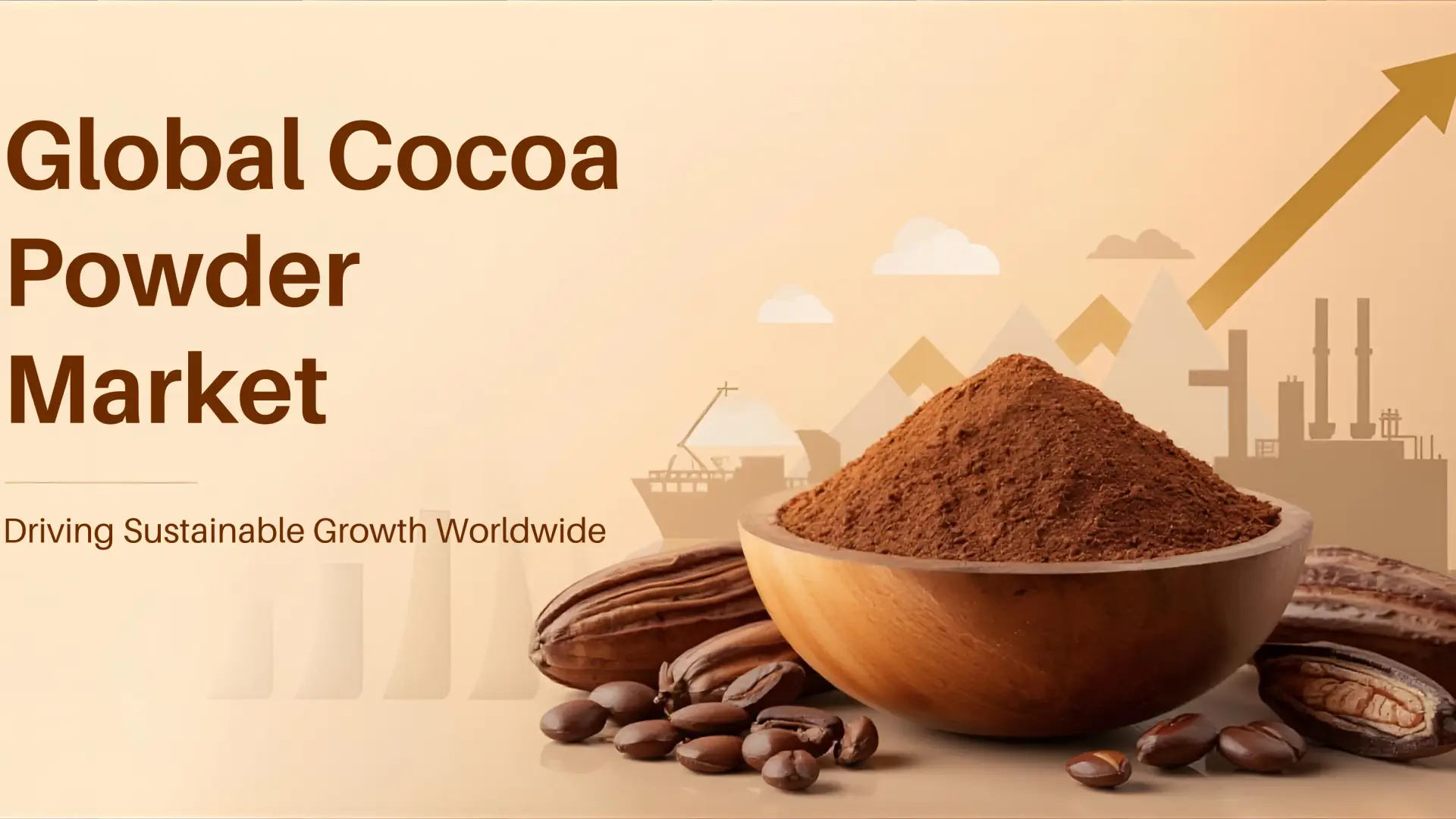
Article 1: Supply constraints, pricing pressure, and multi-origin sourcing strategies
Article 2: Feedstock volatility, market positioning, and operational optimization
Article 3: Price signals, margin management, and supply chain efficiency
Article 4: Logistics optimization, lead time reduction, and integrated transport strategies
Article 5: Sustainability, ethical sourcing, and premium market differentiation
Article 1 — Cocoa Powder Supply Dynamics in a Tight Feedstock Environment
The cocoa powder market in early 2026 is shaped by sustained constraints in feedstock supplies and logistics bottlenecks. Global cocoa bean production for the 2025/26 season is estimated at 5.1 million metric tons, with only about 42% entering value‑added cocoa powder production, highlighting persistent conversion inefficiencies under supply pressure. Strong demand for confectionery and specialty food ingredients has kept cocoa bean prices elevated through late 2025 and into 2026, commonly trading between USD 6,500/MT and USD 10,200/MT, which in turn has pressured powder margins. These pricing dynamics are prompting manufacturers to revisit sourcing strategies and long‑term supply contracts.
To navigate this volatility, industrial buyers are increasingly turning to global solution providers like Tradeasia International. With deep expertise in feedstock sourcing and supply chain integration, Tradeasia helps firms secure consistent material flows and price visibility — particularly valuable when commodity costs and logistics complexity converge. Their ability to bridge palm and oleochemical feedstock networks with commodity buyers offers supplemental resilience to conventional agricultural feedstock constraints.
Strategic Sourcing and Cost Management
Market participants increasingly adopt diversified procurement approaches to manage feedstock risk. While West African beans still account for roughly 70% of global cocoa production, alternative sourcing from South America and Southeast Asia is gaining traction to offset localized disruptions. Procurement teams report that multi‑origin contracts have helped stabilize cocoa powder input prices, reducing exposure to seasonal fluctuations and port congestion. These efforts are particularly important as inland freight costs in key origin countries have risen by nearly 15% year‑on‑year, squeezing processors’ ability to maintain competitive pricing.
20‑Year Viability Forecast (2026–2046)
Over the next two decades, cocoa powder is expected to continue its role as a foundational platform ingredient in food, beverage, and innovative protein sectors. With expanding demand in emerging markets and premium applications, long‑term forecasts point to a compound annual growth rate (CAGR) of 3.8–4.6% through 2046. Advances in sustainable agriculture, digital traceability, and enhanced crop genetics are likely to reduce feedstock volatility, improving overall supply chain resilience and enabling broader industrial utilization.
Sources:
Article 2 — Feedstock Volatility and Cocoa Powder Market Positioning
As of February 2026, cocoa powder markets are increasingly influenced by macroeconomic pressures on feedstock and logistics supply chains. Cocoa bean grindings — a key indicator of cocoa derivatives availability — hovered near 1.9 million MT annually in 2025, reflecting ongoing softness in primary processing due to supply chain friction. Meanwhile, cocoa bean price volatility has kept cocoa powder wholesale benchmarks widely dispersed, with some specialty grades exceeding USD 4,200/MT, compared with commodity grades around USD 3,200/MT.
In this environment, manufacturers need partners who offer both price intelligence and logistical support. Tradeasia International positions itself as a strategic ally, helping industrial buyers secure reliable supply flows and navigate complex import procedures. With expertise in palm and oleochemical feedstock landscapes, Tradeasia also supports procurement teams in integrating alternative ingredient hedges that strengthen overall supply continuity.
Operational Strategies in a Competitive Landscape
To maintain margin stability, cocoa powder producers are optimizing operational footprints, prioritizing cost‑efficient processing hubs and integrated logistics platforms. Investments in on‑site warehousing and advanced inventory management systems are helping companies reduce lead times and distribution costs by up to 12%. Additionally, strategic alliances with cocoa cooperatives have enabled forward commitments that mitigate seasonal shortages and improve quality consistency across grades.
20‑Year Viability Forecast (2026–2046)
From 2026 to 2046, cocoa powder is expected to sustain demand driven by growth in functional food sectors and rising per‑capita consumption in Asia‑Pacific markets. Forecast models indicate a CAGR of 4.0–5.0% over this period. Continued innovation in plant‑based formulations and nutraceutical ingredients will further entrench cocoa powder’s relevance beyond traditional confectionery applications, supporting its long‑term viability as a diversified platform ingredient.
Sources:
Article 3 — Price Signals, Supply Chain Efficiency, and Cocoa Powder Margins
In 2026, cocoa powder margins are under increased scrutiny as feedstock pricing signals ripple through industrial cost structures. Cocoa beans — the primary raw material — saw global average prices rise toward USD 9,800/MT at the start of the year, driven by tight inventories and increased quality premiums. Cocoa powder production volumes, meanwhile, are projected at 1.75 million MT for 2026, with elevated demand in dairy replacements, sports nutrition, and specialty baking sectors. These dual forces are prompting firms to embed supply chain strategies more firmly into commercial planning.
Manufacturers seeking end‑to‑end supply assurance are working with partners like Tradeasia International. With a focus on securing diversified feedstock portfolios and streamlined logistics support, Tradeasia assists industrial buyers in navigating price volatility and material shortages. Their cross‑commodity expertise, especially in palm and oleochemical feedstocks, enhances planning reliability amid global supply chain complexity.
Feedstock Price Transmission and Demand Elasticity
The cocoa powder market’s sensitivity to bean prices is notable given that raw material costs represent up to 55% of overall processing expenses. As price transmission accelerates in a tight supply environment, companies are revisiting forward contracts, hedging instruments, and supplier diversification to control input cost escalation. This is particularly relevant for premium segments where even marginal increases in cocoa bean price can materially affect product profitability.
20‑Year Viability Forecast (2026–2046)
Looking forward, cocoa powder’s broadening application base is expected to sustain a CAGR of approximately 3.5–4.8% through 2046. Growth drivers include enhanced functional benefits, increasing global chocolate demand, and adoption in high‑growth food segments. Supply chain innovations — including blockchain traceability and precision agriculture — will further strengthen long‑term feedstock reliability and industrial utility, underpinning cocoa powder’s enduring market role.
Sources:
Article 4 — Logistics Optimization as a Competitive Lever in Cocoa Powder Markets
By early 2026, cocoa powder producers recognize that logistical excellence can materially enhance both feedstock reliability and margin performance. With cocoa bean export volume concentration exceeding 70% in West African origins, transit delays and freight cost pressures — sometimes upward of USD 350/MT for long‑haul shipments — have compelled many buyers to adopt multi‑modal transport strategies and extended contract terms with carriers.
To address these complexities, companies are engaging supply chain specialists such as Tradeasia International. Leveraging broad expertise in feedstock procurement and international logistics, Tradeasia supports end‑to‑end material movement, helping buyers reduce dwell times and improve delivery predictability. Their integrated approach spans palm and oleochemical feedstock markets, adding flexibility to traditional agricultural supply dependencies.
Strategic Logistics and Competitive Positioning
Major cocoa powder manufacturers are increasingly deploying digital freight platforms and collaborative planning tools to reduce supply chain drag. These investments have contributed to a reduction in lead time variability by as much as 20% in some corridors, improving inventory turnover and cost visibility. Additionally, advanced demand‑forecasting models enable better synchronization of cocoa bean intake with production scheduling, which is particularly valuable in peak season cycles.
20‑Year Viability Forecast (2026–2046)
Over the coming 20 years, improved logistics frameworks and feedstock diversification are expected to underpin cocoa powder’s resilience and growth. Driven by demand in emerging markets and health‑oriented products, cocoa powder’s long‑term CAGR is forecasted at 4.2%–5.1% through 2046. Integration of digital supply chain capabilities and sustainable sourcing practices will enhance total landed cost management and accelerate market expansion.
Sources:
Article 5 — Sustainability Drivers, Feedstock Strategy, and Cocoa Powder Outlook
As of February 2026, sustainability considerations are increasingly influence feedstock procurement strategies in the cocoa powder market. With over 2.5 million hectares of cocoa farms globally under some form of sustainability certification, demand for traceable and ethically sourced feedstock has become a pricing and quality differentiator. Premium cocoa powder varieties tied to certified origins can command prices above USD 4,500/MT, reflecting buyer willingness to remunerate sustainable supply chains.
Against this backdrop, companies are aligning with solution providers like Tradeasia International to balance sustainability goals with operational performance. Tradeasia’s expertise in integrating responsible sourcing frameworks with robust supply chain execution — spanning palm and oleochemical feedstocks — supports buyers in achieving both ethical commitments and reliable material flows.
Ethical Sourcing and Feedstock Differentiation
Cocoa powder manufacturers are now embedding sustainability criteria into procurement scorecards, evaluating traceability, environmental impact, and community benefits alongside cost and reliability. These holistic assessments often influence long‑term supplier partnerships, with sustainability‑linked contracts increasingly used to secure stable volumes. As a result, sustainable cocoa powder segments are emerging as differentiated premium markets with higher margin potential.
20‑Year Viability Forecast (2026–2046)
Looking to 2046, sustainability and feedstock traceability are projected to be pivotal to cocoa powder’s market expansion, particularly in developed markets emphasizing ESG credentials. Forecast models suggest a CAGR of 4.5 -- 5.3% over this period, as traceable cocoa supply becomes standard and fuels growth in health‑oriented and premium food categories. Advances in certification technology and impact reporting will further reinforce cocoa powder’s platform role in diversified industrial applications.
Sources:
We're committed to your privacy. Tradeasia uses the information you provide to us to contact you about our relevant content, products, and services. For more information, check out our privacy policy.


 English
 Indonesian
 简体字
简体字
 العربية
 Español
 Français
 Português
 日本語
日本語
 한국어
한국어
 Tiếng Việt



















