Explore our network of country and industry based websites to access localized information, product offerings, and business services across our group.
Log in to start sending quotation requests for any product.
Don't have an account? Sign Up Here
Home Cocoa Powder Supply Chain in Asia: Market Trends and Sourcing Strategy
Trade Insights | Supply Chain | 19 February 2026

Introduction
Global and Asian Cocoa Powder Market Overview
Supply Chain Structure for Cocoa Powder in Asia
Product Profile: Cocoa Powder Specifications and Grades
Applications, Benefits, and Quality Considerations
Conclusion
The cocoa powder supply chain in Asia has become a strategic focus for food and beverage manufacturers, confectionery brands, and ingredient traders. As consumer demand for chocolate-flavored products grows across emerging Asian economies, companies are seeking reliable sources of cocoa-based ingredients, consistent quality, and competitive pricing. In this context, understanding how cocoa beans are transformed into cocoa powder and how this ingredient flows through the region’s supply chain is essential for procurement and product development teams.
Asia is not traditionally the largest cocoa bean–producing region, yet it is one of the fastest-growing markets for chocolate and cocoa-based foods. This imbalance between local production and consumption makes supply chain design, risk management, and supplier selection especially important. Import dependence, currency fluctuations, and logistics disruptions can all influence the landed cost and availability of cocoa powder for Asian manufacturers.
Industry-focused distributors such as chemtradeasia play a crucial role in bridging the gap between global cocoa processors and regional food producers. By consolidating demand, managing documentation, and ensuring compliance with food safety and quality standards, these intermediaries help stabilize supply and offer tailored cocoa powder solutions to bakeries, confectioners, dairy processors, and beverage manufacturers across Asia.
The global cocoa market is heavily concentrated in West Africa, which supplies roughly 60–70% of the world’s cocoa beans, with Côte d’Ivoire and Ghana as leading producers. These beans are shipped to grinding and processing hubs in Europe, North America, and increasingly in Asia, where they are converted into cocoa liquor, cocoa butter, and cocoa powder. According to industry reports, the global cocoa and chocolate market has been expanding at a steady pace, driven by premiumization, health-oriented product launches, and the penetration of chocolate into new product categories.
Asia’s role has shifted from being a peripheral consumer to a growth engine. Markets such as China, India, Indonesia, Vietnam, and the Philippines have seen double-digit growth in chocolate confectionery and cocoa-based beverages over the last decade. Rising disposable incomes, urbanization, and Westernized snacking habits are encouraging more frequent consumption of chocolate bars, biscuits, bakery items, and ready-to-drink cocoa beverages. This trend has a direct impact on the demand for industrial-grade cocoa powder used as a core flavoring and coloring ingredient.
However, Asia’s local cocoa bean production, while notable in countries like Indonesia and Malaysia, is not sufficient to meet the region’s rapidly growing demand. Quality variability, crop disease, climate risks, and smallholder farm structures add further complexity. As a result, many Asian manufacturers rely on imported cocoa powder or on processors that source beans globally. In this environment, experienced suppliers such as chemtradeasia help companies navigate origin choices, quality grades, and documentation requirements to ensure a steady and compliant supply of cocoa powder.
The cocoa powder supply chain begins with cocoa farmers, primarily in West Africa, Latin America, and certain parts of Asia. Beans are harvested, fermented, and dried at origin before being shipped in bulk to grinding facilities. In Asia, major processing hubs exist in countries like Indonesia, Malaysia, Singapore, and China, where beans are roasted, ground into cocoa liquor, pressed to extract cocoa butter, and milled into cocoa powder. Each step requires strict controls over temperature, moisture, and microbiological contamination to ensure food safety and consistent flavor.
Once produced, cocoa powder is packed in bags or bulk containers and transported via sea or land to regional warehouses and distributors. In Asia’s fragmented food manufacturing landscape, many mid-sized and smaller factories do not import full-container loads directly from processors. Instead, they rely on specialized distributors such as chemtradeasia that maintain inventory in strategic locations, consolidate smaller orders, and manage customs clearance, local regulations, and logistics. This intermediary layer is crucial for smoothing supply volatility and reducing working capital burdens for end-users.
Risk management is a central theme in the cocoa powder supply chain. Price volatility in the global cocoa futures market, weather-related crop failures, political instability in producing countries, and freight disruptions (such as port congestion or container shortages) can all affect supply reliability. Asian buyers increasingly look for multi-origin sourcing options, long-term contracts, and supplier diversification. Distributors with a broad supplier network and regional presence, like chemtradeasia, can mitigate these risks by offering alternative origins, maintaining safety stock, and providing market insight to help buyers time their purchases more effectively.
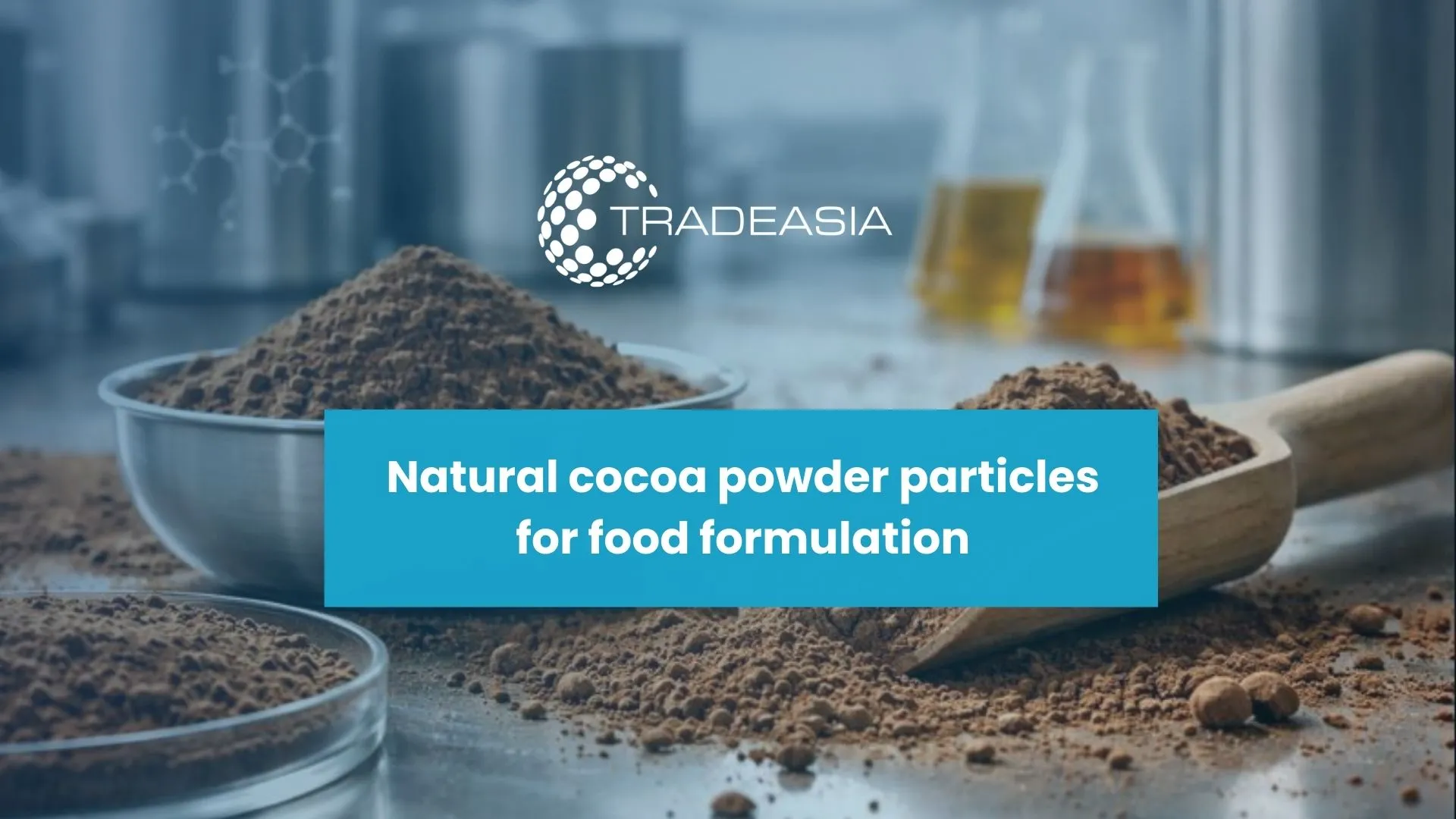
Cocoa powder used in the food industry is not a single, uniform product. It comes in various grades and specifications tailored to different applications. The two primary categories are natural cocoa powder and alkalized (or Dutch-processed) cocoa powder. Natural cocoa powder has a lighter brown color, a sharper, more acidic chocolate flavor, and a typical pH around 5–6. Alkalized cocoa powder is treated with alkali to raise the pH (often to 7–8), resulting in a darker color, milder flavor, and improved solubility in certain systems.
Key technical parameters include fat content, particle size, color intensity, microbiological limits, and heavy metal levels. Commercial cocoa powders often range from 10–12% fat for standard applications to 20–24% fat for richer mouthfeel and flavor. Low-fat cocoa powder (around 8–10% fat) is used where calorie reduction or specific texture requirements are important. Color can range from light brown to very dark, depending on origin and alkalization level. Food manufacturers choose specific grades based on desired product appearance, flavor profile, and labeling claims.
Suppliers such as chemtradeasia typically offer a portfolio of cocoa powder grades to address these diverse needs. For example, a bakery-focused manufacturer may require a medium-dark, 10–12% fat alkalized cocoa for cakes and cookies, while a beverage producer may prefer a highly dispersible, low-fat cocoa for instant drink mixes. Technical documentation, including specifications, certificates of analysis, and compliance with standards like ISO, HACCP, Halal, and Kosher, is essential for qualifying cocoa powder in regulated food markets across Asia.
Cocoa powder is a versatile ingredient used across multiple segments of the Asian food and beverage industry. In bakery and confectionery, it provides chocolate flavor and color in cakes, brownies, cookies, fillings, and coatings. In dairy, it is used in chocolate milk, ice cream, yogurt, and flavored dairy desserts. Beverage manufacturers incorporate cocoa powder into instant hot chocolate, ready-to-drink beverages, and nutritional shakes. It is also used in breakfast cereals, spreads, and snack seasonings, reflecting the broadening of chocolate flavor beyond traditional confectionery.
The benefits of using high-quality cocoa powder include consistent flavor, stable color over shelf life, and reliable performance in processing. For instance, a finely milled cocoa powder with controlled particle size improves texture and dispersibility in beverages, reducing sedimentation. A well-processed alkalized cocoa can enhance the dark, premium appearance of chocolate bakery items and provide a smoother flavor profile that appeals to local taste preferences in Asian markets. Additionally, cocoa powder contributes polyphenols and other naturally occurring compounds, which some manufacturers highlight in better-for-you or premium product positioning.
Quality considerations are increasingly important as regulators and consumers scrutinize food safety and sustainability. Parameters such as microbiological counts, pesticide residues, and heavy metals (notably cadmium and lead) must be controlled in line with regional regulations, including standards set by authorities in China, India, ASEAN countries, and export markets. Reliable suppliers like chemtradeasia work with vetted processors and maintain traceability, documentation, and batch testing to help manufacturers meet these requirements. Furthermore, demand for certified cocoa (such as Rainforest Alliance or Fairtrade) is growing, and some Asian brands are beginning to incorporate sustainability claims into their cocoa-based product lines.
The cocoa powder supply chain in Asia is evolving rapidly as the region’s appetite for chocolate-flavored foods and beverages continues to expand. From bean origination in West Africa and Latin America to grinding hubs and distribution networks in Asia, each step of the chain influences cost, quality, and availability for end-users. Manufacturers that understand these dynamics are better positioned to secure competitive and reliable supplies of cocoa powder, adapt to shifting consumer preferences, and comply with tightening regulatory frameworks.
Strategic partnerships with experienced distributors such as chemtradeasia can offer significant advantages in this environment. By providing access to multiple origins and grades of cocoa powder, managing logistics and documentation, and sharing market insights, such partners help food and beverage companies in Asia reduce supply risk and optimize their ingredient portfolios. As the regional market matures, the ability to balance cost efficiency, quality consistency, and sustainability in cocoa sourcing will become a key differentiator for brands across bakery, confectionery, dairy, and beverage segments. Ensure consistent cocoa powder supply for your business, connect with the Chemtradeasia team to discuss your requirements.
This article is intended solely for informational and market insight purposes and does not constitute technical, safety, regulatory, or professional advice. Readers should independently verify all information with qualified experts, review official documentation such as MSDS/SDS and relevant standards, and consult their own advisors or contact our team before making decisions related to specific products, processes, or applications.
We're committed to your privacy. Tradeasia uses the information you provide to us to contact you about our relevant content, products, and services. For more information, check out our privacy policy.


 English
 Indonesian
 简体字
简体字
 العربية
 Español
 Français
 Português
 日本語
日本語
 한국어
한국어
 Tiếng Việt