Explore our network of country and industry based websites to access localized information, product offerings, and business services across our group.
Log in to start sending quotation requests for any product.
Don't have an account? Sign Up Here
Home Glacial Acetic Acid Procurement and Logistics Governance
Trade Insights | Supply Chain | 19 February 2026
Introduction
Hazard Classification as the Foundation of Procurement Strategy
Strategic Supplier Selection and Regional Risk Diversification
Grade Alignment and Specification Governance
Packaging Standards and Material Compatibility Control
Transportation Mode Governance and Regulatory Compliance
Export Procedures and Customs Documentation Discipline
Storage Infrastructure and Temperature Risk Management
Cost Strategy, Feedstock Volatility, and Risk Hedging
Conclusion
Glacial acetic acid is not a conventional industrial input that can be sourced and transported through standard commodity procedures. It is a high-volume chemical with high hazard exposure, dual regulatory classification, and strict international transport controls. While its industrial relevance is undeniable—serving as a key building block for vinyl acetate monomer, purified terephthalic acid, acetate esters, pharmaceutical intermediates, textile processing agents, and regulated food-grade applications—its classification under UN 2789 as a Class 8 corrosive substance with a subsidiary Class 3 flammable risk transforms procurement and logistics into a tightly governed discipline rather than a simple purchasing activity.
The freezing point of glacial acetic acid at approximately 16.6°C introduces additional operational complexity. In cold climates or during winter shipping cycles, the material may crystallize, potentially obstructing discharge valves, damaging pumping systems, or delaying unloading operations. Simultaneously, its corrosive properties require material compatibility verification at every stage of storage and transport. Its flammable vapor risk, with a flash point near 39°C and explosion range between approximately 4% and 16% in air, demands strict hazard communication and segregation protocols.
For procurement professionals, the challenge extends beyond supplier selection. It involves structured hazard assessment, compliance verification, packaging validation, transport mode optimization, export documentation control, infrastructure readiness, cost hedging strategy, and risk mitigation planning. This article presents a comprehensive governance framework for sourcing and transporting glacial acetic acid safely, compliantly, and efficiently in global trade environments.
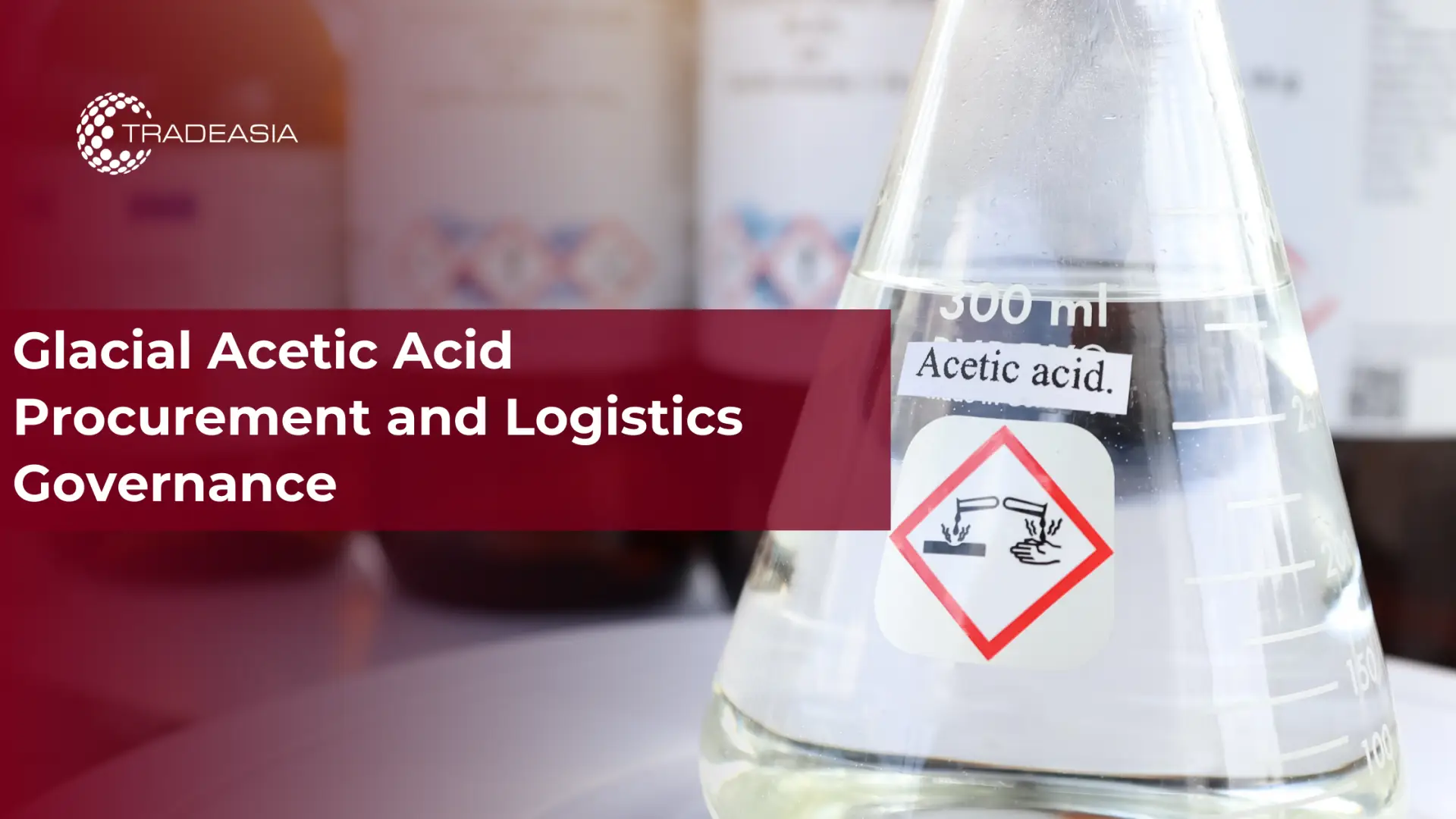
Effective procurement begins with a full understanding of hazard classification, as regulatory categorization determines nearly every downstream logistics requirement. Glacial acetic acid is assigned UN Number 2789 with the proper shipping name “Acetic acid, glacial.” Its primary hazard class is Class 8, signifying corrosive properties capable of causing severe skin burns, eye damage, and material degradation. It carries a subsidiary Class 3 classification due to its flammable liquid characteristics. It is categorized under Packing Group II, indicating medium danger requiring reinforced packaging standards.
This classification framework directly dictates packaging type, labeling, documentation, stowage, segregation, and carrier acceptance conditions. Procurement teams must treat the Safety Data Sheet as a core compliance document rather than a routine attachment. The SDS defines physicochemical properties, hazard identification, emergency response procedures, firefighting measures, spill containment requirements, and storage limitations. Every purchase order, supplier contract, and logistics arrangement must align precisely with SDS specifications.
Misclassification or incomplete declaration is not a minor administrative error; it can result in shipment rejection, port detention, heavy fines, or legal liability in the event of an incident. Therefore, procurement governance must integrate hazard verification into supplier onboarding procedures and contractual compliance audits.
Global production of glacial acetic acid is concentrated in major industrial hubs, particularly in Asia-Pacific, North America, and Europe. China is the largest global producer, supported by integrated methanol-to-acetic acid manufacturing routes that leverage coal or natural gas feedstocks. North American producers benefit from competitive shale gas economics and integrated petrochemical complexes. European suppliers often emphasize high-purity grades and regulatory compliance, particularly for pharmaceutical and food sectors.
From a procurement perspective, supplier selection cannot rely solely on price competitiveness. Evaluation must include production capacity stability, feedstock security, environmental compliance history, hazardous goods handling expertise, export documentation reliability, financial solvency, and emergency response preparedness. Suppliers must demonstrate experience in managing Class 8+3 dangerous goods and possess validated packaging certification records.
Regional diversification is essential to mitigate geopolitical, regulatory, or logistical disruption risks. Overreliance on a single production region exposes procurement operations to port closures, feedstock shortages, environmental enforcement crackdowns, or freight rate volatility. A dual or multi-region sourcing strategy enhances supply continuity and strengthens negotiation leverage.
Supplier audits should evaluate not only manufacturing quality but also their internal dangerous goods booking processes, container inspection protocols, and compliance record with IMDG, IATA, and ADR frameworks. Procurement governance must integrate compliance due diligence as rigorously as quality assessment.
Procurement errors frequently arise from inadequate grade alignment. Glacial acetic acid is typically supplied at purity levels exceeding 99.5 percent, but impurity thresholds vary depending on downstream application requirements. Technical-grade material may be suitable for vinyl acetate monomer or ester production, while pharmaceutical-grade or food-grade variants require strict adherence to USP, EP, BP, or FCC standards.
Specification governance must define assay percentage, water content tolerance, heavy metal limits, iron concentration, color and clarity standards, non-volatile residue thresholds, and freezing point confirmation. The freezing point serves as a practical purity indicator, and deviation may suggest contamination or excessive water content.
Procurement teams must align internal production requirements with supplier quality certificates of analysis. Receiving inspection protocols should verify assay accuracy through titration and freezing point testing. Failure to enforce specification discipline may lead to catalyst poisoning, polymerization inconsistencies, textile dye defects, or pharmaceutical batch rejection.
Packaging is a critical risk control layer in glacial acetic acid logistics. Only UN-approved packaging rated for Packing Group II substances is acceptable. Approved formats typically include high-density polyethylene drums, UN-certified intermediate bulk containers, stainless steel drums, and ISO tank containers for bulk transport.
Material compatibility is paramount because glacial acetic acid is highly corrosive to carbon steel, aluminum, and zinc. Stainless steel, particularly 316L grade, and HDPE materials are commonly selected due to corrosion resistance. Packaging must undergo performance testing that simulates drop impact, stacking load, and leak resistance before certification.
Each package must display the UN 2789 marking, Class 8 corrosive label, Class 3 flammable subsidiary label, proper shipping name, and Packing Group II designation. Labels must be durable, legible, and compliant with the applicable transport regulation. Even minor deficiencies in marking visibility can trigger inspection delays at port terminals.
Procurement contracts should require suppliers to provide valid dangerous goods packaging certificates and ensure traceability of UN specification codes stamped on containers. Packaging integrity must be treated as a contractual performance obligation.
Selecting the appropriate transport mode requires balancing cost efficiency, transit time, and regulatory complexity. Ocean freight remains the dominant method for international shipments due to cost effectiveness for bulk quantities. Under the International Maritime Dangerous Goods Code, glacial acetic acid must be stowed according to segregation requirements and positioned away from incompatible substances and food cargo.
ISO tanks offer efficiency advantages for large volumes, reducing handling risk and lowering per-unit freight cost. However, tank inspection certification and cleaning records must be validated before loading. Drummed shipments within full container loads require proper internal securing to prevent movement and leakage during transit.
Air freight is significantly more restrictive due to quantity limitations and elevated regulatory scrutiny under IATA Dangerous Goods Regulations. It is generally reserved for urgent or small-volume shipments due to high cost and compliance burden.
Road and rail transport under ADR and RID frameworks impose additional driver training requirements, vehicle placarding, and route restrictions. Cross-border land transport requires verification of destination country dangerous goods legislation to avoid detention at inland checkpoints.
End-to-end compliance requires precise dangerous goods declaration documentation, container placarding on all four sides, and advance booking approval with carriers. Documentation errors are among the most common causes of shipment delays.
Exporting glacial acetic acid demands meticulous document preparation. Mandatory documentation typically includes the Safety Data Sheet, commercial invoice, packing list, sales contract, dangerous goods declaration, dangerous goods packaging certificate, customs export declaration, and bill of lading.
Ports such as Shanghai require advance dangerous goods booking approval. Booking applications must specify UN number, hazard class, flash point, packing group, packaging type, and marine pollutant status. Carriers may reject bookings if documentation is inconsistent or incomplete.
Customs authorities in emerging markets may require additional permits for dangerous chemicals. Procurement teams must coordinate with freight forwarders and local compliance agents to verify destination-specific regulatory requirements.
Failure to prepare complete documentation can result in cargo detention, demurrage charges, reputational damage, and financial penalties.
Glacial acetic acid’s freezing characteristic necessitates infrastructure readiness at receiving facilities. Storage tanks may require insulation and heat tracing systems to maintain fluidity. Temperature monitoring protocols must be integrated into warehouse management systems.
Facilities must implement corrosion-resistant flooring, spill containment bunding, ventilation systems, and emergency response stations including eyewash and safety showers. Personnel handling procedures must align with SDS recommendations.
Procurement teams should verify receiving site capability before confirming supply contracts. Infrastructure inadequacy can transform routine deliveries into operational disruptions.
Acetic acid pricing is closely linked to methanol and energy feedstock markets. Procurement professionals must monitor upstream commodity trends and integrate formula-based pricing models into contracts where possible.
Bulk purchasing through ISO tanks reduces freight cost per metric ton but requires capital investment in storage infrastructure. Long-term contracts may stabilize pricing during volatile periods, while diversified sourcing reduces exposure to single-region disruptions.
Risk modeling should account for port congestion, environmental policy enforcement, winter freezing risks, freight rate spikes, and geopolitical trade restrictions.
Procurement governance must combine cost efficiency with compliance resilience.
Glacial acetic acid procurement and logistics management require structured governance rather than transactional purchasing behavior. Its dual hazard classification, corrosive properties, flammability risk, freezing behavior, and regulatory complexity demand integrated control from supplier selection to final delivery.
Organizations that treat glacial acetic acid as a strategic, high-risk commodity—embedding hazard verification, packaging validation, documentation precision, temperature management, and supplier diversification into procurement strategy—will achieve safer operations, regulatory compliance, and supply continuity.
Organizations seeking reliable glacial acetic acid supply, application guidance, and market intelligence can explore further insights at https://www.foodadditivesasia.com or initiate direct sourcing discussions by contacting food@chemtradeasia.com. Strategic partnerships and informed procurement remain essential to unlocking the full value of this indispensable organic acid.
We're committed to your privacy. Tradeasia uses the information you provide to us to contact you about our relevant content, products, and services. For more information, check out our privacy policy.


 English
 Indonesian
 简体字
简体字
 العربية
 Español
 Français
 Português
 日本語
日本語
 한국어
한국어
 Tiếng Việt




















