Explore our network of country and industry based websites to access localized information, product offerings, and business services across our group.
Log in to start sending quotation requests for any product.
Don't have an account? Sign Up Here
Home Fruit By-Products Shape Global Pectin Supply
Trade Insights | Supply Chain | 30 December 2025
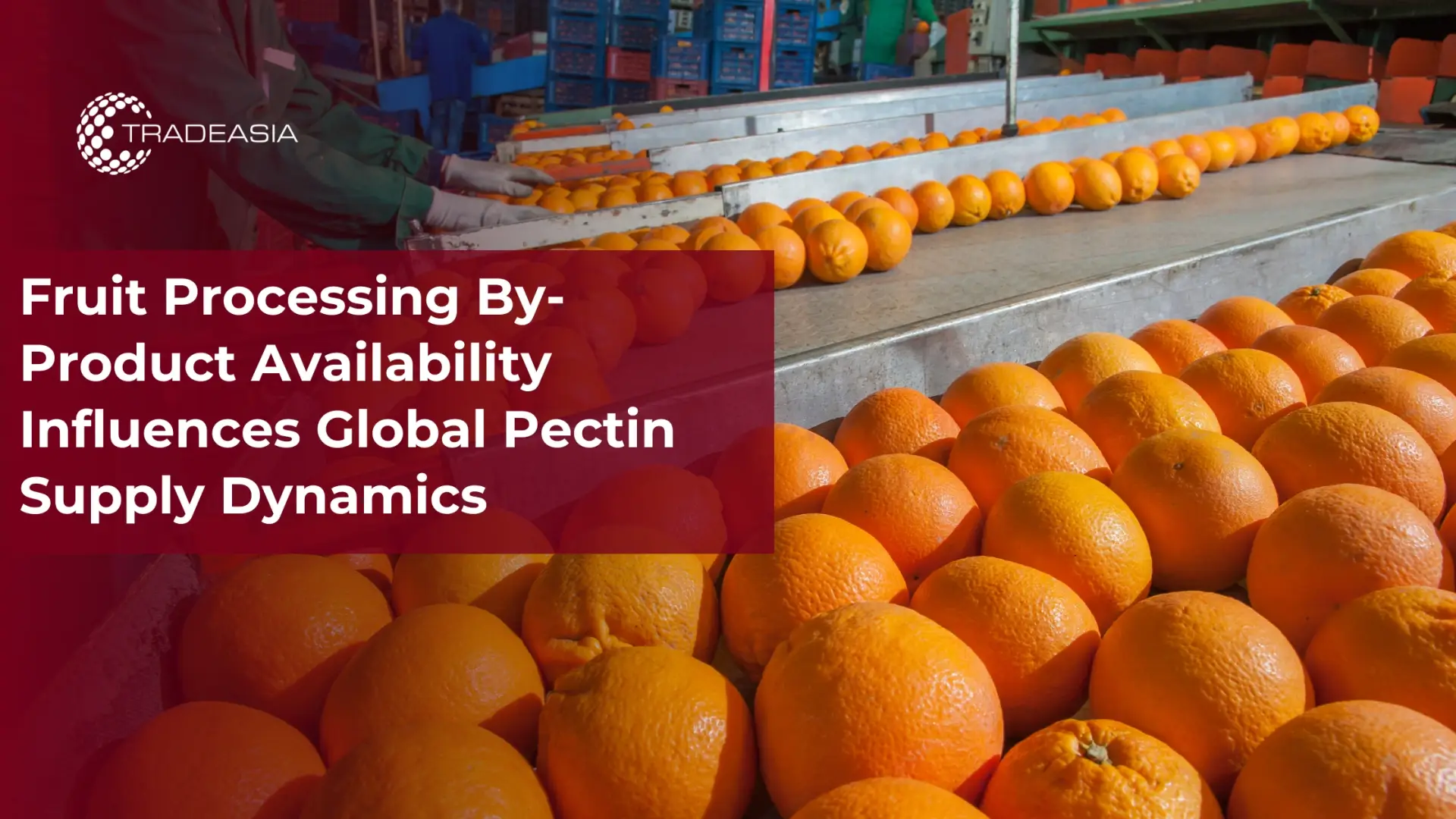
Global pectin production is fundamentally dependent on fruit processing by-products, primarily citrus peel from orange and lemon juice production and apple pomace from apple juice and cider manufacturing. Unlike synthetic hydrocolloids, pectin is not produced from dedicated crops but is extracted from waste streams of the fruit processing industry. As a result, pectin supply is structurally tied to the scale and economics of juice production rather than direct food ingredient demand alone.
When juice processing volumes decline, the availability of raw material for pectin extraction tightens, even if downstream demand from food manufacturers remains strong. This structural dependency makes pectin uniquely sensitive to shifts in consumer beverage preferences and agricultural output.
Citrus peel accounts for the majority of global pectin raw material, with major sourcing regions including Brazil, Mexico, parts of the Mediterranean, and China. Weather volatility—such as droughts, excessive rainfall, or frost—can significantly impact citrus yields, reducing peel availability for pectin processors.
In recent years, disease pressure in citrus-growing regions and climate-related yield fluctuations have added further uncertainty. Lower fruit output translates directly into reduced peel supply, limiting pectin production capacity regardless of extraction efficiency improvements.
Beyond agricultural factors, changing consumer behavior is reshaping the juice industry. In several mature markets, juice consumption has declined due to sugar reduction concerns and shifting preferences toward low-calorie or functional beverages. As juice production volumes soften, the flow of by-products available for pectin extraction also decreases.
This dynamic creates a disconnect where demand for pectin in clean-label, low-sugar, and plant-based foods continues to grow, while the upstream raw material base becomes less predictable. For pectin producers, balancing extraction capacity with fluctuating by-product availability has become a central operational challenge.
Apple pomace provides an alternative raw material stream, particularly for certain high-methoxyl and specialty pectin grades. However, apple-based pectin represents a smaller share of total global supply compared to citrus-derived pectin. Apple harvest variability and regional concentration further limit its ability to fully offset citrus-related supply constraints.
As a result, apple pomace serves more as a complementary source rather than a complete hedge against citrus-driven volatility.
The tight linkage between by-product availability and pectin output contributes to periodic pricing volatility. When citrus harvests are weak or juice processing slows, pectin prices can rise sharply, particularly for standardized grades used in high-volume applications such as jams, beverages, and dairy alternatives.
To manage this risk, both suppliers and buyers are increasingly favoring longer-term contracts, volume commitments, and indexed pricing mechanisms. Buyers are also diversifying sourcing across regions and suppliers to reduce exposure to single-origin risks.
For food producers relying on pectin as a core functional ingredient, understanding upstream fruit processing dynamics is becoming a critical part of procurement strategy. Monitoring citrus crop forecasts, juice market trends, and regional processing capacity helps anticipate supply constraints before they materialize in pricing or availability disruptions.
As clean-label demand continues to support long-term pectin consumption growth, supply-side constraints linked to fruit by-product availability are expected to remain a defining feature of the market. This reinforces the importance of proactive sourcing strategies, supplier partnerships, and formulation flexibility in navigating the evolving global pectin supply landscape.
We're committed to your privacy. Tradeasia uses the information you provide to us to contact you about our relevant content, products, and services. For more information, check out our privacy policy.


 English
 Indonesian
 简体字
简体字
 العربية
 Español
 Français
 Português
 日本語
日本語
 한국어
한국어
 Tiếng Việt



















