Explore our network of country and industry based websites to access localized information, product offerings, and business services across our group.
Log in to start sending quotation requests for any product.
Don't have an account? Sign Up Here
Home Hydrolysed Vegetable Protein Supply Chain Market Insight
Trade Insights | Supply Chain | 09 February 2026
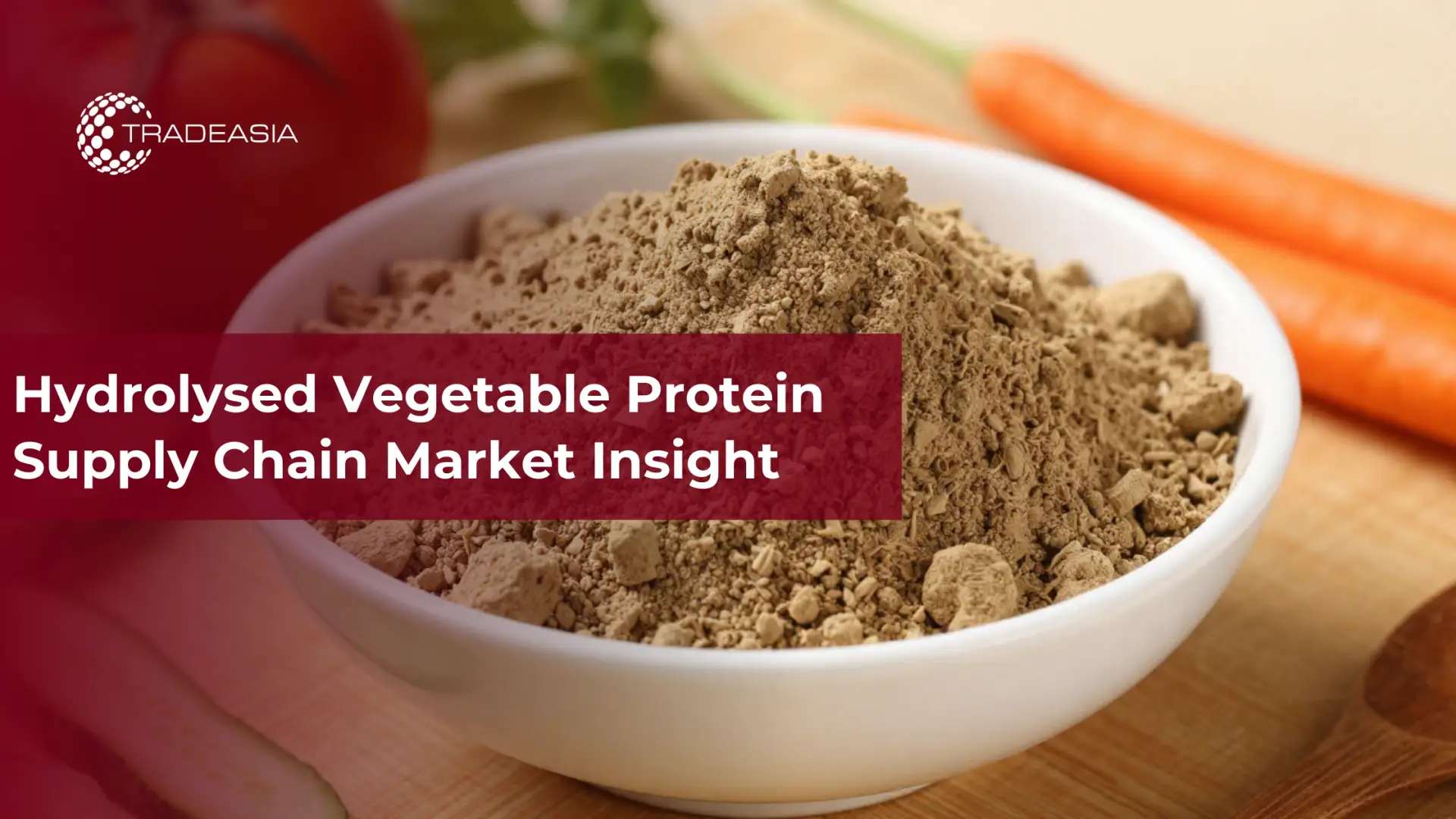
Introduction: Why Hydrolysed Vegetable Protein Has Become a Strategic Ingredient
Raw Material Foundations: Agricultural Inputs as the First Supply Chain Bottleneck
Processing Technologies: Acid vs Enzymatic Hydrolysis
Functional Attributes and Product Forms
Downstream Applications: Where HVP Creates Structural Demand
Regional Supply Chain Dynamics
Competitive Landscape: Consolidation and Capability
Supply Chain Risks: Volatility, Regulation, and Logistics
Future Outlook: From Commodity Ingredient to Strategic Flavor Platform
Conclusion
Hydrolysed Vegetable Protein (HVP) has transitioned from a background flavor enhancer into a structurally important ingredient within the global processed food supply chain. Once viewed primarily as a low-cost umami booster for soups and seasonings, HVP is now embedded deeply in the formulation strategies of sauces, instant foods, plant-based proteins, and ready-to-eat meals worldwide. This shift reflects not only changing consumer preferences toward savory, protein-rich, and plant-based foods, but also the increasing industrial need for flavor consistency, cost control, and scalable production.
In 2024, the global HVP market was valued at approximately USD 1.64 billion, with forecasts indicating expansion to over USD 2.5 billion by 2033, growing at a CAGR of around 4.8–5.1%. Demand growth is strongest in Asia-Pacific, driven by sauces, seasonings, and instant foods, while North America and Europe are reshaping demand through clean-label, low-sodium, and enzymatically hydrolyzed variants. As a result, HVP is no longer just a food additive; it is a supply-chain-sensitive ingredient whose availability, cost, and regulatory compliance directly affect large segments of the global food industry.
Understanding the HVP supply chain today requires examining its upstream agricultural dependencies, midstream chemical and enzymatic processing technologies, downstream application dynamics, and the regulatory and logistical risks that shape global trade flows.
The HVP supply chain begins with plant-based protein crops, primarily soybeans, wheat, corn, peas, rice, and, to a lesser extent, rapeseed. Among these, soy remains the dominant source due to its high protein yield, established global supply infrastructure, and cost efficiency. In 2024 alone, soy-based HVP accounted for over 362,000 metric tons of global consumption, representing more than half of total HVP volume. Wheat followed with approximately 174,000 metric tons, while corn, pea, rice, and other sources collectively contributed around 109,000 metric tons.
This upstream reliance on commodity crops introduces immediate exposure to agricultural volatility. Weather disruptions, climate variability, fertilizer costs, geopolitical trade restrictions, and currency fluctuations directly influence protein isolate pricing. For example, soybean prices rose by nearly 14.6% in 2024 due to adverse weather conditions and global supply tightness, significantly impacting the cost base for soy-derived HVP manufacturers. Wheat protein markets experienced similar pressure, particularly in Europe and North America, where droughts and export controls reduced availability and raised procurement costs.
Asia-Pacific producers, especially in China and Southeast Asia, often depend on imported soymeal and wheat gluten, linking regional HVP output to global agricultural trade routes. This creates a structural dependency on stable grain logistics, port capacity, and international trade policies, making raw material sourcing one of the most critical vulnerabilities in the HVP supply chain.
The transformation of vegetable proteins into HVP occurs through hydrolysis, a process that breaks long protein chains into amino acids and peptides, particularly glutamic acid, which delivers the characteristic umami flavor. Two primary production routes dominate the market: acid hydrolysis and enzymatic hydrolysis, each with distinct cost structures, regulatory implications, and supply chain consequences.
Acid hydrolysis remains the most widely used method globally due to its scalability, speed, and lower production cost. In this process, vegetable proteins are treated with hydrochloric acid at elevated temperatures, breaking peptide bonds and producing free amino acids. The solution is then neutralized with sodium hydroxide, resulting in sodium chloride as a by-product. This method supports large-volume production, making it the backbone of HVP supply for mass-market sauces, seasonings, and instant foods, particularly in Asia.
However, acid hydrolysis introduces regulatory and reputational risks. The process can generate 3-MCPD (3-monochloropropane-1,2-diol), a contaminant classified as potentially carcinogenic. Strict limits imposed by the EU, Japan, and other markets require extensive monitoring, purification, and documentation. In 2024, more than 15,000 metric tons of HVP shipments into Europe were delayed or rejected due to non-compliance with labeling or residue thresholds, highlighting how processing methods directly affect downstream trade flows.
Enzymatic hydrolysis, by contrast, uses proteases and water to break proteins under milder conditions. This approach preserves amino acid integrity, allows better control over flavor profiles, and avoids the formation of 3-MCPD. Although more expensive and technically demanding, enzymatic HVP is increasingly favored for clean-label, low-sodium, allergen-controlled, and premium food applications. In 2024, enzymatic methods accounted for roughly 9% of global HVP production, or about 58,000 metric tons, with Europe leading adoption due to regulatory pressure and consumer preferences.
The coexistence of these two production routes has effectively split the HVP supply chain into cost-driven and compliance-driven segments, forcing manufacturers and buyers to align sourcing strategies with end-market requirements.
The organoleptic properties of HVP—taste, aroma, solubility, and mouthfeel—are shaped by multiple variables, including protein source, degree of hydrolysis, reaction time, temperature, and post-processing refinement. These variables determine whether HVP is produced in dry powder, liquid, or paste form, each serving different supply chain roles.
Dry powder HVP dominates international trade due to its longer shelf life, lower transportation cost, and easier inventory management. It is widely used in seasoning blends, instant noodles, bouillon cubes, and powdered soup bases. Liquid and paste forms, while representing smaller volumes, are critical for large-scale sauce and marinade manufacturing, particularly in Asia-Pacific, where integration into continuous production lines reduces formulation complexity.
These form factors influence logistics decisions, packaging investments, and regional trade flows. Liquid HVP, for instance, requires specialized storage tanks, temperature control, and shorter supply cycles, favoring local or regional sourcing. Dry HVP, by contrast, supports global distribution networks and strategic stockholding, making it the preferred choice for multinational food manufacturers managing price volatility and supply disruptions.
HVP’s downstream demand is anchored firmly in the food industry, which accounts for the vast majority of global consumption. In 2024, over 138,000 metric tons were used in soups, broths, and seasoning bases, while sauces and condiments consumed approximately 92,000 metric tons. Soy sauce production alone absorbed around 112,000 metric tons of HVP, with China accounting for more than half of that volume.
Processed foods such as instant noodles, canned meals, frozen foods, and spice mixes collectively consumed more than 72,000 metric tons, particularly in India, Southeast Asia, and the Middle East. The foodservice sector also emerged as a fast-growing demand center, with HVP usage in pre-made sauces and institutional cooking rising by over 9% year-on-year in 2024.
Beyond food, non-food applications such as pet food, supplements, and functional nutrition accounted for approximately 27,000 metric tons. While still a minority segment, this category is strategically important because it favors enzymatic, allergen-controlled, and high-purity HVP, driving innovation and margin expansion for producers.
Asia-Pacific represents the structural core of the global HVP supply chain, accounting for approximately 280,000 metric tons of consumption in 2024. China alone consumed around 122,000 metric tons, driven by soy sauce, seasoning powders, and instant foods. India followed with 64,000 metric tons, heavily concentrated in spice blends and ready-to-cook products. Japan and South Korea contributed strong demand for low-sodium and enzymatic HVP, reflecting regulatory and demographic trends.
North America consumed approximately 132,000 metric tons, with the United States dominating usage in soups, frozen meals, and plant-based meat analogs. Regulatory scrutiny and allergen labeling requirements have accelerated the shift toward non-soy and enzymatic variants, reshaping supplier qualification criteria.
Europe accounted for roughly 115,000 metric tons, with Germany and France leading consumption. The region’s emphasis on clean labels, sodium reduction, and contaminant control has forced substantial investment in production upgrades and supply chain transparency. Enzymatic HVP accounted for over 23,000 metric tons in Europe in 2024, significantly higher than the global average.
The Middle East and Africa consumed around 46,000 metric tons, driven by sauces, institutional foodservice, and growing urban populations. Supply chains in this region rely heavily on imports, making them sensitive to freight costs and currency fluctuations.
The global HVP market is characterized by a mix of multinational ingredient companies and regional specialists. Archer Daniels Midland (ADM) led global production in 2024 with over 86,000 metric tons, leveraging its integrated agricultural sourcing and processing infrastructure. Ajinomoto followed with approximately 78,000 metric tons, focusing on Asia-Pacific and Europe with strong capabilities in low-sodium and enzymatic variants.
Other key players include Tate & Lyle, Kerry Group, Givaudan, Symrise, Cargill, Griffith Foods, Sensient Technologies, and several Asian manufacturers such as Aipu, New Weikang, and San Soon Seng. Competitive advantage increasingly depends on vertical integration, regulatory compliance, and the ability to offer customized flavor solutions rather than commodity HVP alone.
The HVP supply chain faces four persistent risks. Raw material price volatility remains the most immediate, driven by agricultural uncertainty and global trade disruptions. Regulatory scrutiny, particularly related to 3-MCPD and allergen labeling, creates compliance costs and shipment risks. Logistics disruptions, including shipping delays and container shortages, add lead-time uncertainty, especially for cross-regional trade. Finally, shifting consumer expectations toward clean-label and low-sodium products require continuous investment in process innovation.
Looking ahead, the HVP supply chain is expected to evolve toward greater diversification of protein sources, increased adoption of enzymatic and fermentation-based hydrolysis, and deeper integration with plant-based food innovation. Investments in pea, rice, and maize protein hydrolysis are expanding, particularly for allergen-free and premium applications. Fermentation-assisted hydrolysis, which accounted for around 9% of production in 2024, is expected to gain further traction as sustainability and labeling pressures intensify.
HVP will continue to serve as a foundational umami platform, but its strategic value will increasingly lie in customization, regulatory compliance, and supply reliability rather than pure cost advantage.
The global monopropylene glycol market is transitioning from a relatively stable commodity segment into a more strategically managed chemical category, driven by increasing application complexity, tighter regulatory oversight, and persistent feedstock-related price volatility. As downstream industries such as food processing, pharmaceuticals, personal care, and industrial manufacturing continue to demand higher purity standards and supply consistency, procurement decisions can no longer rely solely on spot pricing or short-term supplier relationships. Instead, buyers are required to adopt a broader market intelligence perspective that integrates supply chain transparency, regional production dynamics, regulatory compliance, and long-term cost optimization.
In this environment, access to reliable market insight and verified supply networks becomes a decisive factor in maintaining operational continuity and competitive advantage. Stakeholders seeking to navigate monopropylene glycol sourcing more effectively—whether for food-grade, pharmaceutical-grade, or industrial applications—are encouraged to leverage industry intelligence and supplier access available through foodadditivesasia.com. For procurement teams requiring direct engagement, technical clarification, or customized sourcing support, inquiries can be directed to food@chemtradeasia.com. Proactive engagement with informed market partners enables organizations to mitigate risk, improve sourcing resilience, and align procurement strategies with evolving global market conditions.
https://www.databridgemarketresearch.com/reports/global-hydrolyzed-vegetable-protein-market
https://www.marketreportsworld.com/market-reports/hydrolysed-vegetable-protein-hvp-market-14716496
We're committed to your privacy. Tradeasia uses the information you provide to us to contact you about our relevant content, products, and services. For more information, check out our privacy policy.


 English
 Indonesian
 简体字
简体字
 العربية
 Español
 Français
 Português
 日本語
日本語
 한국어
한국어
 Tiếng Việt



















