Explore our network of country and industry based websites to access localized information, product offerings, and business services across our group.
Log in to start sending quotation requests for any product.
Don't have an account? Sign Up Here
Home Regulatory Pressure on Phosphates: What It Means for the SHMP Market in the Food Industry
Trade Insights | Regulatory and Compliance | 04 November 2025
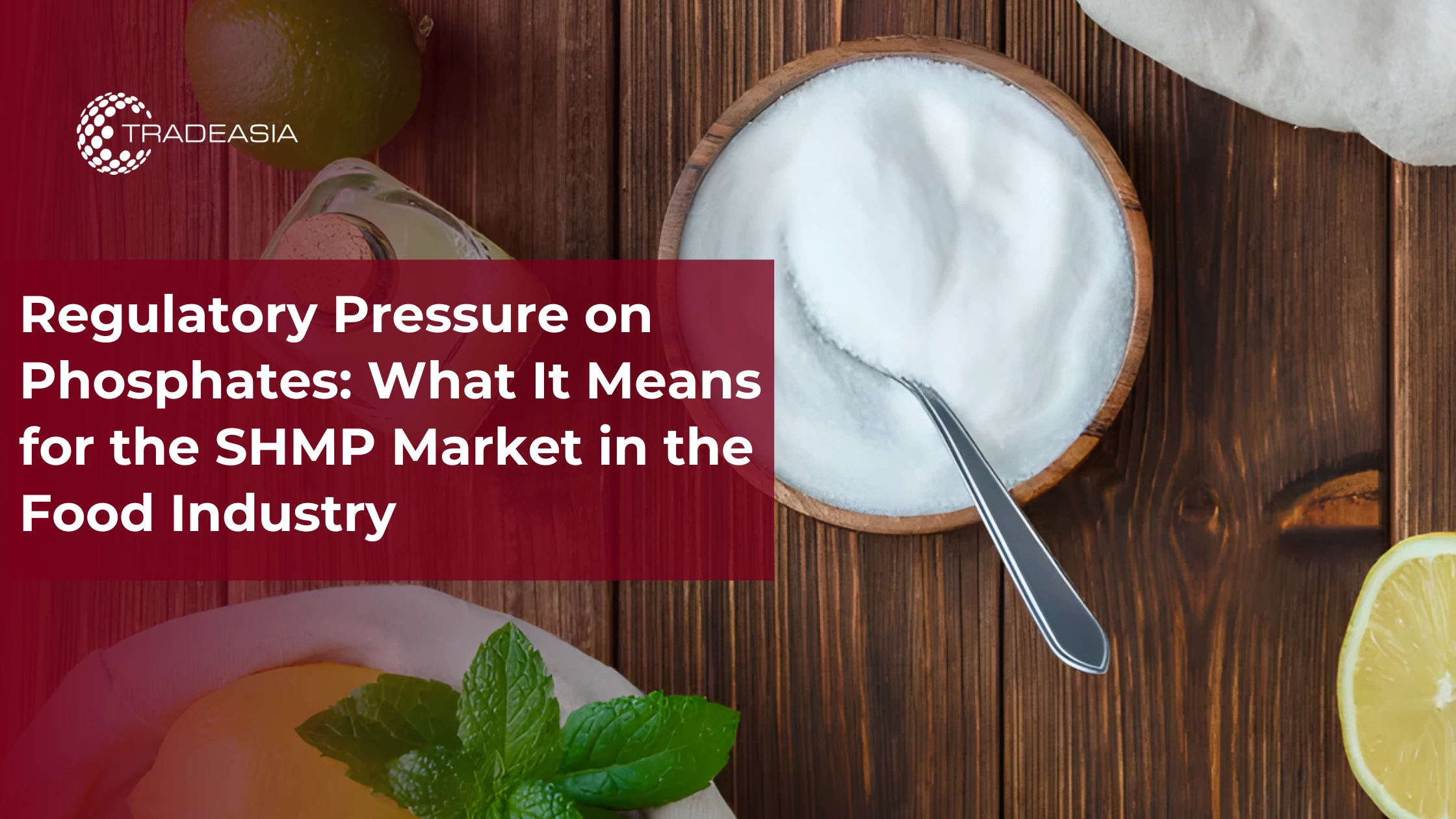
Phosphates, including Sodium Hexametaphosphate (SHMP), play a crucial role in the food industry as emulsifiers, sequestrants, stabilizers, and texturizers. The global phosphate for food market is sizeable, valued at approximately USD 2.4 billion in 2025, with expectations of steady growth driven by processed food demand and innovation in food additives.
Regulatory bodies worldwide, such as the U.S. FDA, EFSA (European Food Safety Authority), and agencies across Asia, are intensifying oversight on phosphate use in foods due to health, safety, and environmental concerns. Key issues driving regulatory pressure include:
Health Concerns: Excessive phosphate intake is linked to potential kidney and cardiovascular issues, prompting limits on maximum allowable concentrations in processed foods. Regulatory authorities require food manufacturers to justify phosphate additive levels and ensure safe consumption thresholds.
Environmental Impact: Phosphates can contribute to water eutrophication when released into wastewater, leading to environmental damage. Governments are imposing stricter controls on phosphate discharge and encouraging sustainable production and usage practices.
Labeling and Transparency: More stringent labeling requirements aim at clearer consumer information about additives, impacting how phosphates are perceived and marketed.
SHMP, widely used to improve food texture and shelf life, faces challenges from these regulatory developments:
Reformulation Needs: Food manufacturers must reformulate products to meet new phosphate limits, which may increase production complexity and costs.
Market Growth Moderation: While demand for phosphates remains strong due to processed food consumption growth, regulatory hurdles may temper high-growth projections.
Innovation Drive: The market sees growth in research on phosphate alternatives, optimized formulations, and lower-phosphate additive blends compliant with regulations.
In Asia, countries like China and Indonesia are actively updating food additive regulations to align with international standards, impacting phosphate use policies.
The EU continues to review phosphate food additive limits for safety reassessments.
North American regulators maintain existing limits but emphasize clear labeling and consumer safety.
Regulatory pressure on phosphates in the food industry is increasing globally due to health and environmental concerns. These regulations impose stricter limits on phosphate additive use, challenging the Sodium Hexametaphosphate (SHMP) market to innovate and adapt. While the demand for processed and convenience foods drives ongoing phosphate use, manufacturers must balance regulatory compliance with product quality and consumer expectations. The SHMP market is responding with reformulation efforts, sustainable practices, and new additive technologies to maintain growth and relevance amid evolving regulations.
We're committed to your privacy. Tradeasia uses the information you provide to us to contact you about our relevant content, products, and services. For more information, check out our privacy policy.


 English
 Indonesian
 简体字
简体字
 العربية
 Español
 Français
 Português
 日本語
日本語
 한국어
한국어
 Tiếng Việt



















