Explore our network of country and industry based websites to access localized information, product offerings, and business services across our group.
Log in to start sending quotation requests for any product.
Don't have an account? Sign Up Here
Home Indonesia’s Halal Sweet Tooth: Why Refined Glycerine Demand is Skyrocketing
Trade Insights | Applications and Buyers | 24 December 2025
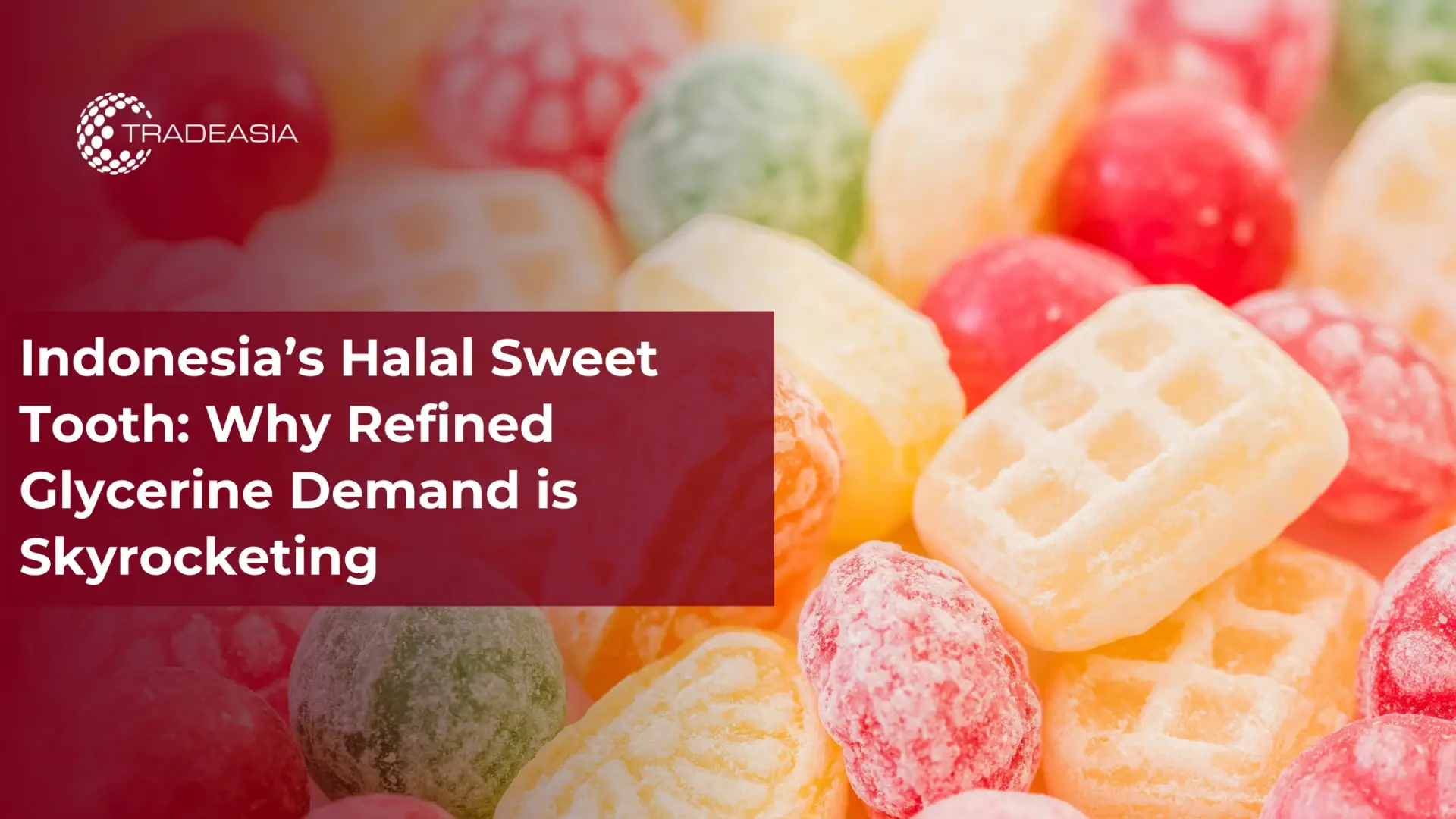
Indonesia is currently witnessing a massive, structural transformation in its confectionery sector. As the nation with the world's largest Muslim population and a rapidly expanding middle class, the demand for Halal-certified products has evolved from a niche preference into a dominant market force. However, recent regulatory shifts and evolving consumer sophistication have turned this steady demand into a surging wave of innovation. For confectionery manufacturers—from multinational giants to local SMEs—this presents a complex dual challenge: they must meet the increasingly strict Halal compliance standards enforced by the BPJPH (Halal Product Assurance Organizing Agency) while simultaneously satisfying a craving for premium, high-quality sweets that can withstand the rigors of a tropical supply chain. At the heart of this industry shift lies a critical, versatile, and often overlooked ingredient: Refined Glycerine.
The Rise of the "Modern Muslim Consumer"
The Indonesian market is no longer satisfied with products that are simply "sweet." The modern Indonesian consumer is urban, digitally connected, and hyper-aware of global food trends. There is a distinct shift occurring in retail channels, moving from traditional wet markets to modern trade outlets like minimarkets (e.g., Indomaret, Alfamart) and premium supermarkets. In these environments, consumers are looking for sophisticated textures—gummies that offer a perfect "bite" without being rubbery, hard candies that don't become sticky in their wrappers, and soft chews that deliver flavor instantly.
Simultaneously, these consumers are reading labels more critically than ever before. The "Halal" logo is now a baseline expectation, not a differentiator. However, the quality of that Halal status matters. Today’s shoppers are wary of vague ingredients. This shift is driving manufacturers to reformulate their products, actively moving away from doubtful animal-derived ingredients toward plant-based alternatives. This is where vegetable-derived Refined Glycerine (USP Grade) becomes essential. Sourced primarily from palm oil—a commodity abundant in Indonesia—it offers a perfectly Halal-compliant solution that aligns with local ethical sourcing preferences, allowing brands to market their products as both spiritually safe and modern.
Glycerine as a Strategic Defense Against Tropical Climate
For industrial confectioners operating in Southeast Asia, Refined Glycerine is more than just an additive; it is a strategic processing aid that solves expensive production and logistics problems. Indonesia’s tropical climate, characterized by high humidity and heat, is the natural enemy of candy. Without precise formulation, sugar blooms on chocolate and sticky, melted wrappers on hard candies can destroy a brand's reputation before the product even leaves the warehouse.
Refined Glycerine acts as a superior humectant and crystallization inhibitor. By managing water activity ($a_w$) within the sweet, it binds water molecules effectively, preventing them from migrating to the surface where they cause stickiness or spoilage. This stability is crucial for manufacturers aiming to expand their distribution networks across the archipelago. Whether the product is sitting in an air-conditioned hypermarket in Jakarta or a non-air-conditioned "warung" (small stall) in a remote village, glycerine ensures the texture remains consistent. It extends shelf-life significantly, reducing return rates and waste, which is a key metric for profitability in the low-margin confectionery business.
The Convergence of "Clean Label" and Halal Integrity
Global trends toward "clean label" products—foods with fewer, simpler, and more natural ingredients—are trickling down to the Indonesian market. Parents, in particular, are increasingly wary of synthetic preservatives and non-Halal animal by-products like gelatin, which is often used for texture. While gelatin can be Halal, sourcing it reliably can be difficult and expensive.
Refined Glycerine, specifically in its 99.5% or 99.7% purity grades, fits perfectly into the "clean label" narrative. It is non-toxic, odorless, colorless, and fully plant-based. It allows manufacturers to replace or reduce the reliance on synthetic stabilizers while maintaining the functional benefits of shelf-life extension. As a supplier, highlighting the vegetable origin of your glycerine is a potent sales tool. It directly addresses the cross-contamination fears inherent in Halal production, offering a "No-Nasties" solution that appeals to both strict Muslim consumers and the growing segment of plant-based or vegetarian buyers in the region.
Navigating the 2026 Halal Mandate and Supply Chain Security
The regulatory landscape in Indonesia has hardened. With the government setting strict phased deadlines for mandatory Halal certification across all food and beverage categories, the supply chain is under unprecedented scrutiny. By 2026, the tolerance for ambiguity in raw materials will essentially vanish. Manufacturers can no longer rely on uncertified suppliers; they require partners who can provide full traceability from the plantation to the factory gate.
A distributor that supplies Refined Glycerine with complete Halal documentation, Kosher certification, and RSPO (Roundtable on Sustainable Palm Oil) compliance is not just selling a chemical commodity; they are selling regulatory safety. In an era of supply chain disruptions and price volatility for palm oil derivatives, manufacturers are seeking stability. They need suppliers who understand the "Wajib Halal" (Mandatory Halal) regulations intimately and can provide the necessary technical documents (COA, Halal Decrees, Flow Charts) to speed up their audit processes. The demand for such transparent, compliant sourcing is predicted to outpace general market growth, positioning capable distributors as indispensable partners in the future of Indonesian confectionery.
Sources
We're committed to your privacy. Tradeasia uses the information you provide to us to contact you about our relevant content, products, and services. For more information, check out our privacy policy.


 English
 Indonesian
 简体字
简体字
 العربية
 Español
 Français
 Português
 日本語
日本語
 한국어
한국어
 Tiếng Việt



















