Explore our network of country and industry based websites to access localized information, product offerings, and business services across our group.
Log in to start sending quotation requests for any product.
Don't have an account? Sign Up Here
Home How Ammonium Hydroxide Functions in Food Manufacturing
Article | 21 November 2025
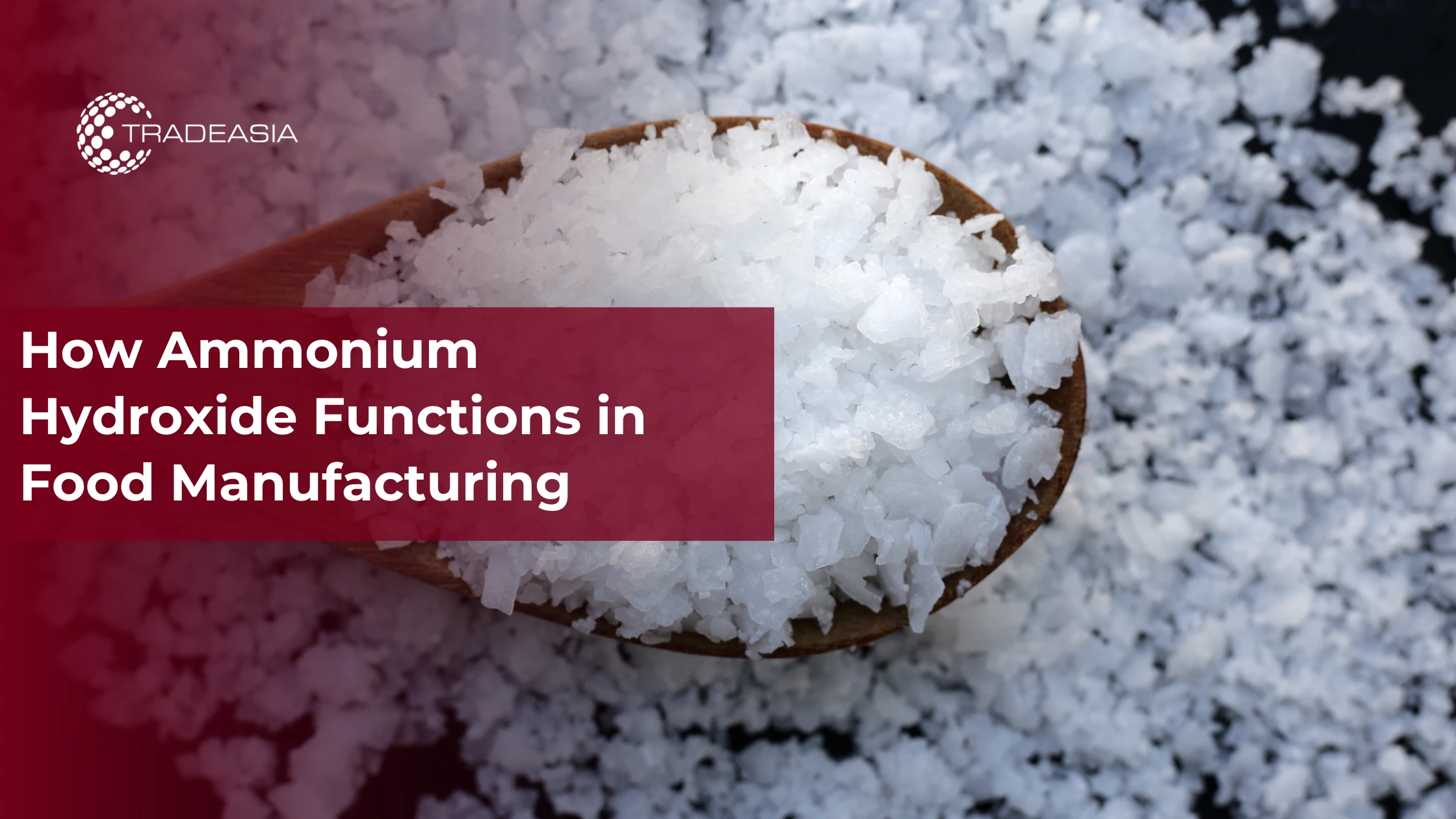
Ammonium hydroxide, a compound formed from ammonia and water, plays a critical yet often understated role in food manufacturing. Its multifunctional nature makes it a valuable ingredient, particularly in maintaining product quality, safety, and consistency. As food producers strive to meet consumer expectations for both safety and sensory appeal, ammonium hydroxide stands out as a trusted ally in modern food processing.
The primary function of ammonium hydroxide in food manufacturing is as a pH regulator and antimicrobial agent. Its alkaline properties help maintain the desired pH levels in various food products, which is crucial for controlling microbial growth and ensuring extended shelf life. By creating an environment less favorable for harmful bacteria, ammonium hydroxide enhances food safety without compromising flavor or texture.
Apart from regulating acidity, ammonium hydroxide is also utilized as a leavening agent, particularly in bakery products, where it contributes to dough rising and improved texture. Its ability to break down complex ingredients helps achieve consistent product quality batch after batch.
Ammonium hydroxide finds application in a wide array of food products:
Processed meats and poultry: It acts as a pH regulator and antimicrobial additive, helping control pathogens and extend shelf life.
Baked goods: Used as a leavening and pH control agent, enhancing texture and volume.
Dairy products: Helps stabilize acidity and preserve freshness, especially in cheeses and fermented products.
Beverages and liquid foods: Buffers pH to maintain stability and prevent spoilage.
Its versatility extends to other uses such as ingredient extraction and as a clarifying agent in food processing.
Ammonium hydroxide used in food manufacturing is typically food-grade, ensuring that it meets strict safety and purity standards established by food safety authorities such as the FDA. Its usage levels are carefully controlled to ensure consumer safety while maintaining its technological benefits.
Manufacturers increasingly appreciate ammonium hydroxide for its efficient functionality and minimal environmental impact when used correctly. It supports clean-label manufacturing goals by enabling reduced reliance on synthetic preservatives while sustaining product quality.
Source:
We're committed to your privacy. Tradeasia uses the information you provide to us to contact you about our relevant content, products, and services. For more information, check out our privacy policy.


 English
 Indonesian
 简体字
简体字
 العربية
 Español
 Français
 Português
 日本語
日本語
 한국어
한국어
 Tiếng Việt




















