Explore our network of country and industry based websites to access localized information, product offerings, and business services across our group.
Log in to start sending quotation requests for any product.
Don't have an account? Sign Up Here
Home Ascorbic Acid Market Demand and Buyer Trends Across Key Industries
Trade Insights | Applications and Buyers | 08 June 2026
Understanding Ascorbic Acid and Its Commercial Importance
Major Industrial Applications Driving Demand
Global Market Trends and Growth Outlook
Buyer Intent and Procurement Considerations
Sourcing Challenges and Supply Chain Opportunities
Commercial Positioning for B2B Buyers and Suppliers
Conclusion: Strategic Outlook for Ascorbic Acid Procurement
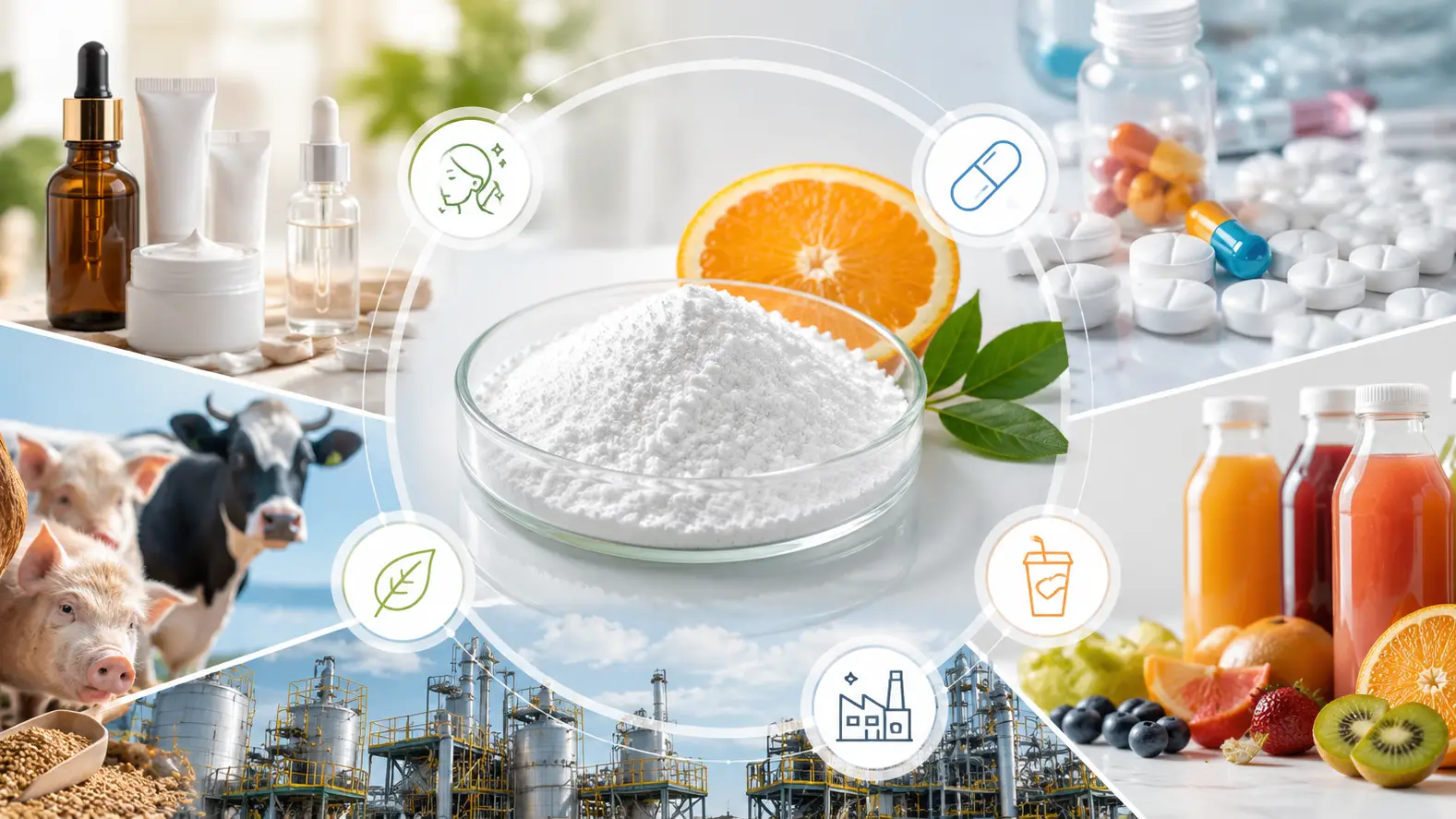
Ascorbic acid, commonly known as Vitamin C, is one of the most widely traded specialty ingredients in global chemical and ingredient markets. Its multifunctional properties make it valuable in food preservation, pharmaceutical formulations, nutritional supplements, and animal feed applications.
According to the U.S. National Institutes of Health (NIH), Vitamin C plays an essential biological role as an antioxidant and enzyme cofactor, contributing to its widespread commercial adoption across multiple industries.
The commercial importance of ascorbic acid extends beyond nutritional benefits. Manufacturers utilize it as a stabilizer, antioxidant, acidity regulator, and shelf-life enhancer in numerous formulations.
Technical information published by the European Food Safety Authority (EFSA) highlights the extensive use of ascorbic acid as a food additive and nutritional ingredient, supporting its position as a high-volume globally traded product.
Demand for ascorbic acid is strongly influenced by its versatility across industrial sectors. Food and beverage manufacturers remain among the largest consumers due to increasing demand for fortified and clean-label products.
Industry reports from the Food and Agriculture Organization (FAO) indicate rising consumer interest in nutrient-enriched foods, supporting sustained demand for food grade ascorbic acid worldwide.
In pharmaceuticals, pharmaceutical grade ascorbic acid is used in tablets, injections, and therapeutic formulations. Nutraceutical companies incorporate Vitamin C into dietary supplements targeting immune health and wellness markets.
The animal nutrition industry also utilizes ascorbic acid in feed formulations. Research published through scientific journals and agricultural organizations demonstrates its value in supporting animal health, particularly in intensive farming systems.
The global ascorbic acid market continues to benefit from increasing health awareness, preventive healthcare spending, and expanding supplement consumption. These factors contribute to growing procurement activity among manufacturers and distributors.
Market analysis published by organizations such as Grand View Research and Fortune Business Insights identifies sustained growth in Vitamin C ingredient demand, particularly within Asia-Pacific manufacturing hubs and major consumer markets.
Recent years have seen stronger interest in immune-support products, functional foods, and fortified beverages. These trends have expanded the customer base for bulk ascorbic acid suppliers serving both established brands and emerging manufacturers.
Industry analysts also note increasing demand for traceable ingredient sourcing, creating opportunities for suppliers that can provide quality assurance, regulatory documentation, and reliable logistics support.
Ascorbic acid buyers typically include food manufacturers, pharmaceutical producers, nutraceutical companies, animal feed formulators, contract manufacturers, and chemical distributors. Procurement teams seek suppliers capable of maintaining consistent quality and supply continuity.
According to guidance from the U.S. Food and Drug Administration (FDA), ingredient quality, compliance, and manufacturing standards remain critical considerations for regulated industries purchasing nutritional ingredients.
When sourcing ascorbic acid, buyers assess product grade, purity specifications, certifications, packaging options, regulatory compliance, and supply reliability. Cost competitiveness is important, but quality consistency often carries equal weight in supplier evaluations.
Buyers frequently compare multiple suppliers to reduce procurement risk, optimize pricing strategies, and secure long-term availability. Product information pages that provide technical specifications and sourcing transparency support faster purchasing decisions and supplier qualification processes.
Global sourcing of ascorbic acid involves navigating supply chain complexities, including raw material availability, manufacturing capacity, transportation costs, and changing international trade conditions. These factors can influence pricing and lead times.
According to international trade monitoring organizations and industry market reports, ingredient procurement teams increasingly prioritize diversified supplier networks to improve resilience against market disruptions.
Reliable sourcing depends on selecting suppliers with proven logistics capabilities, quality management systems, and international trade expertise. Buyers often prefer suppliers capable of serving multiple regions through established distribution channels.
Chemical marketplaces create efficiencies by connecting buyers with verified suppliers, enabling easier comparison of sourcing options, product availability, and commercial terms across global markets.
Ascorbic acid remains commercially significant because it serves several high-growth industries simultaneously. Growth in food fortification, pharmaceutical manufacturing, dietary supplements, and animal nutrition directly influences market demand and procurement activity.
Industry observations from nutrition and ingredient sectors indicate that manufacturers increasingly seek dependable suppliers that can support long-term production requirements while maintaining regulatory compliance.
Manufacturers, traders, distributors, and procurement professionals benefit from access to centralized sourcing platforms that streamline supplier discovery and evaluation. Efficient sourcing contributes to improved operational planning and inventory management.
Tradeasia, Chemtradeasia, and Tradechem Marketplace can support buyers by providing access to global sourcing networks, product information, supplier connections, and procurement opportunities relevant to the evolving ascorbic acid market.
The long-term outlook for ascorbic acid remains positive as health-conscious consumption, functional nutrition, and pharmaceutical production continue to expand globally. Demand is expected to remain supported by diverse industrial applications and broad geographic adoption.
Organizations such as the NIH, FDA, and EFSA continue to recognize the importance of Vitamin C in food and health-related applications, reinforcing the product's strategic relevance across multiple manufacturing sectors.
Companies that establish reliable sourcing strategies and maintain strong supplier relationships are better positioned to manage market fluctuations and support production continuity.
As global demand evolves, B2B buyers seeking bulk ascorbic acid, pharmaceutical grade ascorbic acid, and food grade ascorbic acid will continue to prioritize trusted suppliers, transparent sourcing practices, and efficient marketplace solutions.
Sources
We're committed to your privacy. Tradeasia uses the information you provide to us to contact you about our relevant content, products, and services. For more information, check out our privacy policy.


 English
 Indonesian
 简体字
简体字
 العربية
 Español
 Français
 Português
 日本語
日本語
 한국어
한국어
 Tiếng Việt



















