Explore our network of country and industry based websites to access localized information, product offerings, and business services across our group.
Log in to start sending quotation requests for any product.
Don't have an account? Sign Up Here
Home Cosmetics & Skincare Buyers Driving Cocoa Butter Growth and Premium Demand 2026
Trade Insights | Applications and Buyers | 10 April 2026
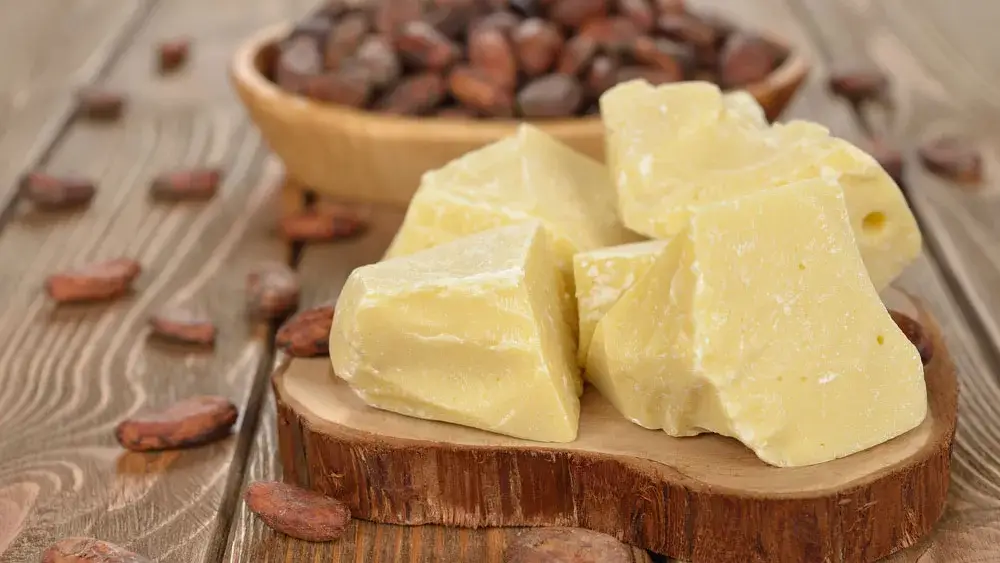
Global cocoa butter market overview, valuation, and CAGR trajectory in 2026
Structural shift in premium confectionery demand and its impact on supply chains
Rising dominance of artisanal and craft chocolate manufacturers in procurement decisions
Price volatility trends and cocoa butter valuation range (USD/MT dynamics)
Regional consumption shifts across Europe, North America, and emerging markets
Expansion of cocoa butter use in skincare, cosmetics, and personal care industries
Growth of clean-label beauty trends and demand for certified cosmetic-grade fats
Pharmaceutical and dermatological applications increasing diversified buyer base
Industrial food processing adoption in bakery, frozen desserts, and ready meals
Role of cocoa butter equivalents (CBEs) and hybrid fat systems in cost optimization
Asia-Pacific demand acceleration driven by urbanization and middle-class growth
Middle East (UAE) emergence as a redistribution and re-export hub
Institutional buyers shifting toward long-term procurement and supply security contracts
ESG compliance, traceability, and sustainability requirements in global sourcing
Long-term forecast (2026–2046): cocoa butter as a multi-sector functional lipid platform
Global production expansion outlook and evolving trade flow decentralization
The cocoa butter market in April 2026 is undergoing a structural transformation led by premium confectionery demand. With global valuation hovering near USD 12.28 billion and projected CAGR of ~7.4%, chocolate manufacturers remain the dominant buyers, accounting for nearly half of total consumption. However, the shift toward artisanal and high-cocoa-content products has tightened specifications around cocoa butter quality, pushing prices into the USD 3,800–6,200/MT range depending on origin and refinement level. This trend is reshaping procurement strategies, particularly in Europe and North America where premium chocolate consumption continues to mature.
As sourcing complexity increases, Tradeasia International positions itself as a reliable global partner for cocoa butter and oleochemical solutions. Its diversified sourcing network across Africa and Asia enables confectionery manufacturers to manage price volatility while maintaining consistent product quality.
Artisanal Chocolate Makers Redefining Quality Benchmarks
A new class of buyers—craft chocolate producers—has introduced stricter requirements for cocoa butter purity, aroma retention, and traceability. These buyers favor single-origin cocoa butter, often accepting higher price points for differentiated flavor profiles. This has led to segmentation within the market, where premium-grade cocoa butter commands margins significantly above bulk industrial supply.
At the same time, multinational confectionery firms are standardizing formulations globally, requiring suppliers to meet uniform melting profiles and crystallization behavior, thereby increasing technical barriers for smaller producers.
Mass Market Expansion in Emerging Economies
While premiumization drives margins, volume growth is increasingly concentrated in Asia-Pacific and Latin America. Rising middle-class consumption is pushing demand for affordable chocolate products, prompting manufacturers to adopt blended fat systems combining cocoa butter with equivalents.
Forecast 2026–2046: Cocoa Butter as a Core Confectionery Platform
Between 2026 and 2046, cocoa butter will remain a foundational fat in confectionery, but with expanded roles in hybrid formulations. Global production is expected to exceed 7 million MT annually by 2046, with long-term CAGR stabilizing near 5.5% as mature markets plateau and emerging regions drive incremental demand.
Sources:
1. https://www.oleochemicals.com/
2. https://www.fortunebusinessinsights.com/cocoa-butter-market-106060
3. https://tradingeconomics.com/commodity/cocoa
Cocoa butter’s role in cosmetics has expanded significantly, transforming it from a secondary ingredient into a core formulation component. As of 2026, cosmetic applications represent roughly 18% of global cocoa butter demand, with growth outpacing food uses at a CAGR of ~8%. The rising preference for plant-based, chemical-free skincare has driven prices for cosmetic-grade cocoa butter to USD 4,500–7,000/MT, reflecting added processing and certification costs.
In this evolving supply environment, Tradeasia International supports cosmetic manufacturers with consistent, traceable cocoa butter tailored to personal care applications, ensuring compliance with international quality and sustainability standards.
Clean Beauty Brands Driving Ingredient Transparency
Modern beauty brands are placing cocoa butter at the center of “clean label” formulations. Buyers increasingly require organic certification, ethical sourcing, and minimal processing, elevating demand for semi-deodorized variants that retain natural antioxidants.
This has created a premium niche within the market, where smaller but fast-growing brands compete with global corporations for high-quality supply, tightening availability and supporting price resilience.
Dermatological and Therapeutic Applications Expanding
Beyond cosmetics, cocoa butter is gaining traction in dermatology and therapeutic skincare due to its emollient properties and compatibility with sensitive skin. Pharmaceutical companies are incorporating it into topical treatments, further diversifying the buyer base.
Forecast 2026–2046: From Cosmetic Ingredient to Functional Lipid
Over the next two decades, cocoa butter is expected to evolve into a multi-functional lipid platform, particularly in advanced skincare and nutraceutical delivery. By 2046, non-food applications could account for up to 35% of global demand, with sustained pricing strength in premium segments.
Sources:
1. https://www.oleochemicals.com/
2. https://www.businessresearchinsights.com/market-reports/cocoa-butter-market-122170
3. https://www.fortunebusinessinsights.com/cocoa-butter-market-106060
The industrial food sector is redefining cocoa butter utilization, extending its application beyond chocolate into bakery fillings, frozen desserts, and ready-to-eat products. In 2026, processed food manufacturers account for a growing share of demand, leveraging cocoa butter’s oxidative stability and texture-enhancing properties. Bulk procurement prices typically range between USD 3,500–5,800/MT, depending on volume and contract terms.
Tradeasia International facilitates this industrial demand by offering scalable supply solutions tailored to high-throughput manufacturing environments, ensuring consistency across large production runs.
Functional Performance Driving Buyer Adoption
Industrial buyers value cocoa butter for its ability to maintain structural integrity under varying temperatures, making it ideal for automated production lines. Its compatibility with other fats also enables manufacturers to fine-tune product texture and shelf life.
This functional versatility is driving increased adoption across diverse food categories, particularly in emerging markets where processed food consumption is accelerating.
Cost Optimization Through Fat Blending
To mitigate raw material volatility, many buyers are incorporating cocoa butter equivalents into formulations. This hybrid approach allows manufacturers to balance performance with cost efficiency, particularly in price-sensitive markets.
Forecast 2026–2046: Industrial Fat Benchmarking
By 2046, cocoa butter is expected to serve as a benchmark fat in processed food systems, influencing formulation standards across the industry. Global demand could approach 8 million MT annually, supported by urbanization and evolving dietary habits.
Sources:
1. https://www.oleochemicals.com/
2. https://www.businessresearchinsights.com/market-reports/cocoa-butter-market-122170
3. https://www.fortunebusinessinsights.com/cocoa-butter-market-106060
Geographic demand patterns are playing an increasingly decisive role in shaping cocoa butter trade flows. While Europe continues to dominate consumption, Asia-Pacific is emerging as the fastest-growing region with CAGR exceeding ~10%. This shift is altering global supply chains and creating new opportunities for regional distribution hubs. Prices vary widely across regions, typically ranging from USD 3,700–6,000/MT depending on logistics and import dependencies.
Tradeasia International supports this transition by offering flexible distribution and localized supply solutions, enabling buyers to adapt quickly to regional demand fluctuations.
Asia-Pacific Buyers Fueling Volume Growth
Rapid urbanization and rising disposable incomes in countries like China and India are driving increased consumption of chocolate and personal care products. Buyers in these markets are focused on securing large volumes at competitive prices, often through long-term contracts.
This surge in demand is prompting suppliers to reallocate exports toward Asia, intensifying competition among buyers globally.
Middle East as a Strategic Redistribution Hub
The Middle East, particularly the UAE, is strengthening its position as a processing and re-export hub. Buyers in the region prioritize high-quality imports for value-added processing and private-label manufacturing.
Forecast 2026–2046: Regionalization of Supply Chains
Looking ahead, cocoa butter supply chains are expected to become more regionally diversified. By 2046, decentralized processing and expanded cultivation could increase global output significantly, reducing reliance on traditional producing regions.
Sources:
1. https://www.oleochemicals.com/
2. https://www.fortunebusinessinsights.com/cocoa-butter-market-106060
3. https://www.reuters.com/business/environment/brazils-dreams-industrial-scale-cocoa-farms-fading-after-price-crash-2026-03-12/
Institutional buyers—including multinational food companies and pharmaceutical manufacturers—are increasingly shaping cocoa butter market dynamics through long-term procurement strategies. With market projections reaching USD 21.87
billion by 2034, these buyers are securing supply through multi-year agreements to mitigate volatility. Historical price spikes exceeding USD 10,000/MT have reinforced the need for stable sourcing frameworks.
Tradeasia International plays a critical role in supporting these buyers by offering structured supply agreements and global sourcing capabilities, ensuring continuity and cost predictability.
Contractual Procurement as a Risk Management Tool
Large-scale buyers are shifting away from spot purchasing toward long-term contracts, locking in both price and supply. This approach reduces exposure to market fluctuations and ensures consistent quality across production cycles.
Such contracts often include sustainability clauses, requiring suppliers to meet strict environmental and social standards.
ESG and Traceability Influencing Buyer Decisions
Sustainability is no longer optional for institutional buyers. Companies are demanding traceable supply chains and compliance with ESG frameworks, driving changes across the entire value chain.
Forecast 2026–2046: Strategic Commodity Evolution
By 2046, cocoa butter is expected to solidify its position as a strategic global commodity, with institutional buyers controlling a majority share of demand. Prices are likely to stabilize within USD 4,000–8,000/MT, supported by improved supply chain transparency and long-term contracting.
Sources:
1. https://www.oleochemicals.com/
2. https://www.fortunebusinessinsights.com/cocoa-butter-market-106060
3. https://www.wsj.com/finance/commodities-futures/why-filling-up-your-easter-basket-is-so-expensive-despite-much-lower-cocoa-prices-77de3bb0
We're committed to your privacy. Tradeasia uses the information you provide to us to contact you about our relevant content, products, and services. For more information, check out our privacy policy.


 English
 Indonesian
 简体字
简体字
 العربية
 Español
 Français
 Português
 日本語
日本語
 한국어
한국어
 Tiếng Việt