Explore our network of country and industry based websites to access localized information, product offerings, and business services across our group.
Log in to start sending quotation requests for any product.
Don't have an account? Sign Up Here
Home Potassium Chloride Global Sourcing Guide for Industrial and Agricultural Buyers
Trade Insights | Applications and Buyers | 26 June 2026
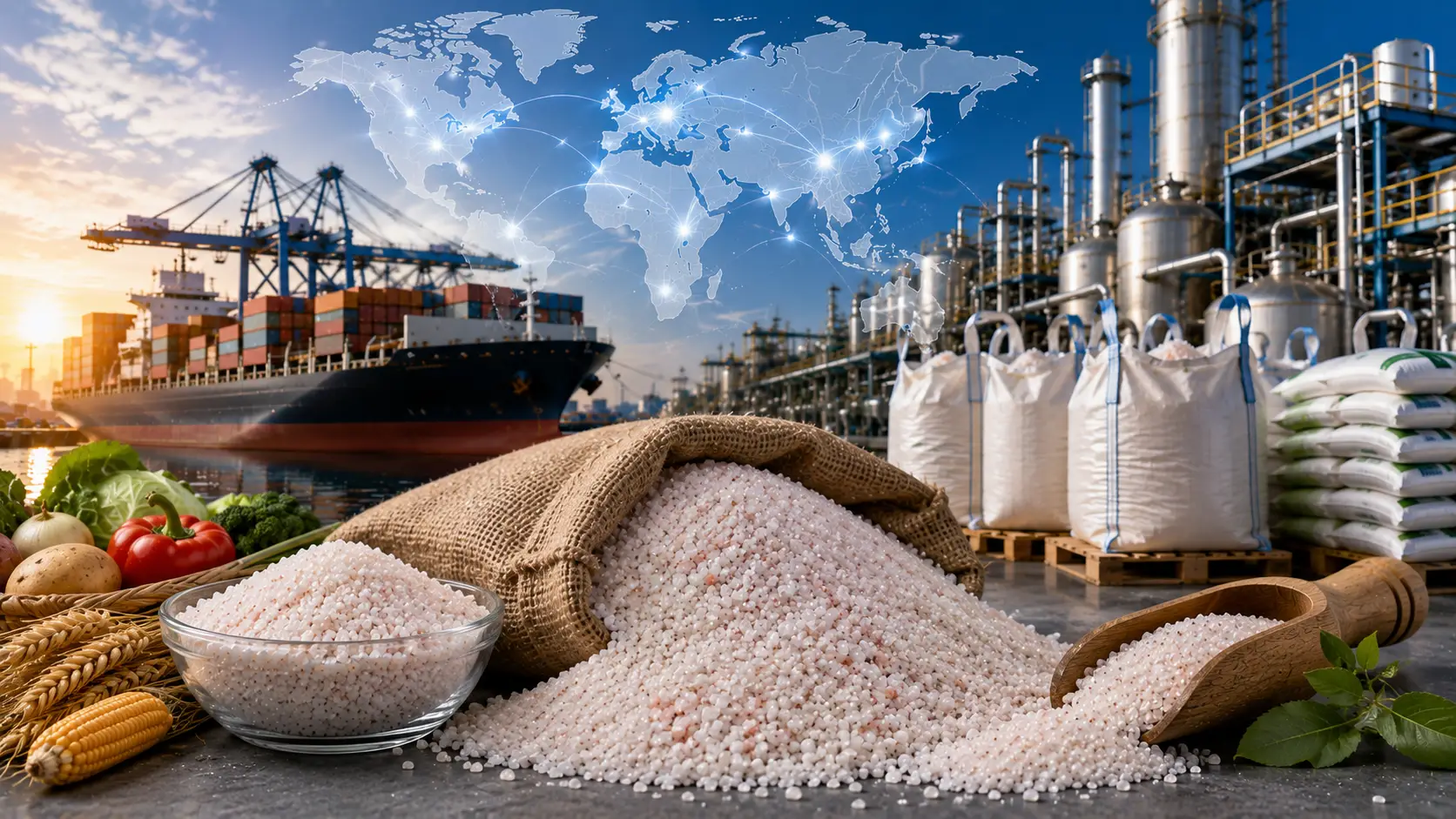
Overview of Potassium Chloride in Global Chemical Trade
Market Demand and Global Trade Dynamics
Agricultural Applications Driving Potassium Chloride Consumption
Industrial and Specialized Uses Across Key Sectors
Buyer Intent and Procurement Decision Factors
Global Supply Chain and Strategic Sourcing Outlook
Potassium Chloride (KCl) is a naturally occurring inorganic salt widely used across agriculture, chemical processing, and industrial manufacturing. It serves as a primary potassium source in fertilizers and as a key raw material in multiple industrial formulations. According to the Food and Agriculture Organization (FAO), potassium-based fertilizers remain essential for sustaining global crop productivity due to soil nutrient depletion in intensive farming systems.
From a commercial perspective, Potassium Chloride is one of the most traded potash products globally. Its demand is closely linked to food production cycles and industrial expansion. The compound is typically available in standard industrial, granular, and refined grades depending on end-use requirements.
In B2B markets, potassium chloride procurement is often driven by bulk supply contracts, long-term agricultural demand, and seasonal fertilizer cycles. Its stability and wide usability make it a core product in global chemical distribution portfolios.
The product is strategically positioned in the Tradeasia marketplace, enabling industrial buyers to access verified supply channels through the Potassium Chloride product page.
Potassium Chloride is primarily derived from potash mining operations concentrated in countries with significant evaporite deposits. According to the United States Geological Survey (USGS), Canada, Russia, and Belarus account for a major share of global potash reserves and production capacity.
The global distribution network is highly centralized, making supply chains sensitive to geopolitical and logistics disruptions. This has increased the importance of diversified sourcing strategies for industrial buyers and fertilizer manufacturers.
Trade flows are heavily influenced by agricultural demand cycles, particularly in Asia-Pacific and Latin America, where fertilizer consumption is highest. This creates recurring procurement peaks throughout the year.
For buyers, understanding production geography is critical for pricing stability and contract negotiation in international trade.
The global demand for Potassium Chloride is largely driven by agriculture, where it is used as a potassium-rich fertilizer. According to the International Fertilizer Association (IFA), potassium fertilizers are essential for improving crop yield quality, disease resistance, and water regulation in plants.
Rising global food demand has significantly increased fertilizer consumption, particularly in emerging economies. This has strengthened long-term demand for potassium chloride in bulk agricultural procurement.
Seasonal planting cycles and government agricultural support programs also contribute to fluctuating but predictable demand patterns. These cycles shape procurement strategies for distributors and importers.
As a result, potassium chloride remains a stable, high-volume commodity in global fertilizer trade markets.
Potassium Chloride pricing is influenced by mining output, transportation costs, and global energy prices. Market analysis from ICIS highlights that fertilizer pricing is often correlated with natural gas and logistics disruptions.
Geopolitical factors also play a significant role, especially when major exporting countries adjust export policies or face trade restrictions. This can lead to temporary supply shortages and price spikes.
Buyers increasingly rely on long-term contracts and diversified sourcing to mitigate volatility risks. Strategic procurement planning is essential for maintaining cost stability in fertilizer production.
Overall, potassium chloride markets require continuous monitoring of supply chain indicators and global trade flows.
Potassium Chloride is widely used as a potassium fertilizer in agriculture, supporting essential plant functions such as enzyme activation, photosynthesis, and water regulation. According to FAO agronomic studies, potassium deficiency in soil significantly reduces crop yield and quality.
Farmers apply potassium chloride to a wide range of crops including grains, vegetables, and oilseeds. It is especially important in high-intensity farming systems where soil nutrients are depleted rapidly.
The compound improves drought resistance and enhances crop resilience against environmental stress. This makes it a critical input in modern precision agriculture practices.
Its cost-effectiveness compared to alternative potassium sources also drives widespread adoption in large-scale farming operations.
In fertilizer manufacturing, potassium chloride is a core component in NPK (Nitrogen-Phosphorus-Potassium) blends. According to the International Fertilizer Association (IFA), blended fertilizers dominate global agricultural nutrient supply due to efficiency and scalability.
Fertilizer producers source potassium chloride in bulk quantities to formulate customized nutrient ratios. This enables tailored solutions for different soil types and crop requirements.
Distribution networks rely on regional blending plants to optimize logistics and reduce transportation costs. This improves accessibility for agricultural buyers in rural markets.
As agricultural technology advances, demand for precision fertilizer blending continues to increase potassium chloride consumption.
Potassium Chloride is widely used in oil and gas drilling fluids to stabilize shale formations and control wellbore stability. According to industry technical reports, KCl-based mud systems help reduce clay swelling and maintain drilling efficiency.
In offshore and deep drilling operations, potassium chloride enhances operational safety and reduces formation damage. This makes it a standard additive in drilling fluid formulations.
Energy sector demand for potassium chloride is closely linked to exploration activity and oil price cycles. Increased drilling operations typically drive higher consumption.
Its chemical stability and compatibility with other drilling additives make it a preferred choice in upstream operations.
In the food industry, potassium chloride is used as a sodium chloride substitute in low-sodium formulations. According to the World Health Organization (WHO), reducing sodium intake is a global public health priority, increasing demand for potassium-based alternatives.
In pharmaceuticals, potassium chloride is used in electrolyte replenishment therapies and IV solutions. It is essential for maintaining proper nerve and muscle function in clinical settings.
Industrial chemical applications include metal processing, water treatment, and specialty chemical synthesis. Its versatility supports demand across multiple manufacturing sectors.
These specialized uses require high-purity grades and strict quality compliance standards.
Potassium Chloride buyers typically include fertilizer manufacturers, agricultural distributors, chemical processors, and oil & gas service companies. These buyers prioritize consistency, purity, and supply reliability.
Procurement teams evaluate suppliers based on price stability, logistics capability, and product certification standards. Regulatory compliance is also a key factor in international trade.
Large-scale buyers often negotiate long-term contracts to secure consistent supply and reduce exposure to market volatility. This is especially important in agricultural sectors.
The Potassium Chloride sourcing page supports these procurement needs by providing structured product access and supplier connectivity.
Buyers frequently compare suppliers based on origin, production capacity, and delivery reliability. According to global commodity trade analysis, supply chain transparency has become a major procurement priority.
Risk management strategies include dual sourcing, regional diversification, and inventory buffering. These approaches help reduce dependency on single-source suppliers.
Quality assurance and documentation also play a major role in supplier selection. Buyers often require detailed chemical specifications and safety data sheets.
This structured evaluation process ensures long-term supply stability in volatile commodity markets.
The potassium chloride supply chain involves mining, processing, bulk shipping, and regional distribution networks. According to international trade logistics studies, bulk chemical shipping efficiency directly impacts final market pricing.
Major trade routes connect North American and Eurasian production hubs to Asia-Pacific and Middle Eastern demand centers. This creates a highly globalized supply ecosystem.
Port infrastructure and freight availability significantly influence delivery timelines and procurement planning. Disruptions in logistics can impact agricultural supply chains.
Efficient sourcing strategies depend on understanding global transport networks and regional distribution hubs.
Future demand for potassium chloride is expected to grow steadily due to global population increase and food security needs. Market research from industry analysts indicates continued expansion in fertilizer consumption.
Sustainability trends are also influencing demand, with more efficient fertilizer use and precision agriculture reducing waste. This improves overall market efficiency while maintaining demand volume.
Industrial diversification, particularly in energy and pharmaceuticals, further supports long-term consumption growth. This reduces reliance on agriculture alone.
Potassium chloride remains a strategically important commodity in global chemical trade and industrial supply chains.
Sources
We're committed to your privacy. Tradeasia uses the information you provide to us to contact you about our relevant content, products, and services. For more information, check out our privacy policy.


 English
 Indonesian
 简体字
简体字
 العربية
 Español
 Français
 Português
 日本語
日本語
 한국어
한국어
 Tiếng Việt



















