Explore our network of country and industry based websites to access localized information, product offerings, and business services across our group.
Log in to start sending quotation requests for any product.
Don't have an account? Sign Up Here
Home Protein Liquid Sourcing Guide and Market Demand in Global Feed Industry
Trade Insights | Applications and Buyers | 29 June 2026
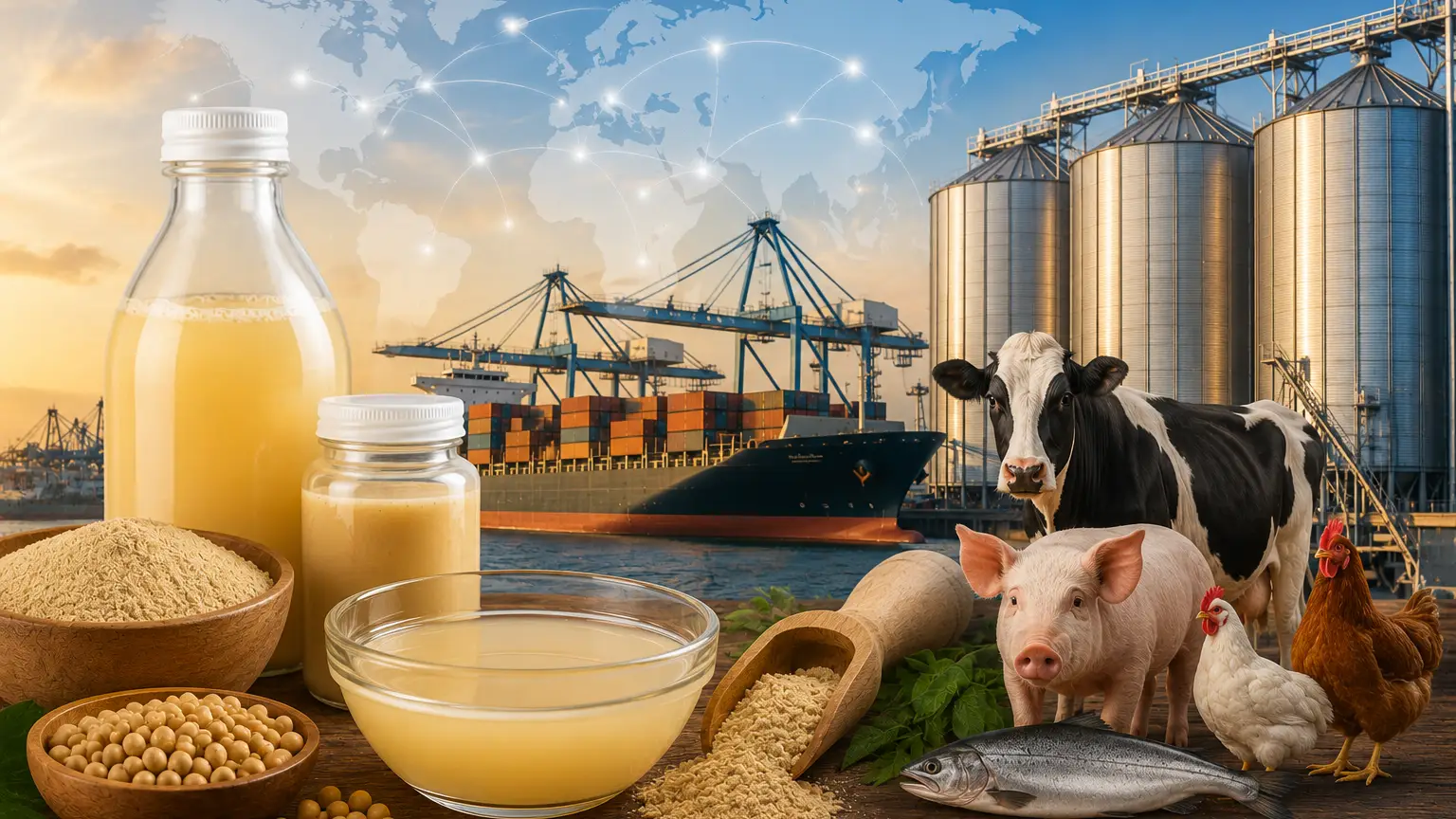
Global Market Overview of Protein Liquid Demand
Industrial Applications in Animal Nutrition and Feed Production
Key Buyers and Procurement Decision Factors
Supply Chain Dynamics and Sourcing Considerations
Regional Market Outlook for Protein Liquid
Future Trends and Strategic B2B Opportunities
The global demand for Protein Liquid is strongly influenced by the rapid expansion of animal feed industries, particularly aquaculture and livestock production. According to the Food and Agriculture Organization (FAO), global protein demand for animal feed continues to rise as population growth drives higher consumption of meat, dairy, and seafood products. Protein Liquid is increasingly positioned as a functional feed ingredient that supports efficient nutrient absorption and feed conversion.
One of the key drivers behind Protein Liquid adoption is the global shift toward alternative protein sources that reduce dependence on fishmeal and soybean meal. Market research from OECD-FAO Agricultural Outlook highlights the increasing pressure on traditional protein supply chains due to environmental and resource constraints. Protein Liquid offers a more sustainable and cost-efficient option for feed manufacturers.
The liquid form allows for better integration into compound feed systems, improving digestibility and reducing waste in production cycles. This makes it attractive for large-scale industrial feed producers seeking consistency and nutritional efficiency.
Protein Liquid plays a critical role in modern feed formulation systems where precision nutrition is required. It supports optimized feed conversion ratios (FCR), which is a key performance metric in livestock and aquaculture production.
As global feed production becomes more industrialized, demand for liquid-based protein solutions continues to expand, especially in regions prioritizing high-efficiency farming systems.
Protein Liquid is widely used in aquaculture feed formulations due to its high digestibility and amino acid profile. According to research published by the Journal of Aquaculture Nutrition, liquid protein sources improve feed intake and growth performance in fish and shrimp farming systems.
Aquaculture producers value Protein Liquid for its ability to reduce feed loss and improve nutrient uptake efficiency. It is often incorporated into early-stage feed for larvae and juvenile fish, where digestibility is critical.
In livestock and poultry feed industries, Protein Liquid serves as a supplemental protein source that enhances growth rates and overall animal health. The European Feed Manufacturers’ Federation (FEFAC) notes increasing interest in liquid protein additives as part of sustainable feed formulation strategies.
It is commonly used in swine and poultry diets to improve protein balance and support metabolic efficiency. The liquid format ensures uniform distribution in feed blends, reducing inconsistencies in nutrient intake.
Beyond traditional livestock applications, Protein Liquid is also gaining traction in premium pet food manufacturing. High-protein liquid ingredients are used to improve palatability and digestibility in pet nutrition products.
This diversification into specialty feed markets is expanding the commercial footprint of Protein Liquid across multiple animal nutrition segments.
The primary buyers of Protein Liquid include animal feed manufacturers, aquaculture companies, livestock integrators, and pet food producers. These buyers operate at industrial scale and require consistent quality supply for continuous production.
According to market analysis from Grand View Research, feed ingredient procurement is increasingly centralized, with large buyers focusing on long-term supplier agreements.
Procurement teams evaluate Protein Liquid based on protein content, amino acid composition, stability, and compatibility with feed systems. Regulatory compliance and traceability are also critical factors in supplier selection.
Buyers prioritize suppliers that can guarantee batch consistency and meet international feed safety standards, particularly in export-oriented industries.
Buyer intent for Protein Liquid is strongly commercial, focusing on bulk purchasing, contract supply, and long-term pricing stability. Procurement teams often compare multiple suppliers to ensure cost efficiency and supply reliability.
Digital B2B marketplaces such as Tradeasia play a key role in helping buyers evaluate specifications and streamline sourcing decisions.
The Protein Liquid supply chain is closely linked to agricultural by-products, fermentation processes, and protein hydrolysate production. According to industry insights from the World Bank agricultural commodities report, feed ingredient supply chains are increasingly integrated with circular economy models.
Manufacturers convert raw protein sources into liquid formulations suitable for industrial feed use.
Protein Liquid requires specialized handling due to its liquid nature, including controlled storage conditions to maintain stability and prevent degradation. This adds complexity to international logistics and shipping operations.
Suppliers must ensure proper packaging and transportation infrastructure to maintain product integrity during long-distance trade.
Reliable sourcing is essential for continuous feed production cycles. Buyers often assess suppliers based on production capacity, certification standards, and export experience.
Strong supplier relationships help mitigate risks related to raw material shortages and price volatility in global protein markets.
Asia-Pacific is the fastest-growing region for Protein Liquid consumption, driven by expanding aquaculture and livestock industries. FAO regional reports highlight strong demand growth in China, Vietnam, and Indonesia due to rising seafood and poultry consumption.
These markets are increasingly adopting liquid protein solutions to improve feed efficiency.
In the Middle East, including the UAE, demand for Protein Liquid is linked to food security initiatives and expansion of controlled-environment agriculture. Import-dependent feed industries rely heavily on global suppliers for protein-based ingredients.
The region’s focus on sustainable food production is accelerating adoption of advanced feed technologies.
In Europe and North America, regulatory pressure on sustainable feed production is driving innovation in alternative protein sources. OECD data shows increased investment in circular bio-based feed ingredients, including liquid protein formulations.
These regions are leading in technological adoption and feed optimization strategies.
The future of Protein Liquid is strongly tied to sustainability trends in global agriculture. According to McKinsey’s global agriculture outlook, alternative protein solutions will play a key role in reducing environmental impact in feed production systems.
Protein Liquid aligns with this shift by improving feed efficiency and reducing reliance on traditional protein sources.
Advancements in fermentation technology and enzymatic hydrolysis are improving the quality and cost efficiency of Protein Liquid production. This is enabling wider adoption across multiple feed industries.
Digital feed formulation tools are also enhancing precision nutrition strategies.
For B2B buyers, Protein Liquid represents a strategic sourcing opportunity that balances cost, efficiency, and sustainability. Suppliers that offer consistent quality and scalable production are well-positioned in the global market.
Platforms like Tradeasia / Chemtradeasia / Tradechem Marketplace provide structured access to verified suppliers, supporting efficient procurement decisions in a competitive global environment.
Sources
We're committed to your privacy. Tradeasia uses the information you provide to us to contact you about our relevant content, products, and services. For more information, check out our privacy policy.


 English
 Indonesian
 简体字
简体字
 العربية
 Español
 Français
 Português
 日本語
日本語
 한국어
한국어
 Tiếng Việt



















