Explore our network of country and industry based websites to access localized information, product offerings, and business services across our group.
Log in to start sending quotation requests for any product.
Don't have an account? Sign Up Here
Home Sodium Dihydrogen Phosphate Applications, Buyers and Sourcing Strategy
Trade Insights | Applications and Buyers | 31 August 2026
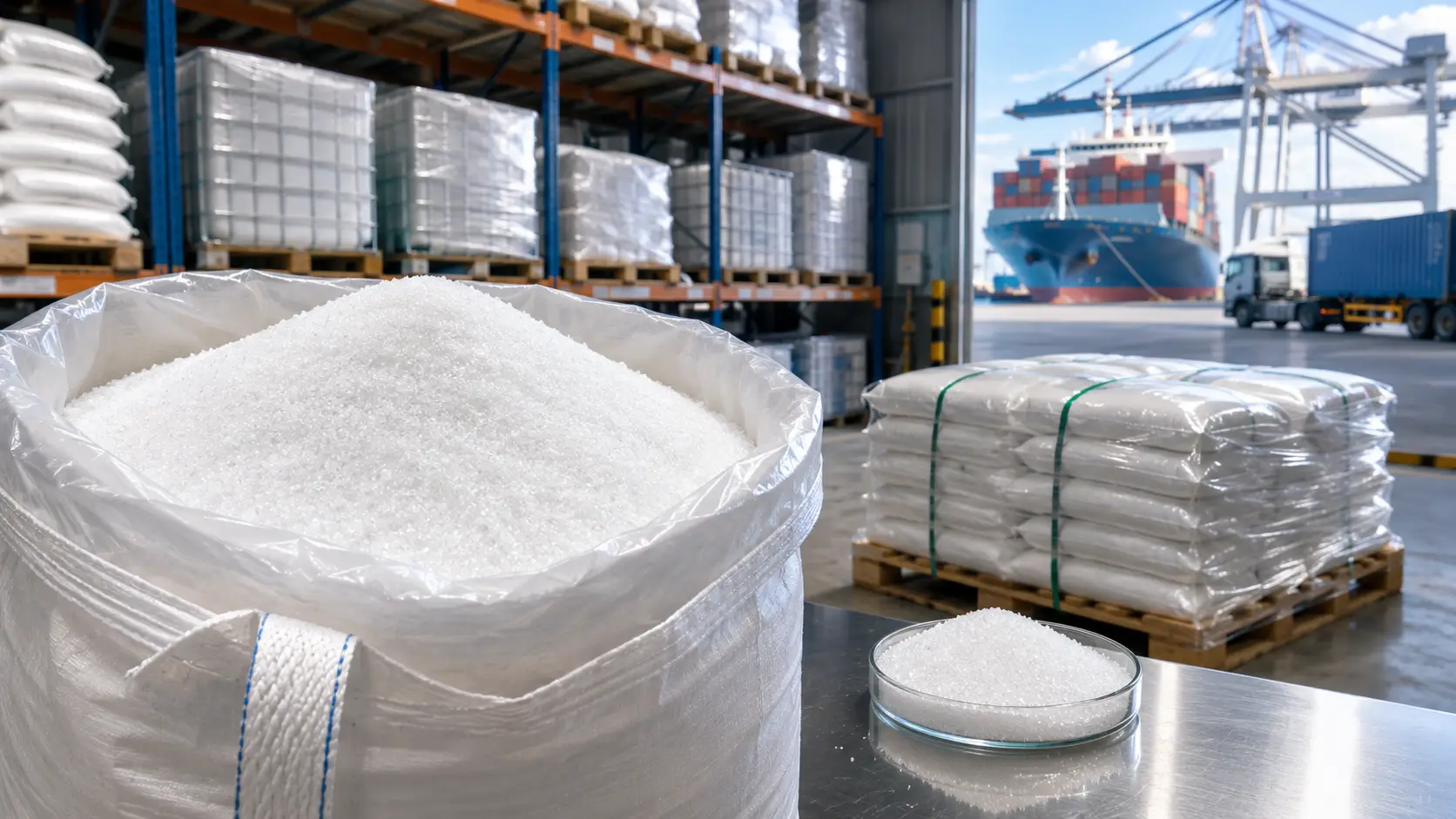
Sodium Dihydrogen Phosphate in B2B Markets
Key Food Additive Applications
Processing and Formulation Functions
Industries and Buyers of SDP
Procurement and Supplier Selection
Quality, Documentation and Supply Considerations
Strategic Outlook for SDP Buyers
Conclusion
Sources
Sodium Dihydrogen Phosphate (SDP), also known as monosodium phosphate or sodium phosphate monobasic, is a sodium phosphate used across food and chemical applications. The substance is identified by CAS 7558-80-7, while different hydrated forms of sodium dihydrogen phosphate have separate chemical identities and specifications.
For B2B buyers, the commercial importance of SDP is closely connected to its functional role rather than simply its chemical identity. Food manufacturers, ingredient distributors and formulation companies evaluate the material according to the intended application, required specification, physical form, regulatory requirements and consistency of supply.
SDP is particularly relevant where manufacturers need a controlled phosphate ingredient for formulation and processing. Its established position within food additive specifications gives buyers a recognized framework for evaluating quality and suitability, while procurement teams must still match the selected grade to the exact end-use requirements.
From a sourcing perspective, SDP therefore belongs in a procurement strategy that balances technical suitability with supply reliability. Buyers looking for a Sodium Dihydrogen Phosphate supplier typically need more than a competitive quotation; they also require dependable documentation, consistent specifications, packaging options and commercially practical delivery arrangements.
Food additives are one of the most commercially relevant application areas for Sodium Dihydrogen Phosphate. The FAO/JECFA database identifies Sodium Dihydrogen Phosphate as a recognized food additive specification, with the Codex GSFA designation INS 339(i).
Its relevance to food manufacturers comes from its ability to perform a functional role within formulated products. Depending on the product and applicable regulations, sodium phosphate ingredients can contribute to processing control, formulation stability and other technical requirements rather than serving simply as a basic mineral ingredient.
This makes SDP relevant to procurement teams serving processed-food manufacturers, ingredient blenders and distributors. Buyers may evaluate it for applications where predictable chemical performance and conformity to food-grade requirements are essential to maintaining consistent production.
For commercial sourcing, the key consideration is therefore application fit. A buyer should identify the required grade, form, specification and regulatory status before comparing suppliers, because the lowest nominal price may not represent the lowest overall procurement cost if documentation or consistency is inadequate.
The U.S. FDA food-substance inventory lists sodium phosphate monobasic under several technical-effect categories, including anticaking or free-flow functionality, antimicrobial applications, drying, emulsifier or emulsifier-salt functions, flavor enhancement and pH-control applications.
For manufacturers, this broad functional profile can make SDP relevant to formulation strategies where ingredient performance needs to be integrated into a controlled production process. The precise function depends on the finished product, formulation, concentration, processing conditions and applicable regulatory requirements.
This functional flexibility also affects buyer behavior. Technical teams may prioritize specification consistency and formulation performance, while procurement teams focus on supplier reliability, commercial terms, packaging and delivery. Successful sourcing therefore requires communication between technical, quality and purchasing departments.
For distributors and B2B marketplaces, positioning SDP around practical applications can make the product more commercially useful. Instead of treating the material only as a commodity phosphate, suppliers can present relevant technical documentation and application information that helps buyers determine whether the product fits their manufacturing process.
Food manufacturers represent a natural buyer segment for Sodium Dihydrogen Phosphate because the ingredient has an established identity within food additive specifications. Buyers may include processed-food producers, ingredient formulators, food ingredient distributors and companies supplying specialized food-processing applications.
Procurement requirements can vary significantly between these buyer groups. A large food producer may prioritize continuous supply and standardized specifications, whereas a distributor may place greater emphasis on packaging flexibility, documentation and regional availability. Formulators, meanwhile, may focus more heavily on technical compatibility.
Other industries may also evaluate sodium phosphate products where controlled chemical functionality is required. However, buyers should avoid assuming that one SDP grade or hydration state is interchangeable across every application. PubChem distinguishes anhydrous sodium dihydrogen phosphate from monohydrate and dihydrate forms, illustrating why product identification matters during procurement.
For B2B suppliers, understanding buyer segmentation creates a stronger commercial proposition. Procurement managers generally want reliable supply and transparent specifications, while technical buyers need confidence that the product corresponds to their formulation requirements. A supplier that addresses both needs can support more efficient purchasing decisions.
When buyers search for a Sodium Dihydrogen Phosphate supplier, supplier evaluation should begin with product identity and specification. CAS number, chemical form, grade, applicable standards, packaging and technical documentation should be clearly aligned with the buyer's intended application.
Quality documentation is particularly important for food-related procurement. Buyers may request product specifications, certificates of analysis, safety documentation and other supporting records required by their internal quality systems or destination-market regulations. FDA records also distinguish sodium phosphate monobasic by CAS 7558-80-7 and provide regulatory references that buyers can use as part of their compliance review.
Commercial terms are another major sourcing factor. Purchase volume, shipment frequency, packaging format, lead time and destination can influence the delivered economics of SDP. A supplier comparison should therefore consider total procurement value rather than evaluating price per unit in isolation.
For international buyers, supplier communication is equally important. Clear specifications at the quotation stage can reduce the risk of receiving a material that differs in hydration state, grade or intended application. This is especially relevant when buyers source through international distributors or B2B chemical marketplaces.
Quality consistency is a central consideration when Sodium Dihydrogen Phosphate is incorporated into repeat manufacturing processes. A buyer needs confidence that successive shipments conform to the agreed specification so that formulation performance does not change unexpectedly.
Different forms of SDP demonstrate why precise product identification matters. PubChem records sodium dihydrogen phosphate monohydrate and dihydrate as distinct chemical forms with different molecular weights, while anhydrous sodium phosphate monobasic is separately identified by the FDA inventory.
Documentation should therefore support the exact commercial product being offered. For B2B transactions, this may include product specifications, batch-related quality information, safety documentation, origin information and application-specific regulatory documentation where required by the buyer.
From a procurement perspective, documentation reduces uncertainty. A supplier capable of providing clear and consistent technical information can make qualification easier for food manufacturers, distributors and industrial users, particularly when purchases involve international shipments or recurring supply contracts.
The commercial opportunity for Sodium Dihydrogen Phosphate is closely connected to the continuing need for functional ingredients in food processing and formulation. Its recognized food-additive identity and range of documented technical effects make it relevant to buyers seeking established phosphate-based ingredients.
For procurement teams, resilience should be built around supplier diversification, specification clarity and dependable logistics. Establishing alternative supply channels can reduce exposure to unexpected production, transportation or availability disruptions while maintaining continuity for manufacturing operations.
Market intelligence should also extend beyond headline pricing. Buyers benefit from evaluating supplier capability, product consistency, documentation quality, packaging suitability, delivery performance and responsiveness alongside the quoted price.
This creates a more strategic approach to SDP sourcing. Instead of treating Sodium Dihydrogen Phosphate as a simple transactional commodity, procurement teams can manage it as a functional production input where quality, compliance and supply continuity directly influence operational performance.
Sodium Dihydrogen Phosphate offers a commercially relevant combination of established food-additive status and functional usefulness in formulation and processing. For buyers, the strongest sourcing decisions begin with understanding the exact application, grade and chemical form required.
The buyer landscape includes food manufacturers, ingredient distributors, formulators and other industrial users seeking dependable phosphate ingredients. Their priorities may differ, but common requirements include consistent specifications, suitable documentation, reliable delivery and commercially competitive supply.
For suppliers, the opportunity is to connect technical product information with practical procurement requirements. Clear product identification, application guidance and transparent commercial communication can help buyers move from initial inquiry to qualified sourcing more efficiently.
As a global B2B chemical marketplace and sourcing partner, Tradeasia International can support businesses seeking structured access to chemical and ingredient supply networks. For procurement teams evaluating Sodium Dihydrogen Phosphate, a supplier relationship built around product suitability, documentation and dependable trade execution can provide a stronger foundation for long-term sourcing.
We're committed to your privacy. Tradeasia uses the information you provide to us to contact you about our relevant content, products, and services. For more information, check out our privacy policy.


 English
 Indonesian
 简体字
简体字
 العربية
 Español
 Français
 Português
 日本語
日本語
 한국어
한국어
 Tiếng Việt



















