Explore our network of country and industry based websites to access localized information, product offerings, and business services across our group.
Log in to start sending quotation requests for any product.
Don't have an account? Sign Up Here
Home Sucralose Sourcing Guide: Applications and Opportunities for Global Buyers
Trade Insights | Applications and Buyers | 17 July 2026
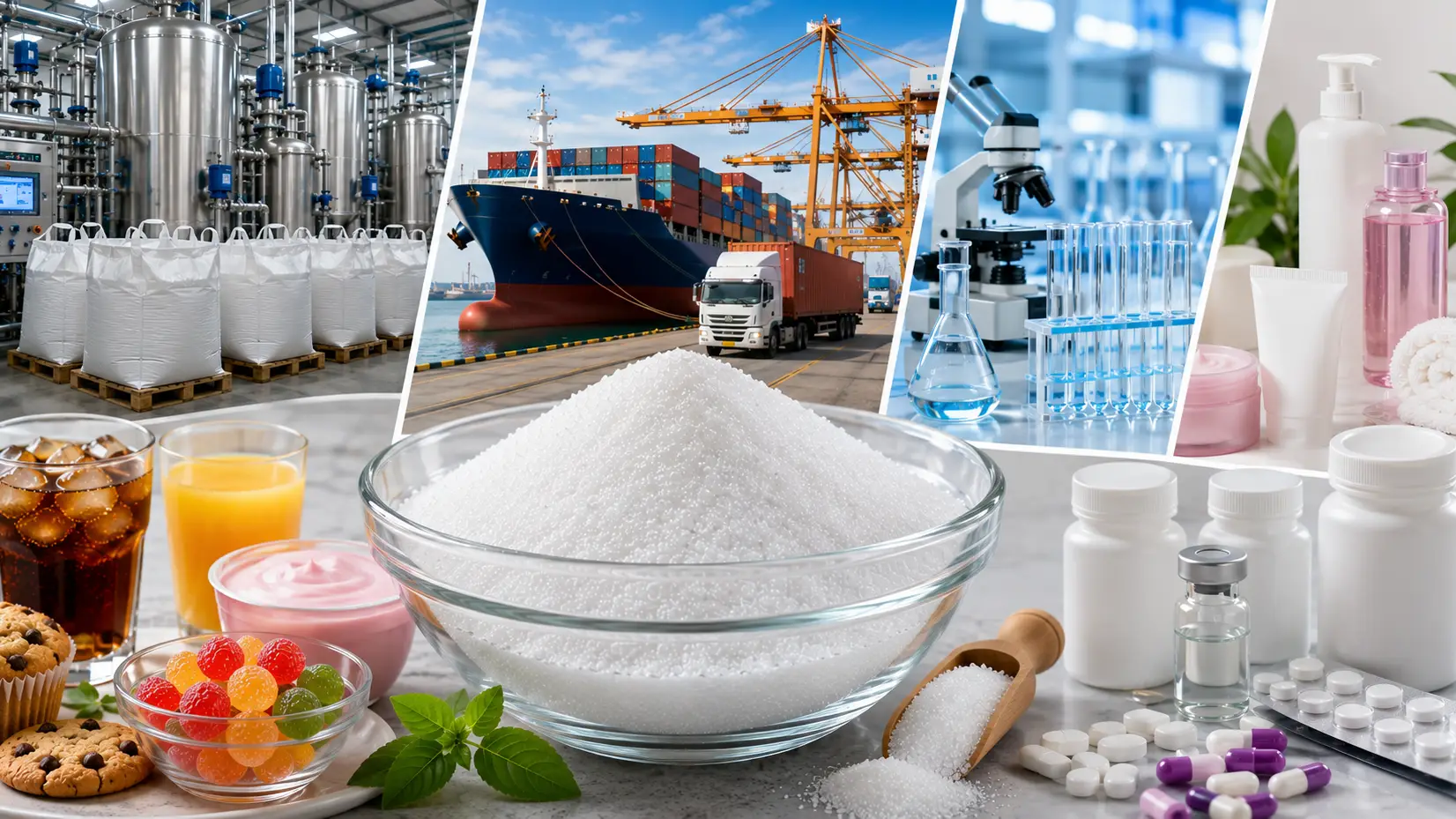
Understanding Sucralose and Its Role in Industrial Manufacturing
Key Industrial Applications Driving Sucralose Demand
Sucralose Market Trends and Global Buyer Opportunities
What B2B Buyers Evaluate When Sourcing Sucralose
Sucralose Supply Chain and Marketplace Sourcing Considerations
Commercial Outlook for Sucralose Buyers and Suppliers
Conclusion: Building Reliable Sucralose Procurement Strategies
Sucralose is a high-intensity sweetener widely used as a sugar substitute in industrial food and beverage production. Produced through the selective chlorination of sucrose molecules, sucralose provides a sweet taste profile while being used at significantly lower quantities compared with traditional sugar. This characteristic makes it valuable for manufacturers developing reduced-sugar and sugar-free formulations.
According to technical information published by the U.S. Food and Drug Administration, sucralose has been reviewed for safety and approved as a food additive for specific applications. Its regulatory acceptance across multiple markets has supported its adoption among food manufacturers, beverage producers, and ingredient formulators.
For industrial buyers, sucralose is not only a functional sweetening ingredient but also a strategic formulation component. Manufacturers select sucralose based on factors such as purity level, consistency, regulatory compliance, supply reliability, and compatibility with other ingredients used in production processes.
The growing demand for lower-calorie products has increased interest in reliable sucralose sourcing channels. Buyers looking for industrial supply options can review the Sucralose product page to understand available product specifications and sourcing information for commercial applications.
Consumer preferences toward reduced sugar intake have influenced manufacturers across multiple industries to reformulate existing products and develop new product categories. Sucralose offers manufacturers a solution for maintaining sweetness while reducing dependence on conventional sugar ingredients.
Based on market observations from the International Food Information Council, consumer interest in healthier food choices and sugar reduction continues to influence innovation strategies within the food and beverage sector. These trends directly affect demand for high-intensity sweeteners such as sucralose.
For procurement teams, understanding sucralose functionality helps determine whether the ingredient is suitable for specific manufacturing requirements. Factors including dosage efficiency, stability, taste profile, and application compatibility are important considerations during supplier evaluation.
As global manufacturers expand product portfolios in beverages, snacks, dairy alternatives, and nutritional products, the need for dependable ingredient supply chains continues to grow. This creates opportunities for chemical marketplaces and distributors that connect qualified suppliers with industrial buyers.
The food and beverage industry represents one of the largest application areas for sucralose. Manufacturers use sucralose in products such as beverages, baked goods, confectionery products, dairy-based products, sauces, and processed foods where sweetness enhancement is required.
Technical guidance from the Food and Agriculture Organization of the United Nations and international food additive standards organizations highlights the importance of evaluating sweeteners according to approved usage levels and application requirements. This regulatory framework supports responsible use of ingredients across global food production.
Beverage manufacturers are among the key buyers of sucralose because the ingredient can support reduced-sugar product development. Soft drinks, flavored beverages, sports nutrition drinks, and functional beverages frequently require sweetening solutions that maintain taste while meeting consumer expectations.
For food ingredient distributors and manufacturers, understanding application-specific demand is essential. Buyers often compare suppliers based on product quality, documentation availability, logistics capability, and the ability to provide consistent industrial quantities.
Beyond conventional food applications, sucralose is also used in specialized nutritional products where manufacturers require sweetness without adding significant sugar content. This includes certain dietary products, powdered nutrition mixes, and functional formulations.
The growth of health-oriented product categories has encouraged manufacturers to explore ingredients that support calorie-conscious positioning. Sucralose can provide formulation flexibility because small quantities can achieve desired sweetness levels.
Nutraceutical companies and contract manufacturers typically evaluate ingredient suppliers based on technical documentation, batch consistency, and regulatory support. These factors influence purchasing decisions because ingredient quality directly affects final product performance.
For B2B suppliers and distributors, serving nutraceutical buyers requires a clear understanding of application requirements. Companies that can provide reliable product information and supply continuity are better positioned to support long-term procurement relationships.
The global demand for sucralose is closely connected to changing consumer preferences, product reformulation initiatives, and the expansion of reduced-sugar product categories. Food and beverage manufacturers increasingly evaluate high-intensity sweeteners as part of their strategies to develop products with improved nutritional positioning while maintaining consumer acceptance.
According to market analysis from the World Health Organization, reducing excessive free sugar consumption has become an important public health objective in many regions. These initiatives have encouraged manufacturers to explore alternative sweetening solutions and optimize sugar content in various product categories.
For industrial buyers, this trend creates continued demand for dependable sucralose suppliers capable of supporting large-scale production requirements. Procurement teams often seek suppliers that can provide consistent quality, appropriate documentation, export capability, and stable supply availability.
The commercial opportunity for sucralose suppliers extends beyond individual markets because food and beverage manufacturers worldwide continue investing in product innovation. As companies expand healthier product lines, sourcing partnerships become an important factor in maintaining production efficiency.
Sucralose has become an important ingredient in international chemical and food ingredient trade networks. Buyers from different regions commonly source from established manufacturing hubs to secure competitive pricing, reliable availability, and technical support.
China has become a significant production base for many food ingredient and specialty chemical products, including high-intensity sweeteners. International buyers typically evaluate suppliers based on manufacturing capability, quality certifications, export experience, and compliance with destination-market requirements.
For importers, distributors, and trading companies, supplier selection involves more than product availability. Buyers must consider logistics performance, regulatory documentation, packaging standards, and communication reliability when establishing international sourcing relationships.
Platforms such as Tradeasia and specialized ingredient marketplaces help connect industrial buyers with suppliers by providing product information, sourcing channels, and opportunities for business-to-business collaboration. These platforms support procurement teams searching for efficient ways to identify suitable ingredient partners.
When purchasing industrial sucralose, buyers typically evaluate product specifications, purity levels, documentation, and supplier reliability. Food and beverage manufacturers require ingredients that meet their internal quality standards and comply with relevant food safety regulations in their operating markets.
Technical references from the European Food Safety Authority provide scientific evaluations of food additives, including sweeteners, that support regulatory decision-making. Such evaluations help manufacturers understand safety considerations and approved applications.
Procurement teams often review information such as product specifications, certificates of analysis, manufacturing standards, and quality management systems before selecting suppliers. These documents help reduce supply risks and ensure compatibility with production requirements.
For companies purchasing sucralose in bulk quantities, supplier transparency is a major consideration. Reliable suppliers should provide clear product information and support buyers throughout the sourcing process.
B2B buyers frequently compare multiple sucralose suppliers before making purchasing decisions. Price remains an important factor, but industrial procurement teams also consider supply stability, technical support, delivery performance, and supplier experience.
Large-scale manufacturers need predictable ingredient availability because production interruptions can affect operational efficiency. As a result, buyers often prefer suppliers with established export capabilities and consistent production processes.
Distributors and traders may also evaluate supplier flexibility, including packaging options, order quantities, and the ability to support different regional market requirements. These considerations influence whether a supplier can become a long-term business partner.
A professional sourcing platform helps buyers simplify supplier discovery by providing structured product information. The sucralose supplier information page allows potential buyers to explore product details when assessing sourcing opportunities.
A stable supply chain is essential for manufacturers that depend on sucralose as part of their production processes. Ingredient shortages, inconsistent quality, or unreliable logistics can create challenges for companies producing food, beverage, and nutritional products.
Industry supply chain analysis from publications covering food manufacturing trends shows that companies increasingly prioritize supplier resilience and diversification. Manufacturers are looking beyond price alone and considering long-term sourcing reliability.
For global buyers, working with experienced chemical distributors and marketplaces can improve access to supplier networks. These platforms provide a structured approach for identifying potential partners and comparing available sourcing options.
Tradeasia’s marketplace positioning supports industrial buyers by connecting procurement teams with suppliers across international markets. This approach helps companies streamline sourcing activities while improving visibility into available ingredient options.
Digital B2B marketplaces have changed how industrial buyers search for chemical and ingredient suppliers. Instead of relying only on traditional supplier networks, procurement teams can access product information, compare options, and initiate commercial discussions through online platforms.
For sucralose buyers, digital sourcing channels provide advantages such as faster supplier discovery and improved access to technical information. This is particularly valuable for companies entering new markets or expanding product categories.
The role of marketplaces continues to grow as manufacturers seek efficient procurement methods. Buyers can use platforms like Tradeasia to evaluate ingredient suppliers while considering quality, availability, and commercial requirements.
By combining product knowledge with supplier accessibility, B2B marketplaces create opportunities for manufacturers, distributors, and traders involved in the global sucralose supply chain.
Sucralose continues to hold commercial importance because it supports manufacturers responding to demand for reduced-sugar and reformulated products. Its ability to provide sweetness at low usage levels makes it a practical ingredient choice for companies developing food and beverage products with different nutritional positioning.
According to scientific evaluations published by the National Center for Biotechnology Information, research into sweeteners and their applications continues to contribute to understanding their role within modern food systems. These scientific assessments support manufacturers when selecting ingredients for product development.
The commercial value of sucralose is influenced by application diversity. Food producers, beverage companies, nutraceutical manufacturers, and ingredient distributors represent important buyer groups because each sector requires reliable access to functional sweetening ingredients.
For suppliers, manufacturers, and trading companies, market opportunities depend on their ability to meet buyer expectations around quality, documentation, logistics, and consistent supply. Companies that provide transparent sourcing information can build stronger relationships with industrial customers.
Industrial buyers increasingly rely on digital sourcing platforms to identify ingredient suppliers and evaluate commercial opportunities. A marketplace approach allows procurement teams to access product information, understand specifications, and connect with potential supply partners more efficiently.
For companies searching for industrial-grade sucralose, having access to structured supplier information reduces uncertainty during the purchasing process. Buyers can evaluate product suitability while considering factors such as application requirements, order volumes, and regional supply capabilities.
Tradeasia and Chemtradeasia support B2B chemical and ingredient sourcing by helping connect buyers with international suppliers. Through marketplace-based sourcing, procurement teams can improve supplier discovery and develop more efficient purchasing strategies.
Companies interested in reviewing commercial product information can explore the Sucralose for industrial applications sourcing page as part of their supplier evaluation process.
The continued development of reduced-sugar foods, beverages, and specialized nutritional products is expected to maintain interest in high-intensity sweeteners such as sucralose. Manufacturers are increasingly focused on ingredients that support product innovation while meeting consumer expectations and regulatory requirements.
Market participants that understand application requirements and sourcing considerations are better positioned to make effective procurement decisions. For buyers, selecting a suitable supplier involves evaluating more than pricing, including quality assurance, technical support, and supply reliability.
As global food ingredient supply chains become more interconnected, international sourcing platforms provide valuable support for companies looking to expand supplier networks. This is particularly important for distributors, manufacturers, and procurement teams operating across multiple regions.
Successful sucralose sourcing depends on cooperation between buyers and suppliers. Manufacturers require dependable ingredient partners, while suppliers need to understand the technical and commercial expectations of different industries.
A reliable sourcing strategy helps companies maintain production continuity and respond to changing market requirements. By evaluating suppliers carefully and using professional marketplace resources, buyers can improve procurement efficiency.
For businesses exploring industrial sucralose sourcing opportunities, the Sucralose supplier information page provides a starting point for reviewing product details and potential supply options.
Sucralose is primarily purchased by industrial organizations rather than individual consumers. The main buyer groups include food and beverage manufacturers, nutritional product companies, ingredient distributors, pharmaceutical-related manufacturers, and chemical trading companies.
Food producers use sucralose as a functional ingredient in formulations where sweetness, calorie reduction, or sugar replacement is required. Beverage manufacturers represent a significant buyer segment because sweeteners are essential components in many reduced-sugar drink categories.
Distributors and trading companies also purchase sucralose in bulk to supply regional manufacturers. These buyers typically focus on supplier reliability, export capability, packaging requirements, and the ability to maintain consistent inventory.
Industrial procurement teams usually assess several factors before selecting a sucralose supplier. Product specifications, purity requirements, regulatory documentation, quality consistency, and delivery capability are among the most important evaluation criteria.
Buyers also compare suppliers because international sourcing involves commercial risks. Differences in production capacity, logistics performance, communication quality, and technical support can influence supplier selection.
A professional product page helps buyers make informed decisions by providing essential sourcing information. The Tradeasia marketplace approach supports this process by organizing product details and helping buyers connect with potential suppliers.
Sucralose represents a commercially important ingredient category because it supports multiple industries responding to changing product development trends. Its applications in food, beverage, and specialized nutrition manufacturing create ongoing demand from industrial buyers.
For suppliers and distributors, the opportunity lies in supporting manufacturers that require dependable access to quality sweetening ingredients. Buyers increasingly prioritize supply transparency, technical information, and reliable partnerships when sourcing internationally.
Tradeasia / Chemtradeasia marketplace positioning helps bridge the gap between global buyers and suppliers by providing a platform where companies can explore sourcing opportunities, evaluate products, and develop business relationships.
We're committed to your privacy. Tradeasia uses the information you provide to us to contact you about our relevant content, products, and services. For more information, check out our privacy policy.


 English
 Indonesian
 简体字
简体字
 العربية
 Español
 Français
 Português
 日本語
日本語
 한국어
한국어
 Tiếng Việt



















