Explore our network of country and industry based websites to access localized information, product offerings, and business services across our group.
Log in to start sending quotation requests for any product.
Don't have an account? Sign Up Here
Home Combination of Calcium Propionate and Natural Ferments Extends Shelf Life of Bread by Four Days, New Study Shows
News | 08 December 2025
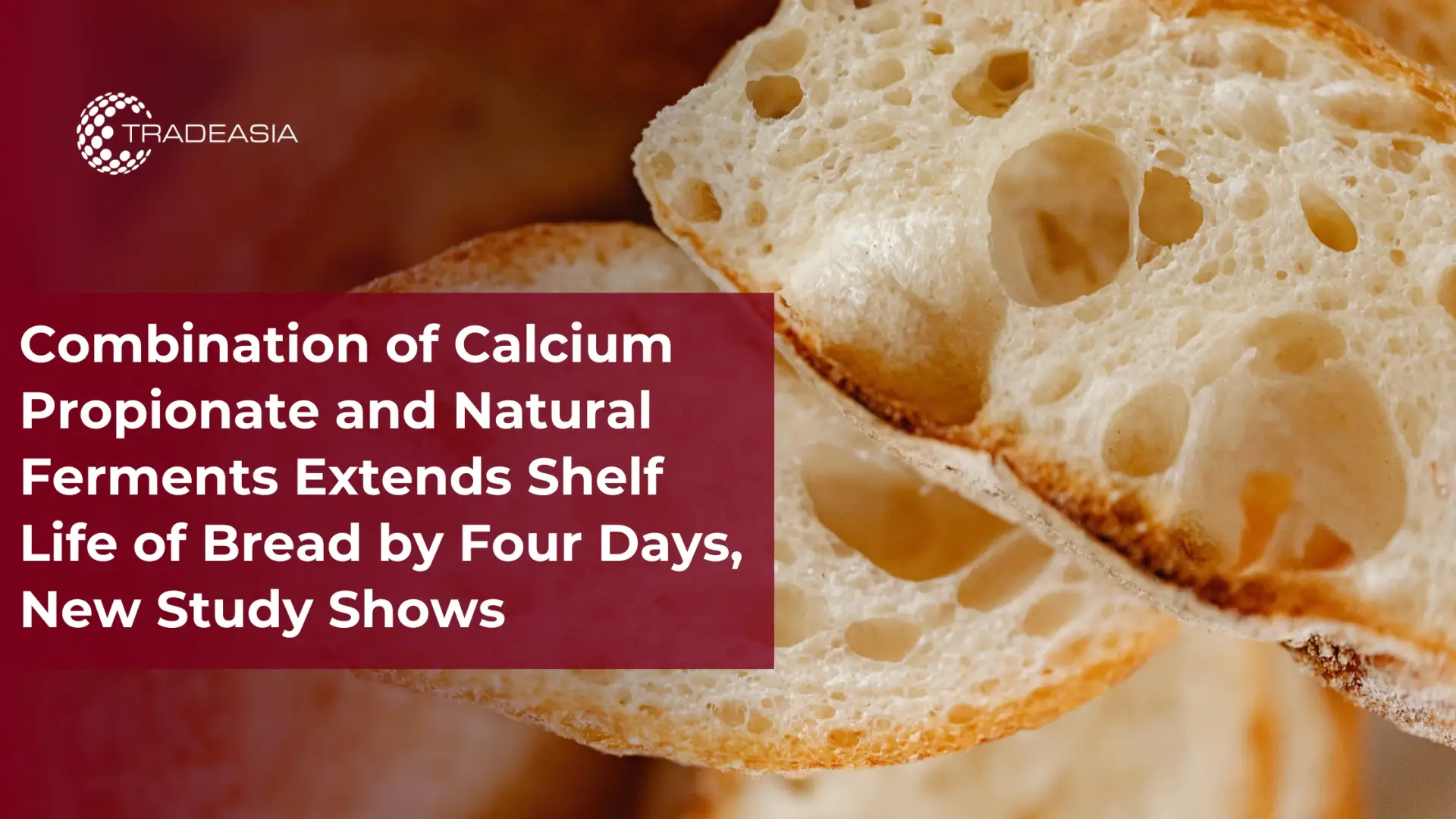
A new bakery science study has identified a promising hybrid preservation method that combines calcium propionate, one of the world’s most widely used antifungal agents, with natural sourdough ferments—resulting in bread that stays fresher up to four additional days without compromising flavor, texture, or label-clean preferences. The findings come at a time when bakeries across Europe, Asia, and North America are urgently seeking solutions to rising food waste and consumer demands for “cleaner,” more natural ingredient lists.
Calcium propionate has long been the standard preservative for controlling mold growth in baked goods. While effective, some consumers increasingly prefer products made with more natural ingredients, leading food technologists to explore blended or reduced-chemical systems.
The newly released findings indicate that when calcium propionate is used at 30–40% lower dosage alongside specific lactobacillus-based ferments, the preservative effect becomes significantly stronger than either component used alone. Researchers observed that the natural acids produced by fermentation lowered the pH of the dough, enhancing the antifungal activity of calcium propionate and inhibiting molds such as Penicillium, Aspergillus, and Rhizopus.
This synergy is particularly promising for manufacturers aiming to reduce chemical additives without sacrificing shelf life or safety.
One of the study’s main advantages lies in the ability to decrease calcium propionate levels while maintaining or even improving bread quality. Lower preservative concentrations help reduce concerns about off-flavors sometimes associated with propionates, particularly in sensitive products such as:
Soft sandwich loaves
Sweet bakery items
Whole-grain breads
Tortillas and flatbreads
By combining the preservative with natural ferments, producers can move closer to clean label formulations, an increasingly important market trend accelerated by post-pandemic consumer behavior shifts. Many bakeries are now marketing products with reduced additives or “fermentation-based preservation” to appeal to health-conscious buyers.
The four-day shelf-life extension represents not only a scientific milestone but also a significant economic opportunity:
Lower product returns due to mold
Longer distribution windows, especially for tropical climates
Reduced food waste at retail shelves
Cost savings from lower preservative usage
For global markets in Southeast Asia, the Middle East, and Sub-Saharan Africa—regions with warm, humidity-driven spoilage issues—the hybrid system could be particularly impactful.
Some European industrial bakeries already report logistical improvements when incorporating fermentation-enhanced preservation systems, allowing them to consolidate delivery routes and reduce chilled storage dependence.
Experts predict this discovery will accelerate the shift toward “dual-action” preservation technologies in commercial bakery operations. Food scientists are also exploring further combinations, such as pairing calcium propionate with plant extracts, enzymes, or next-generation microbial cultures.
With growing pressure to cut food waste, comply with evolving clean-label standards, and maintain efficient supply chains, innovations like these are expected to become mainstream within the next five years.
Sources
We're committed to your privacy. Tradeasia uses the information you provide to us to contact you about our relevant content, products, and services. For more information, check out our privacy policy.


 English
 Indonesian
 简体字
简体字
 العربية
 Español
 Français
 Português
 日本語
日本語
 한국어
한국어
 Tiếng Việt




















