Explore our network of country and industry based websites to access localized information, product offerings, and business services across our group.
Log in to start sending quotation requests for any product.
Don't have an account? Sign Up Here
Home Dried-Fruit Producers Embrace Low-Residue Potassium Metabisulfite for Brighter Color and Longer Shelf Life
News | 09 December 2025
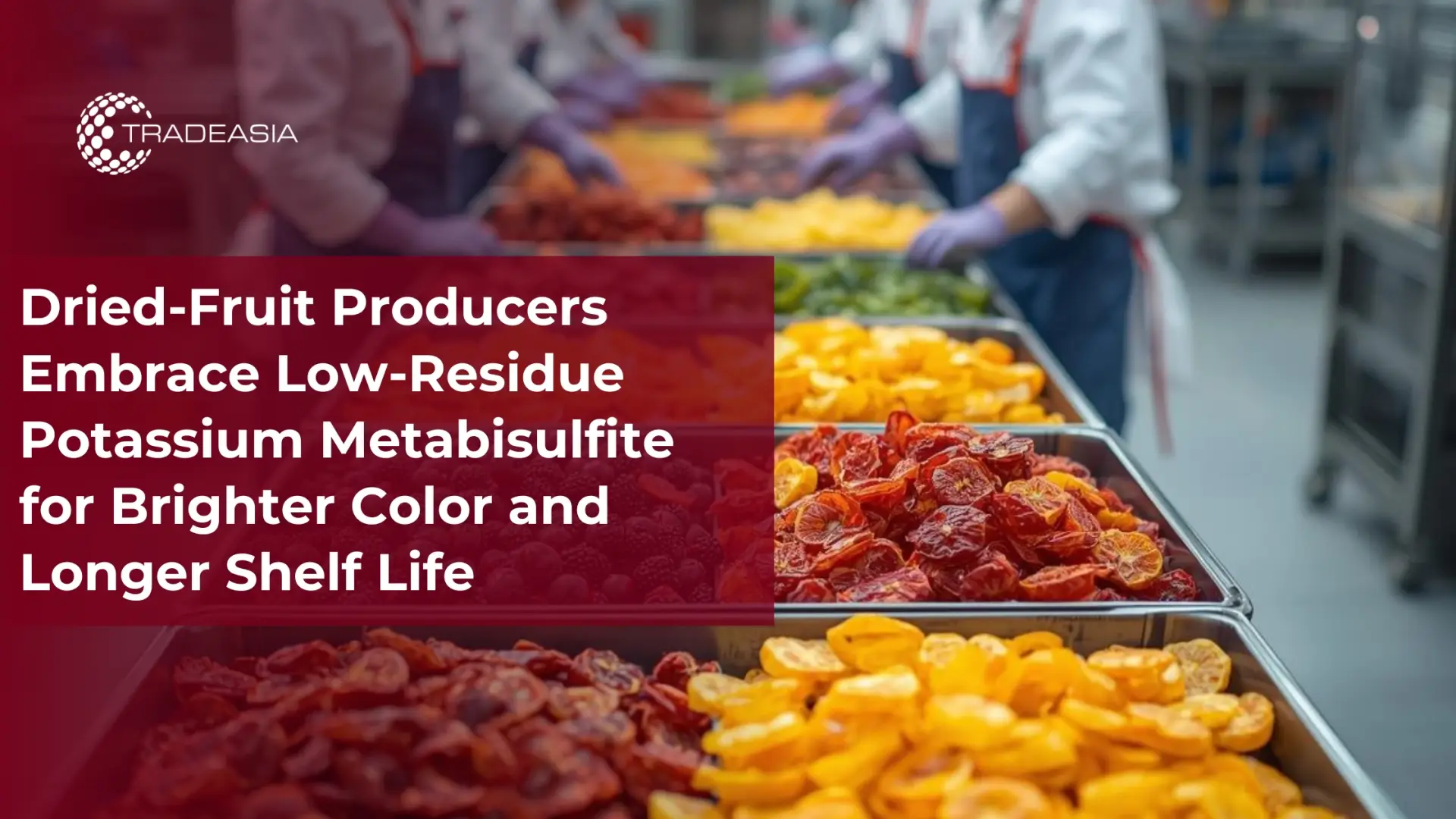
For producers of dried fruit, appearance matters — and nothing turns away a buyer faster than dull, brown, or unevenly colored apricots, raisins, apples, or other dried produce. To meet rising consumer expectations for bright, fresh-looking dried fruit, many producers are now turning to a carefully controlled, “low-residue” treatment using a well-known preservative: potassium metabisulfite (K₂S₂O₅).
During drying or dehydration, fruits often darken due to oxidative reactions and enzymatic browning. This discoloration reduces their visual appeal and perceived quality, which can significantly decrease market value or even render the product unsellable. To prevent such browning, producers may treat fruits with potassium metabisulfite prior to drying or during processing. The compound, when dissolved in water, releases sulfur dioxide (SO₂), which acts both as an antioxidant and as an inhibitor of enzymes responsible for browning. This dual effect helps preserve the natural, bright color of fruits — enhancing their shelf appeal and marketability.
Recent scientific research supports the effectiveness of sulfite-based pretreatment in maintaining color and quality in dried fruits. For example, a study on grapes (destined to become raisins) showed that a combination of blanching, sulfite-based antibrowning treatment, and controlled drying conditions significantly improved color retention and reduced browning. Under optimal conditions, treated grapes exhibited lower browning rate, better preservation of phenolic compounds, and acceptable sulfur-dioxide residue levels — within international safety standards. The treatments also improved antioxidant content (polyphenols and flavonoids) and reduced formation of unwanted compounds associated with overheating or excessive browning.
Importantly, these improvements are not trivial aesthetic gains — they translate into higher-quality dried fruit that retains more of its nutritional and sensory value, making it more desirable for consumers and more competitive on the global market.
Using potassium metabisulfite is not just about maximizing color — producers must carefully control dosage, soaking time, and drying protocol to ensure both safety and compliance. Over-use of sulfites can lead to excessive SO₂ residues, requiring labeling (e.g., “contains sulfites”) and raising concerns for sulfite-sensitive consumers.
By adopting a low-residue approach — using minimal effective concentration, paired with optimized blanching and drying — producers can strike a balance: maintain fruit quality and shelf life, while keeping sulfite levels within acceptable safety standards. This approach also aligns better with global food-safety norms and export requirements.
As dried-fruit markets expand globally, especially for export — where shelf life, appearance, and consumer expectations are high — low-residue sulfite pretreatment is becoming a pragmatic, cost-effective solution. For producers willing to combine good manufacturing practices with transparent labeling and stringent control, potassium metabisulfite offers a reliable way to deliver bright, attractive, shelf-stable products.
Source:
We're committed to your privacy. Tradeasia uses the information you provide to us to contact you about our relevant content, products, and services. For more information, check out our privacy policy.


 English
 Indonesian
 简体字
简体字
 العربية
 Español
 Français
 Português
 日本語
日本語
 한국어
한국어
 Tiếng Việt