Explore our network of country and industry based websites to access localized information, product offerings, and business services across our group.
Log in to start sending quotation requests for any product.
Don't have an account? Sign Up Here
Home Protein Fortification in Staple Foods Drives Incremental Wheat Protein Isolate Demand
Market Insight | 23 December 2025
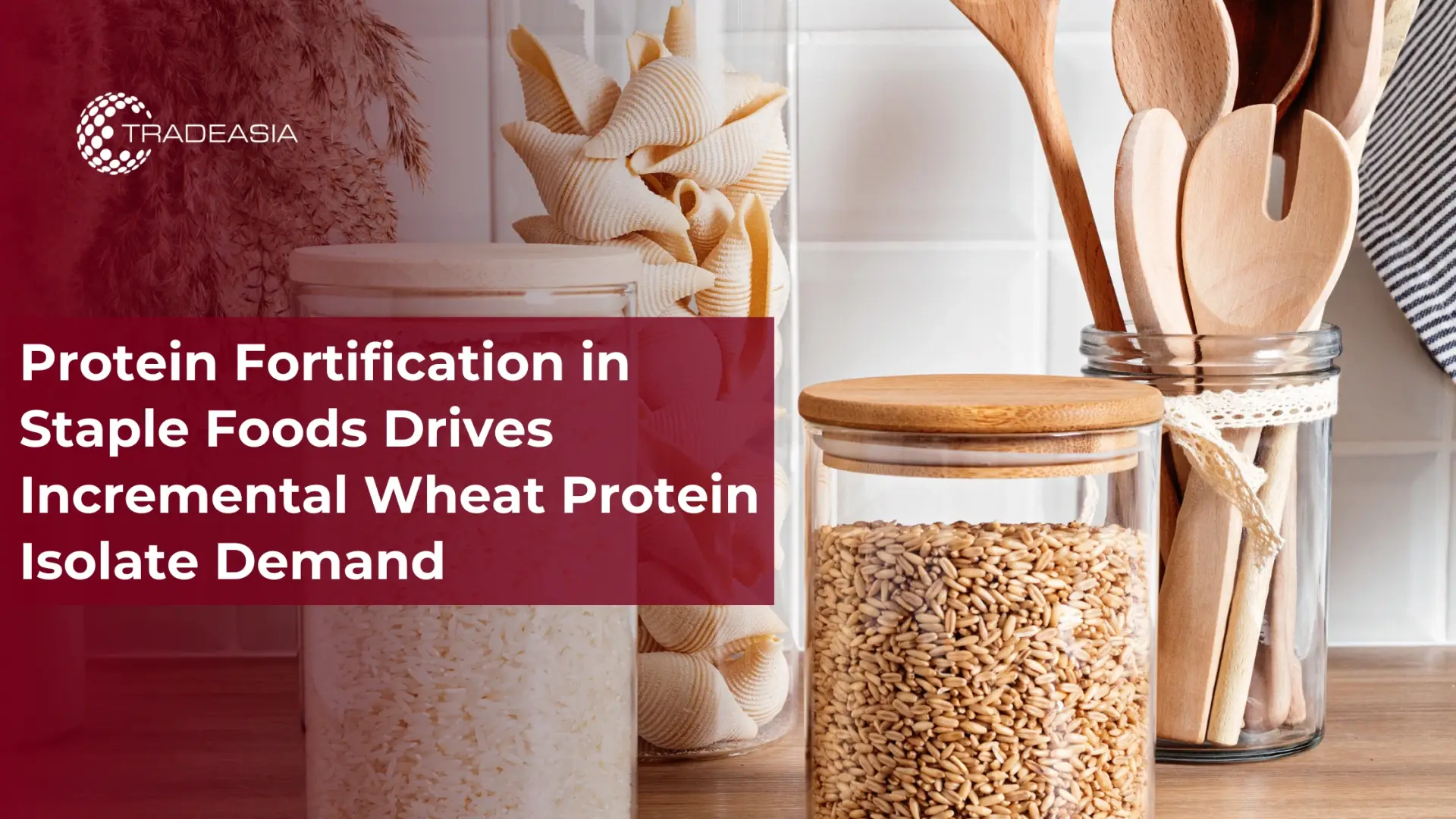
Across developing economies in Asia, the Middle East, and parts of Africa, governments and food manufacturers are increasingly focused on improving the nutritional quality of staple foods. Products such as noodles, pasta, flatbread, and wheat-based snacks form a significant portion of daily calorie intake, making them a strategic vehicle for protein fortification initiatives.
As concerns over protein deficiency, unbalanced diets, and rising lifestyle-related health issues grow, manufacturers are reformulating staple foods to deliver higher nutritional value without altering familiar taste and texture. Wheat Protein Isolate plays a key role in this transition due to its compatibility with wheat-based formulations and established processing behavior.
Wheat Protein Isolate offers strong gluten-forming properties that align naturally with flour-based products. In applications such as instant noodles, dried pasta, and flatbreads, WPI enhances protein content while maintaining dough elasticity, machinability, and structural integrity during high-speed production.
Unlike some alternative plant proteins that can disrupt texture or require significant formulation adjustments, WPI integrates seamlessly into existing recipes. This minimizes reformulation risk and capital investment, making it particularly attractive for large-scale producers serving price-sensitive mass markets.
Rapid urbanization in developing regions is increasing demand for affordable, convenient, and nutritionally improved staple foods. Urban consumers often rely on packaged noodles, breads, and ready-to-cook wheat products as daily meal components, creating consistent volume demand.
For manufacturers, WPI provides a cost-effective solution to upgrade protein content while preserving sensory familiarity. This balance is critical in markets where consumers are open to health improvements but remain highly sensitive to price and product consistency.
Beyond commercial retail channels, protein fortification of staple foods is also supported by public nutrition programs, school feeding initiatives, and institutional catering. In these settings, wheat-based staples are commonly used due to ease of preparation and supply reliability.
Wheat Protein Isolate’s stable supply chain, long shelf life, and predictable performance strengthen its position as a preferred protein ingredient for large-volume procurement and standardized food production.
From a manufacturing perspective, WPI supports processing efficiency by improving dough strength, reducing breakage, and enhancing yield consistency. These attributes are increasingly important as food producers scale up automated lines to meet growing urban demand.
In addition, wheat-based protein ingredients benefit from well-established global wheat production and milling infrastructure, offering relatively stable availability compared to newer or more specialized plant proteins.
Looking toward 2030, demand for Wheat Protein Isolate is expected to grow incrementally, driven by:
Continued fortification of staple wheat-based foods
Expansion of urban populations in developing economies
Government and industry focus on affordable nutrition solutions
Scaling of industrial noodle, pasta, and bakery production
While growth may not be explosive, WPI is positioned as a structurally important ingredient in mass-market food systems, benefiting from its natural fit with staple foods and its balance between nutrition, functionality, and cost.
Sources
https://www.mordorintelligence.com/industry-reports/wheat-protein-market
https://www.statista.com/outlook/cmo/food/staple-foods/worldwide
https://www.foodnavigator.com/Article/Plant-protein-trends-in-staple-foods
We're committed to your privacy. Tradeasia uses the information you provide to us to contact you about our relevant content, products, and services. For more information, check out our privacy policy.


 English
 Indonesian
 简体字
简体字
 العربية
 Español
 Français
 Português
 日本語
日本語
 한국어
한국어
 Tiếng Việt