Explore our network of country and industry based websites to access localized information, product offerings, and business services across our group.
Log in to start sending quotation requests for any product.
Don't have an account? Sign Up Here
Home Global Potassium Metabisulfite Demand Rises with Fruit Processing
Market Insight | 16 December 2025
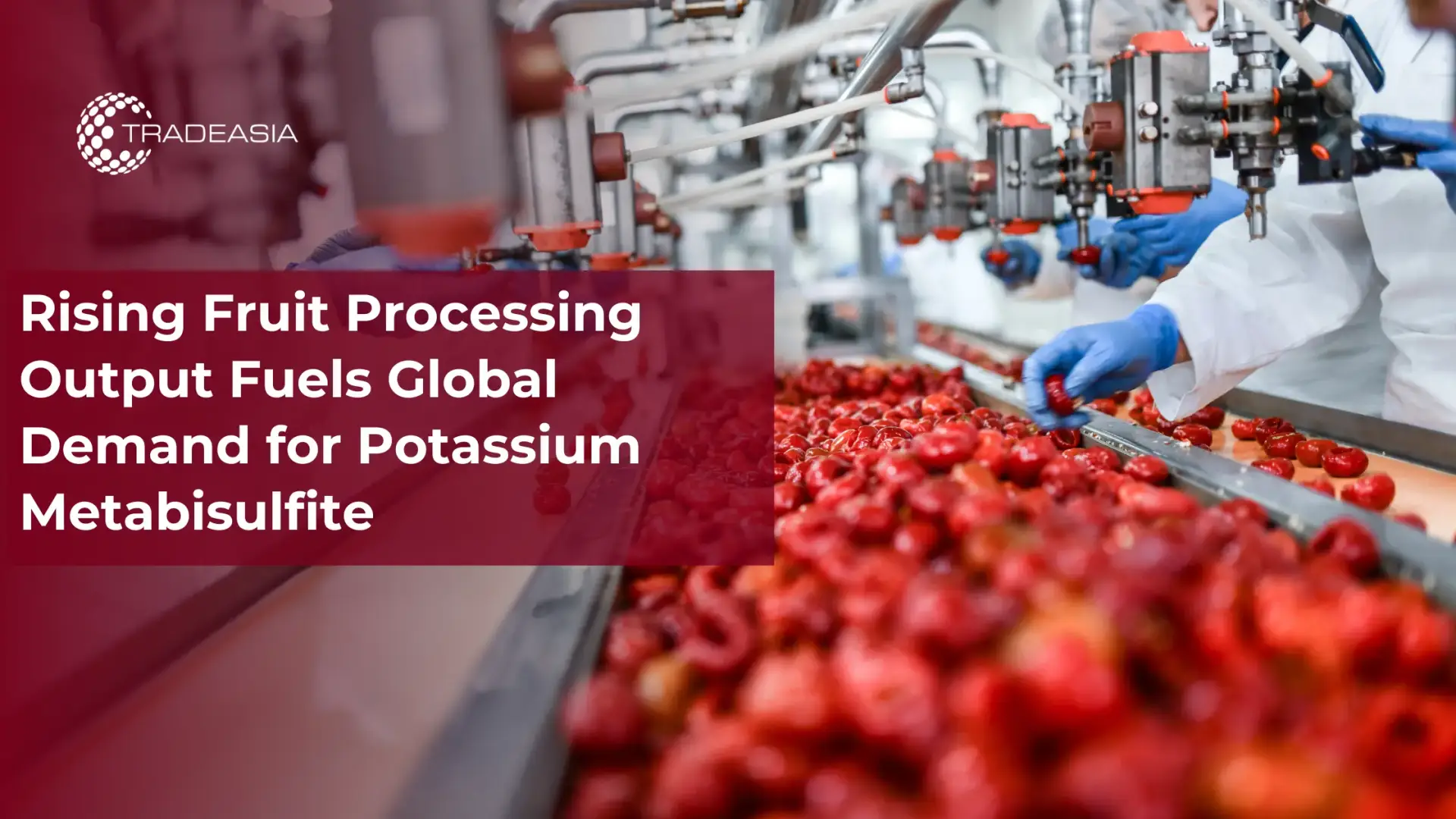
Potassium metabisulfite (KMS) is becoming increasingly indispensable in the global fruit-processing industry. As consumer demand rises for dried fruits, canned fruits, juices, and concentrates, manufacturers are scaling up production—particularly across India, China, Turkey, and Chile, which collectively dominate global fruit processing. This rapid expansion is driving strong growth in the use of KMS, valued for its ability to prevent browning, preserve color, and control microbial activity during processing and storage.
Worldwide consumption of fruit-based products has surged as more consumers embrace convenient, nutritious, and long-shelf-life foods. Demand for dried fruits and fruit snacks is increasing in the US and Europe, while Asia-Pacific is leading growth in fruit juice and concentrate production. This expansion requires reliable preservation solutions that maintain quality throughout long distribution chains.
Potassium metabisulfite provides a cost-effective and highly efficient option for fruit processors seeking oxidation control, color stability, and microbial protection. Its multifunctional abilities make it a core processing aid across multiple fruit categories.
These four countries represent the backbone of global fruit-processing output:
India continues to expand its mango, papaya, and dried fruit production, with processors relying on KMS to stabilize color and maintain product quality in hot climates.
China is the largest global producer of apple juice concentrate and dehydrated fruits. KMS ensures consistent quality as production volumes grow for export markets.
Turkey is a world leader in raisins, apricots, and figs, industries that depend heavily on sulfite-based preservatives for color retention and long-term storage stability.
Chile, a major exporter of berries, grapes, and stone fruits, uses KMS extensively to maintain freshness during processing and shipping.
As these countries scale production facilities, the requirement for potassium metabisulfite rises proportionally, especially in export-oriented segments where preserving quality during long transit times is critical.
One of the main advantages of potassium metabisulfite is its ability to release sulfur dioxide (SO₂), a potent antioxidant that prevents enzymatic browning in fruits. This is especially important for high-sugar fruits such as apples, apricots, grapes, and peaches, which discolor rapidly when exposed to air.
By preventing browning at early processing stages—cutting, peeling, drying, freezing—KMS helps maintain the visual appeal that consumers expect. The demand for bright, visually consistent dried fruits and canned fruits makes KMS a standard ingredient in processing lines worldwide.
Beyond color protection, potassium metabisulfite inhibits yeast, mold, and bacterial growth, improving food safety and extending shelf life. This antimicrobial action is crucial in:
fruit juice concentrates,
fruit pulps and purées,
dried fruit storage,
canned fruit syrups,
intermediate moisture products.
Microbial stability is particularly important for exporters, as products may spend weeks in transit or storage before reaching distribution centers. Using KMS reduces spoilage risk and ensures compliance with global food safety standards.
International markets—especially the EU and North America—have strict sulfite limits and labeling requirements. While regulations for maximum SO₂ levels are carefully enforced, potassium metabisulfite remains the preferred preservative because of its consistency, low cost, and proven performance.
Fruit processors are not moving away from KMS; instead, they are optimizing dosage and integrating stricter quality controls to meet export certifications. As global fruit exports continue to rise, KMS demand will grow in parallel.
With the fruit-processing industry projected to expand steadily through 2030—driven by health trends, snackification, and rising global juice consumption—potassium metabisulfite will continue to play a vital role. Its functional versatility, high efficacy, and alignment with the needs of large-scale processors ensure sustained market growth.
Countries investing in modern fruit-processing infrastructure are expected to be major contributors to KMS demand. The industry’s increasing focus on consistent quality, reduced waste, and long shelf life further cements the importance of KMS in global fruit preservation.
We're committed to your privacy. Tradeasia uses the information you provide to us to contact you about our relevant content, products, and services. For more information, check out our privacy policy.


 English
 Indonesian
 简体字
简体字
 العربية
 Español
 Français
 Português
 日本語
日本語
 한국어
한국어
 Tiếng Việt