Explore our network of country and industry based websites to access localized information, product offerings, and business services across our group.
Log in to start sending quotation requests for any product.
Don't have an account? Sign Up Here
Home Clean-Label Shift: Sodium Cyclamate vs. Stevia in Low-Sugar Trends
Market Insight | 22 December 2025
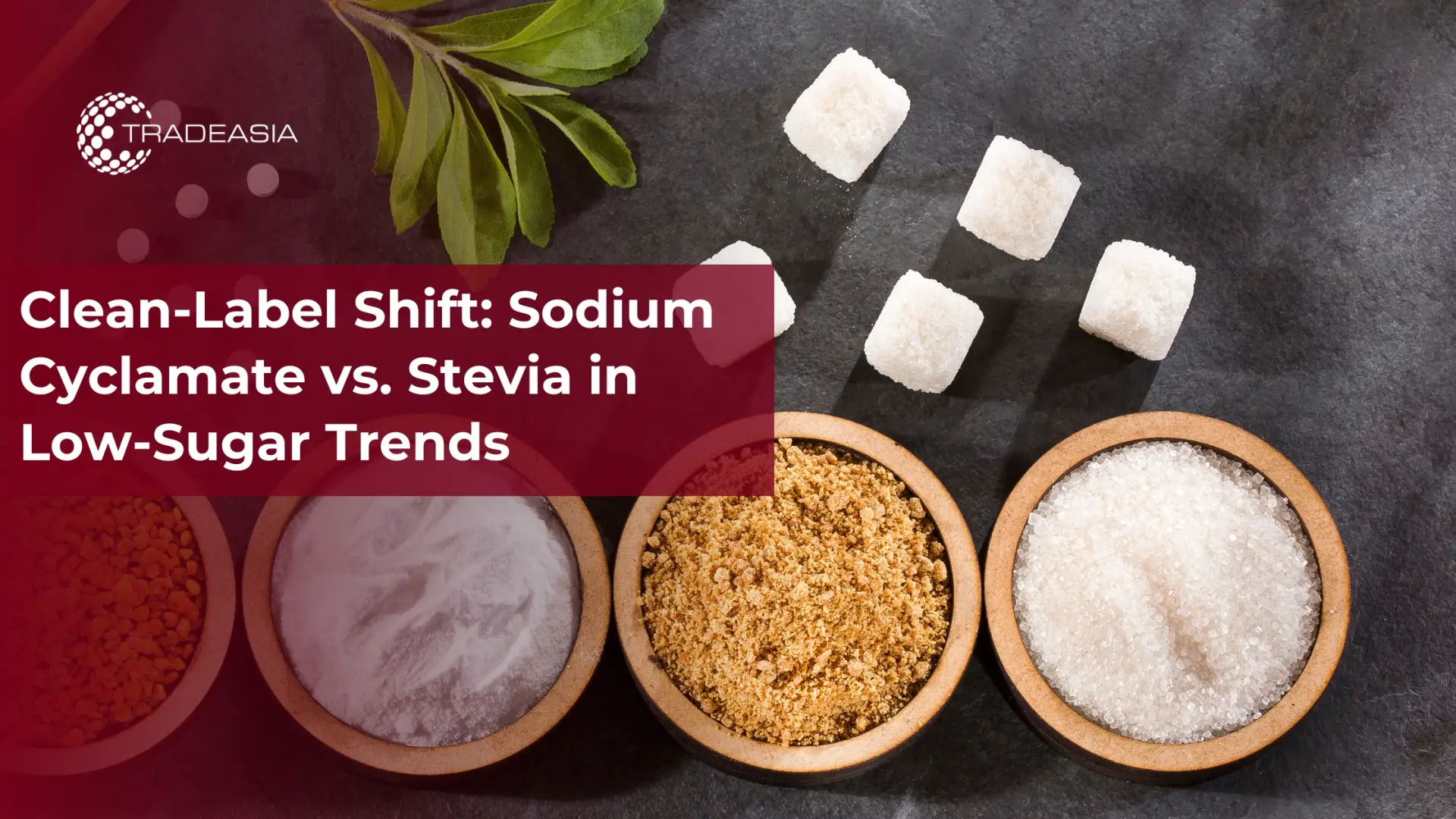
The clean-label movement reshapes the low-sugar food industry, placing sodium cyclamate in direct competition with stevia as manufacturers navigate consumer demands for natural ingredients alongside practical performance needs. While stevia gains traction for its plant-based appeal, sodium cyclamate offers superior taste consistency and cost efficiency, making it a strategic powerhouse for scalable low-sugar innovations in beverages, baked goods, and dairy products.
Clean-Label Consumer Perceptions
Clean-label preferences dominate modern shopping habits, with 70% of consumers worldwide scanning ingredient lists for recognizable, "natural" terms according to 2025 industry surveys. Stevia, derived from the leaves of the Stevia rebaudiana plant, rides this wave through marketing as a "natural zero-calorie sweetener," capturing premium segments like organic sodas and health-focused yogurts where shoppers willingly pay 20-30% more. Its steviol glycosides deliver 200-300 times the sweetness of sugar, aligning perfectly with perceptions of wholesomeness and sustainability.
However, consumer feedback reveals significant drawbacks: up to 40% of taste testers report stevia's characteristic licorice-like bitterness and lingering aftertaste, which undermines repeat purchases and brand loyalty, particularly among families and everyday users. Sodium cyclamate, a synthetic yet calorie-free option (30-50 times sweeter than sucrose), counters this by providing a clean, sugar-mimicking profile with no off-flavors, enabling simpler labels like "sweetener" in approved markets. In regions like Indonesia and India—key hubs for your FMCG operations—cyclamate's neutral taste resonates with price-sensitive consumers who prioritize palatability over "natural" hype, fostering higher satisfaction scores in blind tests.
Comparative Performance in Low-Sugar Products
In low-sugar product categories driving market growth, sodium cyclamate consistently outperforms stevia on key technical metrics essential for commercial success. Beverages such as carbonated drinks, iced teas, and ready-to-drink (RTD) coffees represent 45% of the low-sugar sector; here, cyclamate's full solubility and pH stability (across 2-10) ensure unwavering sweetness through pasteurization and long shelf life (18-24 months), while stevia loses 20-30% potency in acidic environments (pH 3-4), necessitating additives that clutter clean labels.
Baked goods and dairy further highlight the gap: stevia degrades under heat (above 100°C), causing bitterness in cookies, cakes, and baked snacks, whereas cyclamate withstands baking temperatures up to 200°C and integrates seamlessly into yogurts, puddings, and ice creams for creamy, full-sugar mouthfeel at 50-70% sugar reductions. Market data from Asia-Pacific, growing at 18% CAGR through 2025, shows cyclamate-powered products achieving 10-15% lower production costs and superior sensory profiles, dominating mass-market confections, jams, and powdered mixes where stevia's supply inconsistencies inflate expenses by 15-25% year-over-year.
Strategic Advantages for Manufacturers
For FMCG manufacturers like those in your food ingredients network, sodium cyclamate delivers unmatched strategic edges in the clean-label low-sugar arena, starting with economic scalability. Its efficient dosing (0.1-0.3% vs. stevia's variable rates) cuts sweetener costs by 25-40%, freeing budgets for R&D, packaging innovations, or expanded distribution in emerging markets. Formulation speed accelerates by 30%, as cyclamate requires no masking agents, enabling rapid prototyping for trends like plant-based dairy alternatives or diabetic-friendly snacks.
Regulatory flexibility amplifies this: approved in over 100 countries with an ADI of 11 mg/kg body weight, cyclamate sidesteps stevia's purity variability and supports bold claims like "no aftertaste" or "extended freshness." In Indonesia, where clean-label trends blend with affordability, it powers local hits in RTD beverages and candies, boosting margins amid stevia price volatility. Our premium sodium cyclamate, with 99%+ purity and batch consistency, integrates effortlessly into your supply chain, ensuring compliance, stability across -18°C to 40°C storage, and a competitive moat against natural-only competitors. By leveraging cyclamate, manufacturers not only meet clean-label expectations but exceed them with reliable, indulgent products that drive volume sales and loyalty in the $50B+ global low-sugar market.
We're committed to your privacy. Tradeasia uses the information you provide to us to contact you about our relevant content, products, and services. For more information, check out our privacy policy.


 English
 Indonesian
 简体字
简体字
 العربية
 Español
 Français
 Português
 日本語
日本語
 한국어
한국어
 Tiếng Việt