Explore our network of country and industry based websites to access localized information, product offerings, and business services across our group.
Log in to start sending quotation requests for any product.
Don't have an account? Sign Up Here
Home Cross-Contamination Risk in Supply Chains: Quinoa Case Study
Trade Insights | Supply Chain | 17 April 2026
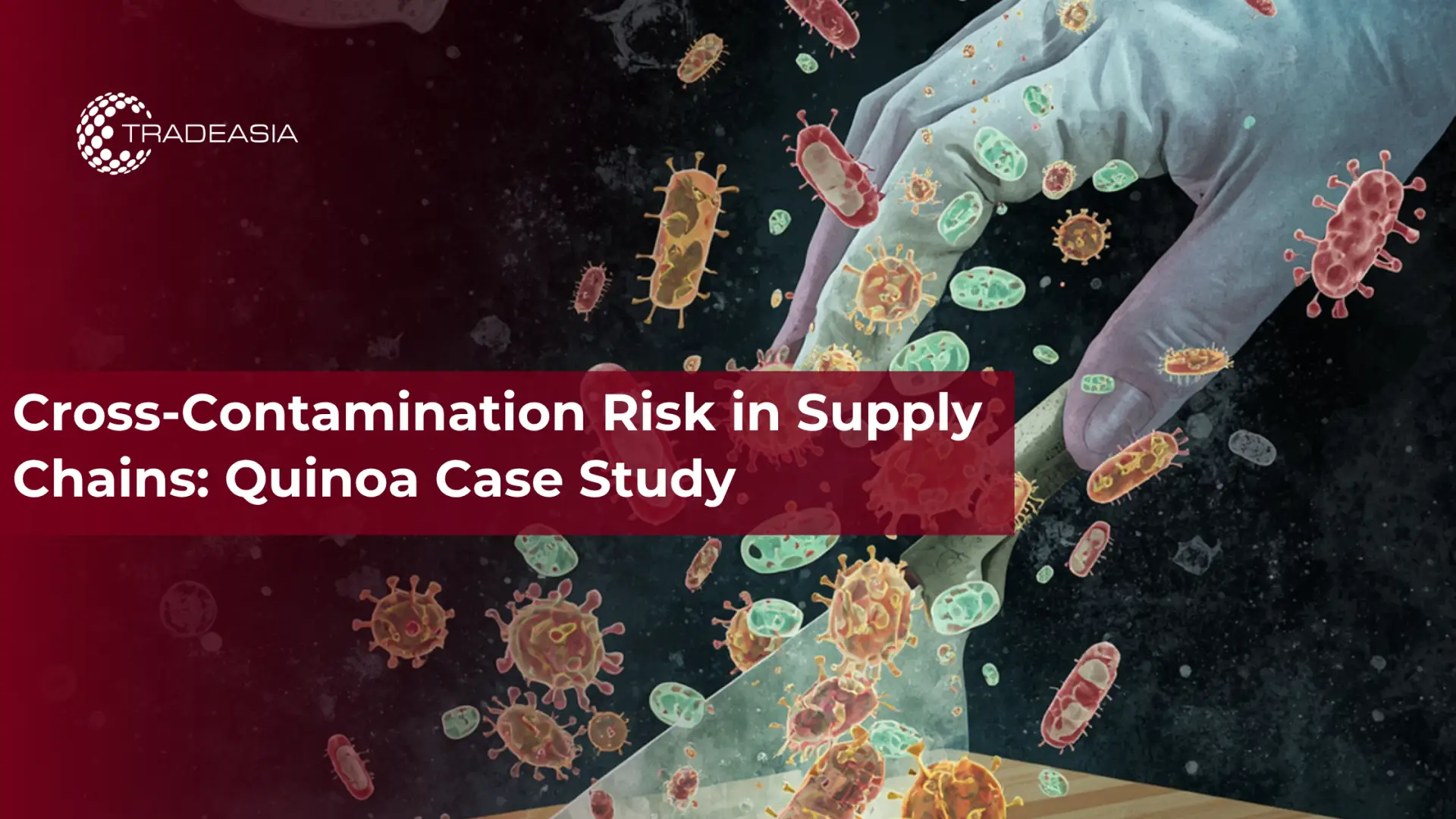
In recent years, quinoa has emerged as one of the most prominent gluten-free grains in the global food system, widely used in retail, foodservice, and industrial applications ranging from ready meals to protein blends. Its naturally gluten-free status positions it as a critical ingredient for consumers with celiac disease, gluten intolerance, or those choosing gluten-free diets for lifestyle reasons. However, while quinoa itself does not contain gluten, ensuring that it remains gluten-free throughout the supply chain is a far more complex challenge than it may initially appear.
The risk does not originate from the crop itself but from the environments in which it is processed, transported, stored, and packaged. In many cases, quinoa shares infrastructure with gluten-containing grains such as wheat, barley, and rye, creating numerous opportunities for cross-contamination. Even trace amounts of gluten—often measured in parts per million—can render a product non-compliant with regulatory standards and unsafe for sensitive consumers. This introduces a level of operational precision and control that goes beyond traditional grain handling practices.
From a commercial standpoint, gluten-free certification is not merely a regulatory requirement but a value driver. Products labeled as gluten-free typically command a price premium and are positioned in higher-value market segments. However, this premium is contingent on trust—both regulatory and consumer. Any breach in gluten-free integrity can lead to product recalls, reputational damage, and loss of market access. As a result, managing cross-contamination risks in quinoa supply chains is not just a quality issue but a strategic imperative.
This article examines the sources of cross-contamination risk in quinoa supply chains, analyzes how these risks manifest across different stages, and explores the operational, regulatory, and commercial implications of maintaining gluten-free integrity in an increasingly complex global food system.
To fully appreciate the risks associated with cross-contamination, it is essential to understand the regulatory and scientific framework surrounding gluten-free products. Most global standards define gluten-free foods as those containing less than 20 parts per million (ppm) of gluten, a threshold considered safe for the majority of individuals with celiac disease. However, achieving and maintaining this threshold across a multi-stage supply chain is technically demanding.
Gluten contamination can occur through direct contact with gluten-containing materials or indirectly through shared equipment, airborne dust, or residue in storage facilities. Unlike visible contaminants, gluten is not easily detectable without specialized testing, making it a “hidden risk” that can persist undetected until final product testing or consumer exposure.
The challenge is further compounded by the sensitivity of target consumers. For individuals with celiac disease, even small amounts of gluten can trigger adverse health reactions, including intestinal damage. This elevates the importance of strict compliance and robust control measures throughout the supply chain.
Regulatory authorities in key markets such as the United States, European Union, and others enforce strict labeling and compliance requirements for gluten-free products. Failure to meet these standards can result in product recalls, legal penalties, and loss of certification, all of which carry significant financial and reputational consequences.
Cross-contamination risks in quinoa supply chains arise from multiple sources, often interconnected and cumulative. One of the most common sources is shared infrastructure, where quinoa is processed or stored in facilities that also handle gluten-containing grains. In such environments, residual gluten can remain on equipment surfaces, in storage bins, or within transport systems, creating a persistent contamination risk.
Transportation is another critical point of exposure. Bulk shipments of grains are often transported using containers, trucks, or railcars that may have previously carried wheat or other gluten-containing commodities. Without thorough cleaning and verification, these transport units can introduce contamination into otherwise clean batches of quinoa.
Storage facilities also present significant risks, particularly when grains are stored in silos or warehouses with inadequate segregation. Airborne dust containing gluten particles can settle on quinoa, especially in facilities with high throughput and limited environmental controls. Additionally, improper handling practices, such as using shared tools or containers, can further increase the likelihood of contamination.
Processing stages, including cleaning, washing, drying, and packaging, are particularly sensitive points. Even minor lapses in sanitation protocols or equipment design can lead to contamination. For example, conveyor belts, sorting machines, and packaging lines may harbor residual gluten if not properly cleaned and validated.
Processing facilities represent one of the most critical control points in maintaining gluten-free integrity. In many regions, quinoa processing is integrated into facilities that handle multiple types of grains, including wheat and barley. While this approach may improve operational efficiency, it significantly increases the risk of cross-contamination.
Cleaning protocols are designed to remove residues between production runs, but their effectiveness depends on the complexity of the equipment and the thoroughness of implementation. Certain equipment, such as screw conveyors or enclosed systems, can be difficult to clean completely, allowing small amounts of gluten to remain. Over time, these residues can accumulate and contaminate subsequent batches.
Validation of cleaning procedures is therefore essential, often requiring regular testing to confirm that gluten levels remain below regulatory thresholds. However, testing itself has limitations, including sampling variability and detection limits, which can create uncertainty in compliance assurance.
Dedicated processing lines for gluten-free products offer a more reliable solution but come with higher capital and operational costs. As a result, many processors must balance the benefits of dedicated infrastructure against the cost implications, making risk management a central consideration in facility design and operation.
Transportation is a frequently overlooked but critical component of gluten-free supply chains. Bulk logistics systems are typically designed for efficiency rather than segregation, meaning that transport units are often reused for different commodities. Without stringent cleaning and documentation protocols, these units can become vectors for contamination.
The challenge is particularly acute in international supply chains, where quinoa may pass through multiple logistics providers and transit points. Each transfer introduces a new potential source of contamination, especially if handling practices are inconsistent or poorly documented.
Containerized shipping offers some advantages in terms of isolation, but it is not immune to risk. Residual dust from previous cargoes, contamination during loading and unloading, and exposure to contaminated environments can all compromise product integrity. Ensuring gluten-free status therefore requires a combination of physical controls, documentation, and supplier verification.
Storage environments play a crucial role in maintaining the integrity of gluten-free products. In facilities where multiple grains are stored, segregation is essential to prevent cross-contact. However, achieving effective segregation can be challenging, particularly in high-volume operations.
Airborne contamination is a significant concern, as dust particles containing gluten can travel and settle on quinoa during storage or handling. This risk is exacerbated in facilities with poor ventilation or inadequate dust control systems. Additionally, shared handling equipment, such as scoops, forklifts, and conveyors, can transfer contaminants between products.
Operational practices also influence contamination risk. Human error, such as incorrect labeling, improper cleaning, or failure to follow protocols, can introduce contamination even in well-designed systems. Training and supervision are therefore critical components of risk management.
Testing is a key tool for verifying gluten-free compliance, but it is not a substitute for robust process control. Laboratory analysis can detect gluten at very low levels, providing assurance that products meet regulatory thresholds. However, testing is inherently reactive, identifying contamination after it has occurred rather than preventing it.
Sampling strategies are therefore critical, as contamination may not be evenly distributed throughout a batch. Multiple samples and statistically robust testing protocols are needed to ensure accurate results. Even then, there is a risk of false negatives if contamination is localized.
Certification programs, such as gluten-free certifications, provide an additional layer of assurance by requiring documented control systems, regular audits, and ongoing testing. These programs help build trust with consumers and regulators but also impose additional requirements on supply chain participants.
The financial impact of cross-contamination in quinoa supply chains can be substantial. Contaminated products may need to be downgraded, reprocessed, or discarded, resulting in direct losses. In addition, companies may face costs related to recalls, regulatory penalties, and legal liabilities.
Beyond immediate financial losses, contamination incidents can damage brand reputation and erode consumer trust. In premium gluten-free markets, where consumers are highly sensitive to quality and safety, such damage can have long-lasting effects.
Conversely, maintaining strict gluten-free integrity can create competitive advantages. Certified gluten-free products can command higher prices and access specialized market segments, making investment in risk management economically justified.
Ensuring gluten-free integrity in quinoa supply chains requires a comprehensive and proactive approach that addresses risks at every stage of the value chain. From processing and transportation to storage and testing, each step presents unique challenges that must be carefully managed.
The complexity of these challenges reflects the broader evolution of food supply chains, where quality attributes such as gluten-free status are as important as traditional factors like price and availability. As demand for gluten-free products continues to grow, the ability to manage cross-contamination risks will become an increasingly critical capability.
Ultimately, success in this area depends on integrating technical controls, operational discipline, and strategic investment. Companies that can effectively navigate these requirements will not only ensure compliance but also unlock value in a rapidly expanding market for gluten-free foods.
For businesses seeking high-quality Quinoa or other grains products and reliable sourcing solutions, visit foodadditivesasia.com for more information about specifications, applications, and supply capabilities. For direct inquiries, product details, or customized requirements, please contact food@chemtradeasia.com. Our team is ready to assist you with professional support and comprehensive solutions tailored to your needs.
We're committed to your privacy. Tradeasia uses the information you provide to us to contact you about our relevant content, products, and services. For more information, check out our privacy policy.


 English
 Indonesian
 简体字
简体字
 العربية
 Español
 Français
 Português
 日本語
日本語
 한국어
한국어
 Tiếng Việt



















