Explore our network of country and industry based websites to access localized information, product offerings, and business services across our group.
Log in to start sending quotation requests for any product.
Don't have an account? Sign Up Here
Home Milk Powder Sourcing, Market Outlook, and Procurement Insights for B2B Buyers
Trade Insights | Supply Chain | 11 June 2026
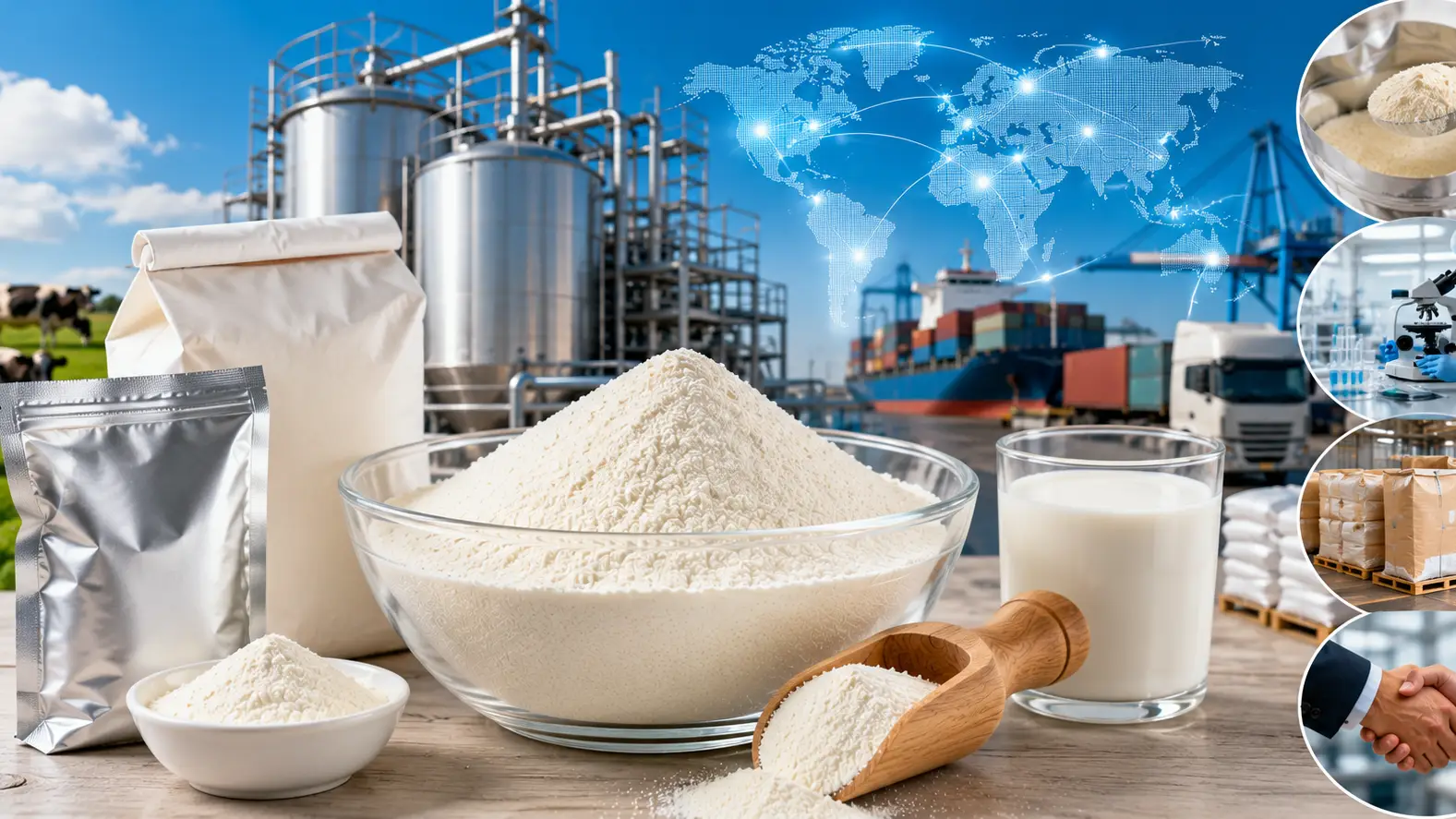
Understanding Milk Powder in the Global Supply Chain
Industrial Applications Driving Milk Powder Demand
Global Market Trends and Growth Outlook
Key Procurement Considerations for B2B Buyers
Buyer Intent and Supplier Evaluation Factors
Commercial Positioning and Strategic Sourcing Opportunities
Conclusion
Milk powder is a dehydrated dairy product manufactured by removing water from liquid milk through specialized drying processes. The resulting ingredient offers extended shelf life, easier transportation, and greater storage efficiency compared with fresh milk, making it a strategic commodity within global food supply chains.
The commercial importance of milk powder has increased significantly as food manufacturers seek stable dairy ingredients that can support consistent production schedules across international markets. According to the Food and Agriculture Organization (FAO), milk powders remain an important segment of global dairy trade and are widely used in both developed and emerging economies.
Milk powder enables manufacturers to access dairy ingredients regardless of local milk production limitations. Its long shelf life and reduced transportation costs make it suitable for export-oriented supply chains and multinational food operations.
According to the OECD-FAO Agricultural Outlook, growing populations, urbanization, and increasing dairy consumption continue to support long-term demand for milk powder products across Asia, the Middle East, and other developing markets.
Milk powder serves as a multifunctional ingredient across numerous food and nutrition industries. Its nutritional profile, protein content, and functional properties allow manufacturers to formulate products with consistent quality and shelf stability.
Demand for dairy-based ingredients has expanded as food producers respond to consumer preferences for convenience foods, nutritional products, and value-added dairy formulations. Market assessments indicate that milk powder continues to play a critical role in industrial food manufacturing.
Food manufacturers commonly use milk powder in bakery products, confectionery, dairy beverages, yogurt production, ice cream manufacturing, nutritional supplements, and infant formula. Whole milk powder and skim milk powder are selected according to specific formulation requirements.
Industry research highlights growing use of milk powder in sports nutrition, fortified foods, and infant nutrition applications, where consistent quality and reliable supply are critical procurement requirements.
The global milk powder market continues to evolve as consumer demand, trade flows, and dairy production patterns shift across regions. Rising urban populations and growing consumption of processed foods are creating sustained demand for dairy ingredients.
Recent market analysis suggests continued expansion of the milk powder industry over the coming decade, supported by growth in infant nutrition, bakery manufacturing, and convenience food sectors. Industry forecasts project steady market expansion through 2034.
Milk powder pricing is influenced by raw milk availability, dairy production volumes, weather conditions, international trade policies, and global demand patterns. Market participants must closely monitor these variables when planning procurement strategies.
According to FAO and Reuters market reporting, dairy markets have experienced periods of both supply constraints and oversupply, affecting milk powder pricing and sourcing decisions. These fluctuations reinforce the importance of diversified supplier networks and long-term procurement planning.
For procurement professionals, sourcing milk powder involves more than comparing prices. Product specifications, quality consistency, regulatory compliance, supplier reliability, and logistics capabilities all influence purchasing decisions.
As global supply chains become more interconnected, buyers increasingly seek suppliers capable of maintaining stable deliveries and meeting international food safety standards. Technical consistency remains a critical requirement for food manufacturers operating large-scale production facilities.
Procurement teams typically evaluate fat content, protein levels, moisture content, microbiological specifications, packaging options, and storage stability before finalizing purchasing agreements. Consistent product performance is particularly important in food processing applications.
Technical observations from dairy manufacturing sectors indicate that variations in milk powder composition can directly affect production outcomes, making supplier consistency a key sourcing criterion for industrial buyers.
Milk powder buyers generally include food manufacturers, dairy processors, infant nutrition producers, bakery companies, confectionery manufacturers, distributors, and ingredient traders. Their purchasing decisions are often driven by supply security, quality assurance, and total procurement cost.
The increasing complexity of global food manufacturing has elevated the role of strategic sourcing. Buyers seek partners that can provide transparent documentation, reliable logistics, and flexible commercial arrangements to support production continuity.
Before selecting a supplier, procurement teams typically assess product quality, supplier certifications, production capacity, shipment reliability, origin options, pricing competitiveness, and market availability. Risk mitigation has become a major purchasing objective.
A comprehensive product page supports sourcing decisions by providing technical information, application guidance, specification details, and supply capabilities that help buyers compare suppliers more effectively and accelerate procurement workflows.
Milk powder remains commercially important because it serves as a foundational ingredient across multiple high-growth food sectors. Demand is influenced by expansion in infant nutrition, bakery manufacturing, dairy processing, and functional food production.
As food companies expand globally, sourcing flexibility becomes increasingly valuable. Buyers require dependable access to milk powder suppliers capable of supporting changing production volumes and regional distribution requirements.
Digital B2B marketplaces create sourcing efficiencies by connecting buyers with qualified suppliers, distributors, and manufacturers across multiple regions. This approach can improve supplier discovery and streamline procurement processes.
For organizations sourcing milk powder internationally, marketplaces such as Tradeasia, Chemtradeasia, and Tradechem Marketplace can help buyers identify supply opportunities, evaluate sourcing options, and access broader supplier networks while supporting procurement transparency and commercial decision-making.
Milk powder continues to be a strategically important dairy ingredient within global food supply chains. Its versatility, shelf stability, and broad application range support demand across food manufacturing, nutrition, bakery, confectionery, and dairy processing sectors.
As market conditions evolve, procurement professionals increasingly prioritize supplier reliability, quality consistency, and supply chain resilience. Organizations that adopt informed sourcing strategies and leverage trusted B2B marketplace networks can strengthen procurement performance and improve long-term supply security in the competitive global dairy ingredients market.
Sources
We're committed to your privacy. Tradeasia uses the information you provide to us to contact you about our relevant content, products, and services. For more information, check out our privacy policy.


 English
 Indonesian
 简体字
简体字
 العربية
 Español
 Français
 Português
 日本語
日本語
 한국어
한국어
 Tiếng Việt



















