Explore our network of country and industry based websites to access localized information, product offerings, and business services across our group.
Log in to start sending quotation requests for any product.
Don't have an account? Sign Up Here
Home Milk Protein Isolate Supply Chain: Technology, Automation & Traceability
Trade Insights | Supply Chain | 20 May 2026
Digitalization in Milk Protein Isolate Sourcing
Automation in Dairy Processing and MPI Yield Efficiency
Cold Chain Logistics and Global Distribution Networks
Blockchain and Traceability in Dairy Ingredients
Quality Assurance and Regulatory Compliance
Demand Forecasting and Supply Chain Resilience
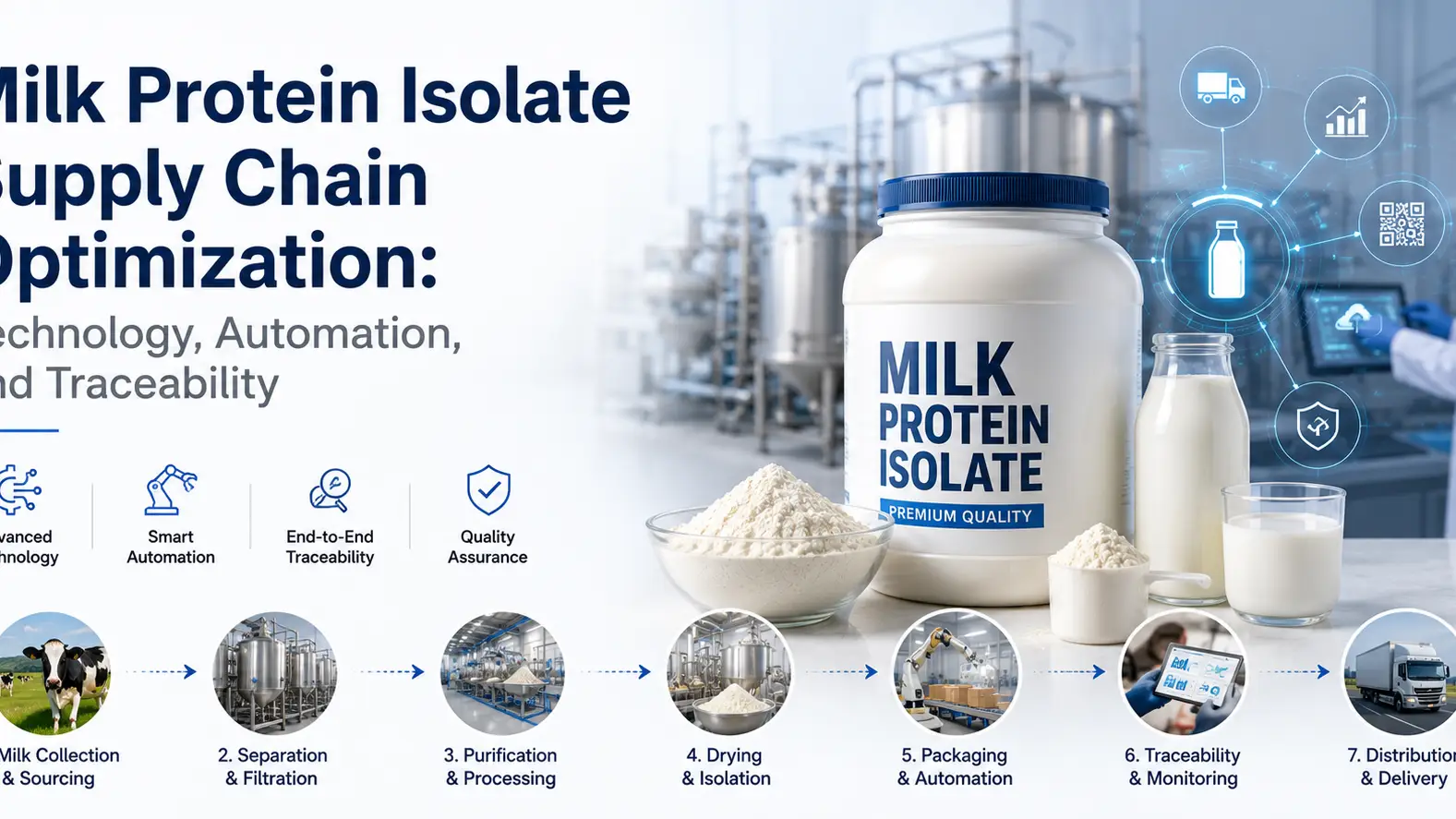
Milk Protein Isolate (MPI) has become a critical ingredient in sports nutrition, clinical foods, and high-protein formulations. As demand rises globally, the supply chain supporting MPI is undergoing significant transformation. What was once a traditional dairy-driven network is now evolving into a digitally enabled, highly optimized ecosystem. From farm-level milk collection to advanced filtration facilities, every stage is being reshaped by automation, data analytics, and traceability systems designed to ensure consistency, safety, and cost efficiency in an increasingly competitive global market.
Digital transformation is reshaping how raw milk is sourced for MPI production. Dairy farms are increasingly equipped with IoT sensors that monitor milk yield, temperature, and composition in real time. This data is transmitted to processors, enabling faster procurement decisions and reducing waste. Digital sourcing platforms also improve supplier coordination, ensuring a more transparent and responsive upstream supply chain that supports consistent protein quality.
Automation plays a central role in improving MPI production efficiency. Modern filtration systems, such as ultrafiltration and microfiltration, are now controlled by automated systems that optimize protein separation. These technologies reduce human error while maximizing yield consistency. As a result, processors can scale production more effectively while maintaining strict nutritional specifications required by food and beverage manufacturers worldwide.
Maintaining protein integrity during transportation is essential in the MPI supply chain. Cold chain logistics ensure that dairy-derived ingredients remain stable from processing plants to end users. Advanced refrigeration systems, real-time temperature tracking, and optimized shipping routes have improved global distribution reliability. This is especially important as MPI is traded across continents for use in premium nutrition products.
Traceability has become a priority in food ingredient supply chains. Blockchain technology is increasingly used to track MPI from farm to final product. Each stage of production is recorded in a secure digital ledger, allowing manufacturers to verify sourcing authenticity and compliance. This level of transparency strengthens consumer trust and helps companies meet stringent food safety regulations in global markets.
MPI supply chains operate under strict regulatory frameworks that vary by region. Quality assurance systems now rely heavily on automated testing and digital documentation. These systems ensure that protein content, microbiological safety, and moisture levels meet international standards. Compliance is not only a legal requirement but also a competitive advantage in securing contracts with global food and nutrition brands.
Advanced analytics tools are improving demand forecasting across the MPI market. By analyzing consumption trends, seasonal demand shifts, and global trade data, companies can better align production with market needs. This reduces overproduction risks and enhances resilience against disruptions such as feed shortages or transportation delays, which have historically impacted dairy supply chains.
The Milk Protein Isolate supply chain is entering a new era defined by intelligence, automation, and transparency. As global demand continues to grow, companies that invest in digital infrastructure and integrated logistics will gain a significant competitive advantage. However, navigating this evolving landscape requires expertise, strategic sourcing, and reliable global partnerships.
In this context, working with established global solution providers such as Tradeasia International can help businesses streamline procurement, ensure consistent quality, and strengthen supply chain resilience across diverse markets. Their expertise in chemical and industrial trading supports companies seeking stability and scalability in complex global supply networks.
We're committed to your privacy. Tradeasia uses the information you provide to us to contact you about our relevant content, products, and services. For more information, check out our privacy policy.


 English
 Indonesian
 简体字
简体字
 العربية
 Español
 Français
 Português
 日本語
日本語
 한국어
한국어
 Tiếng Việt



















