Explore our network of country and industry based websites to access localized information, product offerings, and business services across our group.
Log in to start sending quotation requests for any product.
Don't have an account? Sign Up Here
Home Global Sourcing Guide for Protein Liquid Supply Chains
Trade Insights | Supply Chain | 29 June 2026
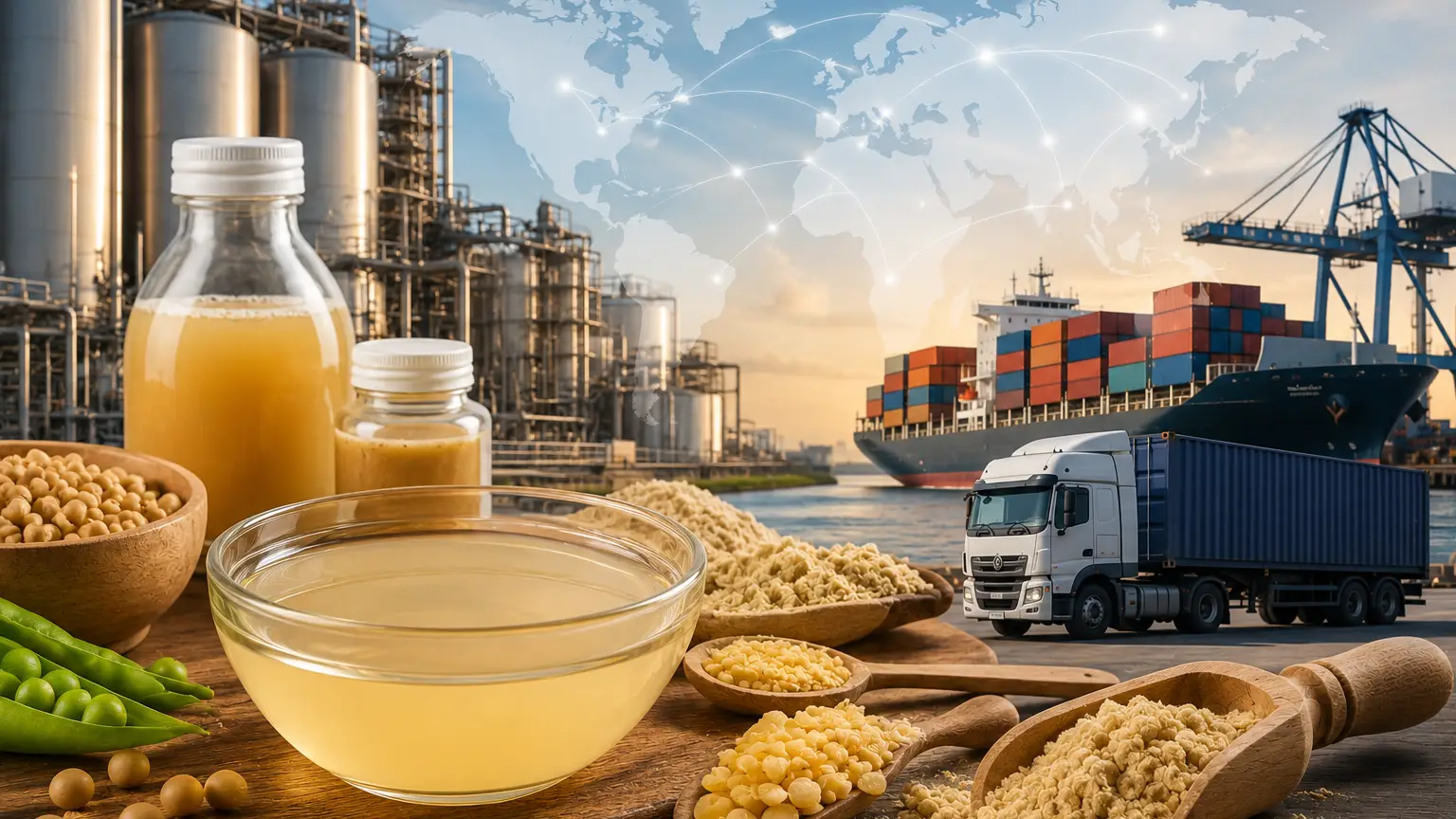
Understanding Protein Liquid in Global Supply Chains
Industrial Applications Across Food, Feed, and Biotechnology
Market Demand and Global Growth Drivers
Key Buyer Segments and Procurement Priorities
Quality Standards and Regulatory Compliance
Strategic Sourcing Through B2B Marketplaces
Protein Liquid refers to a concentrated liquid form of protein derived from plant, animal, or microbial sources, widely used in industrial formulations. According to FAO research on protein hydrolysates and alternative protein systems, liquid protein ingredients are increasingly important in global food and feed security systems due to their digestibility and processing efficiency.
In supply chain terms, Protein Liquid is not a consumer product but a bulk industrial input used by manufacturers. It is typically processed through hydrolysis or extraction methods, resulting in a stable liquid suitable for blending into food, feed, or biochemical formulations.
From a procurement perspective, buyers focus on consistency, amino acid profile, and cost efficiency when sourcing Protein Liquid. These parameters directly affect downstream production quality and operational scalability.
The role of Protein Liquid in supply chains is closely tied to its ability to reduce processing steps for manufacturers. Industry insights from OECD-FAO Agricultural Outlook reports highlight growing reliance on intermediate protein inputs to stabilize global food and feed production systems.
This product is typically transported in bulk tankers or intermediate bulk containers, requiring controlled logistics to maintain stability. Its liquid nature allows for easier integration into continuous production systems compared to dry protein alternatives.
Global distributors and chemical traders act as intermediaries between production facilities and end-use industries. Their ability to ensure consistent availability significantly impacts pricing and supply reliability.
Protein Liquid is widely used in food manufacturing as a functional ingredient to enhance nutritional value and formulation efficiency. Based on Codex Alimentarius guidelines, protein-based ingredients must meet strict safety and compositional standards for use in processed foods.
It is commonly applied in ready-to-drink formulations, nutritional beverages, and food fortification systems. Its solubility and bioavailability make it suitable for high-efficiency production environments.
Food manufacturers prefer liquid protein formats due to reduced processing costs and improved blending consistency compared to powdered alternatives.
In animal nutrition, Protein Liquid plays a critical role in improving feed efficiency and growth performance. Research published by EFSA (European Food Safety Authority) emphasizes the importance of amino acid availability in livestock feed optimization.
It is widely used in aquaculture, poultry, and livestock feed formulations where rapid protein absorption is required. Liquid formats ensure uniform nutrient distribution in feed mixtures.
Feed producers prioritize cost-effective protein inputs that maintain nutritional density while improving digestibility and performance outcomes.
Global demand for protein-based ingredients is increasing due to population growth and changing dietary patterns. According to Grand View Research, the global protein ingredients market is experiencing steady expansion driven by food security and sustainability concerns.
Protein Liquid benefits from this trend as manufacturers seek efficient, scalable protein sources. Its liquid format supports high-volume production systems across multiple industries.
Emerging economies are also contributing to demand growth as industrial food and feed production expands rapidly.
Industrial adoption of Protein Liquid is increasing due to its integration into automated production systems. Market analysis from World Bank food systems studies highlights the importance of efficient protein supply chains in supporting global agriculture and manufacturing.
Manufacturers are increasingly adopting centralized procurement strategies to ensure stable access to protein inputs. This trend is reshaping global trade flows for liquid protein products.
Supply chain resilience has become a key factor influencing purchasing decisions in volatile global markets.
Primary buyers of Protein Liquid include food manufacturers, feed producers, biotech firms, and chemical processors. These organizations evaluate suppliers based on consistency, scalability, and compliance with industrial standards.
Procurement teams often conduct detailed supplier audits to ensure product traceability and quality assurance. Pricing stability and logistics capability are also critical decision factors.
Buyers increasingly prefer long-term supply agreements to mitigate raw material volatility risks.
Distributors and traders play a central role in global Protein Liquid supply chains. According to WTO trade facilitation reports, intermediaries are essential in ensuring cross-border availability of industrial inputs.
They require flexible sourcing arrangements and access to multiple production origins to balance supply risks.
Strong supplier networks enable distributors to respond quickly to fluctuating regional demand.
Protein Liquid used in food and feed industries must comply with strict international safety regulations. Codex Alimentarius and ISO standards provide baseline frameworks for ingredient safety and quality assurance.
Compliance ensures that Protein Liquid meets microbiological, chemical, and nutritional safety requirements for industrial applications.
Manufacturers rely on certified suppliers to reduce regulatory risks in global markets.
Proper handling of Protein Liquid is essential to maintain product stability during transportation and storage. Industry logistics guidelines emphasize temperature control and contamination prevention.
Bulk storage systems such as stainless steel tanks are commonly used to preserve product integrity.
Efficient logistics management reduces losses and ensures consistent supply to downstream industries.
B2B marketplaces play a critical role in connecting buyers with verified suppliers of Protein Liquid. WTO digital trade reports highlight the growing importance of online procurement platforms in industrial sourcing efficiency.
Platforms like Tradeasia enable centralized access to global suppliers, improving transparency and reducing procurement cycles.
This digital transformation is reshaping traditional chemical trade networks into more efficient, data-driven ecosystems.
Strategic sourcing of Protein Liquid focuses on balancing cost, quality, and reliability. Buyers increasingly adopt multi-supplier strategies to ensure continuous supply availability.
Marketplaces support procurement teams by offering product comparisons and supplier verification systems.
This improves decision-making efficiency and reduces supply chain disruption risks.
Buyers of Protein Liquid typically include procurement managers, formulation engineers, and supply chain specialists in food, feed, and biotech industries. These professionals seek reliable bulk supply for continuous production requirements.
Industries using this product include food manufacturing, animal nutrition, biotechnology, and industrial fermentation. Each sector evaluates Protein Liquid based on purity, consistency, and functional performance.
Before purchasing, procurement teams assess supplier certifications, pricing stability, logistics capability, and production scalability. They also compare origin, processing method, and long-term supply reliability.
Buyers compare suppliers to reduce operational risks and ensure uninterrupted production cycles. The Tradeasia marketplace supports these decisions by aggregating verified suppliers and product specifications in one platform.
Protein Liquid holds strong commercial value as a versatile intermediate ingredient in global supply chains. Its applications across food, feed, and biotech industries create sustained industrial demand.
Demand is driven by efficiency needs in large-scale manufacturing and the shift toward high-nutrition, cost-optimized formulations.
Key buyer groups include manufacturers, distributors, and procurement agencies requiring stable bulk sourcing solutions.
Reliable sourcing is essential due to its direct impact on production continuity and product quality assurance. Tradeasia and similar B2B platforms enhance market access and supplier connectivity for global buyers.
Sources
We're committed to your privacy. Tradeasia uses the information you provide to us to contact you about our relevant content, products, and services. For more information, check out our privacy policy.


 English
 Indonesian
 简体字
简体字
 العربية
 Español
 Français
 Português
 日本語
日本語
 한국어
한국어
 Tiếng Việt



















