Explore our network of country and industry based websites to access localized information, product offerings, and business services across our group.
Log in to start sending quotation requests for any product.
Don't have an account? Sign Up Here
Home Sodium Diacetate Supply Chain Trends Reshaping Global Food Manufacturing
Trade Insights | Supply Chain | 18 May 2026
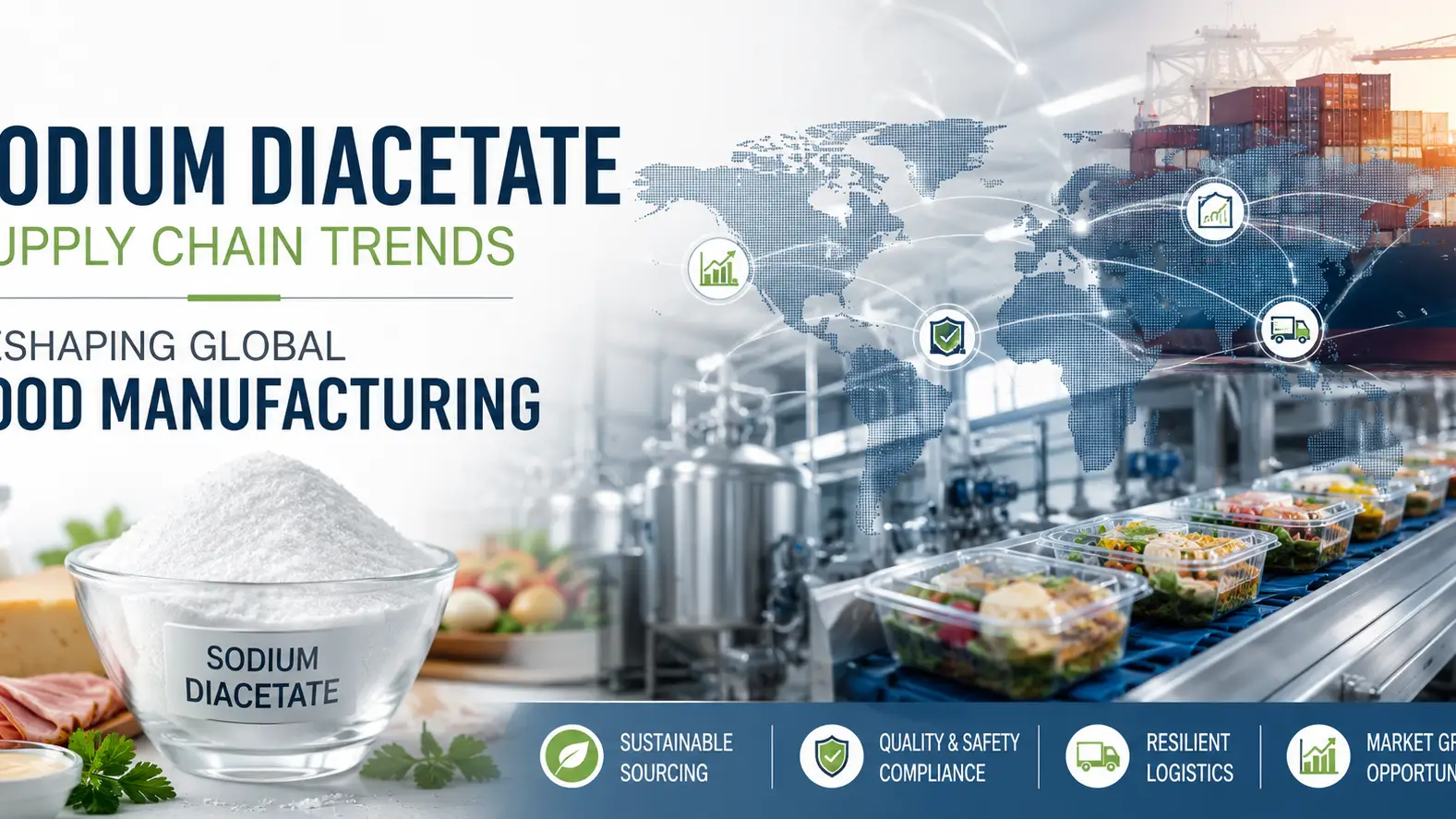
The global food manufacturing sector is undergoing a major transformation as producers seek more resilient, transparent, and cost-efficient ingredient sourcing systems. Among the many additives gaining strategic importance, sodium diacetate has emerged as a critical preservative used in bakery products, processed meats, snacks, sauces, and ready-to-eat meals. Its ability to extend shelf life, improve food safety, and stabilize flavor profiles makes it essential for modern food production. As demand for convenience foods continues to rise worldwide, the sodium diacetate supply chain is evolving to support higher production volumes, stricter regulatory compliance, and faster delivery expectations.
The increasing consumption of processed and ready-to-eat food products has significantly accelerated sodium diacetate demand worldwide. Food manufacturers rely on the additive to improve microbial control and maintain product quality during extended transportation and storage periods. Urbanization, changing lifestyles, and expanding foodservice sectors have amplified the need for preservatives that can support modern distribution models. In particular, meat processors, snack manufacturers, and bakery producers are expanding procurement contracts to ensure stable sodium diacetate availability amid fluctuating raw material costs.
Digital transformation is becoming a defining trend within the sodium diacetate supply ecosystem. Manufacturers and distributors are increasingly adopting inventory tracking systems, predictive analytics, and automated procurement platforms to reduce lead times and improve transparency. Real-time monitoring technologies are helping businesses manage supply risks more effectively, especially during disruptions caused by transportation bottlenecks or raw material shortages. Enhanced logistics coordination is particularly important for food-grade additives, where consistent quality and traceability remain essential for customer trust and regulatory compliance.
Asia-Pacific has emerged as a major hub for sodium diacetate manufacturing due to expanding food processing industries and lower production costs. Countries such as China, India, and Indonesia are witnessing growing investment in food ingredient manufacturing infrastructure. At the same time, North American and European food producers are diversifying sourcing strategies to minimize dependency on single-region suppliers. This shift reflects broader concerns over geopolitical uncertainty, freight volatility, and supply chain resilience. Multi-region sourcing agreements are becoming increasingly common among multinational food manufacturers seeking uninterrupted ingredient supply.
Sustainability expectations are reshaping procurement strategies across the food additive market. Buyers are placing greater emphasis on environmentally responsible production methods, energy-efficient manufacturing, and recyclable packaging solutions. Sodium diacetate suppliers are responding by improving operational efficiency and investing in cleaner production technologies to align with global environmental standards. Companies that can demonstrate sustainable sourcing and reduced carbon footprints are gaining stronger positioning within international food manufacturing networks.
Food safety regulations continue to play a crucial role in shaping sodium diacetate supply chains. Regulatory agencies across major markets require strict adherence to purity, traceability, and labeling standards. As a result, food manufacturers are increasingly partnering with established suppliers capable of maintaining consistent compliance documentation and quality assurance systems. Long-term supplier relationships are becoming more valuable as companies seek dependable sourcing partners that can navigate evolving international regulations while maintaining uninterrupted product availability.
The future sodium diacetate market is expected to be shaped by rising global food consumption, expanding cold-chain infrastructure, and continued demand for shelf-life extension solutions. Growth in cloud kitchens, ready meal production, and international food trade will further strengthen the importance of reliable additive supply chains. Industry participants are also expected to invest more heavily in regional warehousing, supply diversification, and digital procurement systems to improve responsiveness and operational agility. These developments position sodium diacetate as a strategically important ingredient within the broader food manufacturing ecosystem.
As global food manufacturing becomes increasingly interconnected, sodium diacetate supply chains are evolving to meet the demands of efficiency, safety, sustainability, and regulatory compliance. Businesses that prioritize resilient sourcing networks and strategic supplier partnerships will be better positioned to navigate future market uncertainties and maintain operational continuity.
For companies seeking dependable chemical sourcing and international distribution support, Tradeasia International continues to strengthen its role as a trusted global supplier by connecting industries with high-quality chemical solutions, streamlined logistics, and reliable market expertise across multiple regions.
Sources:
We're committed to your privacy. Tradeasia uses the information you provide to us to contact you about our relevant content, products, and services. For more information, check out our privacy policy.


 English
 Indonesian
 简体字
简体字
 العربية
 Español
 Français
 Português
 日本語
日本語
 한국어
한국어
 Tiếng Việt




















