Explore our network of country and industry based websites to access localized information, product offerings, and business services across our group.
Log in to start sending quotation requests for any product.
Don't have an account? Sign Up Here
Home Sodium Hydrogen Phosphate: B2B Procurement and Supply Outlook
Trade Insights | Supply Chain | 21 August 2026
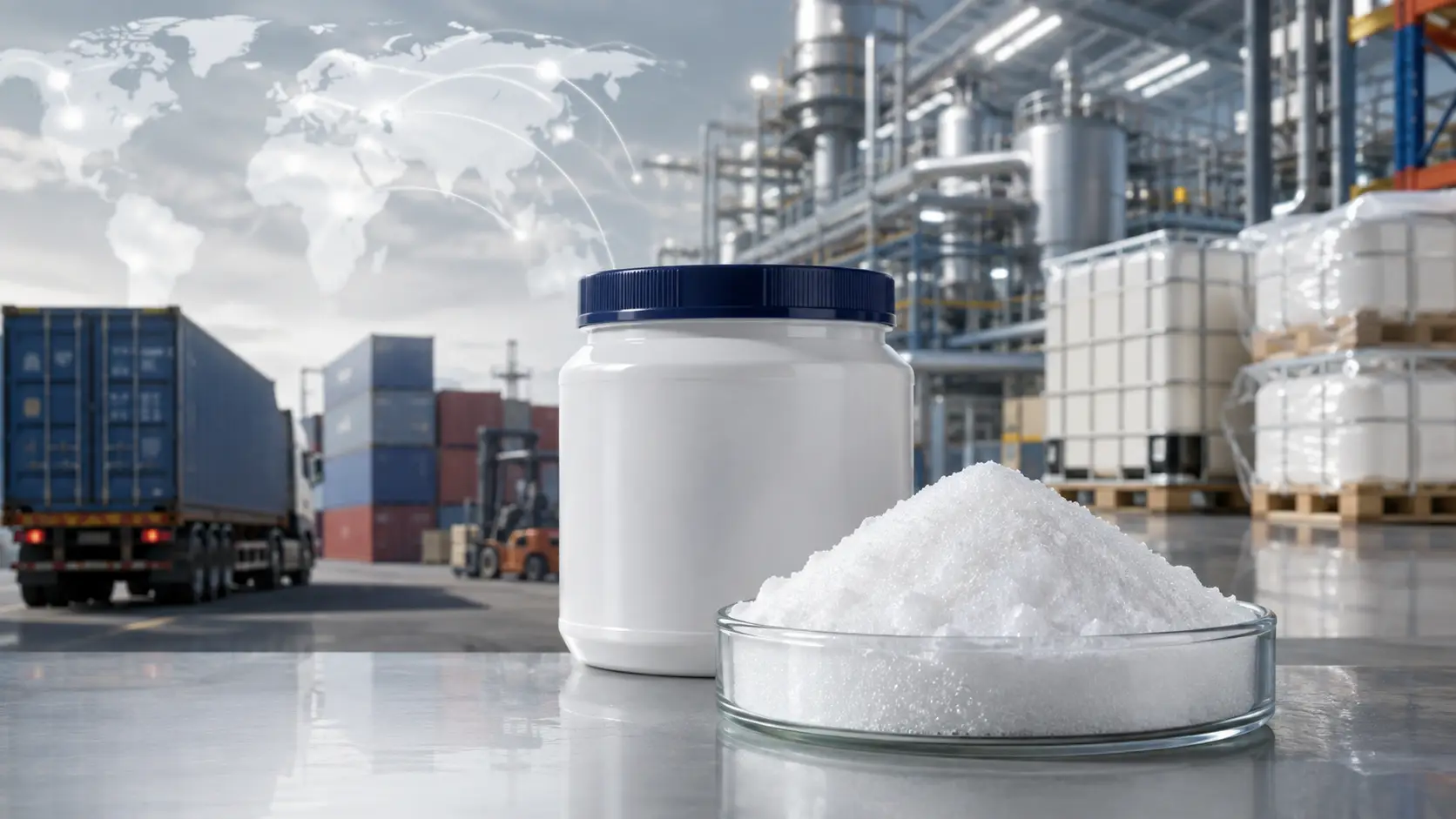
Sodium Hydrogen Phosphate in the Global Supply Chain
Product Grades and Quality Requirements
Key Industrial and Food Applications
Buyer Requirements and Procurement Priorities
Supplier Selection and Sourcing Strategy
Logistics, Storage, and Supply Continuity
Regulatory and Documentation Considerations
Conclusion: Building a Reliable Sodium Hydrogen Phosphate Supply Chain
Sources
Sodium hydrogen phosphate, commonly known as disodium hydrogen phosphate or sodium phosphate dibasic, is an inorganic phosphate salt used across food, pharmaceutical, water-treatment, laboratory, and industrial applications. The commonly traded anhydrous form has the chemical formula Na₂HPO₄ and CAS number 7558-79-4. JECFA identifies disodium hydrogen phosphate under INS 339(ii), distinguishing it from sodium dihydrogen phosphate, INS 339(i).
From a B2B perspective, sodium hydrogen phosphate is a functional ingredient rather than simply a commodity chemical. Its buffering, emulsifying, sequestration, stabilization, and pH-control characteristics make specification consistency important to manufacturers. Commercial supply therefore connects producers, exporters, distributors, formulators, food processors, pharmaceutical manufacturers, laboratories, and industrial users.
The supply chain can involve bulk chemical production, regional distribution warehouses, repacking facilities, and specialized ingredient distributors. Buyers increasingly evaluate not only the quoted product price but also specification consistency, documentation, packaging, lead time, origin, and shipment reliability. These factors can materially affect the delivered cost and production continuity of downstream manufacturers.
For procurement teams, the most effective sourcing strategy begins by defining the exact chemical identity, hydration state, grade, application, required specification, packaging format, destination, and expected annual volume. This reduces the risk of comparing technically different products under the same general name and helps suppliers provide commercially meaningful quotations.
Sodium hydrogen phosphate is available in different forms and grades, including anhydrous and hydrated materials. Commercial technical documentation can identify parameters such as assay, appearance, moisture or loss on drying, insoluble matter, pH, and trace impurities. For example, an ACS-grade anhydrous specification from Thermo Scientific lists an assay range of 98.0–102.0% for one product and separately identifies parameters such as pH and insoluble material.
Food-grade procurement requires closer attention to applicable food standards and permitted uses. A food-grade specification for disodium hydrogen phosphate dihydrate identifies functions including emulsification, texturization, and buffering and specifies a 50 kg standard packaging format. The appropriate grade should therefore be selected according to the destination market and intended application rather than simply by chemical name.
B2B buyers commonly require a technical data sheet, safety data sheet, certificate of analysis, product specification, batch information, and applicable regulatory or conformity documentation. Documentation should correspond to the exact grade and manufacturing batch being supplied. This is particularly important when the material is incorporated into regulated food, pharmaceutical, or nutritional products.
Quality evaluation should extend beyond headline assay. Procurement and technical teams can compare appearance, moisture, solubility, pH, impurity limits, heavy metals, packaging integrity, and batch-to-batch consistency against their internal specification. A supplier able to provide clear and traceable documentation can reduce qualification time and improve confidence in long-term sourcing.
Sodium hydrogen phosphate has an established role in food systems where buffering, emulsification, sequestration, and stabilization are required. Codex identifies disodium hydrogen phosphate as INS 339(ii), while the FDA's substance inventory identifies sodium phosphate dibasic under CAS 7558-79-4 and associated regulatory references.
Commercial applications can include selected dairy and processed-food formulations where controlled pH and functional stability are important. Supplier literature identifies uses in dairy products, processed foods, beverages, and nutritional applications. For manufacturers, the suitability of a specific grade depends on the formulation, permitted use level, local regulation, and required technical performance.
Beyond food processing, sodium hydrogen phosphate is used in pharmaceutical and laboratory environments as a buffering component and formulation ingredient. Laboratory-grade products can carry substantially different specifications from food-grade materials, including tighter limits for selected impurities and analytical suitability. Buyers should therefore avoid treating all sodium hydrogen phosphate grades as interchangeable.
Sodium hydrogen phosphate also has applications in water-treatment systems and selected industrial processes. Commercial references describe its use as a scale inhibitor and buffer, as well as applications involving detergents, cleaning agents, textiles, leather, fertilizers, and electroplating. This diversity gives the product a broad industrial demand base but also makes grade and specification matching essential.
A buyer's first priority is confirming whether the requirement is for anhydrous sodium hydrogen phosphate or a hydrated form. The molecular weight, water content, handling characteristics, and specification can differ between forms. Clear product identification prevents purchasing teams from receiving a chemically related but technically unsuitable phosphate.
Procurement requirements vary from laboratory quantities to production-scale shipments. Food and industrial manufacturers may prioritize palletized bags or bulk packaging, while specialty users can require smaller controlled packs. Packaging should protect the material against moisture exposure and maintain product integrity throughout warehousing and international transportation.
A competitive quotation should be assessed using total delivered cost rather than unit price alone. Freight, insurance, duties, port charges, packaging, documentation, financing, lead time, and potential storage requirements can influence the final procurement economics. For international buyers, comparing landed-cost scenarios can provide a more realistic basis for supplier selection.
For recurring industrial consumption, continuity can be more important than obtaining the lowest initial quotation. Buyers should assess production capacity, inventory availability, historical lead times, alternate supply options, and communication responsiveness. A structured supplier relationship can help manufacturers reduce exposure to production interruptions caused by delayed shipments or specification discrepancies.
Supplier qualification should begin with a technical review of the offered grade and its documentation. Buyers can compare the specification against their own formulation or process requirements, including assay, moisture, pH, impurity limits, appearance, and solubility. Where required, samples can support laboratory validation before commercial approval.
Once technical suitability is established, procurement teams can evaluate price, minimum order quantity, payment terms, packaging, shipment schedule, origin, and delivery terms. This two-stage approach prevents purchasing decisions from being driven solely by price before the material has been technically qualified.
A specialized B2B chemical marketplace can simplify supplier discovery by bringing product information, sourcing requirements, and commercial inquiries into one procurement environment. For sodium hydrogen phosphate, this can be particularly useful when buyers need to compare suppliers according to grade, application, destination, volume, and documentation requirements rather than searching only by product name.
Long-term sourcing can benefit from consistent specifications, recurring order schedules, documented quality performance, and clear communication between buyer and supplier. Tradeasia, Chemtradeasia, and Tradechem Marketplace can position sodium hydrogen phosphate sourcing around these practical procurement requirements, helping buyers connect product specifications with international chemical trade needs.
Sodium hydrogen phosphate shipments require coordination between supplier production schedules, packaging, export documentation, freight arrangements, customs clearance, and destination delivery. International buyers should establish realistic lead times that account for both manufacturing and transportation rather than basing procurement solely on transit duration.
Sodium hydrogen phosphate products can require controlled handling because some forms are hygroscopic and product characteristics can vary with hydration state. Thermo Scientific specifically notes hygroscopic behavior for its sodium hydrogen phosphate material. Appropriate packaging and storage practices therefore form an important part of maintaining product quality after arrival.
Manufacturers with continuous consumption can use safety-stock planning to reduce exposure to shipment delays. The appropriate inventory level depends on consumption rate, supplier lead time, shipment frequency, warehouse capacity, and the availability of alternative suppliers. Strategic inventory planning is particularly valuable where the phosphate is an essential formulation or process input.
Supply-chain control should continue through customs clearance and warehouse receipt. Commercial invoices, packing lists, certificates of analysis, safety documentation, and other destination-specific documents should be checked against the purchase order. Consistent documentation helps reduce clearance delays and supports traceability when the material enters production.
Regulatory classification is an important component of international sourcing. FAO/WHO JECFA lists disodium hydrogen phosphate as CAS 7558-79-4 and Codex GSFA identifies it as INS 339(ii). The distinction is important because sodium dihydrogen phosphate and disodium hydrogen phosphate are separate substances within the sodium phosphate group.
Requirements can differ by country, application, and grade. The FDA inventory, for example, identifies sodium phosphate dibasic under CAS 7558-79-4 and references provisions within U.S. regulations, while Codex provides international food-additive classifications. Buyers should confirm the applicable rules for the specific destination and intended use before commercial importation.
A robust procurement file can include the latest COA, TDS, SDS, specification sheet, product identification, manufacturing information, and relevant certificates. For food applications, additional documentation may be required depending on the buyer and destination market. Documentation should always relate to the actual product and grade being offered rather than a generic sodium phosphate family.
Regulatory compliance should be treated as part of supplier qualification rather than an administrative step after purchasing. Buyers can reduce risk by specifying the intended application and destination during the quotation stage and requesting relevant documentation before order confirmation. This creates a clearer connection between technical suitability, legal compliance, and commercial sourcing.
Sodium hydrogen phosphate is a versatile phosphate ingredient with established relevance across food processing, pharmaceuticals, laboratories, water treatment, and other industrial applications. Its commercial value lies in consistent functional performance, but reliable procurement depends on matching the correct chemical form and grade with the buyer's application and regulatory requirements.
For B2B buyers, supplier selection should combine technical qualification, documentation quality, pricing, packaging, logistics capability, and supply continuity. A structured sourcing process can help procurement teams move beyond simple product-price comparisons and build a more resilient supply network.
Tradeasia International can support buyers seeking a practical route to international chemical sourcing by connecting product requirements with supplier and marketplace capabilities. Through Tradeasia, Chemtradeasia, and Tradechem Marketplace, sodium hydrogen phosphate procurement can be approached as an end-to-end B2B sourcing requirement encompassing product specifications, commercial communication, documentation, and international supply coordination.
As manufacturers continue to prioritize dependable raw-material availability and specification control, sodium hydrogen phosphate sourcing will remain closely connected to effective supply-chain management. For distributors, formulators, and industrial procurement teams, establishing qualified suppliers and clearly defined specifications provides a stronger foundation for consistent purchasing and long-term commercial performance.
We're committed to your privacy. Tradeasia uses the information you provide to us to contact you about our relevant content, products, and services. For more information, check out our privacy policy.


 English
 Indonesian
 简体字
简体字
 العربية
 Español
 Français
 Português
 日本語
日本語
 한국어
한국어
 Tiếng Việt