Explore our network of country and industry based websites to access localized information, product offerings, and business services across our group.
Log in to start sending quotation requests for any product.
Don't have an account? Sign Up Here
Home Origin Certification Gain Attention in the Locust Bean Gum Trade
News | 30 December 2025
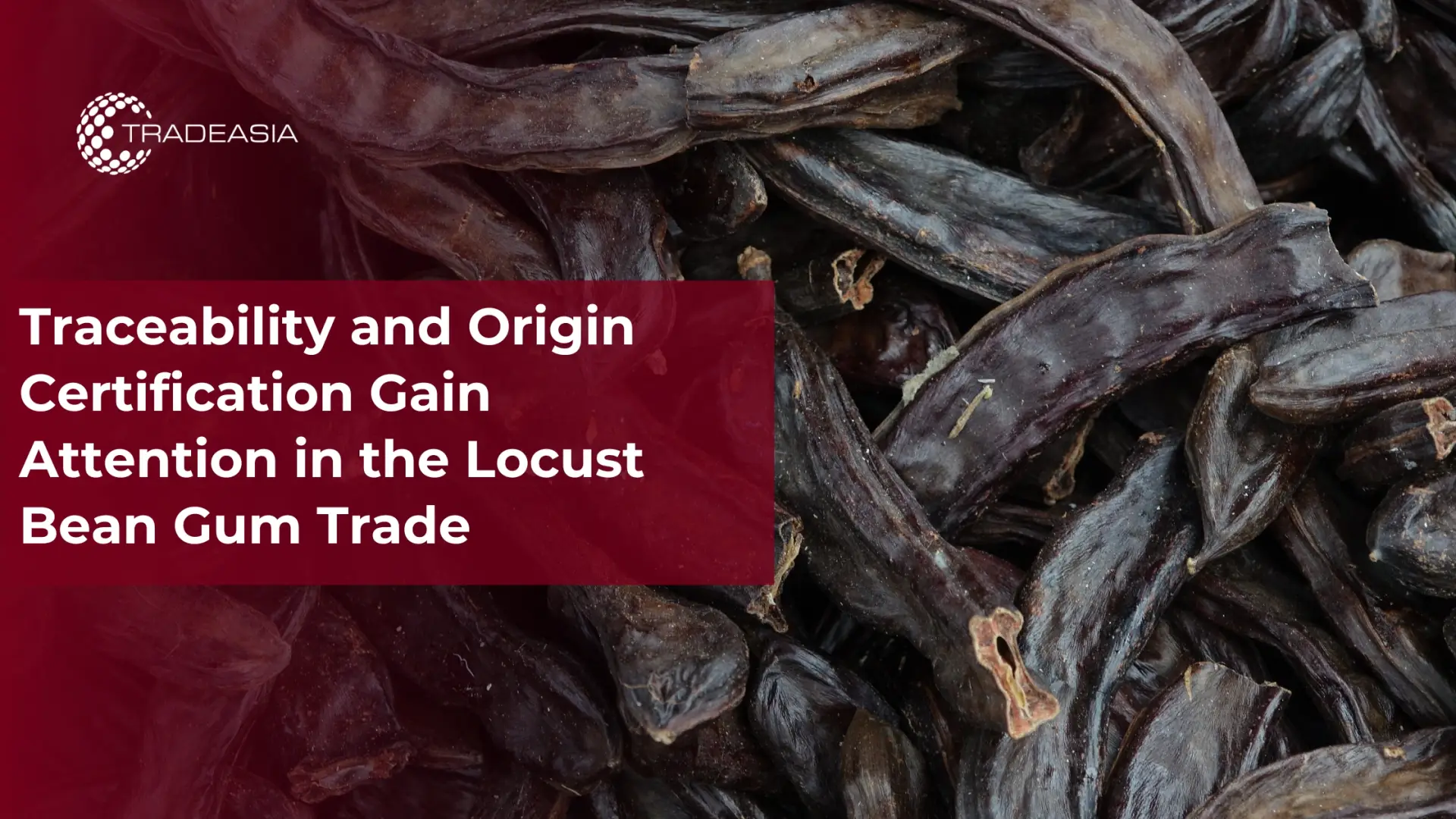
As sustainability reporting, ESG compliance, and supply chain transparency become integral to global food manufacturing, traceability and origin certification are emerging as key commercial considerations in the locust bean gum (LBG) trade. Buyers are no longer focused solely on functionality and price; instead, they increasingly require detailed documentation on sourcing regions, agricultural practices, and processing pathways. This shift is reshaping procurement conversations between ingredient suppliers, processors, and food manufacturers.
Locust bean gum is derived from carob seeds, a crop cultivated primarily in Mediterranean regions such as Spain, Italy, Portugal, and Morocco. This high geographic concentration makes origin visibility particularly important, as supply risks tied to climate variability, harvest yields, and regional regulations can directly affect availability and pricing. Buyers, especially multinational food companies, now view traceability as a risk management tool that supports long-term sourcing stability rather than just a compliance exercise.
In parallel, regulatory frameworks and voluntary sustainability initiatives are pushing companies to map upstream supply chains with greater precision. Retailers and brand owners are increasingly required to disclose ingredient origins as part of broader ESG reporting, carbon accounting, and responsible sourcing commitments. As a result, locust bean gum suppliers that can provide verifiable origin data gain a competitive edge during supplier qualification and contract renewal processes.
Beyond basic origin disclosure, certification and documentation standards are becoming commercial differentiators in B2B procurement. Certifications related to food safety, sustainability, and ethical sourcing—such as ISO standards, supplier codes of conduct, or region-specific agricultural certifications—are increasingly requested alongside technical specifications. For locust bean gum, this often includes documentation on carob harvesting practices, traceability of seed processing, and segregation of certified material through the supply chain.
This trend is particularly visible among buyers serving premium food segments, private label retailers, and export-oriented brands, where ingredient transparency supports brand credibility and regulatory readiness across multiple markets. Suppliers that invest in traceability systems, batch-level documentation, and third-party verification are better positioned to meet these evolving expectations.
The growing emphasis on traceability is influencing trade flows and supplier strategies within the locust bean gum market. Producers and processors located in origin countries are increasingly collaborating with exporters to improve documentation quality and supply chain visibility. At the same time, distributors and traders are enhancing their role as information providers, offering not just material availability but also origin assurance and compliance support.
This shift may gradually favor suppliers with closer integration to origin regions or stronger relationships with carob growers, as transparent sourcing becomes more difficult to replicate through spot-market purchases. Over time, traceability capabilities could contribute to supplier consolidation, as buyers prefer fewer partners with higher documentation reliability.
For food manufacturers, ingredient transparency is evolving into a strategic procurement criterion, influencing supplier selection alongside cost, performance, and reliability. In the locust bean gum trade, traceability and origin certification are no longer optional add-ons; they are becoming part of the value proposition that differentiates suppliers in an increasingly scrutinized global food supply chain.
As ESG expectations continue to expand toward 2030, traceability is expected to move further upstream, reinforcing the importance of origin-certified locust bean gum for manufacturers seeking both functional performance and responsible sourcing assurance.
We're committed to your privacy. Tradeasia uses the information you provide to us to contact you about our relevant content, products, and services. For more information, check out our privacy policy.


 English
 Indonesian
 简体字
简体字
 العربية
 Español
 Français
 Português
 日本語
日本語
 한국어
한국어
 Tiếng Việt




















