Explore our network of country and industry based websites to access localized information, product offerings, and business services across our group.
Log in to start sending quotation requests for any product.
Don't have an account? Sign Up Here
Home Guar Gum Applications Across Industries: Market Demand and Buyer Insights
Trade Insights | Applications and Buyers | 22 July 2026
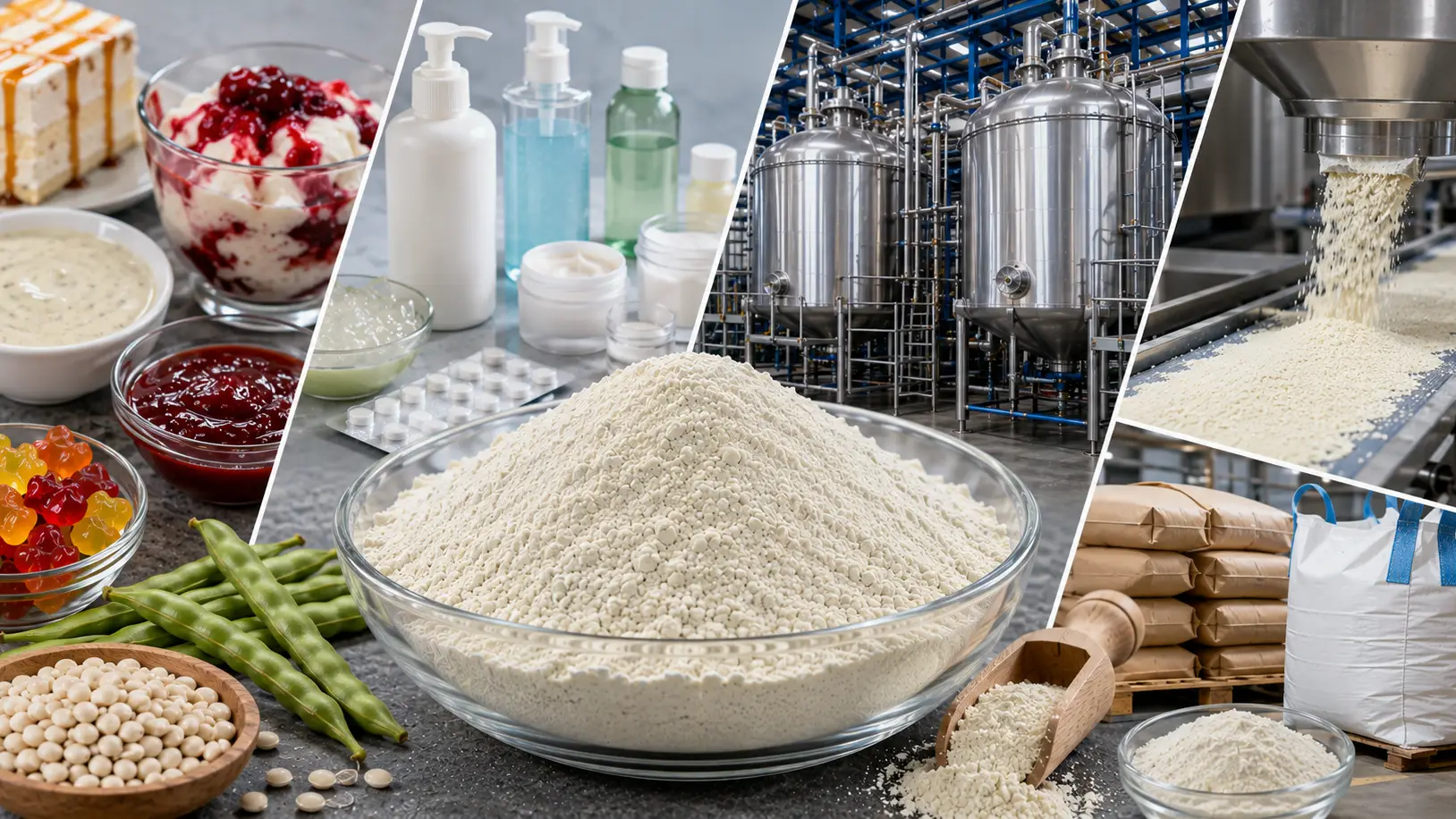
Understanding Guar Gum and Its Role in Industrial Applications
Guar Gum Demand Growth Across Global Industries
Food and Beverage Applications Driving Guar Gum Consumption
Pharmaceutical and Personal Care Industries Using Guar Gum
Industrial Applications and Specialty Chemical Opportunities for Guar Gum
Buyer Considerations When Sourcing Guar Gum from Suppliers
Conclusion: Building Reliable Guar Gum Supply Strategies for Global Markets
Guar Gum is a natural hydrocolloid derived from guar seeds and classified as food additive E412. Its unique ability to absorb water, increase viscosity, and stabilize formulations makes it an important functional ingredient across multiple industries. Manufacturers use guar gum because it can improve texture, consistency, and product performance while supporting formulation efficiency.
According to technical information from the Food and Agriculture Organization of the United Nations, hydrocolloids such as guar gum are widely used in food systems because of their ability to modify rheological properties and enhance product stability. These characteristics have made guar gum a valuable ingredient for manufacturers seeking reliable thickening and stabilizing solutions.
The commercial importance of guar gum comes from its multifunctional performance. In aqueous systems, guar gum can create high viscosity at relatively low concentrations, allowing manufacturers to achieve desired product characteristics while optimizing formulations. This performance has expanded its adoption beyond traditional food applications into pharmaceutical, cosmetic, and industrial sectors.
For businesses evaluating supply options, understanding application requirements is essential. Buyers often compare guar gum suppliers based on factors such as grade availability, technical specifications, consistency, and suitability for their intended formulation. The growing diversity of applications continues to increase demand for dependable guar gum sourcing channels.
Manufacturers across different sectors increasingly rely on natural-based additives to improve product functionality. Guar gum provides a plant-derived solution for companies developing products that require viscosity control, stabilization, or improved texture. This makes it relevant for businesses responding to demand for functional and naturally sourced ingredients.
For B2B buyers, selecting the right guar gum grade is a critical procurement decision. Companies sourcing through platforms such as Tradeasia can evaluate product information, supplier capabilities, and application suitability through resources such as the Guar Gum product page.
Global demand for guar gum is closely connected to growth in processed food production, pharmaceutical formulations, personal care products, and industrial applications. As manufacturers expand product portfolios, the need for functional ingredients that provide stability and performance continues to increase.
Market analysis from Grand View Research highlights that demand for hydrocolloids is supported by increasing use in food processing, pharmaceutical applications, and industrial formulations. These trends create opportunities for suppliers and distributors serving diverse international markets.
One important factor shaping guar gum demand is the growing interest in natural-origin ingredients. Food and beverage companies are increasingly reviewing formulations to meet consumer expectations for recognizable ingredients while maintaining product quality. Guar gum provides manufacturers with a plant-based functional additive option.
The clean-label movement has encouraged companies to explore alternatives that deliver technical performance without relying solely on synthetic additives. As a result, suppliers offering consistent-quality guar gum products can support manufacturers developing new formulations across regional markets.
Different regions contribute to guar gum demand through their expanding manufacturing sectors. Food processing growth in Asia, pharmaceutical development in emerging markets, and industrial activities in energy-producing regions all influence procurement requirements.
According to market observations published by industry research organizations, global ingredient supply chains increasingly depend on reliable international sourcing networks. This creates opportunities for manufacturers, exporters, traders, and distributors to connect with buyers seeking stable guar gum supply.
The food industry represents one of the most established application areas for guar gum. Food manufacturers use guar gum as a thickener, stabilizer, and texture enhancer in products such as sauces, dairy products, baked goods, beverages, and processed foods.
Technical references from European Food Safety Authority recognize guar gum as an approved food additive used for technological purposes in food production. Its ability to improve texture and maintain consistency makes it valuable for large-scale food manufacturers.
Food producers use guar gum to improve mouthfeel, prevent separation, and maintain product consistency during storage. In dairy alternatives, dressings, and sauces, it helps create desirable textures while supporting formulation stability.
For procurement teams, food-grade specifications are among the most important evaluation criteria when purchasing guar gum. Buyers typically review quality documentation, regulatory compliance, and supplier reliability before selecting a long-term ingredient partner.
The expansion of processed foods, convenience products, and specialty formulations continues to create commercial opportunities for guar gum suppliers. Food manufacturers require dependable ingredient availability because production schedules depend on consistent raw material supply.
B2B marketplaces help connect buyers with suppliers by providing product information and sourcing access. Companies looking for guar gum for industrial food applications can use supplier platforms to compare available options and identify suitable partners.
The pharmaceutical industry uses guar gum as a functional excipient because of its binding, thickening, and controlled-release properties. Formulators incorporate guar gum into selected pharmaceutical products to improve formulation performance and support specific delivery mechanisms.
Scientific research published through pharmaceutical and biotechnology journals has examined guar gum as a natural polymer with potential applications in drug delivery systems. Its compatibility with different formulation approaches has encouraged continued research into plant-based pharmaceutical materials.
For pharmaceutical buyers, sourcing decisions require careful consideration of material consistency, quality documentation, regulatory suitability, and supplier reliability. Companies producing pharmaceutical formulations typically evaluate whether guar gum meets their technical requirements before approving a supplier.
In the cosmetics and personal care sector, guar gum functions as a rheology modifier that improves the texture and stability of products. Manufacturers use it in products such as creams, lotions, shampoos, and other personal care formulations where viscosity control is important.
The demand for naturally derived cosmetic ingredients has encouraged formulators to explore botanical-based additives that provide functional benefits. Guar gum supports this trend by offering a plant-based option for improving product feel and formulation consistency.
Pharmaceutical and cosmetic companies often have stricter sourcing requirements compared with general industrial buyers. Procurement teams evaluate factors including batch consistency, technical specifications, supplier documentation, and compatibility with manufacturing processes.
Reliable sourcing platforms can help buyers identify suppliers that provide appropriate product information and support technical evaluation. Tradeasia’s Guar Gum sourcing information helps industrial buyers explore product availability for pharmaceutical, cosmetic, and other specialized applications.
Beyond food and consumer products, guar gum has significant industrial applications. One of the most recognized uses is in oilfield operations, where modified guar gum derivatives are used as viscosity-control agents in certain hydraulic fracturing fluid systems.
Industry organizations such as the Society of Petroleum Engineers have published technical studies discussing the use of polymers, including guar-based materials, in oil and gas production processes. These applications demonstrate the importance of performance-driven material selection in industrial operations.
Guar gum is also relevant in industries that require controlled flow behavior and formulation stability. Depending on the grade and modification, guar-based materials may support applications in areas such as paper processing, textiles, and specialty chemical formulations.
Industrial buyers typically focus on technical performance, supply consistency, and compatibility with existing production systems. Unlike commodity purchasing, industrial chemical procurement often involves evaluating long-term supplier capabilities and application expertise.
The wide application range of guar gum creates opportunities for manufacturers, distributors, and chemical traders. Suppliers able to provide reliable specifications and application guidance can serve multiple industries rather than relying on a single market segment.
For B2B marketplaces, products with cross-industry demand provide opportunities to connect global buyers with qualified suppliers. A well-structured sourcing platform enables companies to evaluate product information and identify potential supply partners more efficiently.
Selecting a reliable guar gum supplier requires buyers to assess several technical and commercial factors. Product specifications, viscosity performance, purity level, grade classification, and documentation are among the main considerations for procurement teams.
Different industries require different product characteristics. Food manufacturers may prioritize food-grade compliance, while industrial users may focus on performance requirements related to viscosity, processing conditions, or application efficiency.
Global buyers often compare suppliers based on more than pricing. Supply reliability, export experience, production capacity, technical support, and consistency of product quality influence supplier selection decisions.
Marketplaces such as Tradeasia support B2B sourcing by helping buyers access product information and supplier networks. For companies seeking guar gum supply solutions, having transparent product details can simplify the evaluation process and improve purchasing confidence.
Digital chemical marketplaces are increasingly important for international sourcing because they allow buyers to research products, compare suppliers, and identify suitable materials more efficiently. This is particularly valuable for companies entering new markets or expanding manufacturing capabilities.
The Guar Gum product sourcing page provides buyers with a direct reference point for exploring product details and potential sourcing opportunities. Reliable product information helps procurement teams make better-informed decisions.
Guar gum continues to maintain commercial importance because of its versatility across food, pharmaceutical, cosmetic, and industrial applications. Its ability to provide thickening, stabilization, and functional performance supports demand from manufacturers seeking effective formulation ingredients.
As industries continue developing new products with functional and natural-based materials, guar gum suppliers have opportunities to serve expanding application markets. Companies involved in manufacturing, distribution, and international trade can benefit from understanding changing buyer requirements.
For procurement teams, successful guar gum purchasing depends on finding suppliers that can deliver consistent quality, suitable specifications, and dependable supply. Application knowledge is increasingly important because buyers need materials that match specific manufacturing requirements.
Tradeasia / Chemtradeasia / Tradechem Marketplace provides a B2B sourcing environment where buyers can explore industrial products and connect with suppliers. By offering product information and marketplace accessibility, platforms like these support companies seeking efficient chemical and ingredient procurement solutions.
The future of guar gum sourcing will continue to be shaped by application growth, international trade, and demand for reliable ingredient supply chains. Manufacturers, distributors, and procurement professionals who understand market requirements can make stronger sourcing decisions.
Businesses interested in exploring guar gum availability and industrial applications can review the Guar Gum product page as part of their supplier evaluation process.
We're committed to your privacy. Tradeasia uses the information you provide to us to contact you about our relevant content, products, and services. For more information, check out our privacy policy.


 English
 Indonesian
 简体字
简体字
 العربية
 Español
 Français
 Português
 日本語
日本語
 한국어
한국어
 Tiếng Việt



















