Explore our network of country and industry based websites to access localized information, product offerings, and business services across our group.
Log in to start sending quotation requests for any product.
Don't have an account? Sign Up Here
Home Japonica Rice: Applications, Market Demand & B2B Sourcing
Trade Insights | Supply Chain | 07 September 2026
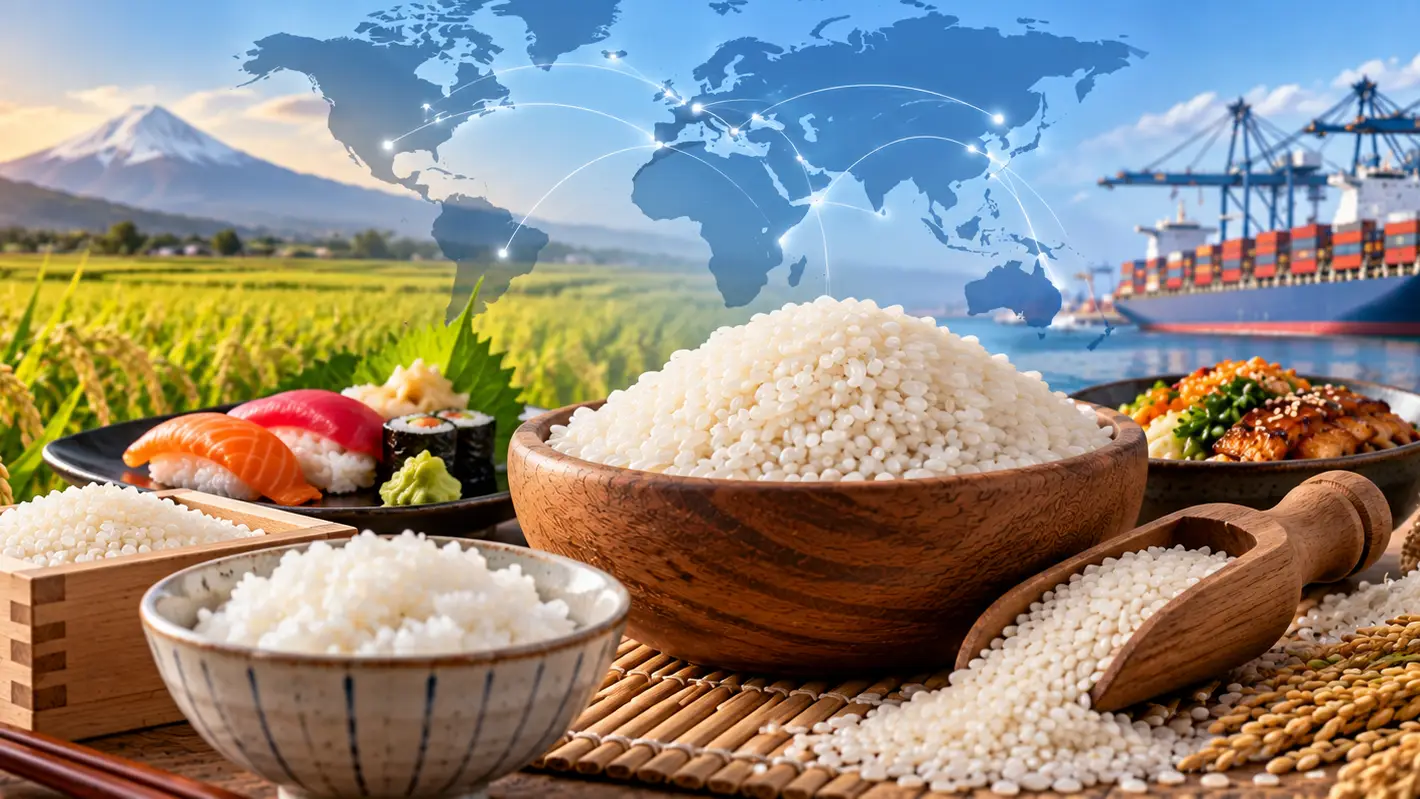
Japonica Rice and Its Commercial Position
Key Industrial and Food Applications
Market Demand and Application Trends
Buyer Intent and Procurement Considerations
B2B Sourcing and Supply Chain Opportunities
Commercial Outlook for Japonica Rice
Conclusion: Turning Japonica Rice Demand into Sourcing Opportunities
Japonica Rice is a short-grain rice type valued for its cohesive texture, subtle sweetness, and ability to maintain its shape after cooking. The product information supplied by Tradeasia identifies the material as originating from Vietnam and lists HS Code 1006.30.99. The product is positioned specifically for food applications where stickiness, texture, and consistency are commercially important. Scientific literature likewise distinguishes Japonica from longer-grain rice types through characteristics associated with starch composition and cooking behavior.
For B2B buyers, the commercial value of Japonica Rice is therefore closely connected to performance at the point of use rather than simply grain classification. Its cohesive texture can be particularly relevant when manufacturers and foodservice operators need rice that can be shaped, compressed, steamed, or prepared through absorption and pressure-cooking methods. This creates a differentiated sourcing proposition for businesses serving Japanese, Korean, and broader Asian food markets.
The product page describes Japonica Rice as suitable for sushi, onigiri, and Asian desserts, while also highlighting its cold-compression strength for applications such as bento products. These characteristics make the ingredient relevant to both traditional food preparation and commercial food manufacturing, where repeatable texture and handling characteristics can influence production efficiency and finished-product consistency.
From a B2B marketplace perspective, Japonica Rice should consequently be positioned as a functional food ingredient with defined end-use advantages. Importers, distributors, food manufacturers, restaurant suppliers, and procurement teams can evaluate the product according to intended application, required quantity, origin, logistics, and technical documentation rather than treating rice as an undifferentiated commodity.
One of the clearest Japonica Rice applications is sushi, where the ability of cooked rice to hold together is an important functional requirement. The product description specifically emphasizes sushi-grade consistency and hand-forming performance. Research into rice cooking characteristics has also shown that the relative proportions and behavior of amylose and amylopectin influence stickiness and cooked-rice texture, helping explain why short-grain Japonica varieties can be commercially attractive for cohesive food formats.
Japonica Rice is also suited to onigiri and similar molded foods in which structural integrity matters after preparation. For manufacturers producing prepared meals, chilled food, bento products, or foodservice portions, the ability of cooked rice to maintain its form can be relevant to handling, packaging, transportation, and presentation.
Asian desserts provide another application pathway because sticky or cohesive rice textures can be desirable in specific traditional and modern formulations. This expands the potential customer base beyond sushi-focused businesses and creates opportunities for ingredient distributors serving multiple categories within Asian food manufacturing.
The broader implication for buyers is that Japonica Rice can serve several related applications without requiring the same ingredient to be marketed solely as a specialty sushi product. Food manufacturers and distributors can therefore assess demand across prepared foods, Japanese cuisine, Asian desserts, and foodservice channels when planning procurement volumes. Technical information on starch structure and processing behavior further supports application-specific ingredient selection.
The global rice market remains substantial, but commercial demand is increasingly influenced by how rice is used across food and processing channels. The FAO reported that world rice utilization for 2025/26 was forecast to reach an all-time high of 555.1 million tonnes, reflecting continued growth in food and non-food industrial uses. At the same time, rice trade and inventory conditions continue to change between regions, meaning buyers need to distinguish broad rice-market trends from the requirements of specific Japonica applications.
For Japonica Rice, one important opportunity is the continuing internationalization of Japanese and other East Asian food formats. USDA reporting on Japan indicates that commercial rice exports increased in MY2024/25, with growth in destinations including Hong Kong and the United States, while the agency expects Japanese cuisine to support continued export growth. Although these figures cover rice more broadly, they illustrate the international commercial relevance of Japanese-style food consumption and related rice supply chains.
Another important trend is the development of processed and convenience foods. USDA analysis of South Korea reported that declining domestic rice consumption was partly offset by manufacturing demand for rice products, including frozen kimbap intended for export. This demonstrates how rice demand can increasingly originate from manufacturers rather than only household consumption, creating additional opportunities for suppliers able to support consistent commercial volumes.
For procurement teams, these developments suggest that Japonica Rice demand should be assessed through end-use markets rather than population consumption alone. Foodservice, prepared meals, Asian convenience foods, export-oriented food manufacturing, and specialty ingredient distribution can all influence purchasing requirements, while global rice supply, prices, crop conditions, and trade flows remain important variables monitored by organizations such as the FAO.
The principal B2B buyer groups for Japonica Rice include food manufacturers, rice processors, importers, distributors, restaurant and foodservice suppliers, Japanese and Asian food producers, and procurement teams sourcing ingredients for commercial-scale production. Buyers may purchase directly for manufacturing or distribution, or incorporate the ingredient into broader portfolios of Asian food ingredients.
Procurement teams typically evaluate product suitability against the intended end use before comparing suppliers. For Japonica Rice, relevant considerations can include origin, grain characteristics, technical documentation, required quantity, packaging requirements, shipping arrangements, consistency of supply, and commercial terms. The Tradeasia product page identifies Vietnam as the origin and provides a technical document option, while also allowing prospective buyers to request pricing, customization, and shipping information.
Supplier comparison is particularly important when rice is used in standardized commercial recipes. Differences in grain characteristics, processing, storage, and supply continuity can affect finished-product consistency and operational planning. Research has demonstrated that Japonica rice quality can be influenced by genotype, cultivation conditions, starch structure, and other factors, reinforcing the value of evaluating technical characteristics alongside price.
For businesses evaluating a B2B rice supplier, the Japonica Rice product page provides a direct sourcing entry point. Buyers can use the product information and inquiry function to communicate quantity requirements and request additional information concerning pricing, customization, and shipping, helping move the sourcing process from initial research toward a commercial discussion.
Japonica Rice sourcing requires more than identifying a supplier offering the correct grain type. Importers and manufacturers need to consider whether the supply chain can support their production schedule, target markets, required volumes, and logistics model. Origin is one useful starting point: the listed product is sourced from Vietnam, providing a defined geographic reference for buyers evaluating their Asian ingredient supply options.
Market volatility is another reason for structured procurement. FAO maintains dedicated rice market intelligence covering supply, demand, trade, stocks, prices, and policy developments, while its Rice Price Update tracks export prices from major origins. These resources demonstrate why commercial rice purchasing decisions can benefit from monitoring both product-level specifications and broader commodity-market conditions.
For manufacturers, distributors, and trading companies, supply opportunities can emerge when end users require a more specialized rice profile than conventional long-grain products provide. Applications such as sushi, onigiri, bento, and Asian desserts create a basis for differentiated sourcing, while broader food manufacturing can create recurring demand when Japonica Rice is incorporated into standardized recipes or finished products.
Tradeasia's marketplace positioning can support this process by connecting product information with an inquiry-based procurement pathway. Instead of relying only on generic commodity searches, buyers can identify the relevant Japonica Rice specification, communicate quantity requirements, and discuss commercial variables such as shipping and customization through the product sourcing process. This is particularly relevant for procurement teams seeking a B2B supplier rather than a consumer retail pack.
The commercial outlook for Japonica Rice should be viewed through the intersection of rice-market fundamentals and application-specific demand. FAO's latest global outlook continues to show rice as a major traded and consumed agricultural commodity, while its market-monitoring framework highlights the importance of changing supply, demand, trade, stocks, and prices. For Japonica buyers, these macro conditions provide the context in which more specialized food applications develop.
Application growth is particularly relevant because commercial demand does not depend exclusively on traditional household consumption. Export-oriented Asian food manufacturing, prepared meals, foodservice, Japanese cuisine, and specialty food distribution can all create procurement requirements. USDA reporting from South Korea provides a recent example of manufacturing demand helping offset declines in conventional rice consumption, while Japan's export data demonstrates continuing international interest in Japanese cuisine.
Quality consistency is likely to remain an important purchasing consideration as food manufacturers standardize recipes and expand production. Scientific studies indicate that cultivar, environmental conditions, starch structure, and storage can affect rice's physicochemical and cooking characteristics. Consequently, professional buyers have reason to evaluate sourcing options using both commercial and technical criteria instead of making decisions based solely on nominal price.
For suppliers, traders, and distributors, this creates an opportunity to position Japonica Rice around specific industrial and food applications rather than commodity terminology alone. Clear product documentation, transparent sourcing information, responsive commercial communication, and dependable logistics can help convert application-driven demand into repeat B2B business.
Japonica Rice occupies a commercially distinctive position because its short-grain format and cohesive cooked texture align with applications where shape retention and stickiness matter. Sushi, onigiri, bento products, Asian desserts, foodservice, and prepared-food manufacturing provide identifiable use cases for buyers evaluating specialized rice ingredients. The product's listed Vietnam origin and HS Code 1006.30.99 also give procurement teams practical reference points for initial sourcing discussions.
Market conditions reinforce the need for application-specific procurement. Global rice utilization remains large, while changing trade flows, manufacturing demand, prices, crop conditions, and regional consumption patterns can influence sourcing decisions. Buyers therefore benefit from combining market intelligence with product-level assessment rather than assuming that all rice supply options provide equivalent commercial performance.
For manufacturers, importers, distributors, and procurement teams, the next step is to translate application requirements into a sourcing specification covering intended use, quantity, origin, technical documentation, logistics, and commercial terms. The Japonica Rice supplier information offers a practical starting point for that process, with product information and an inquiry route for pricing, customization, and shipping discussions.
Ultimately, Japonica Rice is best approached as an application-driven ingredient within the wider Asian food supply chain. For B2B buyers, the strongest sourcing strategy is to match the rice profile with the finished product, validate technical and commercial requirements, and work with a supply partner capable of supporting the required procurement model. This creates a clearer path from market research to qualified supplier engagement and sustainable purchasing decisions.
We're committed to your privacy. Tradeasia uses the information you provide to us to contact you about our relevant content, products, and services. For more information, check out our privacy policy.


 English
 Indonesian
 简体字
简体字
 العربية
 Español
 Français
 Português
 日本語
日本語
 한국어
한국어
 Tiếng Việt



















