Explore our network of country and industry based websites to access localized information, product offerings, and business services across our group.
Log in to start sending quotation requests for any product.
Don't have an account? Sign Up Here
Home Quinoa Market Demand, Applications, and B2B Sourcing Opportunities
Trade Insights | Applications and Buyers | 07 September 2026
Quinoa in the B2B Food Ingredient Market
Industrial Applications Driving Quinoa Demand
Emerging Food and Ingredient Applications
Key Quinoa Buyers and Procurement Requirements
Quinoa Market and Supply Outlook
Quinoa Sourcing and Supplier Evaluation
Commercial Opportunities for Quinoa Buyers and Suppliers
Conclusion: Building a Reliable Quinoa Supply Strategy
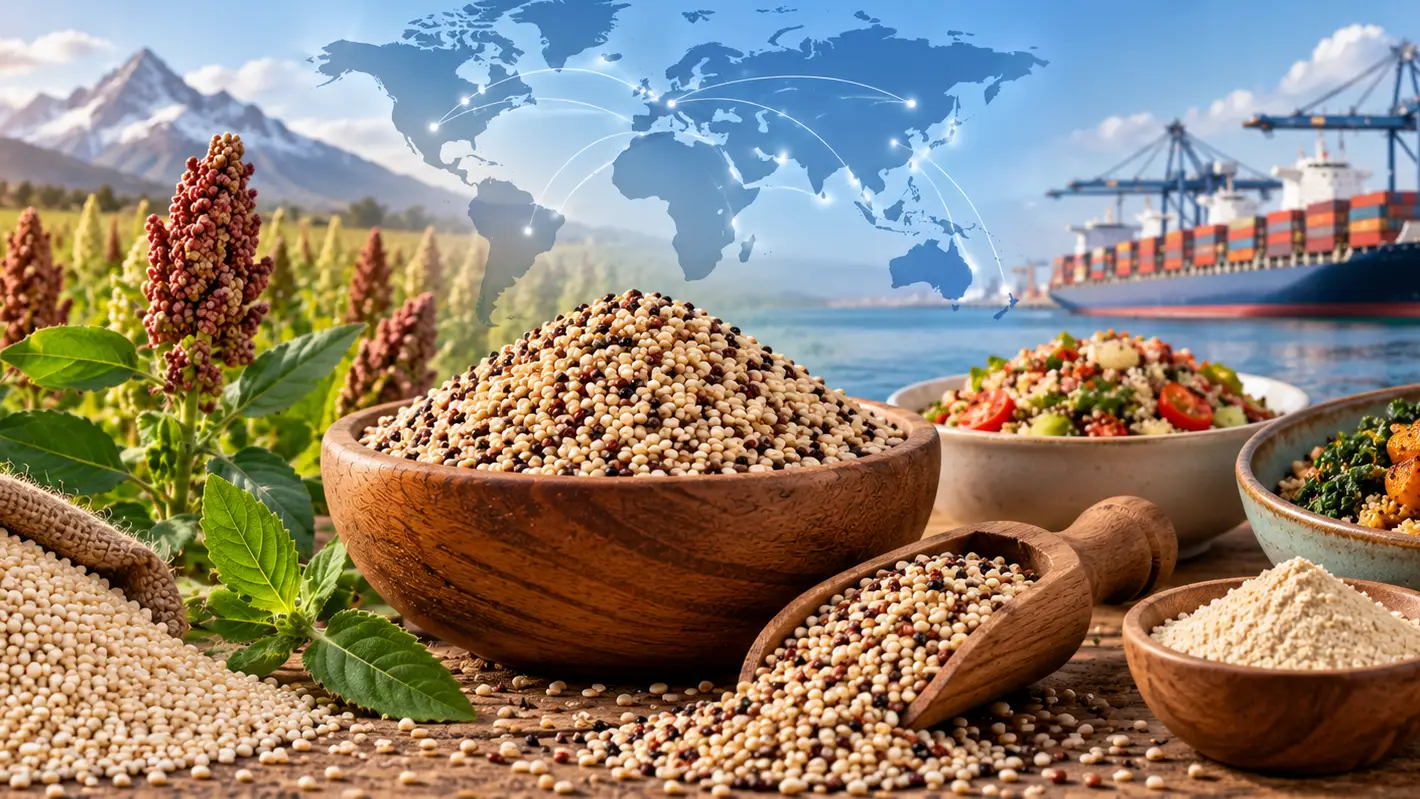
Quinoa is a pseudocereal derived from Chenopodium quinoa Willd. and has moved from a traditional Andean staple into a globally traded food ingredient. The product information for Tradeasia identifies Peru as the origin and classifies quinoa under HS Code 1008.50.00. It describes the ingredient as gluten-free and highlights its protein, fiber, mineral and functional-food characteristics. These attributes make quinoa relevant to manufacturers seeking ingredients that can support nutritional positioning while also providing formulation versatility. The Food and Agriculture Organization of the United Nations (FAO) similarly identifies quinoa as a high-nutritive-value crop with potential relevance to food security and diversified food systems.
For B2B buyers, quinoa is best understood not simply as a retail health food but as a raw material that can be incorporated into multiple processed-food formats. Whole quinoa, milled quinoa and derivative fractions can serve different formulation objectives, including grain replacement, nutritional enrichment and texture development. Scientific reviews published in recent years have documented applications ranging from bakery and noodles to snacks, beverages, functional foods and protein-based formulations. This breadth expands the potential customer base for quinoa suppliers beyond specialist health-food companies to mainstream food manufacturers.
The commercial value of quinoa depends on more than its nutritional profile. Food manufacturers need raw materials that can perform consistently within their production processes, which makes characteristics such as particle size, moisture, cleanliness, processing history and microbiological quality important procurement considerations. The desired specification can also change according to whether the buyer requires whole seeds, flour, flakes or another processed format. Consequently, a quinoa supplier serving industrial customers needs to communicate product specifications clearly rather than relying solely on broad nutritional claims.
A B2B marketplace can connect quinoa demand with manufacturers, traders, distributors and procurement teams searching for suitable supply channels. Tradeasia's quinoa product page provides a commercial starting point for buyers by presenting the product identity, origin and HS classification while offering an inquiry route for pricing, customization and shipping information. For companies evaluating bulk quinoa sourcing, the Quinoa product page can therefore function as an initial sourcing reference before technical, commercial and logistics requirements are discussed.
Bakery is one of the most established industrial application areas for quinoa because quinoa flour can be incorporated into bread, biscuits, cakes, crackers and other flour-based products. Research has specifically examined quinoa flour as an ingredient for wheat-bread supplementation, showing why particle size and formulation level can matter when manufacturers seek nutritional improvements without compromising product characteristics. For industrial buyers, quinoa therefore represents both a nutritional ingredient and a formulation variable that must be matched to the target recipe and processing system.
Quinoa can also be incorporated into breakfast cereals, pasta, noodles and other grain-based products. FAO notes traditional uses including flour, bread, cereal and pasta, while scientific literature describes the continued development of industrialized quinoa products. This creates sourcing opportunities for manufacturers that want to diversify cereal portfolios or develop products positioned around alternative grains and pseudocereals. The application can involve whole quinoa, flour or flakes depending on the product architecture and desired eating characteristics.
Snack manufacturers represent another relevant buyer group because quinoa can be incorporated into extruded, expanded, baked or mixed snack formats. Scientific reviews identify snacks and crackers among established quinoa applications and also discuss processing technologies designed to modify texture, digestibility and functional performance. This is commercially significant because snack manufacturers often require ingredients that can differentiate a product while fitting high-throughput processing systems. Quinoa can consequently be evaluated as part of broader product-development strategies rather than as a standalone ingredient category.
Functional-food manufacturers are particularly relevant to quinoa sourcing because its composition includes protein, dietary fiber, minerals and bioactive compounds. A 2023 review in Food Chemistry identified quinoa as having potential applications in functional food, feed and other areas, while a 2024 review examined nutritional, biotechnological and value-added applications. For procurement teams, the commercial opportunity lies in matching the raw material specification to the intended nutritional and technological function while maintaining consistent quality across production batches.
The expansion of plant-based product development has created additional interest in quinoa and quinoa-derived proteins. Research has examined quinoa proteins for functional properties such as emulsification, foaming and gel formation, suggesting potential relevance to modern formulated foods. These properties are important for manufacturers developing products in which plant proteins need to contribute not only nutritional value but also physical structure. Quinoa can therefore enter procurement discussions alongside other plant-derived protein and cereal ingredients.
Quinoa has also been investigated for beverage and dairy-alternative applications. Scientific literature identifies quinoa milk and other quinoa-based beverages among emerging product formats, while processing research continues to explore fermentation and other techniques that can alter nutritional and functional characteristics. For manufacturers, this creates an opportunity to use quinoa as part of differentiated beverage concepts, although the appropriate processing method and ingredient specification depend on the final product and regulatory requirements.
Ingredient fractionation is another area with commercial potential. Research published through the Spanish National Research Council's food-technology community has investigated quinoa fiber-rich fractions obtained through wet milling and assessed their technological properties for food formulations. Such developments indicate that the quinoa value chain can extend beyond whole seeds toward more specialized ingredient fractions. This is particularly relevant to ingredient manufacturers looking for functional components with defined water-holding, oil-retention or swelling characteristics.
Recent research increasingly focuses on processing technologies that can make quinoa more suitable for industrial use. Thermal processing, germination, fermentation, extrusion and other techniques can influence nutritional quality, sensory characteristics and functional performance. At the same time, scientific reviews emphasize that saponins and other antinutritional compounds can present processing challenges and may need to be controlled depending on the intended application. For B2B buyers, this makes processing history an important part of supplier qualification.
The largest commercially relevant buyer group consists of food manufacturers using quinoa as an ingredient in finished or semi-finished products. These companies may include bakery manufacturers, cereal producers, snack companies, pasta manufacturers, functional-food developers and plant-based food processors. Their requirements vary according to formulation, but most need dependable specifications, consistent supply, appropriate packaging and documentation that supports quality assurance. A supplier that understands these differences can position quinoa more effectively across multiple B2B applications.
Distributors and commodity traders can also represent significant demand because they purchase ingredients for resale to downstream manufacturers or regional food businesses. These buyers generally place additional emphasis on commercial factors such as minimum order quantities, shipment economics, origin, availability, documentation and delivery reliability. Because quinoa is produced across multiple geographic regions but remains strongly associated with Andean production, origin and supply-chain transparency can also influence supplier comparisons. FAO notes both quinoa's Andean roots and its expansion into cultivation in numerous countries.
A professional quinoa ingredient procurement process typically considers product identity, specification, intended application, quality documentation, food-safety controls, packaging, order quantity, lead time and logistics. Buyers may also evaluate whether the product is suitable for gluten-free claims or particular nutritional positioning, although such claims must ultimately be supported by the relevant testing and regulatory framework. The appropriate specification should therefore be established before commercial purchasing rather than assumed from the word "quinoa" alone.
Supplier comparison is important because the same commodity category can involve meaningful differences in origin, processing, specification, documentation, service and logistics. A buyer developing a food product needs confidence that the material available during product development can also be sourced consistently during commercial production. For this reason, supplier evaluation is not simply a price comparison; it is a risk-management exercise involving technical suitability, supply continuity and total delivered cost. A B2B marketplace can make this evaluation more structured by providing a commercial point of contact for inquiries and specification discussions.
Quinoa's supply base has expanded beyond its traditional Andean production areas. FAO reports that quinoa cultivation has spread to more than 70 countries, while more recent scientific literature describes its global expansion and continued interest in adapting the crop to different environments. This geographical diversification can create opportunities for international sourcing, but it does not remove the importance of evaluating origin, agronomic conditions, processing infrastructure and consistency of supply.
One of the most durable demand drivers for quinoa is the continued development of nutritious and differentiated food products. Recent research links quinoa's commercial potential to its protein, dietary fiber, mineral and phytochemical composition, as well as its naturally gluten-free status. However, an evidence-based B2B strategy should distinguish between nutritional characteristics supported by research and specific health claims that may be subject to regulatory restrictions in individual markets. This distinction is particularly important for manufacturers developing packaging, advertising and product claims.
Market growth also brings supply-chain considerations. Scientific reviews have highlighted agronomic limitations, resource concerns and socioeconomic issues associated with the expansion of quinoa cultivation, particularly in traditional producing regions. Buyers seeking long-term commercial quinoa supply therefore have reason to consider not only price and availability but also the resilience and sustainability of the underlying supply chain. These factors can become increasingly relevant for multinational food companies with supplier-governance and sustainability programs.
The future commercial opportunity for quinoa is likely to involve greater product differentiation rather than dependence on one application. Research into protein isolates, fiber fractions, germination, fermentation and other processing technologies demonstrates how quinoa can become a platform for multiple value-added ingredients. For suppliers and distributors, this creates opportunities to serve customers at different points in the value chain, from whole-seed buyers to ingredient processors and food manufacturers seeking specialized functional materials.
For a procurement team, the first step in bulk quinoa sourcing should be defining the intended use and technical specification. A buyer sourcing quinoa for direct food use may have different requirements from a processor intending to mill, extrude or fractionate the material. Key specifications should be agreed before quotations are compared so that suppliers are evaluated against the same technical requirements rather than against price alone.
Origin can be commercially relevant because it can influence availability, supply-chain structure and buyer preferences. Tradeasia's product information identifies Peru as the origin of the listed quinoa product, providing a clear starting point for discussions around provenance. Processing history should also be reviewed because research shows that treatments such as dehulling, thermal processing, germination and fermentation can materially affect quinoa's functional and nutritional characteristics.
Quality assurance should cover the documentation required for the buyer's market and application. Depending on the destination and end use, procurement teams may need specifications, certificates of analysis, food-safety documentation, microbiological information, allergen-related declarations and other regulatory or commercial documents. The exact documentation package should be confirmed with the supplier and applicable authorities rather than assumed to be identical across countries.
A competitive quinoa supplier for manufacturers must also be evaluated on logistics. Buyers should consider minimum order quantities, packaging formats, shipment options, lead times, port considerations and the supplier's ability to support repeat orders. These factors influence total landed cost and production continuity, particularly for manufacturers operating scheduled production lines. A technically suitable ingredient can still become commercially unattractive if delivery performance or order flexibility does not match the buyer's operating model.
For food manufacturers, quinoa offers an ingredient platform that can support multiple product categories rather than a single finished-product niche. Bakery, cereals, snacks, plant-based foods, beverages and functional-food formulations can all create potential demand, with the precise opportunity determined by formulation requirements and consumer positioning. This flexibility allows product developers to evaluate quinoa for new product launches, reformulation projects and premium or differentiated food concepts.
Distributors and traders can build value by matching quinoa supply with regional demand from manufacturers that may not source directly from producing countries. Their commercial role can include inventory management, regional logistics, customer qualification and supplier coordination. In markets where food manufacturers require smaller or more frequent deliveries than an origin-based supplier can conveniently provide, distribution can become an important link between global supply and local manufacturing demand.
For procurement teams, the opportunity is to treat quinoa as a category that can be strategically sourced rather than purchased only when required for a particular product. Establishing qualified suppliers, comparing specifications and understanding alternative supply routes can reduce sourcing friction when demand increases. The Tradeasia platform provides a direct commercial inquiry route for buyers seeking pricing, customization and shipping information, making the Quinoa sourcing page a practical starting point for supplier discussions.
For a B2B marketplace, quinoa is commercially relevant because its buyer base spans ingredient manufacturers, food producers, distributors, importers, traders and procurement organizations. Effective marketplace positioning should therefore connect product information with application intelligence and sourcing support rather than presenting quinoa only as a commodity description. Tradeasia's positioning around global sourcing, procurement and supply-chain solutions can help create a pathway from informational search to a qualified commercial inquiry, while buyers can use product specifications and supplier communication to determine suitability for their individual applications.
Quinoa has developed into a versatile ingredient for modern food manufacturing, with applications spanning bakery, cereals, pasta, snacks, functional foods, beverages and plant-based formulations. Its nutritional composition and gluten-free characteristics contribute to its commercial appeal, while continuing research is expanding understanding of its proteins, fibers and other components. For B2B buyers, the central opportunity is to identify where quinoa can deliver measurable formulation or product-development value rather than treating demand as a purely consumer-trend phenomenon.
A sound procurement strategy should connect application requirements with supplier capabilities. Buyers should establish the necessary specification, confirm origin and processing details, assess quality documentation, compare commercial terms and evaluate logistics before selecting a supply partner. This approach is particularly important for manufacturers that need repeatable raw-material performance, because ingredient inconsistency can affect production efficiency and finished-product quality.
As quinoa cultivation expands geographically and research continues to develop new applications, the ingredient offers opportunities for manufacturers, traders, distributors and procurement teams. Recent scientific work on functional foods, protein applications, fiber fractions and processing technologies suggests that quinoa's value chain can continue moving toward more specialized products and applications.
For businesses evaluating quinoa sourcing opportunities, the next step is to translate application requirements into a clear commercial specification and engage with qualified suppliers. Tradeasia's Quinoa supplier information provides a direct route for buyers to review the listed product and submit an inquiry concerning quantity, pricing, customization and shipping. In this way, quinoa market intelligence can become a practical sourcing process connecting food-industry demand with international supply.
We're committed to your privacy. Tradeasia uses the information you provide to us to contact you about our relevant content, products, and services. For more information, check out our privacy policy.


 English
 Indonesian
 简体字
简体字
 العربية
 Español
 Français
 Português
 日本語
日本語
 한국어
한국어
 Tiếng Việt



















