Explore our network of country and industry based websites to access localized information, product offerings, and business services across our group.
Log in to start sending quotation requests for any product.
Don't have an account? Sign Up Here
Home Isomalt Growth in Food, Oral Care, and Pharmaceuticals
Trade Insights | Applications and Buyers | 03 June 2026
What Is Isomalt and Why Is It Important?
Growing Demand for Isomalt in the Food Industry
Expanding Pharmaceutical Applications of Isomalt
Isomalt in Oral Care and Functional Products
Global Market Trends and Industry Outlook
Buyer Intent and Procurement Considerations
Commercial Positioning and Sourcing Opportunities
Conclusion
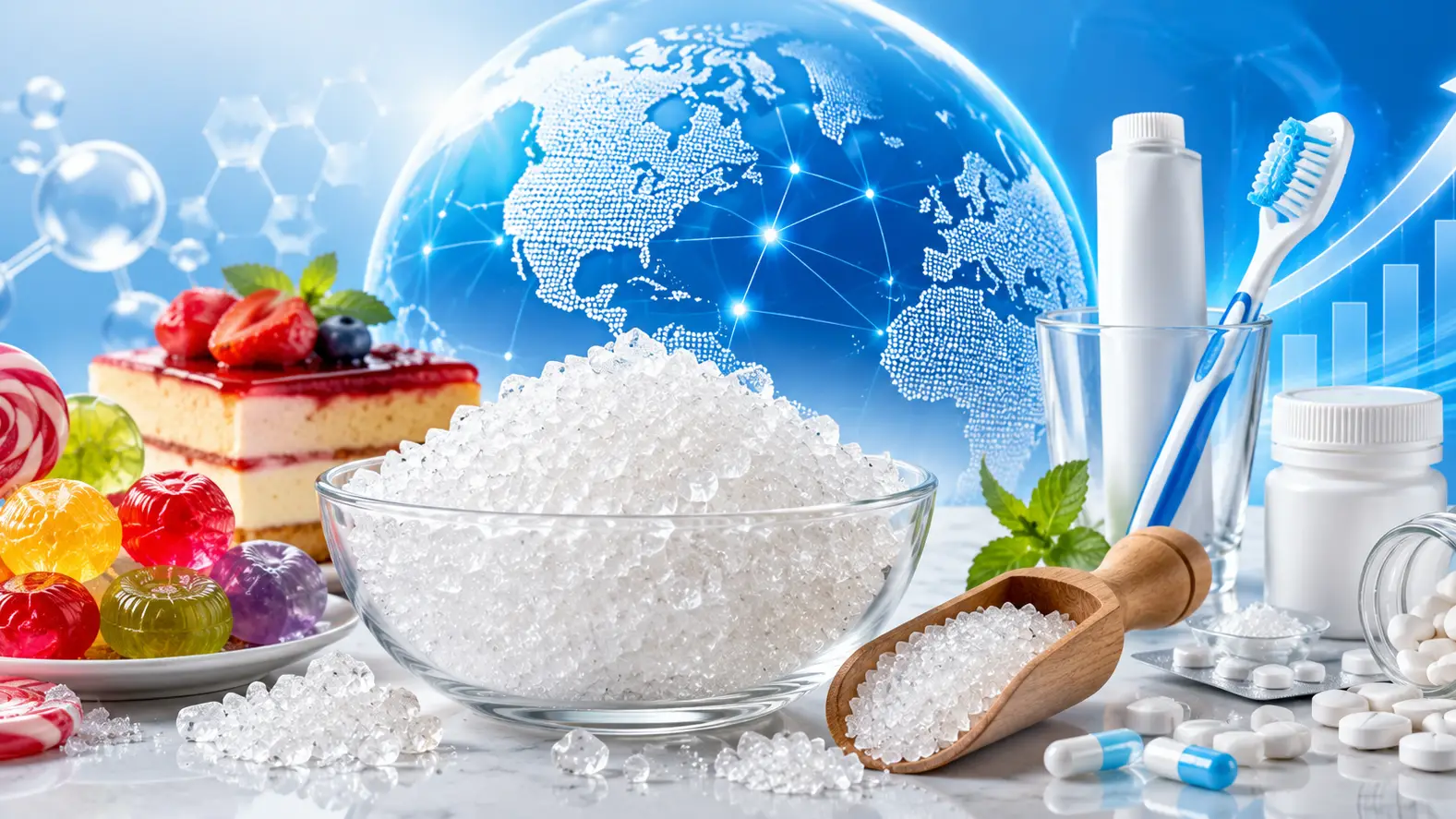
Isomalt is a sugar alcohol derived primarily from sucrose and is widely used as a sugar substitute in industrial manufacturing. Its low glycemic impact, excellent stability, and tooth-friendly characteristics make it a preferred ingredient in various food and healthcare applications.
The increasing focus on sugar reduction initiatives worldwide has elevated the role of specialty sweeteners such as Isomalt. Manufacturers seek ingredients that can replicate the functionality of sugar while supporting healthier product formulations.
One of the most valuable properties of Isomalt is its ability to provide bulk, texture, and sweetness simultaneously. Unlike many high-intensity sweeteners, it contributes structure and mouthfeel, making it suitable for confectionery and pharmaceutical products.
According to market analysis from Future Market Insights, Isomalt has become increasingly important for premium confectionery and pharmaceutical applications because of its heat stability, low hygroscopicity, and formulation flexibility.
The food industry remains the largest consumer of Isomalt globally. Manufacturers increasingly use it to develop sugar-free and reduced-sugar products that align with changing consumer preferences and nutritional objectives.
As health awareness continues to rise, food producers are reformulating products to reduce sugar content without compromising taste or texture. This trend has strengthened demand for functional sweeteners that deliver both sweetness and structural performance.
Isomalt is extensively used in hard candies, chocolates, chewing gums, decorative confectionery, and bakery products. Its resistance to moisture absorption helps maintain product quality and shelf stability, particularly in sugar-free confectionery.
According to Data Bridge Market Research, confectionery remains the leading end-use segment for Isomalt due to its low glycemic response, tooth-friendly properties, and ability to provide bulk sweetness in sugar-free products.
The pharmaceutical sector has emerged as a significant growth market for Isomalt. Beyond sweetening, it serves as a functional excipient in numerous dosage forms.
Pharmaceutical manufacturers value ingredients that support formulation performance while enhancing patient acceptability. Isomalt provides sweetness without contributing significantly to blood glucose spikes, making it suitable for various healthcare products.
Isomalt is commonly used in chewable tablets, lozenges, compressed tablets, and nutraceutical formulations. Its excellent compressibility and stability support efficient production processes and consistent product quality.
Technical industry assessments indicate growing adoption of Isomalt in direct-compression tablets and pharmaceutical excipients due to its compatibility with active ingredients and favorable manufacturing characteristics.
Oral care manufacturers increasingly incorporate Isomalt into formulations designed to support dental health while delivering pleasant taste experiences. This creates additional demand beyond traditional food applications.
As consumers become more conscious of oral health, ingredient selection has become an important differentiator for manufacturers developing gums, mints, and specialized oral care products.
Isomalt is considered non-cariogenic, meaning it does not contribute to tooth decay in the same manner as conventional sugars. This characteristic makes it attractive for products marketed toward dental wellness.
Industry reports highlight growing interest in Isomalt for chewing gums, medicated lozenges, and oral care formulations due to increasing awareness of dental health and sugar reduction initiatives worldwide.
Global demand for Isomalt continues to expand as food, healthcare, and wellness sectors prioritize sugar reduction and functional ingredient innovation. Market participants are investing in new applications and supply capabilities to support long-term growth.
Regulatory support for sugar alternatives and increasing prevalence of diabetes and obesity are encouraging manufacturers to adopt alternative sweetening systems across multiple product categories.
Europe remains a leading market due to strong adoption of sugar-free products and established regulatory frameworks. Meanwhile, Asia-Pacific is emerging as a high-growth region driven by urbanization, dietary changes, and increasing health awareness.
Market research published by Data Bridge Market Research and Mordor Intelligence identifies rising demand for low-glycemic and sugar-free formulations as key growth drivers across both developed and emerging markets.
Industrial buyers evaluating Isomalt often represent food manufacturers, confectionery producers, pharmaceutical companies, nutraceutical brands, oral care formulators, distributors, and contract manufacturers. Their purchasing decisions are influenced by both technical and commercial factors.
Procurement teams typically assess product consistency, regulatory compliance, particle size specifications, application suitability, supply continuity, and pricing structures before selecting suppliers.
Buyers compare suppliers to ensure reliable quality, stable supply chains, documentation support, and competitive commercial terms. Global sourcing strategies also require suppliers capable of supporting multiple regions and production facilities.
A comprehensive product page helps buyers evaluate technical specifications, application suitability, sourcing options, and supplier credibility, enabling faster procurement decisions and reduced sourcing risk. Industry analysis continues to highlight supply reliability and consistent product performance as key differentiators among Isomalt suppliers.
Isomalt occupies an important position within the specialty sweetener market because it offers both functional and nutritional benefits across several high-value industries. Its versatility supports continued commercial demand from manufacturers seeking sugar reduction solutions.
Application growth directly influences market demand. Expansion in sugar-free confectionery, nutraceutical products, pharmaceutical excipients, and oral care formulations creates new sourcing opportunities for manufacturers, traders, distributors, and procurement teams.
Reliable sourcing is increasingly important as manufacturers seek supply chain resilience and consistent product quality. Buyers often prefer marketplace partners capable of providing product availability, supplier access, technical information, and international trade support.
For companies sourcing industrial ingredients, Tradeasia, Chemtradeasia, and Tradechem Marketplace can help connect buyers with qualified suppliers, streamline procurement processes, and support regional and international sourcing requirements without compromising quality or supply reliability.
Isomalt has evolved from a niche sugar substitute into a strategic ingredient supporting innovation across food, pharmaceutical, and oral care industries. Its unique combination of sweetness, functionality, and formulation performance continues to drive adoption among manufacturers worldwide.
As demand for sugar-free and health-focused products expands, Isomalt is expected to remain a valuable ingredient for industrial buyers seeking reliable, multifunctional solutions. Companies that understand application trends, sourcing requirements, and market dynamics will be better positioned to capitalize on emerging opportunities within the global specialty sweetener market.
Sources
We're committed to your privacy. Tradeasia uses the information you provide to us to contact you about our relevant content, products, and services. For more information, check out our privacy policy.


 English
 Indonesian
 简体字
简体字
 العربية
 Español
 Français
 Português
 日本語
日本語
 한국어
한국어
 Tiếng Việt



















