Explore our network of country and industry based websites to access localized information, product offerings, and business services across our group.
Log in to start sending quotation requests for any product.
Don't have an account? Sign Up Here
Home Isomalt Applications Across Industries: A B2B Guide for Buyers and Suppliers
Trade Insights | Applications and Buyers | 15 July 2026
Understanding Isomalt and Its Role in Industrial Formulations
Isomalt Applications in Food and Confectionery Manufacturing
Pharmaceutical and Nutraceutical Uses of Isomalt
Market Trends Driving Global Isomalt Demand
Buyer Considerations When Sourcing Isomalt
Tradeasia Marketplace Opportunities for Isomalt Buyers
Conclusion: Building Reliable Isomalt Supply Strategies
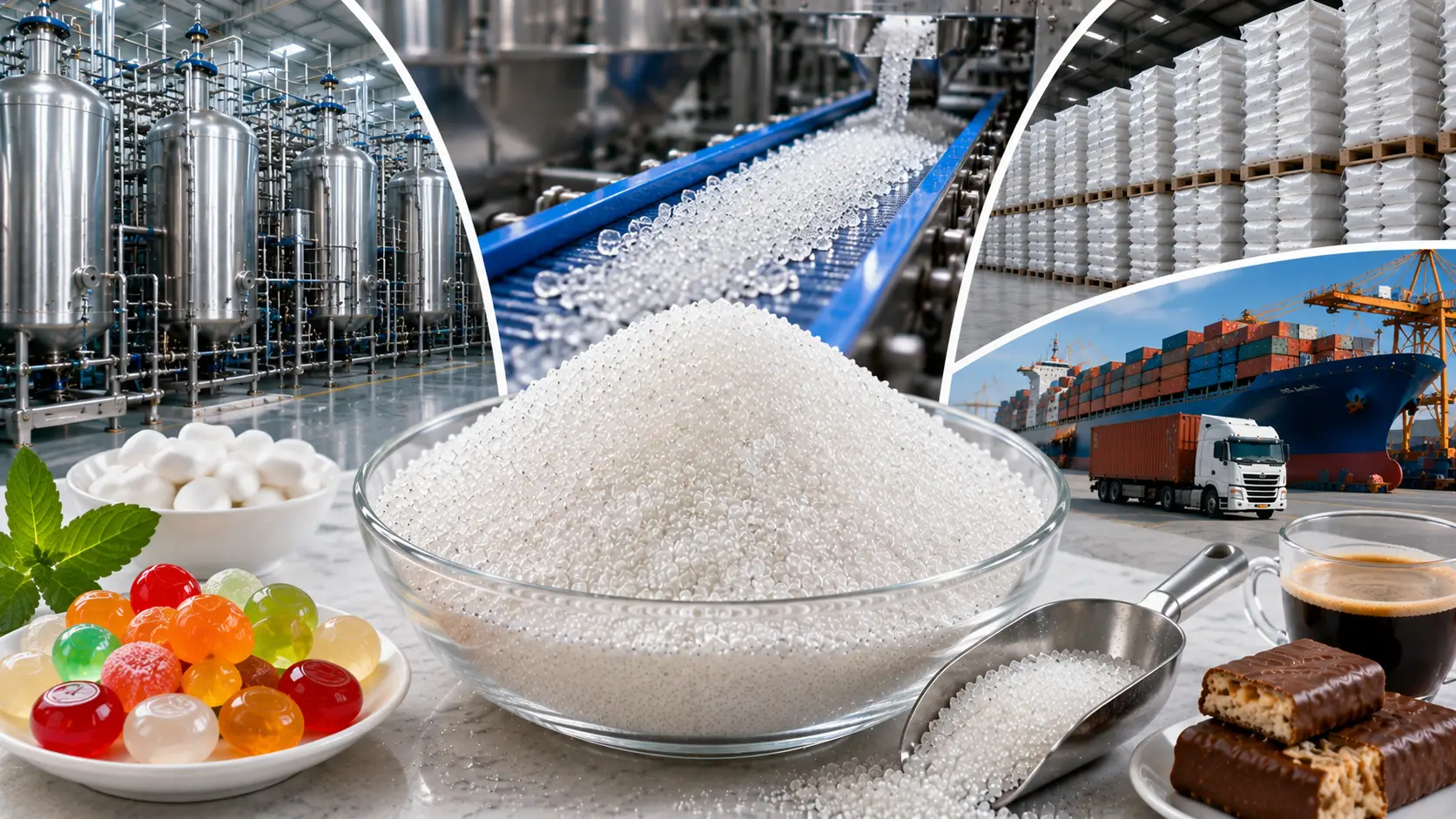
Isomalt has become an important functional ingredient for manufacturers developing sugar-reduced and specialty formulations. As a polyol derived from sucrose, isomalt provides sweetness with lower caloric value than traditional sugar while maintaining desirable physical properties such as stability, low moisture absorption, and a clean taste profile. These characteristics make it suitable for industrial applications where product texture, shelf life, and processing performance are essential.
According to technical information from European Food Safety Authority, polyols including isomalt have been evaluated for their safety and use as food ingredients under regulated food applications. This regulatory recognition supports continued adoption by manufacturers seeking alternatives to conventional sugar-based ingredients.
The commercial value of isomalt comes from its ability to perform similarly to sugar in many processing environments. It offers good thermal stability, crystallization control, and resistance to humidity, making it especially useful in applications where appearance and texture directly influence consumer acceptance.
For confectionery producers, these characteristics allow the development of clear hard candies, decorative products, and sugar-free formulations. For pharmaceutical manufacturers, the ingredient’s functional behavior supports applications where taste, tablet structure, and patient experience are important considerations.
Tradeasia buyers looking for detailed specifications, industrial applications, and supplier information can explore the isomalt product page to evaluate sourcing requirements and available product information.
The confectionery industry represents one of the most established application areas for isomalt. Manufacturers use isomalt in sugar-free candies, lozenges, chewing products, and decorative confectionery because it provides sweetness while helping maintain the texture and appearance expected from traditional sugar-based products.
Market interest in sugar reduction continues to influence ingredient selection across the food sector. According to World Health Organization, reducing excessive free sugar consumption remains an important nutrition objective, encouraging food companies to reformulate products with alternative sweetening solutions.
Beyond confectionery, isomalt is also used in selected bakery and specialty food formulations where manufacturers require sweetness, stability, and improved product functionality. Its lower hygroscopicity compared with sugar can help support products requiring controlled moisture interaction.
Technical guidance from Food and Agriculture Organization of the United Nations highlights the importance of food ingredient innovation in developing products that meet changing consumer expectations. This trend creates opportunities for suppliers supporting manufacturers with functional ingredients such as isomalt.
For industrial buyers, sourcing the correct grade and consistent supply of isomalt is essential because formulation performance depends on quality specifications, processing compatibility, and regulatory compliance.
Pharmaceutical manufacturers use isomalt as a functional excipient in applications where stability, taste improvement, and formulation performance are required. It may be incorporated into chewable tablets, lozenges, and other oral dosage formats where palatability is an important factor.
According to technical information published by pharmaceutical ingredient suppliers and industry references, polyols such as isomalt are valued in oral healthcare and pharmaceutical applications because they provide suitable texture characteristics while supporting sugar-free product development.
The growth of nutraceutical products has increased demand for ingredients that support functional positioning and consumer-friendly formulations. Isomalt can be considered by manufacturers developing supplements, wellness products, and oral delivery formats requiring controlled sweetness.
For procurement teams, selecting an isomalt supplier involves reviewing documentation, quality standards, production capability, and suitability for the intended application. Reliable sourcing helps manufacturers maintain consistency across production batches and meet customer expectations.
The global shift toward healthier eating patterns has encouraged food manufacturers to explore alternatives to traditional sugar. Isomalt benefits from this movement because it allows companies to reformulate products while preserving important sensory and processing characteristics.
Industry analysis from Grand View Research indicates continued growth in the broader sweetener and sugar substitute markets, supported by demand from food, beverage, and health-focused product manufacturers.
As food and pharmaceutical industries become increasingly globalized, manufacturers often seek international ingredient partners capable of supporting consistent supply, documentation requirements, and cross-border logistics.
This creates opportunities for chemical marketplaces and distributors to connect producers with buyers searching for dependable isomalt sourcing channels. Suppliers with strong quality systems and export capabilities are better positioned to serve multinational procurement requirements.
Industrial buyers typically assess several factors before selecting an isomalt supplier. These include product grade, compliance documentation, packaging options, supply capacity, and the supplier’s ability to support long-term procurement needs.
For food and pharmaceutical applications, buyers often require transparency regarding quality standards and technical documentation. These considerations help manufacturers reduce supply risks and maintain consistent production performance.
International buyers frequently compare suppliers based on reliability, commercial terms, logistics capability, and application expertise. A competitive supplier relationship involves more than product availability; it requires understanding the buyer’s industry requirements and supporting efficient sourcing decisions.
Tradeasia’s marketplace approach helps connect industrial buyers with ingredient suppliers by providing access to product information and sourcing opportunities. Buyers can review isomalt supplier information to support procurement evaluation.
Isomalt represents a commercially relevant ingredient for manufacturers seeking solutions in sugar reduction, confectionery innovation, and pharmaceutical formulation. As demand evolves, buyers increasingly require transparent sourcing channels that simplify supplier discovery and comparison.
A B2B marketplace environment supports procurement teams by improving access to product information, supplier networks, and international trade opportunities. This is particularly valuable for companies operating across multiple regions or managing complex ingredient supply chains.
The connection between end-use applications and sourcing reliability is critical in ingredient procurement. Manufacturers need suppliers that understand technical requirements and can provide consistent materials for production.
Tradeasia supports industrial sourcing by helping buyers explore available ingredient solutions. Companies interested in evaluating isomalt for industrial applications can access the isomalt for industrial applications page for further product details.
Isomalt continues to hold commercial importance across confectionery, food ingredient, pharmaceutical, and nutraceutical industries. Its functional characteristics make it a valuable option for manufacturers responding to demand for reduced-sugar and specialty formulations.
According to market observations from industry research organizations, continued innovation in food ingredients and healthier product development is expected to influence demand for alternative sweeteners and functional ingredients.
For procurement teams, successful isomalt sourcing depends on balancing product quality, supplier reliability, regulatory requirements, and commercial flexibility. Companies evaluating supply opportunities can benefit from working with marketplaces that provide structured product information and global sourcing connections.
Tradeasia provides a platform for buyers seeking industrial ingredient solutions, with the isomalt sourcing page serving as a reference point for companies exploring supply options.
Sources
We're committed to your privacy. Tradeasia uses the information you provide to us to contact you about our relevant content, products, and services. For more information, check out our privacy policy.


 English
 Indonesian
 简体字
简体字
 العربية
 Español
 Français
 Português
 日本語
日本語
 한국어
한국어
 Tiếng Việt



















