Explore our network of country and industry based websites to access localized information, product offerings, and business services across our group.
Log in to start sending quotation requests for any product.
Don't have an account? Sign Up Here
Home Pea Starch Procurement Guide for Global Food Ingredient Buyers
Trade Insights | Applications and Buyers | 25 August 2026
Pea Starch in the B2B Food Ingredient Market
Key Food Applications for Pea Starch
Pea Starch in Bakery and Confectionery
Pea Starch for Meat and Plant-Based Formulations
Pea Starch in Dairy, Snacks, and Prepared Foods
What Buyers Should Evaluate When Sourcing Pea Starch
B2B Procurement and Supplier Selection
Conclusion: Building a Reliable Pea Starch Supply Strategy
Sources
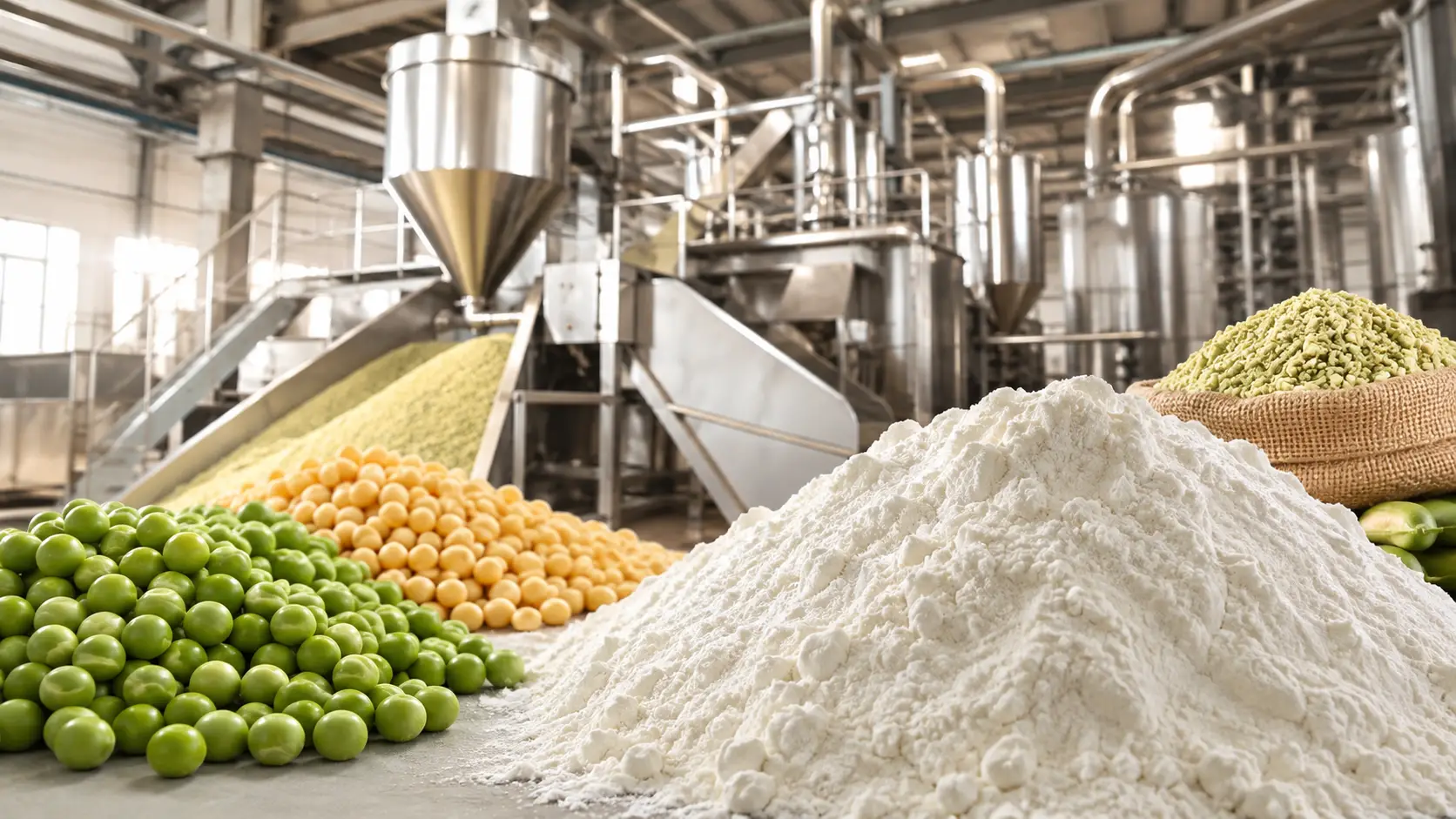
Pea starch is a plant-derived starch ingredient positioned for commercial use across a range of food formulations. For B2B buyers, its value is not simply in being a starch, but in its ability to contribute functional characteristics to finished products while fitting into plant-based and ingredient-conscious formulation strategies. Codex identifies starch as a glucose polymer occurring naturally in plant materials including peas, establishing the broader technical basis for starch ingredients derived from pulses.
For food manufacturers, pea starch can therefore be evaluated as a functional formulation component rather than simply a commodity powder. Its commercial relevance depends on the intended application, processing conditions, required texture, product positioning, and specification expectations. This makes application knowledge important when procurement teams compare potential suppliers.
The same starch ingredient can perform differently depending on processing conditions and the surrounding formulation. Buyers need to understand how the material is expected to behave in the target food system before selecting a specification or negotiating supply. Factors such as processing intensity, formulation composition, desired texture, and finished-product characteristics can influence the suitability of a starch.
This creates an opportunity for B2B marketplaces and ingredient suppliers to connect product sourcing with application requirements. Rather than treating pea starch as a one-size-fits-all material, procurement teams can approach sourcing around the specific food category, processing environment, and performance expectations of their manufacturing operation.
Bakery and cereal products represent important application areas for food starches because starch functionality can contribute to structure and texture. Commercial starch portfolios commonly include bakery mixes, snacks, cereals, and other processed food applications, demonstrating the broad role starches can play in food formulation.
For buyers considering pea starch, the key question is how the ingredient fits the desired formulation rather than whether starch is required in general. Product developers can assess pea starch against processing conditions and finished-product objectives, while procurement teams can use those technical requirements to define a suitable purchasing specification.
Starch ingredients are also relevant to prepared foods, where texture and consistency are important commercial considerations. Food manufacturers producing sauces, fillings, soups, processed foods, and other formulated products routinely evaluate starch-based ingredients for functional performance.
Pea starch can consequently attract interest from manufacturers looking for a plant-derived starch option within their ingredient portfolio. For B2B sourcing, this means the buyer profile extends beyond ingredient traders to formulation companies, prepared-food producers, processors, and distributors supplying food manufacturers.
Confectionery is another area where pea starch can have commercial relevance. Technical information for food-grade pea starch identifies confectionery applications and describes functionality associated with gel formation and texture. This makes application-specific evaluation particularly important for manufacturers developing products where texture is a defining quality attribute.
For procurement teams, the practical implication is that sourcing should begin with the formulation target. A buyer may require a starch for a particular texture profile, processing method, or label strategy, so supplier discussions should address the intended application instead of focusing only on price per metric ton.
Pea starch can also fit product-development strategies centered on plant-derived ingredients. Commercial pea starch specifications may identify attributes such as plant origin and suitability for food formulations, while application materials highlight its potential role in vegan and plant-based confectionery concepts.
This can make pea starch relevant to manufacturers responding to formulation trends without assuming that every pea starch product has identical certifications or regulatory status. Buyers should verify the exact documentation, specification, and permitted use applicable to their target market before commercial adoption.
Starch functionality has established relevance in processed meat formulations. Commercial food-ingredient portfolios list processed meat among applications for native starches, reflecting the importance of starch-based ingredients in formulated food systems.
For pea starch buyers, the commercial opportunity lies in evaluating whether the ingredient meets the formulation's functional requirements. Procurement teams should coordinate closely with technical departments so that the selected material is assessed against the actual manufacturing process and finished-product specifications rather than purchased solely according to generic starch terminology.
Pea-derived ingredients are particularly relevant to plant-based food development, although starch and pea protein perform different functions. Pea starch should therefore be positioned according to its starch functionality rather than treated as a substitute for pea protein. The distinction is important for buyers developing meat alternatives, snacks, prepared foods, or other plant-based products.
A B2B buyer may nevertheless evaluate pea starch as part of a broader plant-based ingredient strategy. This can involve coordinating starch with proteins, fibers, oils, seasonings, and other formulation components. Supplier conversations should consequently identify the complete application context and expected processing conditions.
Food starches have applications across dairy and dairy-alternative categories, including products where texture, consistency, and processing behavior are commercially important. Industry ingredient portfolios identify dairy desserts and related food categories among starch application areas.
For buyers, this creates a potential role for pea starch within formulation development where a plant-derived starch ingredient is being considered. The technical team should establish the required functional performance first, followed by procurement specifications covering quality, documentation, packaging, storage, and supply consistency.
Snacks and convenience foods are additional areas where starch functionality can support product development. Commercial starch applications include snacks, extruded products, instant food powders, and prepared foods, showing how starch ingredients can be integrated into diverse processing environments.
From a B2B purchasing perspective, the relevant buyer is often looking for repeatable performance at commercial scale. This shifts attention toward supplier reliability, batch consistency, technical documentation, packaging suitability, and the ability to maintain supply over recurring production cycles rather than evaluating a sample in isolation.
A professional sourcing process should begin with a clear product specification. Depending on the application, buyers may evaluate physical appearance, particle size, moisture, microbiological parameters, regulatory information, packaging, storage requirements, and other quality characteristics. A current commercial pea starch specification, for example, demonstrates how these parameters can be documented in a technical product specification.
Buyers should avoid assuming that every supplier's pea starch is technically identical. The correct comparison requires matching the supplier specification against the manufacturer's formulation and regulatory requirements. This approach reduces the risk of selecting a lower-cost material that does not perform as expected in production.
Regulatory and documentation requirements should also be part of the sourcing decision. Codex's General Standard for Food Additives provides an international reference framework for permitted food additives and their conditions of use, while individual markets can impose additional requirements.
For this reason, buyers should request relevant technical documentation and independently verify suitability for the destination market and intended food application. Documentation can include product specifications, certificates, regulatory statements, allergen information, and other records required by the buyer's quality-management system.
A reliable pea starch supplier should be evaluated on more than product availability. Procurement teams can consider consistency of specifications, technical documentation, packaging options, communication, lead times, order quantities, and the supplier's ability to support recurring commercial requirements.
The importance of supplier capability increases when pea starch becomes part of a standardized production formula. A food manufacturer may need predictable deliveries across multiple purchasing cycles, making supply continuity an important part of the total sourcing decision.
B2B sourcing works best when the buyer and supplier establish clear expectations from the beginning. Product specifications, application requirements, packaging, delivery terms, documentation, and quality expectations should be aligned before a recurring supply program is established.
For distributors and ingredient traders, application knowledge can also strengthen the commercial proposition. Instead of presenting pea starch only as a raw material, suppliers can position it according to the food categories and buyer requirements it is intended to support. This creates a more useful procurement conversation and helps buyers identify appropriate supply options.
Pea starch offers B2B relevance across food applications where starch functionality, plant-derived ingredients, and formulation performance are important considerations. Its potential applications span bakery, confectionery, snacks, prepared foods, processed meat, dairy-related products, and plant-based formulations, subject to the specifications and processing requirements of each product.
For procurement teams, the strongest sourcing strategy is therefore application-led. Buyers should define the required functionality, quality parameters, documentation, packaging, and supply expectations before comparing suppliers. This helps transform pea starch procurement from a simple commodity purchase into a structured ingredient-sourcing decision.
Tradeasia International can serve as a commercial connection point for businesses evaluating food-ingredient sourcing opportunities, helping buyers and suppliers engage around product requirements and international B2B trade. For manufacturers, distributors, and procurement teams, the objective is to identify supply options that align with technical specifications and commercial requirements.
As demand for plant-derived food ingredients continues to influence formulation strategies, pea starch can remain a relevant ingredient for manufacturers seeking functional starch solutions. A disciplined approach to specifications, applications, supplier evaluation, and regulatory verification gives B2B buyers a stronger foundation for developing dependable pea starch supply relationships.
We're committed to your privacy. Tradeasia uses the information you provide to us to contact you about our relevant content, products, and services. For more information, check out our privacy policy.


 English
 Indonesian
 简体字
简体字
 العربية
 Español
 Français
 Português
 日本語
日本語
 한국어
한국어
 Tiếng Việt



















