Explore our network of country and industry based websites to access localized information, product offerings, and business services across our group.
Log in to start sending quotation requests for any product.
Don't have an account? Sign Up Here
Home Vital Wheat Gluten Sourcing Insights for Global Food Manufacturers
Trade Insights | Applications and Buyers | 22 June 2026
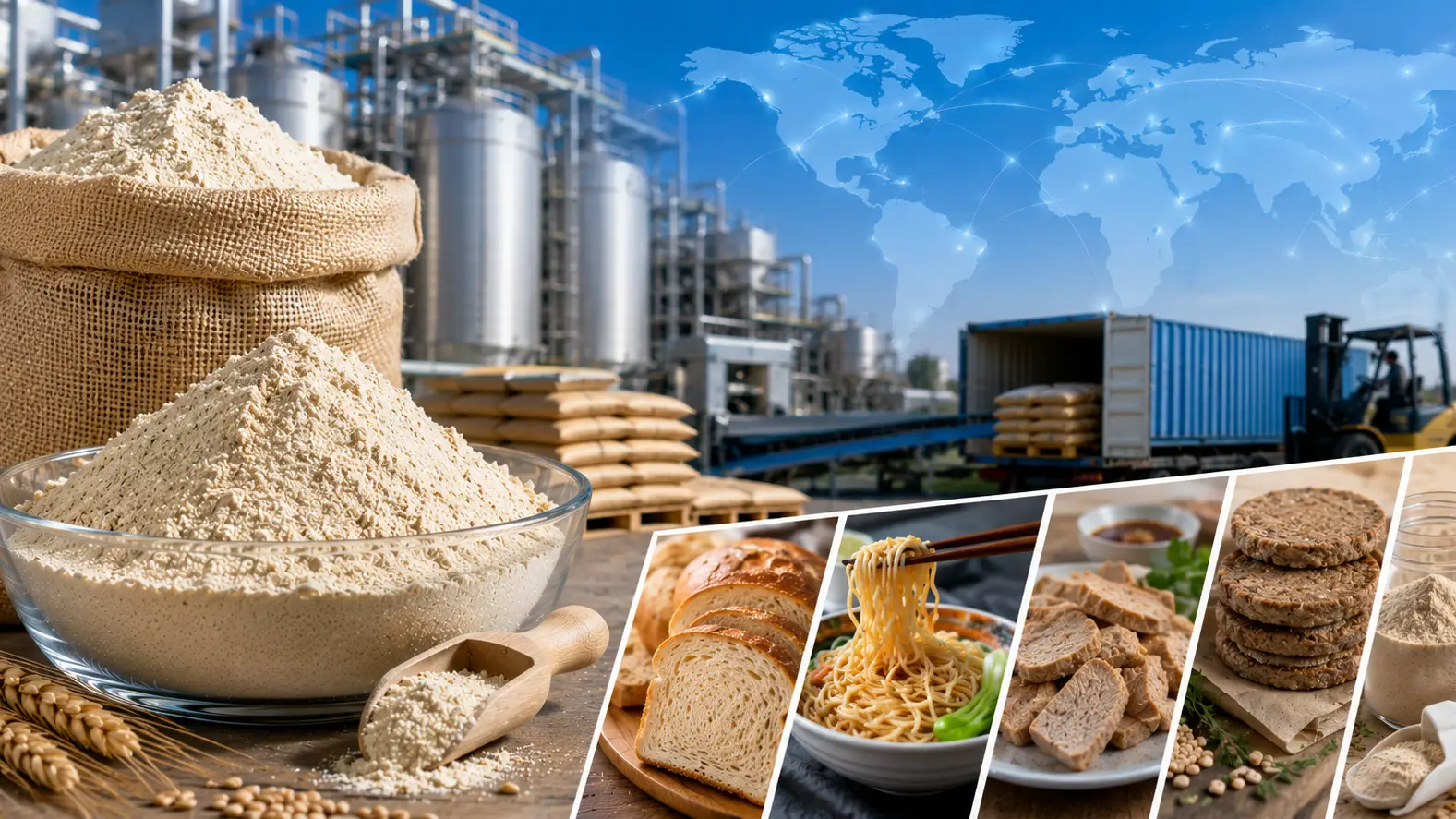
Global Market Overview of Vital Wheat Gluten Demand
Industrial Applications in Bakery and Dough-Based Products
Functional Role in Food Processing and Protein Formulation
Key Buyer Segments and Procurement Decision Factors
Global Supply Chain and Sourcing Dynamics
Quality Standards, Safety Regulations, and Compliance
Strategic Outlook for B2B Buyers and Market Positioning
The global demand for Vital Wheat Gluten has been increasing steadily due to the expansion of plant-based protein applications in food manufacturing. According to insights from the Food and Agriculture Organization (FAO), wheat-derived proteins remain a key contributor to global protein supply chains. This shift is particularly driven by the need for cost-efficient and functional protein ingredients.
As food manufacturers seek alternatives to animal proteins, Vital Wheat Gluten has emerged as a widely used functional ingredient. Its ability to provide elasticity and structure makes it essential in processed food systems. This has strengthened its position in both developed and emerging food markets.
The rising adoption of protein enrichment in packaged foods further reinforces its relevance. Manufacturers are integrating wheat gluten into formulations to enhance texture and nutritional value. This trend continues to expand across bakery and meat substitute industries.
Based on market analysis published by OECD-FAO Agricultural Outlook, wheat protein consumption is growing alongside global food processing expansion. The industrial food sector increasingly relies on gluten-based ingredients for product stability.
Vital Wheat Gluten is also benefiting from cost optimization trends in food production. Manufacturers are shifting toward ingredients that improve yield efficiency and reduce formulation complexity. This makes wheat gluten a strategic input in large-scale food production systems.
As global consumption patterns evolve, demand for structured plant proteins is expected to remain strong. This positions Vital Wheat Gluten as a long-term staple in industrial ingredient sourcing.
Vital Wheat Gluten is widely used in bakery applications to improve dough elasticity and strength. According to technical references from the American Association of Cereal Chemists International (AACC), gluten proteins are essential for gas retention and dough structure formation.
In industrial baking, it helps maintain consistency across high-volume production lines. Bakers use it to improve bread volume, chewiness, and texture stability. This is particularly important in frozen dough and packaged bakery products.
Its functional properties make it suitable for both artisanal and industrial baking systems. It allows manufacturers to standardize product quality while maintaining efficiency in production.
Beyond bakery products, Vital Wheat Gluten is used in flour blending to enhance protein content. This supports manufacturers producing high-protein bread, noodles, and pasta.
Its application ensures better dough handling properties during mechanical processing. This reduces production losses and improves yield consistency in industrial environments.
Food manufacturers also use it to adapt flour performance for specific product requirements. This flexibility increases its commercial importance across global food processing sectors.
Vital Wheat Gluten plays a critical role in food engineering due to its viscoelastic properties. Research from the European Food Safety Authority (EFSA) highlights its importance in maintaining structural integrity in processed foods.
It acts as a binding and texturizing agent in various formulations. This makes it valuable in meat analogs and plant-based protein systems.
Its ability to mimic meat-like texture has made it a key ingredient in alternative protein innovation. Food developers rely on it to create realistic and stable product structures.
In meat alternative production, Vital Wheat Gluten is used as a primary protein base. It helps replicate fibrous textures found in animal proteins.
Manufacturers integrate it into sausages, burgers, and plant-based protein strips. This supports the growing demand for vegetarian and vegan food products globally.
Its stability during cooking processes ensures consistent product quality. This makes it a preferred ingredient in large-scale food innovation projects.
The primary buyers of Vital Wheat Gluten include food manufacturers, bakery producers, and plant-based protein companies. According to industry procurement studies from McKinsey Food Insights, ingredient sourcing decisions are increasingly driven by functionality and cost efficiency.
Procurement teams evaluate suppliers based on consistency, protein content, and processing compatibility. These factors directly influence production performance and final product quality.
Bulk availability and supply reliability are also critical considerations. Buyers prefer suppliers that can ensure uninterrupted industrial-scale delivery.
Buyers often compare suppliers based on product purity, pricing stability, and logistics efficiency. This ensures optimized production planning and reduced operational risk.
Technical support and documentation also play a role in procurement decisions. Manufacturers require clear specifications for formulation integration.
As a result, sourcing platforms like Tradeasia and Chemtradeasia provide value by centralizing verified supplier information.
Global wheat gluten supply is closely linked to wheat production and milling industries. According to the International Grains Council (IGC), wheat processing outputs significantly influence gluten availability in international markets.
Major exporting regions include North America, Europe, and parts of Asia. These regions supply industrial-grade wheat gluten to food manufacturing hubs worldwide.
Supply chain efficiency is critical due to dependency on agricultural cycles. This makes sourcing strategy an important factor for buyers.
Wheat-based ingredient pricing is influenced by raw grain fluctuations and energy costs. This impacts procurement planning for food manufacturers.
Logistics also plays a key role in maintaining product quality during international transport. Proper handling ensures protein stability and functional performance.
Buyers increasingly seek long-term supply agreements to stabilize cost structures. This improves predictability in large-scale production operations.
Vital Wheat Gluten must comply with strict food safety regulations depending on the destination market. According to the U.S. Food and Drug Administration (FDA), wheat gluten is classified as a recognized food ingredient under specific purity standards.
Manufacturers require certifications such as ISO and HACCP compliance to ensure safety and traceability. These standards support global trade acceptance.
Quality assurance is essential for maintaining consumer trust in food products. This is especially important in exported processed foods.
Different regions enforce varying standards for food ingredient imports. The European Union and GCC countries maintain strict guidelines for protein-based additives.
Compliance ensures smooth customs clearance and market access. Suppliers must meet documentation requirements for international trade.
This regulatory complexity increases demand for verified B2B sourcing platforms.
The outlook for Vital Wheat Gluten remains strong due to increasing demand for plant-based and functional food ingredients. Market research from Statista indicates continuous growth in plant protein consumption globally.
Food manufacturers are expected to expand usage in both traditional and alternative protein sectors. This strengthens its long-term industrial relevance.
Innovation in food formulation continues to expand application possibilities. This supports sustained market growth.
For B2B buyers, reliable sourcing is essential to maintain production stability and cost efficiency. Tradeasia and Chemtradeasia provide structured access to verified suppliers and bulk procurement options.
This improves transparency in ingredient sourcing and reduces procurement risks. Buyers benefit from centralized information and global trade connectivity.
As food manufacturing becomes more complex, strategic sourcing of Vital Wheat Gluten remains a key competitive advantage.
Sources
We're committed to your privacy. Tradeasia uses the information you provide to us to contact you about our relevant content, products, and services. For more information, check out our privacy policy.


 English
 Indonesian
 简体字
简体字
 العربية
 Español
 Français
 Português
 日本語
日本語
 한국어
한국어
 Tiếng Việt



















