Explore our network of country and industry based websites to access localized information, product offerings, and business services across our group.
Log in to start sending quotation requests for any product.
Don't have an account? Sign Up Here
Home Sodium Nitrite Compliance in ASEAN’s Processed Meat Industry
Trade Insights | Regulatory and Compliance | 20 May 2026
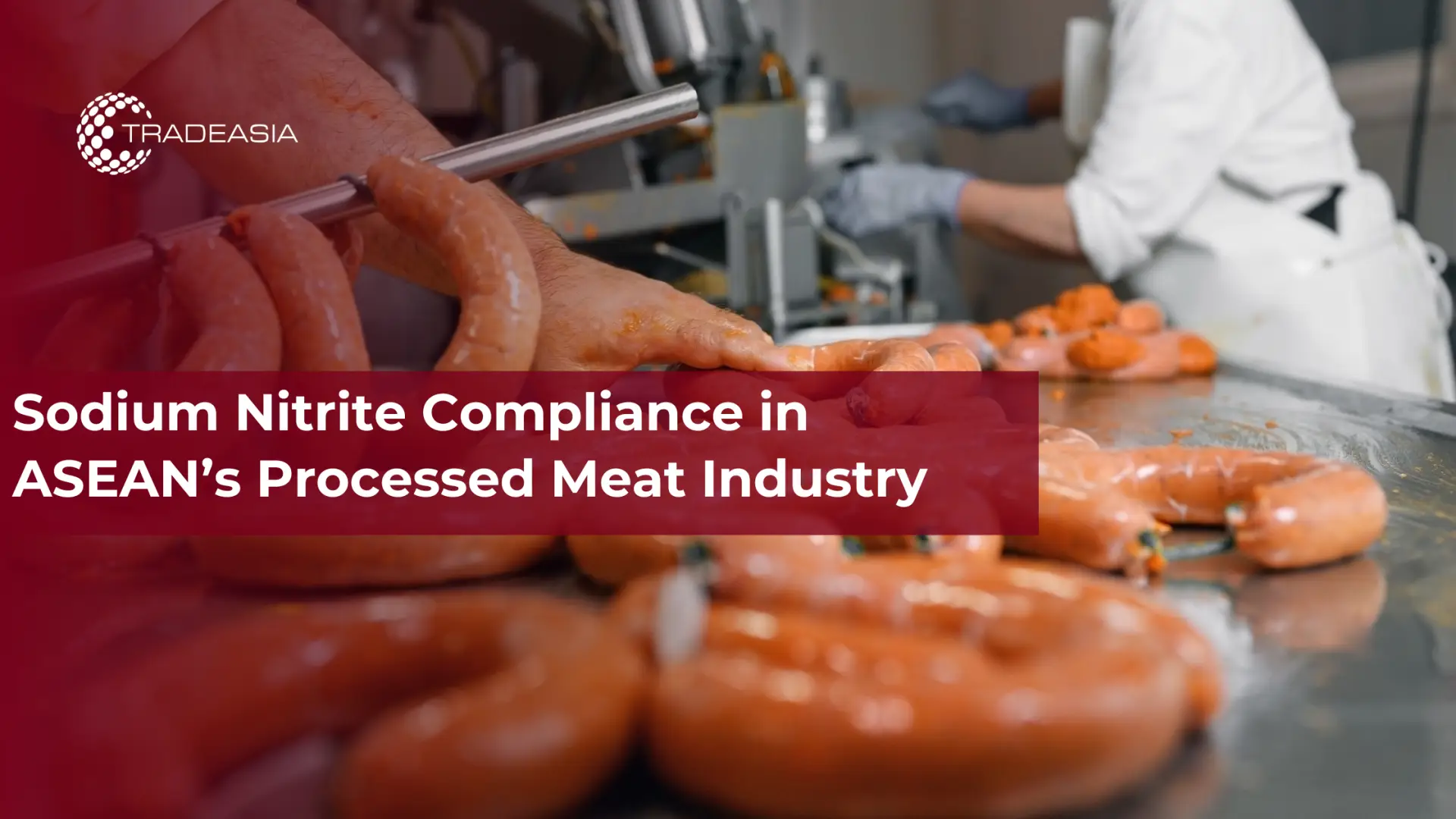
The processed meat industry across Southeast Asia has experienced rapid transformation over the past two decades as urbanization, rising disposable income, changing dietary habits, modern retail expansion, and food-service growth continue reshaping regional food consumption patterns. Countries such as Indonesia, Thailand, Vietnam, and Malaysia are witnessing significant increases in demand for sausages, cured meats, smoked products, canned meats, ready-to-eat protein products, frozen processed foods, and convenience-oriented meat applications designed for increasingly urban lifestyles. Within this rapidly expanding industrial food ecosystem, sodium nitrite remains one of the most strategically important but heavily regulated food additives due to its critical role in meat preservation, microbial safety, color stabilization, and shelf-life management.
Sodium nitrite occupies a uniquely sensitive position within food regulation because it delivers both major technological benefits and significant regulatory challenges simultaneously. In processed meat systems, sodium nitrite functions as a curing agent that helps inhibit dangerous microorganisms, particularly Clostridium botulinum, while also contributing to characteristic cured-meat color, flavor development, oxidative stability, and extended shelf life. Without nitrite-based curing systems, many industrial processed meat categories would face substantially greater microbiological risks, shorter distribution windows, and reduced commercial scalability. However, excessive nitrite usage or improper processing conditions may also contribute to nitrosamine formation, a major toxicological concern linked to potential carcinogenic risks. As a result, governments worldwide regulate sodium nitrite far more strictly than many other food additives.
Within ASEAN markets, the complexity of sodium nitrite compliance becomes even more pronounced because Southeast Asia combines rapid processed-food growth with fragmented regulatory systems, differing halal standards, evolving food safety infrastructures, and highly variable enforcement capabilities. Indonesia, Thailand, Vietnam, and Malaysia each maintain their own food additive regulations, import frameworks, labeling systems, and inspection procedures governing sodium nitrite usage in processed meat applications. While ASEAN economic integration continues progressing through regional harmonization efforts, food additive regulation still differs significantly across member states in terms of allowable usage categories, maximum dosage limits, compliance documentation, and market surveillance practices.
The regulatory importance of sodium nitrite has increased substantially as ASEAN’s processed meat sector expands under the influence of modern retail development and changing consumer behavior. Supermarkets, convenience stores, quick-service restaurants, frozen-food distribution networks, and e-commerce grocery systems are driving rising demand for packaged and shelf-stable meat products capable of surviving complex regional supply chains. Manufacturers therefore increasingly depend on preservation systems that combine food safety, operational scalability, and commercial efficiency. Sodium nitrite remains central to these systems because of its effectiveness in controlling microbial hazards and stabilizing processed meat products during transportation, warehousing, retail display, and consumer storage.
At the same time, ASEAN food regulators are under growing pressure to strengthen food safety oversight due to increasing consumer awareness, international trade integration, public health concerns, and export-market competitiveness. Nitrite usage attracts particular regulatory attention because of its association with processed meat safety, residue control, and long-term health debates. Governments throughout Southeast Asia are therefore continuously refining additive standards, labeling requirements, inspection systems, and halal certification frameworks affecting sodium nitrite applications within meat processing industries.
Halal compliance further complicates sodium nitrite regulation in ASEAN because Indonesia and Malaysia represent two of the world’s largest halal-sensitive food markets. Processed meat manufacturers operating within these markets must ensure not only compliance with additive regulations but also compatibility with halal processing standards, ingredient traceability systems, contamination prevention protocols, and religious certification requirements. Although sodium nitrite itself is generally considered permissible under halal frameworks when produced appropriately, its use within processed meat systems remains closely connected to broader halal governance involving slaughtering procedures, processing controls, ingredient sourcing, and manufacturing integrity.
International trade dynamics also contribute to the importance of sodium nitrite compliance across ASEAN. The region functions simultaneously as a major consumer market, a growing processed-food manufacturing hub, and an increasingly important participant in global meat supply chains. Processed meat manufacturers exporting products regionally or internationally must therefore navigate multiple regulatory environments while maintaining consistent product quality and safety standards.
This article provides a comprehensive analysis of sodium nitrite compliance within ASEAN’s rapidly growing processed meat industry, focusing specifically on regulatory frameworks in Indonesia, Thailand, Vietnam, and Malaysia, as well as additive maximum levels, halal-sensitive applications, labeling systems, and broader food safety governance shaping the future of processed meat manufacturing across Southeast Asia.
Sodium nitrite has remained deeply integrated within global processed meat industries because it performs several critical technological functions simultaneously. Unlike many additives that serve only a single purpose, sodium nitrite contributes to microbial safety, color development, flavor stabilization, oxidative protection, and shelf-life extension within cured meat products.
One of the additive’s most important functions is its ability to inhibit Clostridium botulinum, the bacterium responsible for botulism, one of the most dangerous foodborne illnesses associated with improperly preserved foods. In processed meat systems where anaerobic conditions may exist, nitrite functions as a highly important antimicrobial barrier supporting food safety during storage and distribution.
Sodium nitrite also contributes to the distinctive pink or reddish appearance associated with cured meats such as sausages, hot dogs, cured beef, luncheon meats, smoked poultry products, and processed meat slices. Consumers strongly associate this color profile with freshness, quality, and product identity. Without nitrite-based curing systems, processed meats would often display less commercially attractive gray or brown coloration.
Flavor stabilization represents another commercially important benefit. Nitrite contributes to the characteristic cured-meat flavor profile expected by consumers while simultaneously slowing oxidative deterioration that may otherwise create rancidity and off-flavors during storage.
These functional benefits explain why sodium nitrite remains difficult to replace completely despite ongoing public-health debates and clean-label trends. Processed meat manufacturers continue relying on nitrite systems because they combine microbial protection, product consistency, and operational scalability in ways few alternative technologies can fully replicate at industrial scale.
The processed meat sector across ASEAN has expanded rapidly due to demographic and economic transformation throughout Southeast Asia. Rising urban populations, increasing workforce participation, changing dietary habits, and modern retail penetration are driving substantial growth in demand for convenient protein products requiring minimal preparation.
Indonesia, Thailand, Vietnam, and Malaysia have all experienced rising consumption of sausages, frozen meat products, canned meats, processed poultry products, and ready-to-cook foods. International fast-food chains, convenience-store expansion, supermarket growth, and online grocery systems have accelerated the industrialization of meat processing throughout the region.
This growth has significantly increased the importance of food additive regulation because industrial processed meat systems depend heavily on standardized preservation and curing technologies. Sodium nitrite therefore sits at the center of regulatory attention as governments seek to balance food safety, public-health protection, and industrial food production needs.
ASEAN regulators face particularly complex challenges because processed meat industries are growing faster than regulatory harmonization efforts in some areas. Differences in food safety infrastructure, laboratory capacity, enforcement consistency, halal governance, and import oversight create varying compliance expectations across member states.
At the same time, ASEAN governments are increasingly aligning food safety systems with international frameworks due to export ambitions and rising consumer expectations. This trend is contributing to tighter additive monitoring, stronger labeling enforcement, improved inspection systems, and expanding traceability requirements throughout regional processed-food industries.
Indonesia represents one of ASEAN’s largest and most strategically important processed-food markets due to its enormous population, rapid urbanization, expanding middle class, and highly developed halal economy. The country’s processed meat industry continues growing as modern retail infrastructure expands and consumer demand for convenient protein products increases.
Sodium nitrite regulation in Indonesia falls primarily under the authority of Badan Pengawas Obat dan Makanan, commonly known as BPOM. BPOM oversees food additive approvals, labeling requirements, maximum usage levels, food safety standards, and import compliance systems governing processed-food products entering or manufactured within Indonesia.
Indonesia permits sodium nitrite usage within specific processed meat categories under controlled maximum limits designed to balance technological functionality with consumer safety. Manufacturers must comply with permitted dosage restrictions and ensure products remain within regulatory specifications throughout commercial shelf life.
BPOM increasingly emphasizes food safety documentation, additive traceability, and manufacturing compliance due to growing public awareness surrounding processed-food quality and foodborne health risks. Processed meat manufacturers operating in Indonesia are expected to maintain proper documentation regarding additive usage, production controls, and quality-assurance procedures.
Indonesia’s halal framework further strengthens compliance complexity because processed meat systems must comply not only with food safety laws but also with halal assurance requirements governed under the country’s expanding halal regulatory infrastructure. Processed meat manufacturers targeting Indonesian markets increasingly integrate halal traceability systems into additive management and ingredient sourcing programs.
Thailand possesses one of Southeast Asia’s most advanced food-processing industries and functions as a major regional exporter of processed poultry, meat products, and ready-to-eat foods. The country’s industrial food sector benefits from sophisticated manufacturing infrastructure, strong export orientation, and extensive integration into international food supply chains.
The Thai Food and Drug Administration regulates sodium nitrite usage within processed foods through additive approval systems, food safety standards, and inspection programs governing domestic production and imports. Thailand generally aligns many aspects of its food additive governance with international Codex frameworks while maintaining national implementation requirements.
Thai regulators place strong emphasis on manufacturing hygiene, additive control, microbiological safety, and export competitiveness. Processed meat producers supplying both domestic and international markets are expected to maintain rigorous quality-control systems ensuring compliance with additive limits and food safety regulations.
Thailand’s export-oriented meat industry has contributed to relatively advanced compliance capabilities among larger manufacturers. Many processors operate under HACCP, ISO, BRC, or international retailer certification systems requiring disciplined additive management and extensive documentation controls.
However, smaller domestic producers may still face operational challenges related to regulatory consistency, technical expertise, and laboratory verification capacity. This creates varying levels of compliance sophistication across Thailand’s processed meat landscape.
Vietnam’s processed-food industry has expanded rapidly alongside economic growth, rising urbanization, and increasing integration into regional trade systems. Demand for packaged meats, frozen foods, convenience products, and modern retail offerings continues increasing across major Vietnamese cities.
Vietnam regulates sodium nitrite through food additive standards overseen by the Ministry of Health and related food safety authorities. The country has gradually strengthened food safety regulation due to rising export ambitions, growing consumer expectations, and increasing participation in international food trade.
Vietnamese authorities continue modernizing food safety infrastructure including laboratory capabilities, inspection systems, and additive governance frameworks. Processed meat manufacturers are increasingly expected to maintain stronger documentation systems and traceability capabilities supporting regulatory compliance.
However, Vietnam’s regulatory environment remains somewhat transitional compared to more mature systems such as Japan or the European Union. Enforcement consistency and technical implementation may vary depending on product category, manufacturing scale, and inspection resources.
Nevertheless, international investment and export-market participation are steadily encouraging higher compliance standards throughout Vietnam’s food-processing sector.
Malaysia occupies a uniquely important position within ASEAN food industries because the country functions as one of the world’s leading halal regulatory and certification centers. Processed meat manufacturers targeting Malaysian markets must therefore navigate both conventional food safety requirements and highly developed halal governance systems.
Sodium nitrite itself is generally permitted within approved processed meat applications when compliant with food safety regulations and halal production standards. However, additive compliance becomes closely linked to broader halal assurance frameworks involving ingredient sourcing, contamination prevention, processing integrity, and traceability verification.
Malaysia’s Ministry of Health oversees food additive regulation while JAKIM plays a central role in halal certification and governance. Processed meat manufacturers must therefore satisfy multiple layers of compliance simultaneously.
Malaysia’s processed-food market is highly quality-sensitive, particularly regarding halal assurance and imported-food integrity. This creates strong incentives for manufacturers to maintain disciplined additive management systems and transparent documentation practices.
One of the central regulatory issues surrounding sodium nitrite involves maximum allowable usage levels designed to minimize excessive exposure and reduce nitrosamine formation risks. Nitrosamines may form under certain processing conditions when nitrites react with amines, particularly during high-temperature cooking or prolonged storage.
Because some nitrosamines are classified as potentially carcinogenic, regulators worldwide carefully control nitrite dosage limits in processed meats. ASEAN countries similarly establish maximum usage thresholds intended to balance technological necessity with public-health protection.
Manufacturers must therefore optimize curing formulations carefully because excessive nitrite application may create compliance risks while insufficient usage may compromise microbial protection and product stability.
Laboratory verification systems increasingly support regulatory enforcement through residue testing and product surveillance programs. Larger manufacturers often implement internal monitoring procedures ensuring consistent compliance performance throughout production cycles.
Processed meat labeling requirements are becoming increasingly important throughout ASEAN as consumers grow more aware of food additives, ingredient transparency, and health-related food concerns. Sodium nitrite declarations generally fall under broader ingredient-labeling regulations requiring manufacturers to disclose additive usage appropriately.
Labeling systems vary somewhat across ASEAN markets but generally emphasize accurate ingredient declaration, product traceability, and consumer information transparency. Imported processed meats may additionally require localized labeling formats and language compliance depending on destination market requirements.
Consumer awareness regarding processed meat health debates may continue increasing pressure for clearer additive disclosure and enhanced transparency throughout ASEAN food markets.
Sodium nitrite remains one of the most strategically important additives within ASEAN’s expanding processed meat economy because it supports microbial safety, product stability, curing functionality, and industrial scalability across modern meat-processing systems. However, its technological importance is matched by equally significant regulatory complexity due to food safety concerns, nitrosamine risks, additive monitoring requirements, and growing consumer awareness.
Indonesia, Thailand, Vietnam, and Malaysia each maintain evolving regulatory frameworks governing sodium nitrite usage within processed foods, reflecting broader efforts to strengthen food safety governance amid rapid industrial food growth. Manufacturers operating across ASEAN must therefore navigate fragmented additive regulations, varying enforcement systems, halal-sensitive applications, labeling obligations, and increasingly sophisticated compliance expectations.
As Southeast Asia’s processed-food industries continue expanding through urbanization, retail modernization, and regional trade integration, sodium nitrite compliance will likely become even more strategically important. Manufacturers capable of balancing preservation performance with disciplined additive control, transparent documentation, halal compatibility, and regulatory reliability will strengthen their competitiveness within ASEAN’s increasingly sophisticated processed meat market.
For businesses seeking high-quality Sodium Nitrite or other food additives and ingredients products and reliable sourcing solutions, visit foodingredientsasia.com for more information about specifications, applications, and supply capabilities. For direct inquiries, product details, or customized requirements, please contact food@chemtradeasia.com. Our team is ready to assist you with professional support and comprehensive solutions tailored to your needs.
We're committed to your privacy. Tradeasia uses the information you provide to us to contact you about our relevant content, products, and services. For more information, check out our privacy policy.


 English
 Indonesian
 简体字
简体字
 العربية
 Español
 Français
 Português
 日本語
日本語
 한국어
한국어
 Tiếng Việt



















