Explore our network of country and industry based websites to access localized information, product offerings, and business services across our group.
Log in to start sending quotation requests for any product.
Don't have an account? Sign Up Here
Home Halal & Food Additive Rules for STPP in Middle East
Trade Insights | Regulatory and Compliance | 31 March 2026
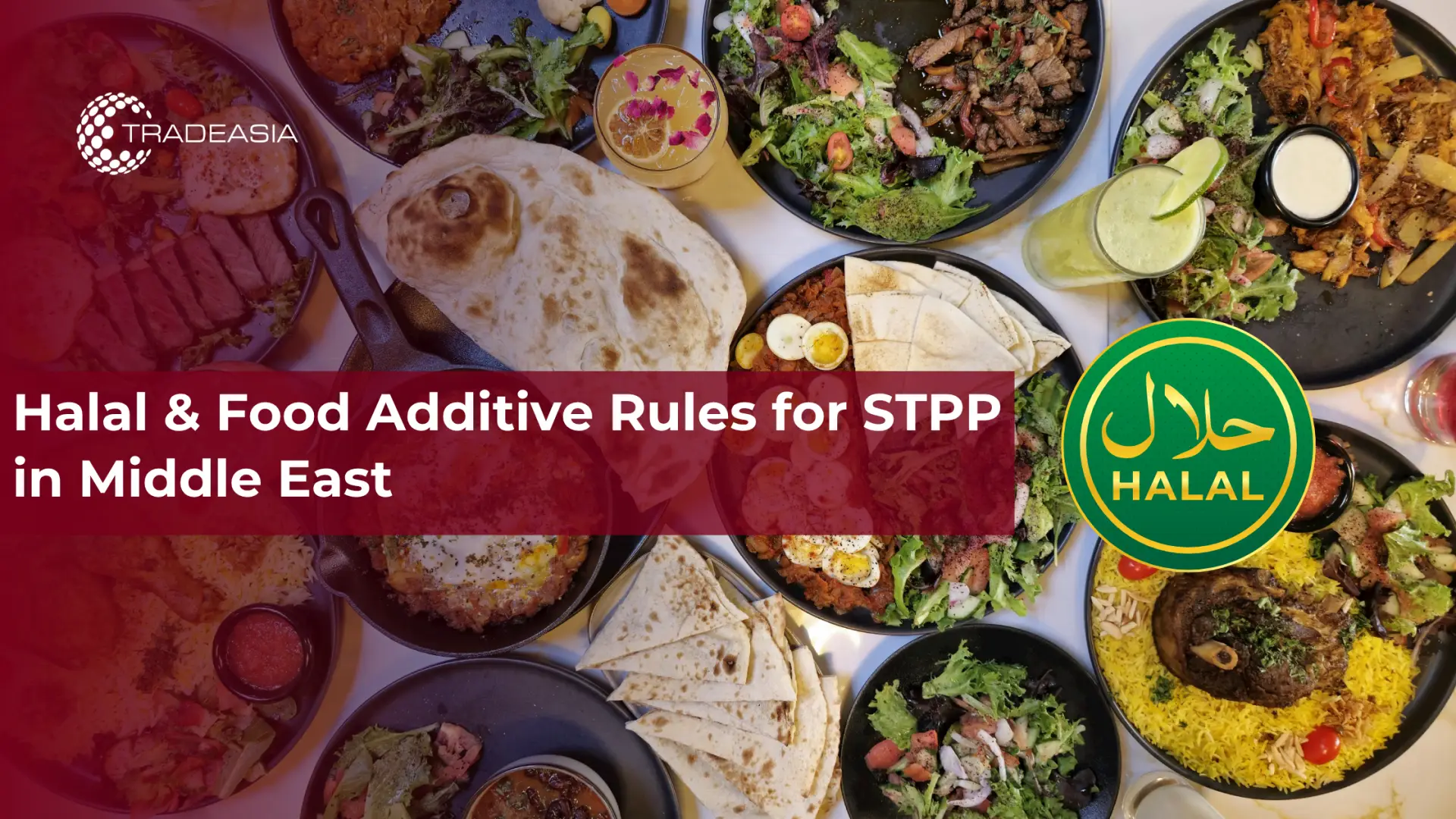
The Middle East, particularly the Gulf Cooperation Council (GCC) region, has emerged as a highly attractive market for food ingredients, driven by rapid urbanization, strong growth in processed food consumption, and increasing demand for high-quality, compliant products. Within this landscape, sodium tripolyphosphate (STPP) plays a critical role as a multifunctional phosphate used extensively in food processing applications such as seafood, meat products, and processed foods. Its ability to enhance water retention, improve texture, and stabilize proteins makes it indispensable in modern food manufacturing. However, the use and trade of STPP in the Middle East are governed by a complex regulatory framework that combines food safety standards with strict halal compliance requirements.
Unlike many other regions, regulatory compliance in the Middle East is shaped not only by technical food safety considerations but also by religious requirements that influence ingredient acceptance and supply chain practices. This dual layer of compliance creates a unique environment in which exporters must address both conventional food additive regulations and halal certification standards. Regulatory authorities such as the Gulf Standards Organization (GSO), along with national bodies in countries like Saudi Arabia and the United Arab Emirates, play a central role in defining and enforcing these requirements.
For exporters, navigating this regulatory landscape requires a deep understanding of how STPP is classified and controlled within the region. It involves ensuring that the additive is approved for use in specific applications, meets purity and safety standards, and is supported by appropriate documentation. At the same time, halal compliance introduces additional considerations related to raw material sourcing, manufacturing processes, contamination risks, and traceability.
This article provides a comprehensive analysis of halal and food additive compliance for sodium tripolyphosphate in the Middle East. It explores the regulatory framework governing food additives, the requirements for halal certification, labeling and traceability obligations, the role of regional and national authorities, and the practical challenges faced by exporters. Through this analysis, it highlights the importance of aligning technical compliance with cultural and religious expectations in one of the world’s most dynamic food markets.
The regulation of food additives in the Middle East is largely coordinated through the Gulf Standards Organization, which develops unified standards for member states while allowing national authorities to implement and enforce these standards within their jurisdictions. STPP is classified as a food additive within the phosphate group and is subject to regulations that define its permitted uses, maximum allowable levels, and quality specifications.
These regulations are generally aligned with international standards, particularly those established by Codex Alimentarius, but may include region-specific requirements that reflect local priorities and consumption patterns. For example, certain applications of phosphates in meat and seafood products are closely monitored due to concerns about overuse and potential consumer deception.
The approval of STPP for use in food products depends on its functional role, such as water retention or stabilization, and must be justified within the context of the product category. Regulatory authorities assess not only the safety of the additive but also its necessity and impact on product integrity. This ensures that additives are used appropriately and do not compromise the authenticity or quality of food products.
For exporters, understanding the regulatory framework requires familiarity with both regional standards and national regulations. While GSO standards provide a common foundation, differences in implementation and enforcement can create additional complexity.
Halal compliance is a defining feature of the regulatory environment in the Middle East, influencing every aspect of food production and trade. For STPP, halal certification is not automatically guaranteed, as it depends on the sourcing of raw materials, the manufacturing process, and the potential for contamination with non-halal substances.
Although STPP itself is a synthetic chemical compound, its production may involve intermediates or processing aids that must be evaluated for halal compliance. Certification bodies assess the entire production chain, including raw material sourcing, manufacturing conditions, storage, and transportation, to ensure that the product meets halal requirements.
Certification is typically issued by recognized halal authorities, which may be accredited by national or regional bodies. Exporters must ensure that their certification is accepted in the target market, as recognition of certification bodies can vary between countries. This often requires coordination with importers and local authorities to verify compliance.
In addition to certification, companies must maintain robust documentation and traceability systems to demonstrate ongoing compliance. This includes records of raw materials, production processes, and quality control measures, all of which may be subject to audit by certification bodies or regulatory authorities.
Labeling plays a critical role in ensuring transparency and compliance in the Middle East food market. For products containing STPP, labeling must clearly indicate the presence of the additive, typically using its functional class and chemical name. This requirement aligns with broader food safety regulations and supports consumer awareness.
In addition to standard labeling requirements, halal labeling is an essential component of compliance. Products that are certified halal must display appropriate certification marks, providing assurance to consumers that the product meets religious requirements. This labeling must be accurate and supported by valid certification, as misuse of halal claims can result in severe penalties.
Language requirements are also important, as labels must often be provided in Arabic to comply with local regulations. This includes not only ingredient lists but also product descriptions and certification information. Ensuring accurate translation and consistency across labeling materials is essential for compliance.
Transparency in labeling extends beyond regulatory requirements to include broader consumer expectations. In a market where trust and authenticity are highly valued, clear and accurate labeling can enhance brand reputation and support market success.
Traceability is a critical component of both food safety and halal compliance in the Middle East. Regulatory authorities and certification bodies require companies to maintain detailed records that allow products to be traced throughout the supply chain, from raw materials to finished goods.
For STPP, this means documenting the origin of raw materials, the conditions of production, and the pathways of distribution. Traceability systems must be robust and capable of providing accurate information in the event of audits, inspections, or recalls.
Supply chain integrity is particularly important in the context of halal compliance, where contamination with non-halal substances must be prevented at all stages. This requires strict segregation of materials, careful control of processing environments, and thorough documentation of handling procedures.
The implementation of effective traceability systems not only supports compliance but also enhances operational efficiency and risk management. It enables companies to respond quickly to issues and maintain confidence among regulators and customers.
Regulatory oversight in the Middle East is carried out by a combination of regional and national authorities. The Gulf Standards Organization provides a framework for harmonization, while national agencies are responsible for enforcement and inspection.
These authorities conduct regular inspections of imported products, manufacturing facilities, and distribution channels to ensure compliance with food safety and halal standards. Testing may be carried out to verify the composition and quality of products, including the presence and levels of additives such as STPP.
Enforcement actions can include product recalls, fines, and restrictions on market access in cases of non-compliance. Authorities may also collaborate across countries to address issues related to food safety and fraud, reflecting the interconnected nature of the regional market.
For exporters, understanding the role of these authorities and maintaining open communication with them is essential for navigating the regulatory landscape and ensuring successful market entry.
Exporters of STPP to the Middle East face several challenges in achieving and maintaining compliance. One of the most significant is the need to meet both technical and halal requirements, which may involve additional certification, documentation, and process adjustments.
Variations in regulatory implementation across countries can also create complexity, requiring exporters to adapt their strategies for different markets. This may include tailoring documentation, labeling, and certification to meet specific national requirements.
Another challenge is the need for reliable local partners, who can facilitate communication with authorities, manage import processes, and provide insights into regulatory expectations. Building strong relationships with such partners is critical for success.
Finally, staying informed about regulatory changes and trends is essential, as the Middle East regulatory environment continues to evolve in response to global developments and local priorities.
To succeed in the Middle East market, exporters must adopt a strategic approach to compliance that integrates regulatory, operational, and commercial considerations. This includes investing in quality control systems, maintaining comprehensive documentation, and ensuring that products meet all relevant standards.
Engaging with recognized halal certification bodies and ensuring the acceptance of certifications in target markets is also critical. Companies should establish clear processes for managing certification and maintaining compliance over time.
In addition, exporters should prioritize transparency and communication, both within their organizations and with external stakeholders. This includes providing clear and accurate information to customers, regulators, and certification bodies.
By adopting a proactive and integrated approach, companies can navigate the complexities of the Middle East regulatory environment and position themselves for long-term success.
The regulation of sodium tripolyphosphate in the Middle East reflects a unique convergence of food safety standards and halal requirements, creating a complex but well-defined framework for compliance. For exporters, success in this market depends on the ability to meet both technical and religious criteria, supported by robust documentation, traceability, and quality control systems.
While the challenges are significant, they are matched by the opportunities offered by a rapidly growing and high-value market. Companies that can demonstrate compliance, transparency, and reliability are well positioned to build strong relationships and achieve sustainable growth.
Ultimately, the case of STPP in the Middle East highlights the importance of aligning regulatory compliance with cultural and consumer expectations, ensuring that products not only meet legal requirements but also resonate with the values of the market.
We're committed to your privacy. Tradeasia uses the information you provide to us to contact you about our relevant content, products, and services. For more information, check out our privacy policy.


 English
 Indonesian
 简体字
简体字
 العربية
 Español
 Français
 Português
 日本語
日本語
 한국어
한국어
 Tiếng Việt



















