Explore our network of country and industry based websites to access localized information, product offerings, and business services across our group.
Log in to start sending quotation requests for any product.
Don't have an account? Sign Up Here
Home White Pepper Export Compliance from ASEAN Countries to EU
Trade Insights | Regulatory and Compliance | 18 May 2026
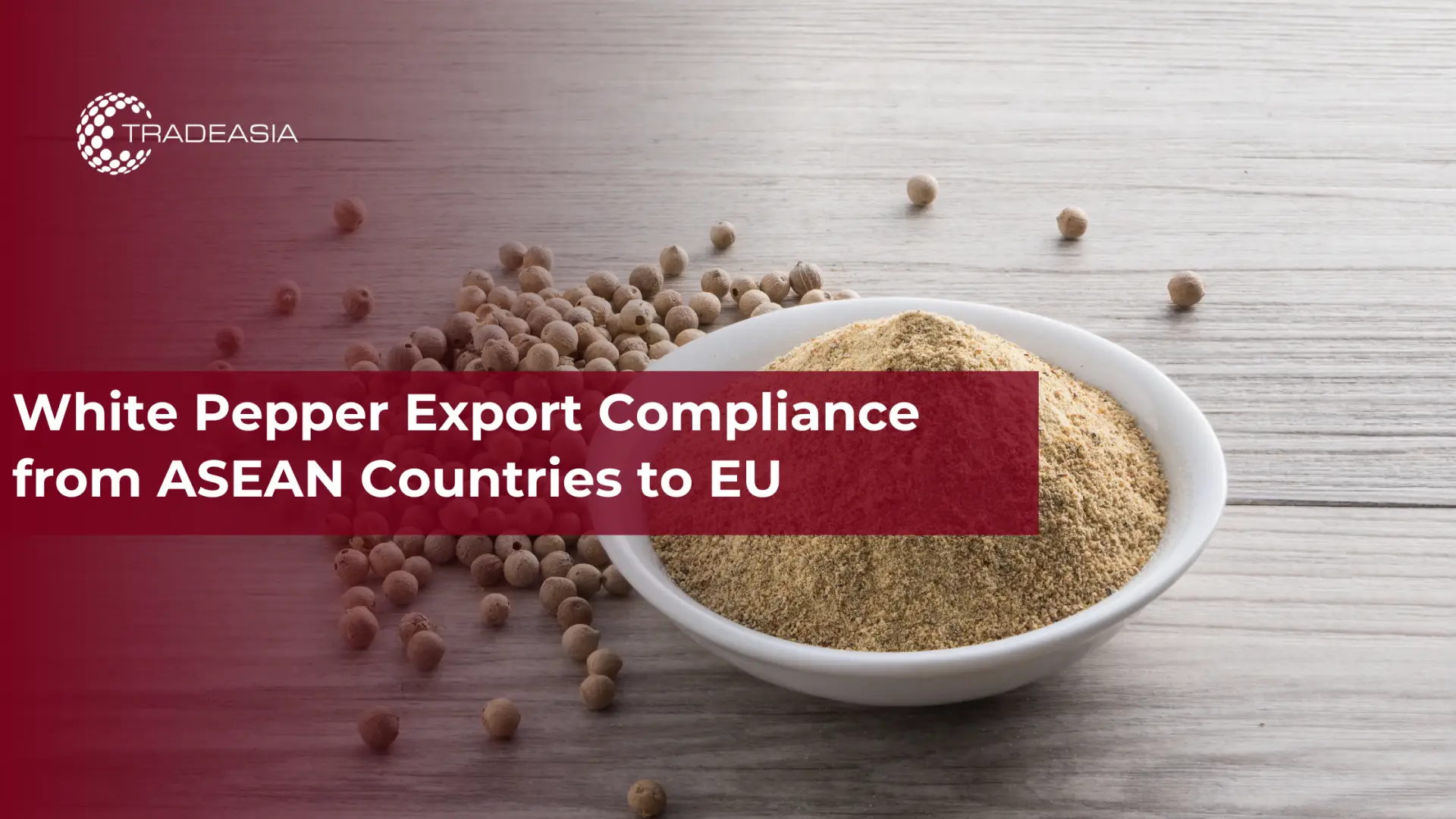
White pepper remains one of the most important spice commodities in international food manufacturing due to its extensive application across processed foods, seasoning systems, meat products, soups, sauces, ready meals, instant noodles, and foodservice industries. Unlike black pepper, white pepper undergoes a retting and soaking process that removes the outer layer of the pepper berry, producing a cleaner appearance and a milder, smoother flavor profile preferred in many industrial and culinary applications. European food manufacturers especially value white pepper because it blends more uniformly into light-colored products without visually altering finished formulations. This makes it highly important for cream sauces, poultry products, seafood applications, processed meats, mashed potato products, seasoning powders, and premium culinary formulations where visual consistency is critical.
ASEAN countries occupy a dominant position within the global pepper trade and represent some of the world’s most important white pepper suppliers. Vietnam has established itself as the largest pepper exporter globally, supported by extensive cultivation areas, strong export infrastructure, and advanced processing capabilities. Indonesia, particularly through the internationally recognized Muntok white pepper industry in Bangka Belitung, has historically maintained a strong reputation for premium white pepper quality and distinctive flavor characteristics. Thailand and several other Southeast Asian agricultural economies also contribute to regional pepper production and specialty spice exports. Collectively, ASEAN producers supply substantial volumes of white pepper into international food manufacturing systems, including the highly regulated European Union market.
The European Union represents one of the most commercially attractive yet technically demanding destinations for spice exporters. Europe’s mature processed food industry consumes large quantities of imported spices annually because climatic conditions within Europe do not support large-scale pepper cultivation. However, European food safety authorities maintain some of the strictest contaminant, microbiological, and traceability standards in the global food trade. Agricultural commodities such as spices receive particularly close regulatory attention because they are considered high-risk products susceptible to microbial contamination, pesticide residues, heavy metals, and adulteration.
White pepper presents unique compliance challenges because its production process inherently increases food safety risks. During retting and soaking, pepper berries remain exposed to water and moisture-rich environments that can encourage microbial growth if processing systems are poorly managed. Inadequate drying systems, contaminated water sources, poor sanitation practices, or improper storage conditions may create risks involving pathogens such as Salmonella, mold contamination, or other microbiological hazards. Additionally, pepper cultivation in tropical agricultural systems often involves pesticide application, making compliance with European Maximum Residue Limits highly complex.
Over the past decade, European border inspection systems have intensified scrutiny toward imported spices from Asian agricultural-exporting countries. ASEAN-origin shipments have periodically faced regulatory actions involving excessive pesticide residues, microbial contamination incidents, or documentation deficiencies. These developments have reshaped the operational priorities of exporters throughout Southeast Asia. Compliance is no longer viewed merely as an administrative obligation but increasingly as a strategic commercial requirement directly linked to market access, buyer trust, and long-term competitiveness.
This article provides a comprehensive analysis of white pepper export compliance from ASEAN countries to the European Union, focusing on microbial safety management, pesticide residue compliance, aflatoxin monitoring, sterilization technologies, traceability expectations, and broader regulatory challenges shaping the international spice trade. It also explores how evolving European food safety frameworks are influencing agricultural practices, processing technologies, and export competitiveness across Southeast Asia’s pepper industry.
The importance of white pepper within Europe’s food industry has increased significantly alongside broader growth in processed food manufacturing, convenience meals, ready-to-eat products, and global culinary influences. European consumers increasingly purchase packaged foods requiring sophisticated seasoning systems, and white pepper plays a critical role within many of these formulations because it provides heat and aroma without affecting product appearance. Manufacturers prefer white pepper in light-colored sauces, processed poultry products, seafood applications, soups, dairy-based formulations, and powdered seasoning systems where black specks from traditional black pepper may be visually undesirable.
Industrial demand for white pepper is closely tied to the expansion of multinational food manufacturing operations throughout Europe. Major food processors require standardized spice ingredients capable of delivering consistent flavor intensity, microbiological safety, and formulation performance at large production scales. White pepper exporters serving European customers therefore operate within highly demanding supply chains where consistency, documentation, and compliance reliability are critical purchasing criteria.
The European spice market has also evolved in response to growing consumer awareness regarding food safety and ingredient transparency. Buyers increasingly prioritize suppliers capable of demonstrating traceable agricultural sourcing, contaminant monitoring systems, and validated food safety controls. This shift has intensified competitive pressure among exporters because compliance excellence now functions as a major differentiator within international spice trade.
ASEAN countries remain strategically important suppliers because of favorable climatic conditions for pepper cultivation and decades of agricultural expertise. Vietnam’s dominance in global pepper exports reflects its extensive cultivation networks and industrial-scale processing capabilities. Indonesia’s Muntok white pepper continues to maintain premium positioning in international markets due to its traditional production methods and quality characteristics. However, European buyers are increasingly evaluating suppliers not only on price and availability but also on regulatory performance, food safety systems, and long-term supply-chain reliability.
White pepper is considered a high-risk agricultural commodity within European food safety systems because spices are vulnerable to multiple contamination pathways throughout cultivation, harvesting, processing, storage, and transportation stages. Unlike highly processed food ingredients subjected to intensive thermal treatment or sterilization, spices often retain complex microbial and chemical exposure histories that regulators must carefully monitor.
The production process for white pepper creates additional compliance challenges compared to black pepper. During retting, mature pepper berries are soaked in water to loosen and remove the outer skin. This moisture-intensive stage increases the possibility of microbial proliferation if water quality, sanitation, and drying systems are not properly controlled. Pathogenic organisms such as Salmonella may survive in low-moisture spices for prolonged periods, creating serious food safety concerns if contamination occurs.
European authorities have strengthened monitoring of imported spices partly because past contamination incidents revealed vulnerabilities within global spice supply chains. Notifications involving microbial hazards, excessive pesticide residues, or contaminant violations have periodically affected spice imports originating from Asia and other agricultural-exporting regions. These incidents prompted tighter border inspections, more frequent laboratory testing, and greater emphasis on preventive food safety systems.
The European Union’s food safety framework prioritizes proactive risk management and traceability. Rather than relying solely on end-product testing, authorities increasingly expect exporters to implement integrated systems covering agricultural practices, supplier monitoring, sanitation controls, sterilization validation, storage management, and export documentation. This means that compliance extends far beyond laboratory specifications alone and now encompasses the operational integrity of the entire supply chain.
For ASEAN exporters, adapting to these expectations requires substantial investment in infrastructure, training, testing capabilities, and process control systems. Smaller exporters operating fragmented agricultural supply chains may face particular challenges because maintaining consistent compliance across numerous farms and intermediaries is operationally complex.
Microbiological contamination remains one of the most critical regulatory concerns affecting white pepper exports into Europe, with Salmonella representing the most significant pathogen risk within the spice industry. Spices have historically been associated with occasional foodborne illness outbreaks because microbial contamination can persist in dry environments for extended periods if pathogens enter the production chain during harvesting, soaking, drying, or storage stages.
White pepper production involves especially high microbial risk because of prolonged moisture exposure during retting and fermentation processes. Water quality plays a crucial role in determining microbiological safety outcomes. If contaminated water sources are used during soaking, pathogens may spread rapidly throughout production batches. Additionally, inadequate sanitation practices or improper drying conditions may allow microbial populations to survive and remain viable during export distribution.
European food safety authorities maintain extremely strict expectations regarding Salmonella control. In many food applications, European regulations effectively require the absence of Salmonella in spice products intended for human consumption. Consequently, exporters must implement highly disciplined preventive systems designed to minimize contamination risks throughout every production stage.
Modern ASEAN spice exporters increasingly rely on internationally recognized food safety frameworks such as Good Agricultural Practices, Good Manufacturing Practices, Hazard Analysis and Critical Control Point systems, and microbiological monitoring programs. These systems help identify contamination risks before they escalate into regulatory or commercial problems. Export-oriented facilities often conduct routine microbiological testing for total plate count, yeast and mold, coliform bacteria, Escherichia coli, and Salmonella as part of ongoing quality assurance protocols.
European buyers also increasingly require validated microbial reduction interventions. Steam sterilization has become one of the most widely adopted technologies because it allows exporters to reduce microbial loads significantly without relying on chemical treatments. However, sterilization systems require careful operational control because excessive treatment may damage flavor quality, volatile compounds, or product appearance. Exporters must therefore balance food safety objectives with sensory preservation and commercial quality expectations.
Pesticide residue compliance has become another defining challenge for ASEAN white pepper exporters because the European Union maintains one of the world’s strictest Maximum Residue Limit frameworks for agricultural commodities. Pepper cultivation in tropical environments often requires pest-management interventions to control fungal diseases, insects, and agricultural threats that can affect yield and crop quality. However, pesticides permitted within producing countries may face tighter restrictions or complete prohibition under European regulations.
The complexity of compliance is amplified by the fragmented nature of pepper farming across Southeast Asia. In countries such as Vietnam and Indonesia, pepper cultivation frequently involves large numbers of smallholder farmers operating under varying agricultural conditions and technical capabilities. Maintaining consistent control over pesticide application practices across decentralized farming networks is therefore extremely difficult.
European importers increasingly require exporters to demonstrate active agricultural management systems designed to minimize residue risks. Export-oriented companies often implement farmer training initiatives, approved pesticide lists, pre-harvest intervals, and residue-monitoring programs to strengthen compliance consistency. Many exporters also conduct multi-residue laboratory testing before shipment to ensure products meet European standards.
The financial consequences of non-compliance can be severe. Shipments exceeding European Maximum Residue Limits may be rejected at borders, subjected to enhanced inspection frequencies, or trigger reputational damage affecting future buyer relationships. In some cases, repeated violations may result in intensified scrutiny toward products originating from specific countries or suppliers.
As European regulatory standards continue evolving, pesticide compliance increasingly requires integrated cooperation between exporters, agricultural cooperatives, laboratories, and farming communities. This transformation is gradually reshaping agricultural practices throughout Southeast Asia’s pepper industry and encouraging greater professionalization within export supply chains.
Although aflatoxins are more commonly associated with nuts and grains, white pepper remains vulnerable to mold-related contamination if drying and storage conditions are poorly managed. Tropical climates create elevated humidity conditions that may encourage fungal growth during post-harvest handling or warehouse storage, particularly when pepper retains excessive moisture levels.
European food safety authorities maintain strict contaminant regulations covering aflatoxins and other mycotoxins because of their carcinogenic potential and public health implications. Exporters therefore face increasing pressure to implement sophisticated moisture-control systems capable of preventing mold development throughout the supply chain.
Modern processing facilities increasingly invest in controlled drying technologies, warehouse ventilation systems, moisture-monitoring equipment, and hygienic storage infrastructure. Proper drying is especially critical because uneven moisture distribution may create localized conditions favorable to fungal growth. Exporters also conduct routine contaminant testing to verify compliance with European standards before shipment approval.
The growing importance of mycotoxin control reflects broader changes within global spice trade, where buyers increasingly prioritize suppliers capable of delivering consistently safe products supported by documented quality management systems.
Traceability has become a central pillar of European food safety governance, particularly for imported agricultural commodities considered high-risk from contamination or fraud perspectives. European authorities and food manufacturers increasingly expect exporters to maintain transparent systems capable of tracing products from cultivation through export distribution.
Within the white pepper industry, traceability systems may include farm registration, supplier identification, batch coding, digital inventory systems, warehouse tracking, and export documentation controls. These systems allow exporters to isolate contamination risks rapidly and support recall procedures if necessary.
Traceability also strengthens buyer confidence because it demonstrates operational discipline and supply-chain accountability. Premium European customers increasingly favor suppliers capable of providing transparent sourcing information, sustainability documentation, and consistent batch-level traceability.
As food safety expectations continue rising globally, traceability is evolving from a regulatory requirement into a strategic commercial advantage for ASEAN exporters seeking long-term relationships within premium spice markets.
The export of white pepper from ASEAN countries to the European Union demonstrates how global agricultural trade is increasingly shaped by food safety governance, regulatory sophistication, and supply-chain transparency. Vietnam, Indonesia, Thailand, and other Southeast Asian producers maintain strong structural advantages in pepper cultivation and processing, yet access to high-value European markets now depends heavily on the ability to meet complex compliance expectations.
European regulations surrounding microbiological safety, pesticide residues, aflatoxin monitoring, sterilization validation, and traceability are reshaping operational standards throughout the spice industry. Exporters can no longer compete solely through agricultural output or pricing advantages but must instead develop integrated compliance systems aligned with international buyer expectations and regulatory frameworks.
This transformation presents both challenges and opportunities for ASEAN exporters. Companies investing in food safety infrastructure, laboratory testing capabilities, supplier education, sterilization technologies, and transparent traceability systems are likely to strengthen their long-term competitiveness within global spice trade.
As European consumers continue demanding safer, more transparent, and higher-quality food products, compliance excellence will increasingly function not only as a regulatory obligation but as a fundamental driver of sustainable commercial success within the international white pepper market.
For businesses seeking high-quality White Pepper or other food ingredients products and reliable sourcing solutions, visit foodingredientsasia.com for more information about specifications, applications, and supply capabilities. For direct inquiries, product details, or customized requirements, please contact food@chemtradeasia.com. Our team is ready to assist you with professional support and comprehensive solutions tailored to your needs.
We're committed to your privacy. Tradeasia uses the information you provide to us to contact you about our relevant content, products, and services. For more information, check out our privacy policy.


 English
 Indonesian
 简体字
简体字
 العربية
 Español
 Français
 Português
 日本語
日本語
 한국어
한국어
 Tiếng Việt



















