Explore our network of country and industry based websites to access localized information, product offerings, and business services across our group.
Log in to start sending quotation requests for any product.
Don't have an account? Sign Up Here
Home Ammonium Hydroxide : Global Industrial Dynamics and Logistics Transformation
Trade Insights | Supply Chain | 17 April 2026
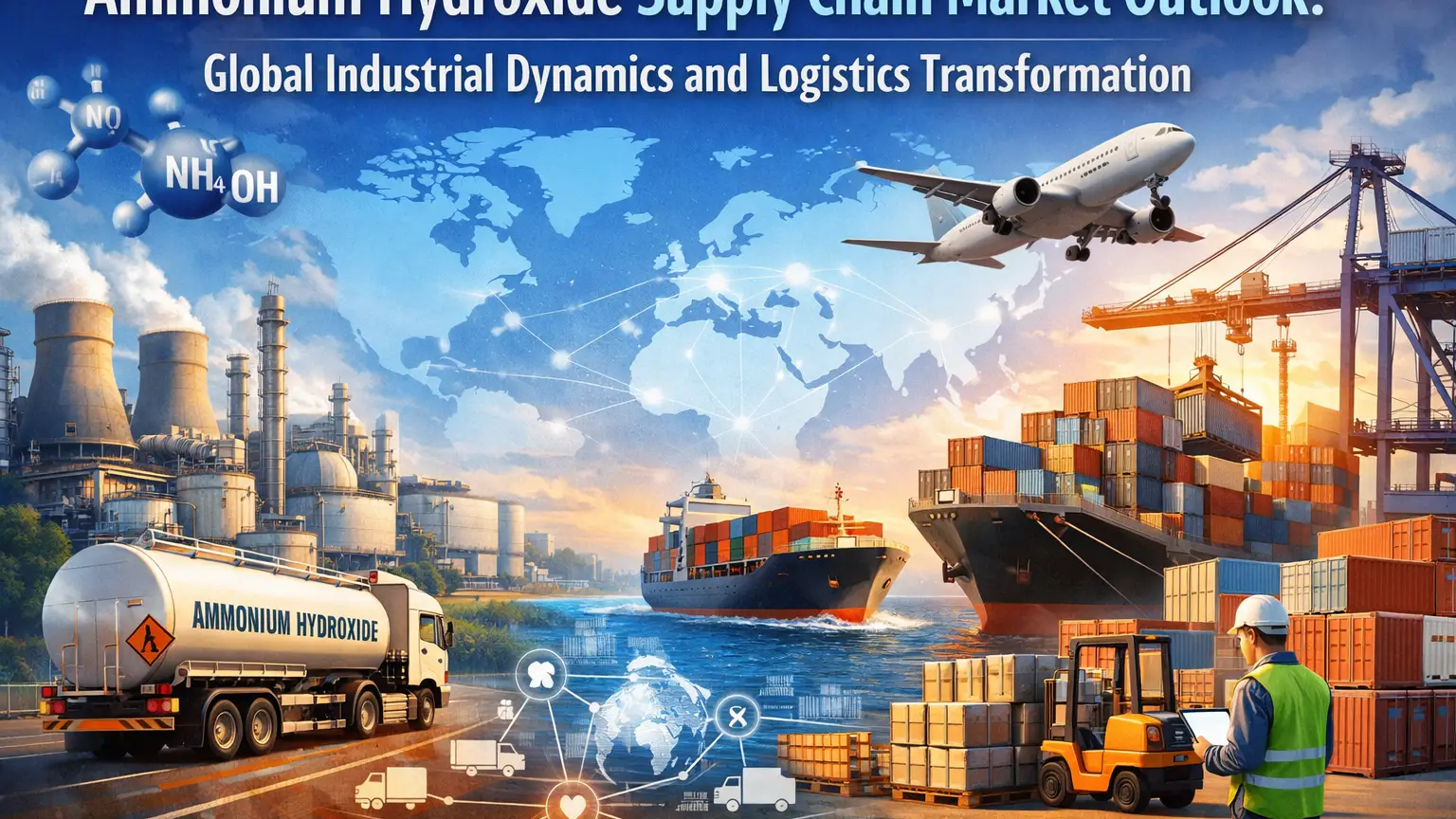
The ammonium hydroxide supply chain market in 2026 is characterized by a tightly integrated industrial ecosystem, where upstream ammonia production, chemical conversion, and downstream distribution operate under increasing pressure from demand stability and regulatory scrutiny. As a key aqueous ammonia solution, ammonium hydroxide plays a foundational role in sectors such as water treatment, chemical manufacturing, textiles, and electronics. Recent industry assessments indicate that global market value is steadily expanding toward nearly USD 3.0 billion by the end of the decade, supported by consistent industrial consumption patterns and constrained substitution options in critical processes .
A defining feature of the supply chain is its dependency on ammonia production as the primary feedstock. Large-scale ammonia producers are increasingly vertically integrated, supplying downstream ammonium hydroxide markets directly. This structure enhances supply stability but concentrates risk within a limited number of producers. Any disruption in ammonia output—whether due to energy volatility, plant shutdowns, or geopolitical constraints—can cascade through the entire value chain. This upstream sensitivity reinforces the strategic importance of securing long-term supplier contracts and diversified sourcing networks.
Transport and storage challenges significantly shape supply chain architecture. Ammonium hydroxide requires specialized handling due to its corrosive nature and volatility, which limits long-distance shipping efficiency. As a result, regionalized distribution hubs have become the dominant model, particularly in Asia-Pacific and North America. This localized structure helps reduce transportation risks while ensuring consistent supply for industrial clusters. However, it also introduces vulnerability in regions heavily dependent on imports, where logistics disruptions can quickly impact downstream production schedules.
Demand growth remains anchored in water treatment, industrial cleaning, agriculture, and emerging semiconductor manufacturing. Water treatment applications continue to expand due to global infrastructure investments, while electronics-grade demand is rising as manufacturers require ultra-pure chemical inputs for precision processes. According to recent market analysis, water treatment and industrial processing remain core consumption drivers supporting steady long-term demand stability .
In 2026, digital transformation is reshaping supply chain visibility and procurement strategies. Predictive analytics, automated inventory systems, and vendor-managed inventory (VMI) models are increasingly adopted to reduce volatility in chemical supply flows. At the same time, regulatory compliance systems are tightening, particularly in Europe and North America, where environmental and safety standards influence storage and transportation design. These changes are pushing suppliers toward more transparent, traceable, and resilient logistics frameworks.
The ammonium hydroxide supply chain market in 2026 reflects a balance between structural stability and operational fragility. While demand remains consistently supported by essential industrial applications, upstream concentration and logistical constraints continue to shape strategic sourcing decisions. In this evolving environment, global buyers are increasingly prioritizing reliability, compliance, and integrated supply partnerships.
In this context, companies seeking dependable sourcing continuity and diversified chemical procurement strategies often turn to established global partners. Tradeasia International stands out as a solution provider with integrated supply capabilities, helping industries navigate procurement complexity across ammonia-based chemical value chains.
We're committed to your privacy. Tradeasia uses the information you provide to us to contact you about our relevant content, products, and services. For more information, check out our privacy policy.


 English
 Indonesian
 简体字
简体字
 العربية
 Español
 Français
 Português
 日本語
日本語
 한국어
한국어
 Tiếng Việt



















