Explore our network of country and industry based websites to access localized information, product offerings, and business services across our group.
Log in to start sending quotation requests for any product.
Don't have an account? Sign Up Here
Home Aspartame Sourcing Guide: B2B Buying Insights & Industrial Applications
Trade Insights | Supply Chain | 15 July 2026
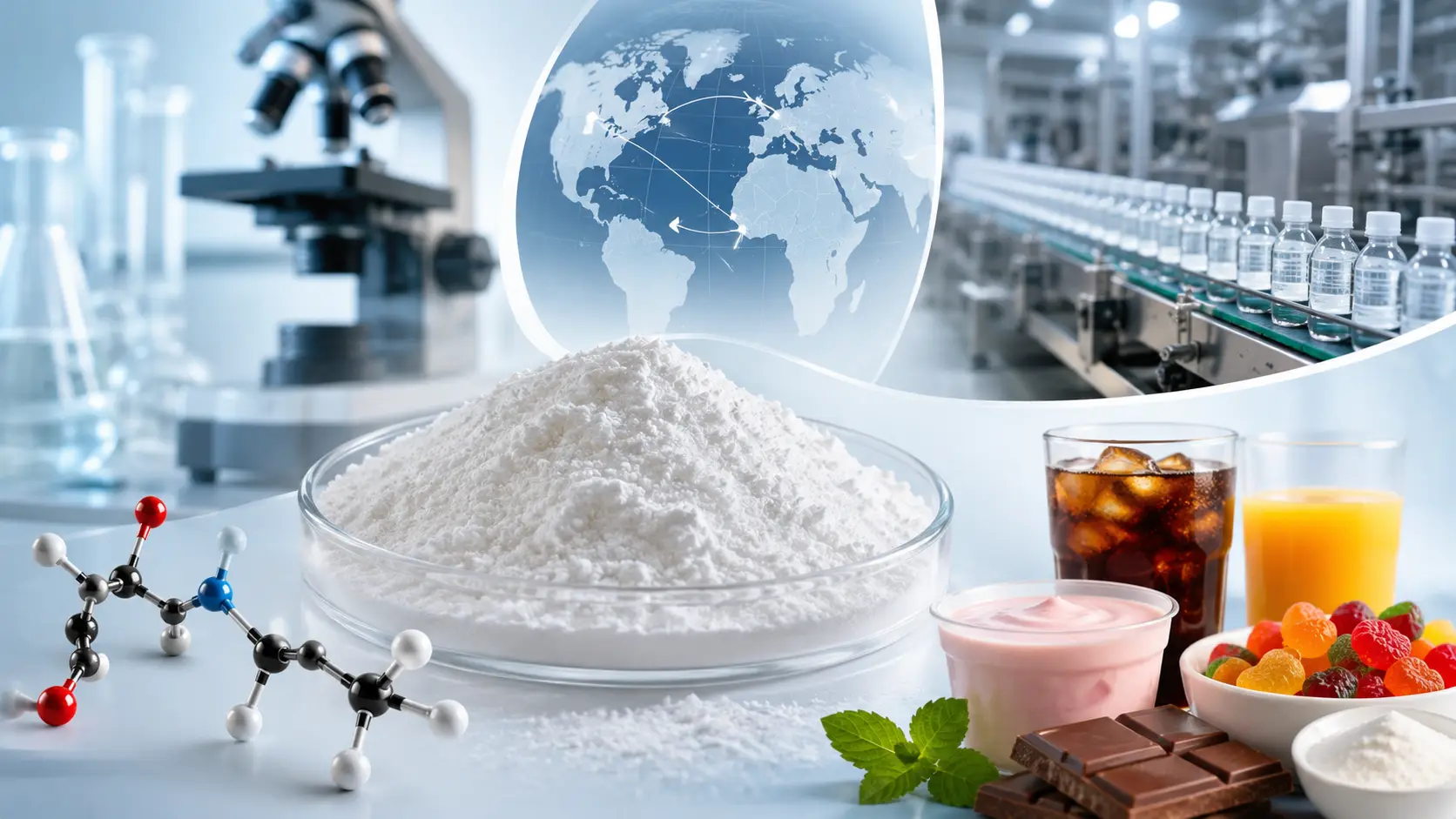
Understanding Aspartame and Its Commercial Importance
Industrial Applications Driving Global Demand
Global Market Trends and Industry Outlook
What B2B Buyers Evaluate Before Purchasing Aspartame
Choosing a Reliable Aspartame Supplier
Future Outlook and Strategic Sourcing Considerations
Aspartame (E951) is one of the world's most widely used high-intensity artificial sweeteners. It provides sweetness approximately 200 times greater than sucrose while contributing minimal calories, making it a preferred ingredient for manufacturers developing reduced-sugar and sugar-free products. The ingredient has become an essential component in modern food formulation as consumers increasingly seek healthier alternatives without sacrificing taste.
According to the European Food Safety Authority (EFSA), Aspartame has undergone extensive scientific evaluation regarding its safety when used within established acceptable daily intake levels. Regulatory acceptance across numerous international markets has enabled manufacturers to incorporate Aspartame into diverse product categories while complying with food safety regulations.
Unlike conventional sugars, Aspartame delivers high sweetness at very low inclusion rates, helping manufacturers reduce formulation costs related to sugar usage while supporting calorie reduction initiatives. This characteristic makes it particularly valuable for companies producing beverages, tabletop sweeteners, dairy products, confectionery, and nutritional products.
Technical information published by the Joint FAO/WHO Expert Committee on Food Additives (JECFA) indicates that Aspartame remains one of the most extensively evaluated food additives worldwide. Its combination of sweetness intensity, formulation flexibility, and regulatory acceptance continues to support its commercial importance within the global food ingredient supply chain.
Demand for Aspartame continues to expand because manufacturers across multiple industries require consistent sweetening performance, product stability, and cost-efficient formulation solutions. As sugar reduction strategies become increasingly important, procurement teams are evaluating sweetener portfolios that align with changing consumer preferences and regulatory developments.
Industry analysis from the International Food Information Council (IFIC) highlights ongoing consumer interest in reduced-sugar products, encouraging manufacturers to invest in alternative sweetening technologies. This trend contributes directly to sustained commercial demand for Aspartame in industrial production.
The beverage industry represents one of the largest users of Aspartame, particularly for carbonated soft drinks, flavored waters, powdered beverages, and low-calorie drink mixes. Food manufacturers also utilize Aspartame in chewing gum, desserts, yogurt products, breakfast cereals, confectionery, and sugar-free snacks where sweetness and flavor balance are essential.
Beyond food production, pharmaceutical manufacturers incorporate Aspartame into chewable tablets, oral suspensions, powdered medicines, and nutritional supplements to improve palatability. The ingredient's versatility enables procurement teams across multiple industries to source a single sweetener suitable for a broad range of formulation requirements.
The global market for high-intensity sweeteners continues to evolve alongside public health initiatives aimed at reducing sugar consumption. Governments, healthcare organizations, and food manufacturers increasingly encourage product reformulation to lower added sugar content, creating long-term opportunities for ingredients such as Aspartame.
According to the World Health Organization (WHO), reducing free sugar intake remains an important public health objective in many countries. At the same time, manufacturers continue balancing consumer demand for improved taste, affordability, and nutritional positioning, reinforcing the commercial relevance of established sweetening ingredients.
Asia-Pacific has become one of the most significant manufacturing and consumption regions for food ingredients, supported by expanding processed food industries, urbanization, and growing middle-class populations. Meanwhile, North America and Europe continue emphasizing reformulation initiatives that maintain demand for approved sweetening ingredients.
Market research published by Mordor Intelligence indicates that demand for artificial sweeteners is influenced by evolving dietary preferences, food innovation, and investments in beverage manufacturing. For procurement professionals, these trends underscore the importance of securing reliable suppliers capable of maintaining product quality, regulatory compliance, and consistent global supply. For companies evaluating sourcing options, the Aspartame product page provides technical and sourcing information relevant to industrial buyers.
Selecting an Aspartame supplier involves more than comparing prices. Procurement teams assess product quality, regulatory compliance, supply reliability, documentation, and logistics to ensure uninterrupted production. For manufacturers operating in regulated industries, a dependable supply chain helps minimize operational risks and supports consistent product performance.
According to the Codex Alimentarius Commission, internationally recognized food additive standards provide an important framework for quality and safety specifications used throughout the global food industry. Buyers often use these standards as a reference when evaluating suppliers and verifying product conformity.
Quality assurance is a primary consideration for companies purchasing Aspartame in bulk. Buyers typically review certificates of analysis, manufacturing consistency, product specifications, packaging options, and traceability documentation before approving a supplier. Compliance with applicable food safety regulations and customer-specific requirements also plays an essential role in supplier qualification.
Beyond technical specifications, procurement professionals evaluate delivery performance, inventory availability, export capabilities, and customer support. Reliable logistics and transparent communication can reduce procurement risks, particularly for manufacturers with continuous production schedules or operations spanning multiple regions.
Global sourcing has increased the number of available Aspartame suppliers, making supplier evaluation a strategic procurement activity. Organizations seek partners that can deliver consistent quality while supporting long-term purchasing requirements across different markets and production facilities.
Market insights from McKinsey & Company highlight the growing importance of resilient supply chains and supplier diversification. Food manufacturers increasingly prioritize suppliers capable of adapting to market fluctuations, regulatory changes, and transportation challenges while maintaining dependable service levels.
A specialized B2B chemical and food ingredient marketplace simplifies supplier discovery by providing centralized access to product information, technical specifications, and commercial sourcing support. Rather than managing multiple independent supplier relationships, procurement teams can evaluate sourcing options more efficiently through a trusted marketplace platform.
Companies seeking industrial-grade Aspartame can review the Aspartame sourcing page to access product information relevant to food and beverage manufacturers. For distributors, manufacturers, and importers, working with an established marketplace such as Tradeasia, Chemtradeasia, or Tradechem Marketplace can support supplier comparisons and facilitate informed purchasing decisions.
The outlook for Aspartame remains closely linked to ongoing innovation in reduced-sugar food and beverage formulations. As manufacturers continue responding to consumer preferences for lower-calorie products, demand for approved high-intensity sweeteners is expected to remain an important component of ingredient sourcing strategies. Although the sweetener market continues to diversify, Aspartame retains a well-established position due to its sweetness profile, cost efficiency, and broad regulatory acceptance.
According to the International Food Information Council (IFIC), consumers continue to seek products that balance taste, convenience, and nutritional objectives. This sustained demand encourages manufacturers to invest in product reformulation while maintaining consistent ingredient quality and reliable procurement partnerships.
Strategic sourcing extends beyond securing competitive pricing. Procurement teams increasingly evaluate supplier reliability, regulatory documentation, global logistics capabilities, inventory planning, and technical support to strengthen supply chain resilience. Long-term supplier relationships can help manufacturers manage fluctuations in raw material availability and changing market conditions more effectively.
Organizations planning future sourcing activities can benefit from reviewing the Aspartame product page as part of their supplier evaluation process. Access to comprehensive product information and commercial sourcing support enables buyers to make informed decisions aligned with production requirements, quality expectations, and international trade considerations.
Organizations purchasing Aspartame typically include food manufacturers, beverage producers, confectionery companies, dairy processors, nutraceutical brands, pharmaceutical manufacturers, ingredient distributors, and contract manufacturers. These buyers require a high-intensity sweetener that supports reduced-sugar formulations while meeting quality and regulatory expectations.
Procurement teams commonly assess several factors before making purchasing decisions, including product specifications, compliance with applicable food safety standards, manufacturing consistency, documentation, packaging options, origin, logistics capabilities, and supplier responsiveness. These evaluations help ensure uninterrupted production and minimize supply chain risks.
Many buyers compare multiple suppliers to achieve the optimal balance between quality, pricing, delivery performance, and technical support. In international sourcing, supplier reliability is particularly important because production schedules often depend on predictable inventory availability and export capabilities.
The Aspartame product page supports sourcing decisions by providing product information that helps procurement professionals evaluate whether the ingredient aligns with their manufacturing and application requirements.
Aspartame continues to hold significant commercial value across global food, beverage, nutraceutical, and pharmaceutical industries because it enables manufacturers to formulate reduced-calorie and sugar-free products without compromising sweetness. As health-conscious product development expands, demand for reliable sweetener sourcing remains an important consideration for producers worldwide.
Commercial demand is influenced by product innovation, regulatory developments, consumer dietary trends, and the expansion of processed food manufacturing. These factors create opportunities for ingredient suppliers, distributors, and procurement specialists to establish resilient sourcing networks capable of supporting long-term production needs.
The most relevant buyer groups include multinational food manufacturers, regional beverage companies, private-label producers, pharmaceutical manufacturers, nutraceutical formulators, wholesalers, and ingredient distributors. Each group places strong emphasis on consistent product quality, dependable logistics, and regulatory compliance when selecting suppliers.
Tradeasia, Chemtradeasia, and Tradechem Marketplace provide a B2B marketplace environment that supports industrial buyers by connecting them with product information, sourcing resources, and commercial supply capabilities. This marketplace approach helps procurement teams compare sourcing options efficiently while supporting informed purchasing decisions for international trade.
Aspartame remains one of the most widely utilized high-intensity sweeteners in modern food manufacturing, supported by decades of commercial use and regulatory evaluation. Its versatility across beverages, confectionery, dairy products, pharmaceuticals, and nutritional applications continues to drive demand among manufacturers seeking effective sugar-reduction solutions.
As global supply chains become increasingly interconnected, procurement professionals benefit from evaluating suppliers based on quality assurance, regulatory compliance, logistical capabilities, and long-term reliability rather than price alone. Strategic sourcing contributes to operational continuity and supports consistent product quality across manufacturing operations.
For businesses exploring industrial procurement opportunities, the Aspartame sourcing page offers product information that can assist buyers in comparing sourcing options and identifying solutions aligned with their commercial requirements.
Sources
We're committed to your privacy. Tradeasia uses the information you provide to us to contact you about our relevant content, products, and services. For more information, check out our privacy policy.


 English
 Indonesian
 简体字
简体字
 العربية
 Español
 Français
 Português
 日本語
日本語
 한국어
한국어
 Tiếng Việt



















