Explore our network of country and industry based websites to access localized information, product offerings, and business services across our group.
Log in to start sending quotation requests for any product.
Don't have an account? Sign Up Here
Home Corn Starch Supply Chain: 2026 Price & Sourcing Guide
Trade Insights | Supply Chain | 22 May 2026
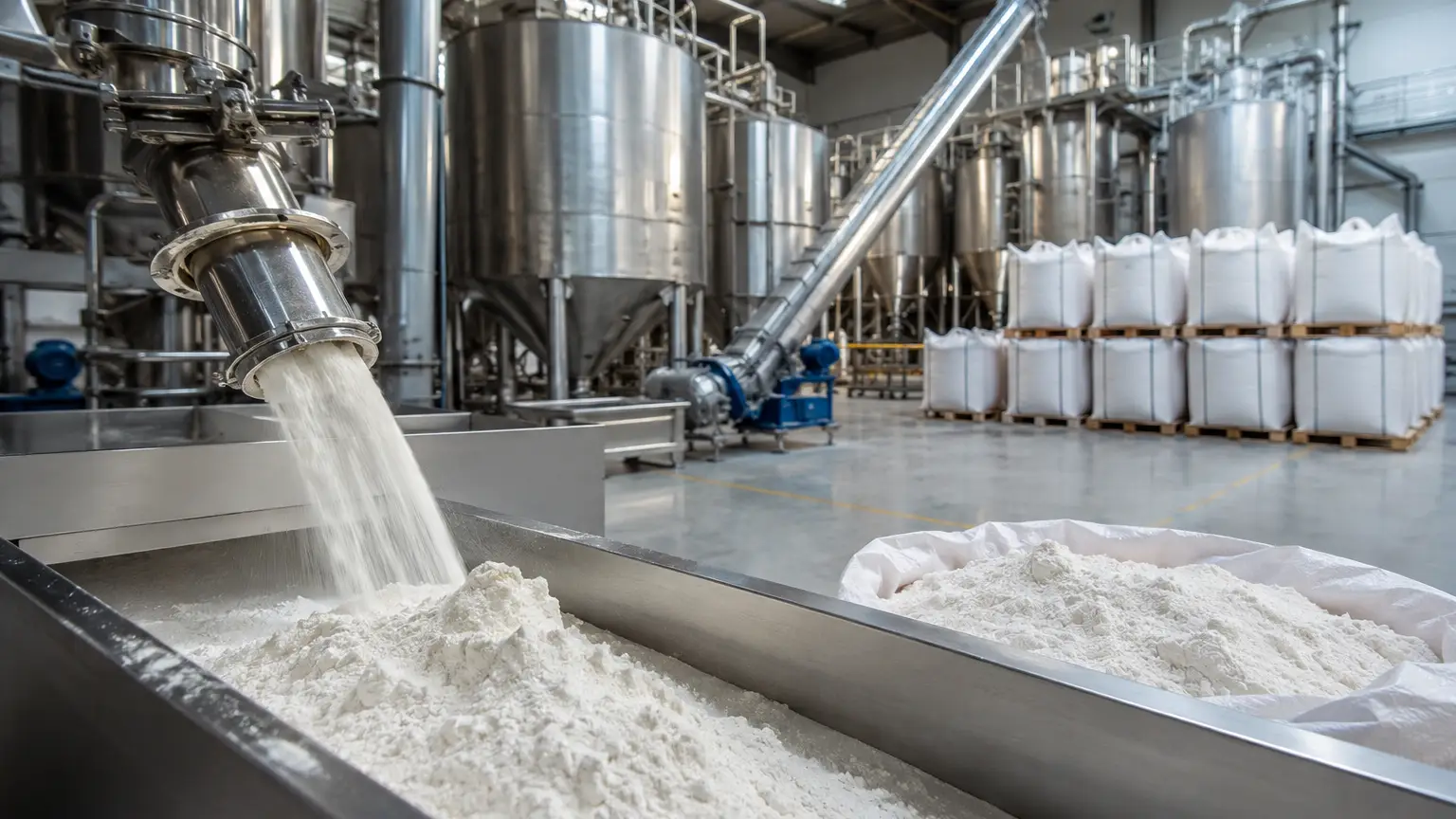
China's corn wet milling industry processed approximately 85 million metric tons of maize in 2024, yielding 48 MMT of starch output — a volume that makes Beijing's production policy the single most consequential variable in Southeast Asian corn starch pricing. For procurement teams in Malaysia, Indonesia, Vietnam, and the Philippines, this concentration is not an abstraction. It is the structural reality shaping every supplier negotiation, logistics schedule, and contract term they will manage in 2026.
Global corn starch production reached approximately 29 million metric tons in 2024, per IndexBox data, with values estimated at USD 20.2 billion in export price terms. Three countries hold the dominant positions: China at 6.2M tons (~21% of global output), the United States at 3.2M tons (~11%), and India at 2.8M tons (~10%), together accounting for roughly 42% of total global production.
China's wet milling capacity is concentrated in three provinces: Shandong, Jilin, and Heilongjiang. Processing plants in these clusters averaged above 60% utilization through both MY2024/25 and MY2023/24, per USDA reporting. Capacity expanded by approximately 3% in 2025 over 2024, though a slowdown in the domestic ethanol sector has kept overall demand growth from absorbing all new output — creating a margin-compression dynamic that has kept Chinese export offers competitive despite rising input costs.
In the United States, ADM and Cargill collectively hold over 25% of the market, per industry estimates. The U.S. produced 14.9 billion bushels of corn in the 2024/25 marketing year per NCGA data, providing a deep and consistent feedstock base for wet milling operations. American corn starch prices reached USD 503/MT in December 2025, per ChemAnalyst data — above the Southeast Asian CFR range — which means U.S. origin competes primarily on grade consistency and documentation rather than price.
India has become a structurally important exporter to Southeast Asia, with wet milling infrastructure concentrated in Gujarat, Punjab, and Maharashtra. Maize accounted for 62.34% of India's starch market share in 2024, according to Mordor Intelligence. Indian producers offer food-grade corn starch to the Bangladesh, Vietnam, and Philippine markets, and have historically priced 10-15% below Western averages, per Intel Market Research estimates. Cargill's March 2025 opening of a new corn milling plant in Gwalior, serving confectionery, infant formula, and dairy sectors, signals continued Indian capacity investment aimed at export markets.
Turkey rounds out the key exporting group. Along with India and the U.S., Turkey is consistently cited among the top four global exporters of maize starch products.
Southeast Asia's corn starch import structure is lopsided. Malaysia, Indonesia, and Thailand together represent 78% of total regional import value, with Vietnam and the Philippines accounting for a further 20%, per IndexBox 2024 data. That leaves less than 2% distributed across the rest of the region — making these five markets the effective demand anchor for all import-origin suppliers.
Indonesia stands as the region's single largest importer by volume and is heavily dependent on Chinese offers. When Chinese export prices firmed in Q1 2026, Indonesian buyers absorbed a 1.55% quarter-over-quarter increase in their price index, with CFR averages reaching approximately USD 435.67/MT, per ChemAnalyst. The USD/IDR exchange rate and port throughput at Tanjung Priok and Belawan have historically dampened volatility on the logistics side, but they cannot offset sustained feedstock cost pressure from upstream maize markets.
Malaysia is the other major pull market. Food and beverage manufacturing — bakery, confectionery, instant noodles, sauces, and dairy analogues — drives the bulk of corn starch demand, followed by paper and packaging and pharmaceuticals. Multinational food manufacturers that have expanded production bases in Malaysia create a sustained, quality-sensitive demand that favors documented, traceable supply chains over spot opportunism.
Vietnam and the Philippines are accelerating import volumes. Vietnam booked 134,000 metric tons of U.S. corn for 2025/26, compared with only 2,000 in the same period a year earlier, per Marine Link reporting. This shift is partly tied to tariff-related trade redirection — as regional governments pledge to source more U.S. agricultural products — and partly driven by domestic food processing expansion. The Philippines, as a major importer of feed grains and a growing food manufacturing base, is expected to increase corn starch uptake as its import infrastructure deepens.
Thailand occupies a dual role: both a domestic consumer and a regional processor. Roquette inaugurated an enzyme optimization unit in Thailand in March 2025 to serve clean-label bakery and dairy customers. Thailand's cassava starch industry competes directly with corn starch in several food applications, and cassava now captures approximately 30% of the textile sizing market across the region — a share that erodes corn starch's historical position in that segment.
Price direction heading into 2026 is best described as range-bound with mild upward bias. The regional CFR benchmark — measured in Indonesia as the most liquid Southeast Asian market — averaged USD 435.67/MT through Q4 2025 and Q1 2026, per ChemAnalyst data. That is a decline from the USD 559/MT peak import price recorded in 2022, reflecting a post-shock correction driven by favorable maize harvests and moderated energy costs.
The Chinese corn starch market tells part of the story. Prices in China dropped from approximately USD 426/MT in April 2024 to around USD 406/MT in December 2024, per Procurement Resource data, as falling domestic corn prices and an unprecedented harvest pushed feedstock costs lower. Oversupply in the ethanol and animal feed sectors also reduced competition for maize within China, giving wet mills access to cheaper grain. These conditions flowed through to competitive Chinese export offers — and by extension, to firmer CFR levels for Southeast Asian buyers as Chinese exporters rebuilt margins.
From a Southeast Asian buyer's standpoint, the key 2026 price driver is not domestic demand — it is maize feedstock cost in origin countries. Native corn starch production cost is directly tied to corn kernel pricing, and corn wet milling is also energy-intensive: the steeping, grinding, separation, centrifugation, and drying sequence means that natural gas and electricity prices feed directly into delivered cost. Energy costs for the wet milling process have risen approximately 15-18% in recent years in markets where utilities track crude oil above USD 120 per barrel, per Expert Market Research pricing data.
For buyers benchmarking 2026 procurement, FOB prices for standard food-grade native corn starch from major Southeast Asian ports were running generally in the range of USD 430–520/MT depending on origin, grade, and order volume, per Chemtradeasia market data from March 2026.
Procurement teams sourcing corn starch across multiple grades for different production lines — food-grade native starch for F&B, modified starch for paper coating, pharmaceutical-grade excipients — should evaluate whether a single distributor can consolidate supply across origins and grade specifications, reducing the administrative load of managing separate supplier qualifications. Tradeasia International, a Singapore-headquartered global chemical distributor with over 20 years of supply chain experience, supplies corn starch in food-grade and industrial-grade specifications to buyers across Malaysia, Indonesia, Vietnam, and Thailand, serving buyers across Southeast Asia through regional offices in Singapore, Indonesia, and Thailand. Procurement teams managing multi-grade corn starch requirements can contact Tradeasia International for grade-specific product specifications, certificates of analysis, and volume pricing.
The wet milling process is capital-intensive and feedstock-sensitive. Corn kernels are steeped in sulfurous acid, then ground and separated into starch, gluten, fiber, and germ fractions. The starch stream undergoes centrifugation, refining, and drying to produce the white powder sold commercially. Throughput quality depends on kernel consistency — which is why weather-related quality downgrades during harvest can disrupt plant operations more than a proportional tonnage shortfall would suggest. Wet mills depend on steady intake and consistent kernel quality to maintain yield; irregular corn supply forces throughput reductions that reduce production economics even when maize is technically available.
The feedstock-to-starch ratio runs roughly 1.6–1.8 kg of corn per kg of starch produced, meaning corn input costs represent the dominant variable cost line. At this conversion rate, a USD 20/MT move in corn price translates to approximately USD 32–36/MT in starch production cost — before energy, labor, and logistics are added.
From a logistics standpoint, corn starch moves in 25 kg bags (for food and pharmaceutical buyers) and in bulk container loads (for industrial buyers). Chinese exports move primarily through Tianjin, Qingdao, and Shanghai, transiting the South China Sea to discharge at Port Klang (Malaysia), Tanjung Priok (Indonesia), and Cat Lai (Vietnam). Indian exports originate primarily from Nhava Sheva (Mumbai) and Mundra, routed through the Strait of Malacca. Transit times from Chinese origins to major Southeast Asian ports average 7–14 days depending on vessel and routing; from India, 10–18 days.
The food and beverage sector accounts for 63.6% of global corn starch consumption, per Market Data Forecast 2025 data. In Southeast Asia, this means bakeries, instant noodle producers, sauce manufacturers, and dairy analogue facilities are the dominant buyers — and they require consistent starch viscosity, low microbiological counts, and COA documentation to food safety standards (FCC, EU food regulations, or local equivalents).
Industrial buyers present a different profile. Paper and board manufacturers use corn starch as a surface sizing and internal sizing agent, improving paper strength and printability — a segment projected to grow at 5.4% CAGR through 2030 globally, per Market Data Forecast. Textile manufacturers use it for warp sizing in countries like Vietnam and Bangladesh, where garment export volumes drive demand. Modified corn starch — cross-linked or pregelatinized — is increasingly specified for high-performance paper coatings and adhesives in packaging. These buyers typically require viscosity data, pH specifications, and moisture content certificates rather than food-safety documentation.
| Application Segment | Key Southeast Asian Markets | Grade Requirement | Primary Price Sensitivity |
|---|---|---|---|
| Food & Beverage (F&B) | Indonesia, Malaysia, Philippines | Food-grade native, COA/FCC | Origin consistency, microbiological specs |
| Paper & Packaging | Vietnam, Indonesia, Thailand | Industrial modified starch | Viscosity specs, bulk pricing |
| Textiles | Vietnam, Thailand | Native warp sizing grade | Delivered cost per ton |
| Pharmaceuticals | Malaysia, Indonesia | Pharmaceutical excipient grade | Purity, documentation |
| Bioplastics / Adhesives | Thailand, Indonesia | Specialty modified | Technical performance specs |
Southeast Asian buyers face a structural concentration risk that their supply chain geography cannot easily resolve. China, the U.S., and India — the three primary supply origins — all draw from geographically distinct but climatically sensitive maize belts. A single La Niña or El Niño cycle can simultaneously reduce corn yields in the U.S. Midwest, India's Maharashtra belt, and northeastern China. When this happens, buyers cannot easily substitute origins, because all origins are affected.
This is not a theoretical risk. Brazil's safrinha (second crop) corn output has become a critical global price stabilizer precisely because it provides Southern Hemisphere harvest timing that offsets Northern Hemisphere shortfalls. When the 2022–2023 Brazilian safrinha underperformed, competition for U.S. and Argentine corn intensified globally, and corn starch prices in Southeast Asia spiked to their USD 559/MT CFR import peak. Mills in Indonesia and Malaysia that had not secured forward corn supply absorbed the full spot price shock.
| Risk Factor | Trigger Event | Historical Precedent | Risk Rating | Buyer Mitigation |
|---|---|---|---|---|
| Maize feedstock shock | Simultaneous drought in U.S. Midwest and China's Shandong belt | 2012 U.S. drought pushed corn to USD 8.44/bushel; 2022 supply tightening caused SEA import prices to peak at USD 559/MT | HIGH | Multi-origin sourcing; 3–6 month forward contract coverage |
| Chinese export policy shift | Export restrictions or licensing changes by China's Ministry of Commerce | China's 2021 urea export restrictions demonstrated willingness to impose controls on commodity exports; similar action on starch inputs is plausible | MEDIUM | Maintain approved Indian and Thai secondary suppliers |
| Energy cost pass-through | Natural gas / electricity price spikes increasing wet milling costs | 15–18% wet milling energy cost increase reported when crude tracks above USD 120/bbl | MEDIUM | Index-linked supply contracts with energy escalation clauses |
| Logistics disruption | South China Sea routing bottleneck or port congestion | Logistics costs rose 20–25% during the 2021–2022 container shipping crisis; Strait of Malacca remains a single-chokepoint exposure | MEDIUM | Mixed origin sourcing (China + India) to diversify shipping lanes |
| Cassava starch substitution | Thai or Vietnamese cassava producers gaining price advantage | Cassava now holds ~30% of SEA textile sizing market; further substitution if corn starch premium widens | LOW-MEDIUM | Grade differentiation to applications where cassava cannot substitute |
The energy risk deserves attention that it rarely receives in standard procurement reviews. Corn wet milling is water-intensive — requiring approximately 1.5 cubic meters of water per ton of processed corn — and energy-intensive across the drying and separation stages. Some wet mill facilities have faced 15–20% reductions in allocated water volumes due to regulatory pressure in water-stressed production regions, per 24 Chemical Research data. These operational constraints do not immediately translate into export price spikes, but they compress production efficiency and reduce the willingness of producers to extend volume commitments at fixed prices.
The 2026 procurement environment for corn starch in Southeast Asia calls for a specific set of actions, not generic hedging advice.
Multi-origin approval is the primary risk lever. Buyers that have approved only Chinese suppliers are structurally exposed to any policy, logistics, or harvest shock affecting that single corridor. Adding at least one Indian and one Thai-origin supplier to the approved vendor list — even without immediate volume allocation — provides optionality that takes months to build but can be exercised within weeks.
Forward contract coverage of 3–6 months is appropriate for food-grade buyers. CFR prices in the USD 430–520/MT range are within historical norms, and the upside risk — driven by maize feedstock cost and energy pass-through — is more pronounced than the downside. Spot procurement strategies that worked in the 2023–2024 oversupply period are less appropriate heading into a tighter supply outlook. USDA baseline projections place U.S. corn production at approximately 15.6 billion bushels for 2025/26, which provides macro supply comfort — but interior basis levels remain sensitive to ethanol plant bidding, rail availability, and river conditions, all of which affect delivered cost to wet mills regardless of national production totals.
Grade specification matters more than price per ton for food and pharmaceutical buyers. The price difference between a properly documented food-grade COA with FCC compliance and a commodity industrial-grade cargo is real but smaller than the quality risk of substituting without documentation. Procurement teams should define grade specifications first and then seek competitive pricing within that specification envelope — not the reverse.
Buyers across Southeast Asia evaluating corn starch supplier qualification should consider whether their current supply base includes the documentation depth, origin flexibility, and regional logistics support needed to withstand a 2022-style feedstock shock. Tradeasia International, with regional presence across Singapore, Indonesia, and Thailand and over 20 years of global chemical and commodity distribution experience, supplies corn starch across food-grade and industrial-grade specifications with batch-specific COA documentation, multi-origin sourcing capability from China, India, and other origins, and logistics coordination for buyers across the region. Procurement teams seeking to expand their approved supplier base or benchmark current supply terms can contact Tradeasia International for grade specifications, origin options, and volume pricing.
We're committed to your privacy. Tradeasia uses the information you provide to us to contact you about our relevant content, products, and services. For more information, check out our privacy policy.


 English
 Indonesian
 简体字
简体字
 العربية
 Español
 Français
 Português
 日本語
日本語
 한국어
한국어
 Tiếng Việt



















