Explore our network of country and industry based websites to access localized information, product offerings, and business services across our group.
Log in to start sending quotation requests for any product.
Don't have an account? Sign Up Here
Home Citric Acid Monohydrate 2026: A Strategic Outlook on Global Supply Chains
Trade Insights | Supply Chain | 22 April 2026

Introduction Citric Acid Monohydrate
Understanding Citric Acid Monohydrate: A Versatile Workhorse
The Global Supply Chain Landscape: Key Players and Flows
Market Drivers and Trends Shaping Demand to 2026
Critical Applications in the Food & Beverage Industry
Sourcing Strategies and Partner Selection
Conclusion
The global food industry operates on a foundation of functionality, safety, and taste, with food additives playing an indispensable role. Among these, Citric Acid Monohydrate stands out as one of the most ubiquitous and versatile ingredients. As we look toward 2026, understanding the complex supply chain for this critical chemical is paramount for manufacturers, formulators, and procurement specialists worldwide. The journey from fermentation tanks in production hubs to food processing plants across the globe involves intricate logistics, geopolitical considerations, and evolving market dynamics.
This article provides a comprehensive analysis of the Citric Acid Monohydrate supply chain tailored for the food additives sector. We will delve into the product's specifications, explore the key global trade flows dominated by regions like Asia-Pacific, examine the demand drivers pushing the market forward, and outline the essential applications that make it irreplaceable. Furthermore, we will offer strategic insights for sourcing this essential ingredient reliably and efficiently in an increasingly competitive and volatile global market.
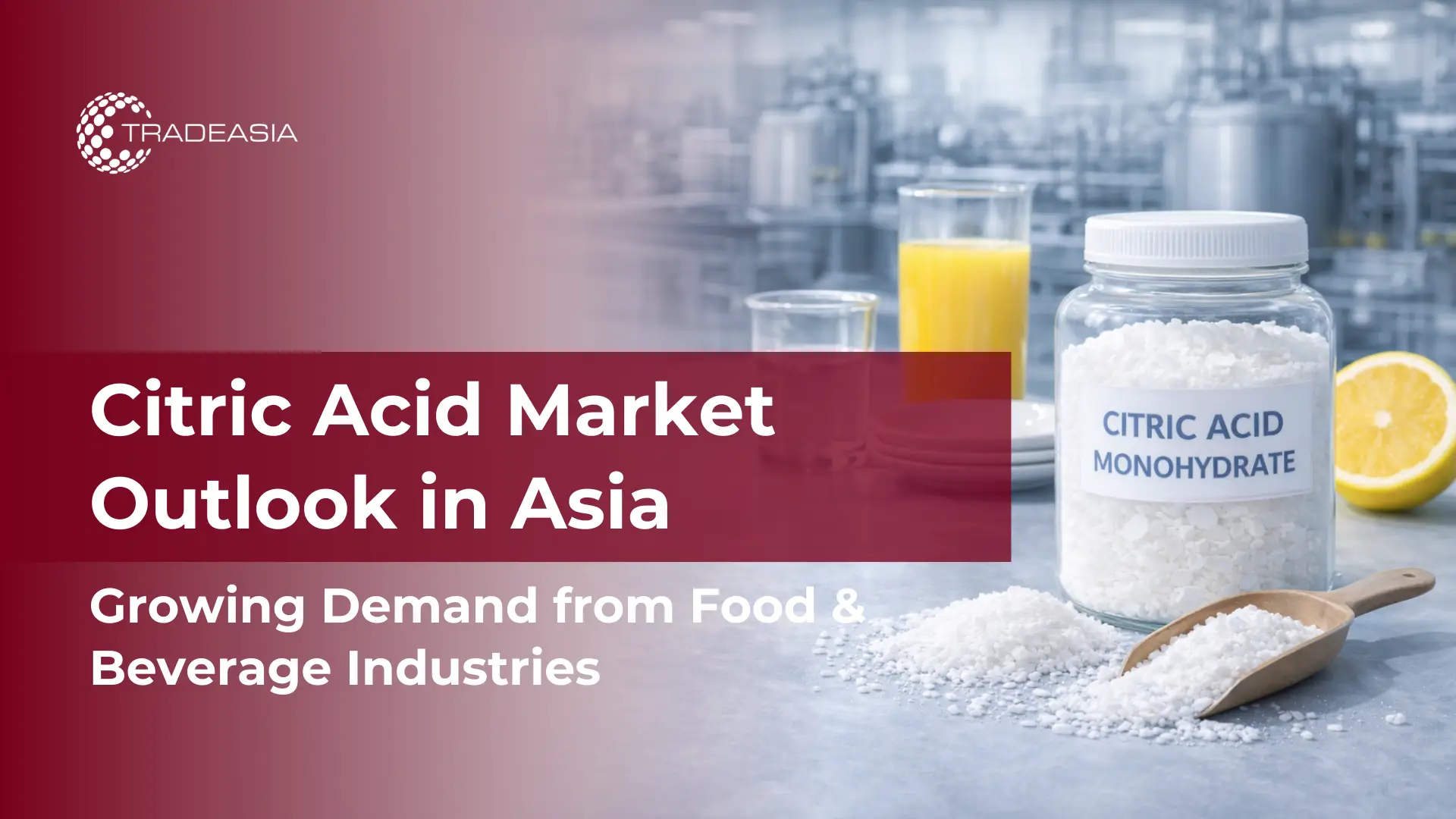
Citric Acid Monohydrate (C6H8O7·H2O) is the hydrated crystalline form of citric acid, containing one molecule of water of crystallization. It is produced predominantly through the microbial fermentation of carbohydrate substrates, such as molasses from sugarcane or corn-derived glucose syrup, using strains of the fungus Aspergillus niger. This bio-based production method has made it a favored, naturally-sourced acidulant in an industry increasingly focused on clean-label and natural ingredients. Its key specifications for food-grade use are strictly governed by standards like the Food Chemicals Codex (FCC), USP, and EU regulations, ensuring high purity, consistent acidity, and safety for human consumption.
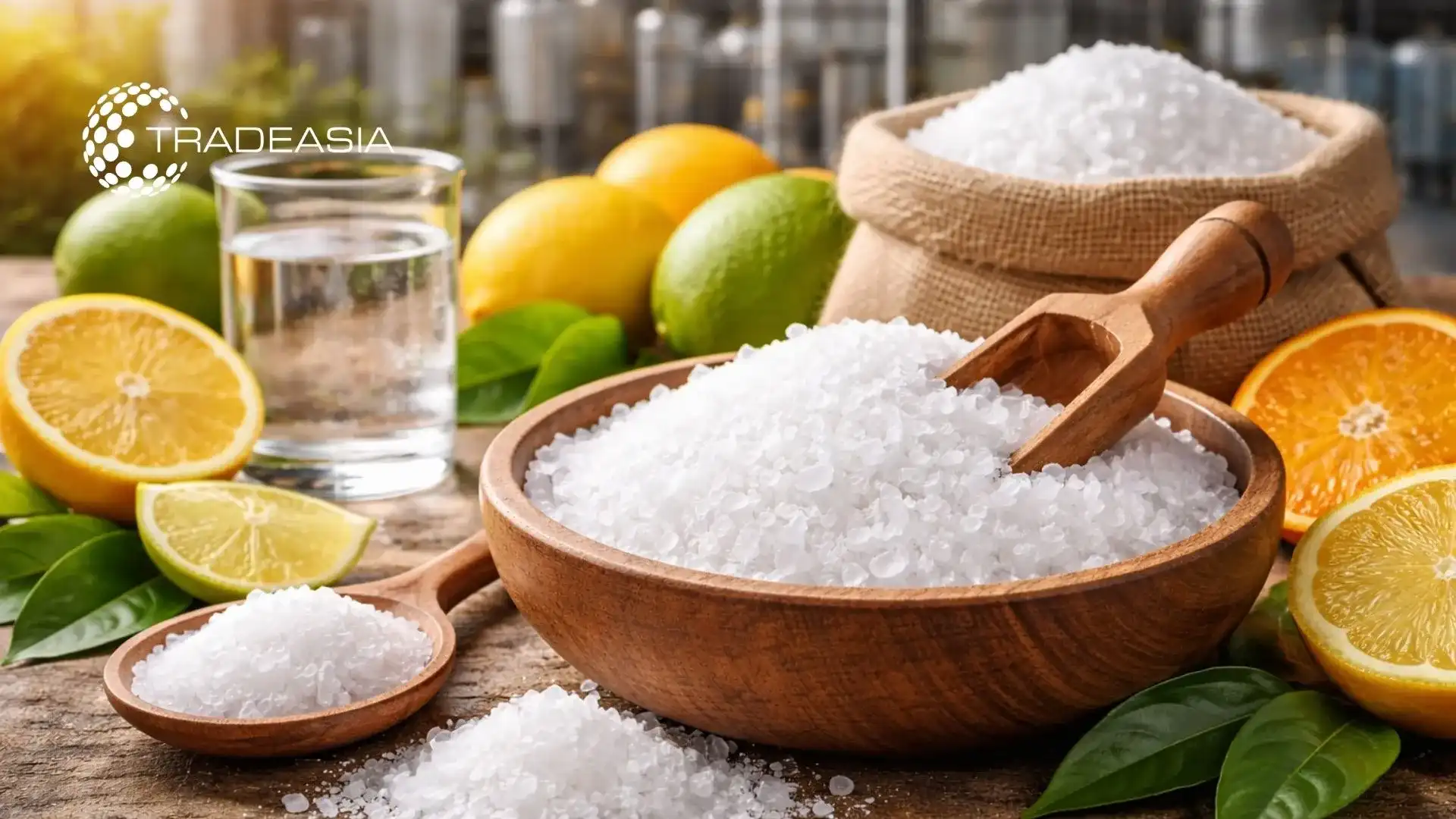
Compared to its anhydrous counterpart, the monohydrate form is often preferred in certain food applications due to its handling characteristics and controlled release properties in specific processes. It appears as colorless, translucent crystals or as a white, crystalline powder with a strongly acidic taste. Its functionality extends far beyond mere sourness; it acts as a potent preservative by chelating metal ions that catalyze spoilage, an effective pH buffer to stabilize products, and a synergistic agent with antioxidants. This multi-functionality is a primary reason for its widespread adoption.
For industrial buyers, understanding these technical specifications is the first step in quality assurance. Parameters such as assay (minimum 99.5%), sulfate and oxalate limits, heavy metal content (e.g., lead, arsenic), and microbial counts are critical checkpoints. Reputable suppliers and platforms specializing in chemical sourcing, such as Chemtradeasia, provide detailed Certificates of Analysis (CoA) that verify these parameters, giving procurement teams confidence in the material's suitability for sensitive food and beverage applications.
The global supply chain for Citric Acid Monohydrate is highly concentrated and geographically defined. China is the undisputed production powerhouse, accounting for a significant majority of the world's output. This dominance is built on large-scale fermentation capacities, access to cost-effective raw materials (primarily corn), and established manufacturing ecosystems. Major Chinese producers have achieved economies of scale that allow them to compete aggressively on price in international markets. Following China, other significant production regions include Europe, with several established players, and North America, though its capacity has diminished relative to Asia.
The trade flows are consequently centered on exports from China to virtually every other region, including North America, Europe, Southeast Asia, Africa, and South America. This creates a supply chain with long lead times and exposure to international freight costs, port congestion, and trade policy shifts. For instance, tariffs, anti-dumping duties, and quality inspection regimes at key import hubs like the EU and the USA can create sudden bottlenecks. Furthermore, the reliance on agricultural feedstocks ties the supply chain's stability to corn and sugar market volatility and harvest yields, adding another layer of complexity for risk management.
In this landscape, intermediaries and specialized B2B platforms play a crucial role in smoothing out friction. They connect global buyers with vetted suppliers, manage logistics and documentation, and provide market intelligence. A platform like Chemtradeasia acts as a vital node in this network, offering buyers access to a diversified supplier base, which can mitigate the risk of over-reliance on a single source or region. This is increasingly important as companies seek to build more resilient and transparent supply chains post-pandemic.
The demand for Citric Acid Monohydrate is projected to follow a steady growth trajectory through 2026, driven by several interconnected factors. The most significant driver is the expanding global processed food and beverage industry, particularly in emerging economies with growing middle-class populations. As consumption of packaged drinks, confectionery, dairy products, and ready-to-eat meals rises, so does the need for acidulants, preservatives, and flavor enhancers. Citric acid, being natural and multifunctional, is often the first choice.
Consumer trends are profoundly shaping formulation strategies. The relentless push for "clean-label" and "natural" ingredients directly benefits citric acid, as it can be listed simply as "citric acid" or "fruit acid" and is derived from fermentation. It is increasingly replacing synthetic acidulants like phosphoric acid in certain applications. Additionally, the growth of functional beverages, including vitamin-fortified drinks and energy shots, relies on citric acid for pH adjustment and flavor masking. Sustainability trends are also pushing producers to optimize fermentation yields and explore alternative, non-food biomass feedstocks to reduce environmental impact.
From a market insight perspective, price volatility remains a key challenge. Factors such as fluctuations in corn prices, energy costs affecting fermentation, and environmental regulations in China influencing production capacity can cause significant price swings. Strategic buyers are therefore moving towards longer-term contracts, diversified sourcing, and closer partnerships with reliable suppliers or aggregators who can provide stability and forward-looking market analysis to navigate these uncertainties effectively through 2026 and beyond.
The applications of Citric Acid Monohydrate in food and beverages are remarkably diverse, underpinning its status as an industry staple. In the beverage sector, it is the acidulant of choice for soft drinks, fruit juices, and nectars, providing a sharp, refreshing tartness that balances sweetness. It also acts as a preservative by sequestering metal ions, thereby extending shelf-life and maintaining flavor clarity. In powdered drink mixes, its hygroscopic nature is managed, but its flavor profile is essential for the final product's taste.
In food processing, its roles multiply. In jams, jellies, and canned fruits, it adjusts pH to ensure proper gelling and acts as a preservative. In the dairy industry, it is used in processed cheese production to emulsify fats and create a smooth, consistent texture. For confectionery, it provides the sour note in gummies, hard candies, and sour coatings. Furthermore, it serves as an effective antioxidant synergist in fats and oils, preventing rancidity. In meat processing, it can be used in minor amounts for pH adjustment and color retention. Each application requires a specific grade and particle size, which professional suppliers can provide.
The benefits of using Citric Acid Monohydrate in these applications are clear: it is a safe, effective, and label-friendly multifunctional agent. It enhances flavor, improves preservation, ensures product stability, and often allows for a reduction in the use of other, less desirable additives. For R&D teams, its well-understood properties and regulatory acceptance worldwide (GRAS status in the USA, E330 in the EU) make it a reliable and versatile tool for product development and innovation in natural preservation and flavor systems.
In a globalized yet volatile market, developing a robust sourcing strategy for Citric Acid Monohydrate is a critical business function. The first pillar of this strategy is supplier qualification. Buyers must look beyond price and assess a supplier's manufacturing capabilities, quality control certifications (ISO, FSSC 22000, etc.), financial stability, and track record for reliability. The ability to provide consistent, food-grade material with full traceability and compliant documentation (CoA, MSDS/SDS) is non-negotiable. Platforms that pre-vet their suppliers, like Chemtradeasia, add a layer of security to this process.
Supply chain resilience is the second pillar. The over-concentration of production in one geographic region presents a significant risk. Astute buyers are therefore exploring dual-sourcing strategies, balancing cost-effective volumes from major producers with backup supplies from regional manufacturers, even if at a premium. Building strategic partnerships with suppliers or intermediaries who have deep market intelligence can provide early warnings about potential disruptions, be they logistical, regulatory, or raw material-related, allowing for proactive contingency planning.
Finally, the partnership should extend beyond transactional purchasing. A good supplier or sourcing partner should offer technical support, help navigate regulatory changes in different target markets, and provide flexibility in order sizes and logistics solutions. For global food companies, having a reliable channel to source bulk Citric Acid Monohydrate with transparency and support is a competitive advantage, ensuring production continuity and safeguarding product quality in a dynamic market heading toward 2026.
The global supply chain for Citric Acid Monohydrate is a vital artery for the food additives industry. As demand grows steadily towards 2026, driven by clean-label trends and expanding processed food consumption, understanding this landscape becomes more crucial. From its technical specifications and multifaceted applications in beverages, dairy, and confectionery to the complexities of a China-centric production model and the associated logistical and price risks, informed navigation is key. Success will depend on a blend of deep market insight, rigorous supplier vetting, and strategic sourcing partnerships that prioritize quality, reliability, and supply chain resilience.
For procurement professionals and product developers, the path forward involves leveraging reliable market intelligence platforms and establishing relationships with trusted suppliers who can act as partners rather than just vendors. In doing so, businesses can secure their supply of this essential ingredient, mitigate risks, and capitalize on the opportunities presented by a growing global market for safe, effective, and natural food additives.
Disclaimer: This article is for informational and market insight purposes only. It is not intended as technical, safety, or professional advice. The information presented regarding market trends, applications, and supply chains should be verified independently. For specific applications, technical specifications, or safety handling, readers must consult official documentation such as Material Safety Data Sheets (MSDS/SDS) and engage with qualified experts. We strongly advise conducting thorough due diligence and directly contacting our team or relevant suppliers for precise, application-specific guidance.
We're committed to your privacy. Tradeasia uses the information you provide to us to contact you about our relevant content, products, and services. For more information, check out our privacy policy.


 English
 Indonesian
 简体字
简体字
 العربية
 Español
 Français
 Português
 日本語
日本語
 한국어
한국어
 Tiếng Việt