Explore our network of country and industry based websites to access localized information, product offerings, and business services across our group.
Log in to start sending quotation requests for any product.
Don't have an account? Sign Up Here
Home Mannitol Market Demand: Applications, Buyers, and Global Sourcing Insights
Trade Insights | Supply Chain | 16 July 2026
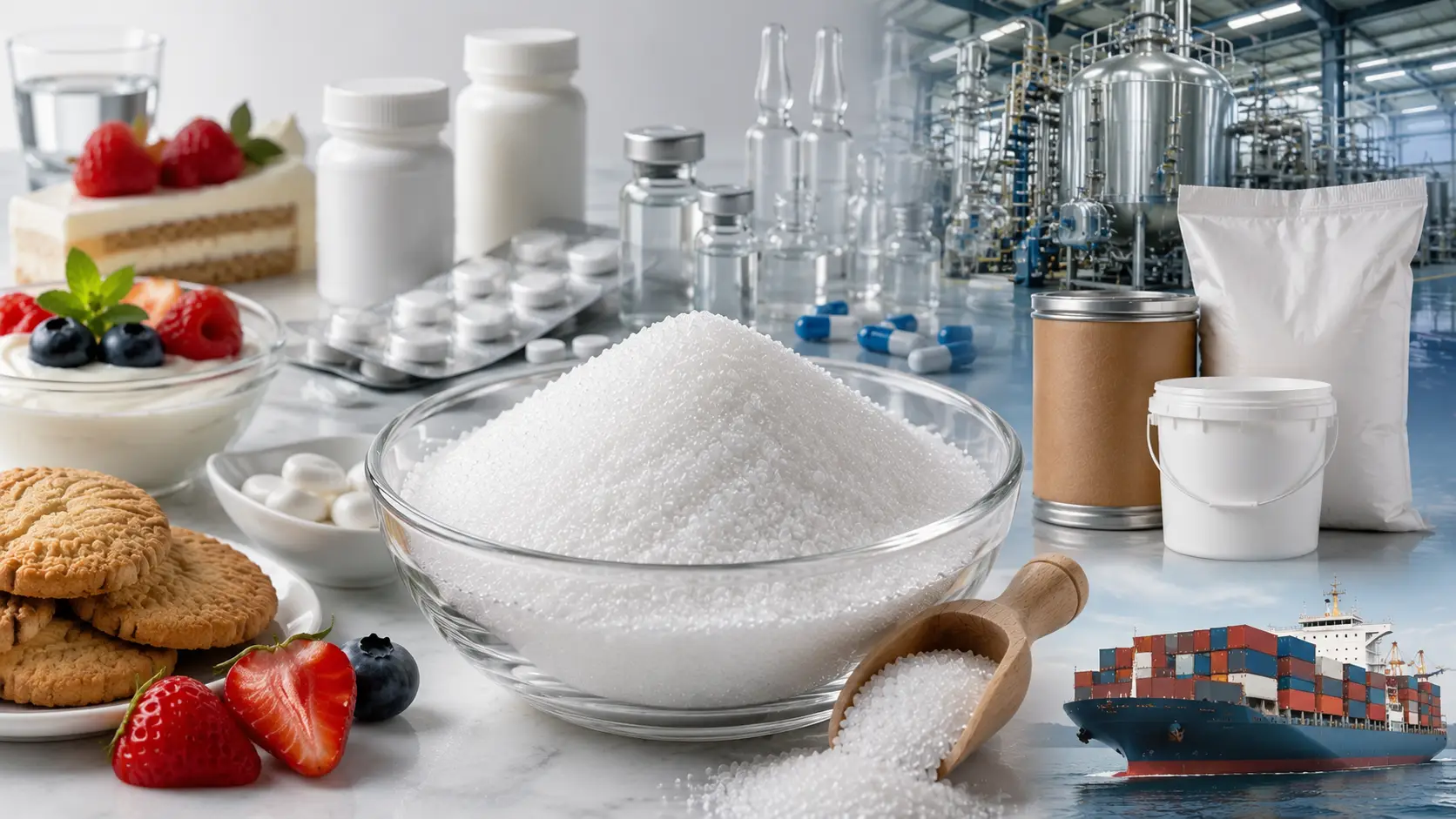
Understanding Mannitol and Its Commercial Importance
Growing Industrial Applications Driving Mannitol Demand
Key Buyer Groups and Industries Using Mannitol
Mannitol Market Trends and Global Supply Opportunities
Sourcing Considerations for Mannitol Buyers
Tradeasia Supply Chain Approach for Mannitol Procurement and Distribution
Future Outlook for Mannitol Applications and B2B Markets
Mannitol is a naturally occurring sugar alcohol widely used as a functional ingredient across pharmaceutical, food, and specialty manufacturing industries. Its commercial value comes from its physical and chemical properties, including low hygroscopicity, pleasant sweetness, cooling effect, and compatibility with different formulation processes. These characteristics make Mannitol an important material for companies seeking reliable ingredients with consistent performance.
According to technical information published by the European Food Safety Authority, Mannitol is recognized as a permitted food additive under specific regulatory conditions, reflecting its established role in food applications. The ingredient is commonly identified as E421 in food manufacturing environments and is evaluated based on safety and application requirements.
For industrial buyers, Mannitol represents more than a simple sweetener. Its role as a pharmaceutical excipient and functional ingredient creates demand from manufacturers that require dependable specifications, regulatory compliance, and stable supply availability. Procurement teams typically evaluate factors such as purity level, documentation, production capacity, and supplier consistency before selecting a source.
Companies looking for commercial Mannitol supply can review available specifications and sourcing information through the Mannitol product page to better understand product availability and potential industrial applications.
The commercial importance of Mannitol is linked to its versatility across multiple industries. Unlike ingredients that serve only one function, Mannitol supports different manufacturing requirements, including pharmaceutical formulation, food processing, and specialty applications. This diversity helps maintain demand from different buyer segments.
Technical references from the U.S. Food and Drug Administration list Mannitol among approved food ingredients, supporting its continued use in regulated applications. Manufacturers operating in food and healthcare sectors rely on compliant raw materials to meet product quality expectations.
The increasing focus on functional ingredients and high-quality excipients has encouraged companies to strengthen their sourcing strategies. Buyers are increasingly comparing suppliers based on technical documentation, production reliability, international logistics capability, and supply chain transparency.
For chemical traders, distributors, and procurement teams, Mannitol provides an opportunity to participate in a global ingredient market where application knowledge and dependable sourcing networks influence purchasing decisions.
The pharmaceutical industry is one of the most important demand sectors for Mannitol. It is commonly used as an excipient in tablet manufacturing because of its compressibility, stability, and ability to improve product texture and handling. Mannitol is also used in certain medical formulations where controlled physical properties are required.
According to scientific literature indexed by the National Center for Biotechnology Information, Mannitol has been extensively studied in pharmaceutical and medical applications due to its osmotic properties and formulation compatibility.
Pharmaceutical manufacturers purchasing Mannitol typically require consistent quality standards, reliable batch performance, and documentation supporting regulatory compliance. These requirements make supplier qualification an essential part of procurement processes.
As pharmaceutical production expands globally, demand for dependable excipient suppliers continues to increase. Companies involved in formulation development and manufacturing often seek suppliers capable of supporting long-term supply agreements.
Mannitol is also widely used in food manufacturing, particularly in products requiring reduced sweetness intensity, improved texture, and functional sugar alcohol properties. It is commonly applied in confectionery products, chewing gum, and specialty food formulations.
Food manufacturers value Mannitol because it provides sweetness while contributing fewer calories compared with traditional sugars. Its cooling sensation and stability characteristics make it suitable for specific product categories where sensory performance is important.
According to information from the Food and Agriculture Organization of the United Nations, food additives and functional ingredients are evaluated according to international safety considerations, supporting responsible use within regulated food systems.
For food ingredient buyers, sourcing Mannitol involves evaluating factors such as food-grade certification, supplier reliability, packaging options, and logistics capability. These considerations directly affect production efficiency and market competitiveness.
Pharmaceutical companies represent one of the most important buyer groups for Mannitol because of its role as a functional excipient in various formulations. Tablet producers, formulation developers, and healthcare manufacturers require ingredients that meet strict quality requirements, including purity standards, consistency, and regulatory documentation.
Mannitol buyers in the pharmaceutical sector usually evaluate suppliers based on technical specifications, certificates of analysis, manufacturing controls, and the ability to maintain stable supply. For multinational pharmaceutical companies, supply continuity is especially important because ingredient availability directly affects production planning.
According to technical guidance from the United States Pharmacopeia, pharmaceutical ingredients are subject to quality standards designed to support safety, identity, strength, and purity requirements. These standards influence how pharmaceutical buyers select and qualify raw material suppliers.
For companies sourcing Mannitol internationally, supplier transparency and supply chain capability are key purchasing considerations. A reliable marketplace platform can help connect manufacturers, distributors, and industrial buyers with suitable supply partners.
Food manufacturers and nutraceutical companies are another significant buyer segment for Mannitol. These companies use Mannitol as a functional ingredient in products where sugar reduction, texture improvement, or specific sensory characteristics are required.
The growth of healthier food preferences has encouraged manufacturers to explore alternatives to conventional sugar ingredients. Sugar alcohols such as Mannitol are increasingly considered in product development because they provide sweetness and functional benefits while supporting reduced-sugar formulations.
Market analysis from organizations studying global food ingredient trends highlights increasing demand for functional ingredients that support changing consumer preferences, including lower-sugar and specialty nutrition products.
For procurement teams in food and nutraceutical industries, supplier selection involves reviewing food-grade compliance, production capacity, packaging requirements, and international delivery capabilities. These factors influence both product development timelines and commercial competitiveness.
Mannitol demand continues to be influenced by expansion in pharmaceutical production, food innovation, and specialty ingredient applications. As healthcare manufacturing grows and food companies develop more functional products, demand for reliable Mannitol supply chains becomes increasingly important.
The global nature of the chemical and ingredient industry means buyers often source Mannitol through international suppliers, distributors, and trading platforms. Regional production capabilities, transportation networks, and regulatory requirements all affect sourcing decisions.
According to market research analysis from Grand View Research, the broader pharmaceutical excipients market has experienced continued growth due to increasing pharmaceutical manufacturing activities and demand for functional formulation ingredients.
For suppliers and distributors, understanding regional demand patterns provides opportunities to develop stronger commercial relationships with manufacturers and procurement teams. Companies that can provide consistent quality and dependable logistics are better positioned in competitive ingredient markets.
The Mannitol supply chain involves multiple stakeholders, including manufacturers, exporters, distributors, and end users. Efficient coordination between these participants helps ensure product availability and reduces procurement risks for industrial buyers.
International buyers often compare suppliers based on production location, lead times, export experience, documentation support, and ability to meet industry-specific requirements. These factors become especially important when sourcing pharmaceutical and food-grade materials.
Industry organizations such as the International Trade Centre emphasize the importance of efficient global trade networks and reliable supplier relationships in international commerce.
For B2B chemical marketplaces, the ability to provide supplier information, product specifications, and sourcing support creates value for buyers looking to simplify procurement processes.
Selecting a Mannitol supplier requires careful evaluation of product quality, technical documentation, and supply reliability. Industrial buyers typically review specifications such as grade availability, purity requirements, packaging formats, and compliance documentation before placing orders.
Pharmaceutical and food manufacturers often require suppliers that can provide consistent product performance across multiple batches. Variations in raw material quality can affect manufacturing efficiency, formulation results, and regulatory approval processes.
Technical standards provided by recognized organizations, including pharmacopeial and food safety institutions, help define expectations for ingredient quality and manufacturing practices.
For companies purchasing Mannitol through global supply networks, supplier evaluation is not only about price. Long-term sourcing decisions depend on reliability, communication, documentation support, and the ability to meet changing market requirements.
Reliable supply is a major consideration for companies purchasing Mannitol for industrial production. Manufacturers in pharmaceutical, food, and nutraceutical sectors depend on consistent ingredient availability to maintain production schedules and fulfill customer demand.
Procurement teams commonly compare suppliers based on production capability, inventory management, export experience, technical support, and responsiveness. A supplier with strong supply chain coordination can help reduce risks associated with delays, quality variation, or limited availability.
According to supply chain research from the Council of Supply Chain Management Professionals, effective supply chain management improves visibility, coordination, and operational efficiency across international business networks.
For global Mannitol buyers, working with an established chemical marketplace can simplify supplier discovery and provide access to information needed for better purchasing decisions. Trade platforms support communication between manufacturers, distributors, and industrial users seeking efficient sourcing channels.
Tradeasia / Chemtradeasia / Tradechem Marketplace operates within the broader chemical supply chain ecosystem by helping industrial buyers identify sourcing opportunities and connect with suppliers. For products such as Mannitol, marketplace accessibility is valuable because buyers often require detailed product information before beginning procurement discussions.
A B2B chemical marketplace approach allows buyers to evaluate product availability, application suitability, and supplier information in one commercial environment. This helps procurement teams reduce search time and improve supplier comparison processes.
Industry reports from the United Nations Conference on Trade and Development highlight the importance of digital trade platforms in improving international commerce and connecting businesses across markets.
Companies interested in Mannitol sourcing can explore the Mannitol sourcing page for product-related information and potential supply discussions.
Beyond product availability, industrial buyers require market understanding to make informed purchasing decisions. Information about applications, specifications, and industry requirements helps companies determine whether a product matches their manufacturing needs.
For Mannitol, buyer decisions are influenced by the intended application. Pharmaceutical companies may prioritize pharmaceutical-grade specifications, while food manufacturers may focus on food-grade requirements and regulatory suitability.
A marketplace-driven sourcing model supports different buyer groups, including manufacturers, distributors, traders, and procurement professionals. Each group may have different purchasing priorities depending on their role within the supply chain.
By providing product information and supply chain access, Tradeasia supports a more efficient connection between Mannitol buyers and suppliers across international markets.
The future demand outlook for Mannitol is closely connected to growth in functional ingredients, pharmaceutical manufacturing, and specialty food development. As industries continue improving product performance and exploring alternative ingredients, Mannitol remains relevant across multiple applications.
Pharmaceutical innovation, increasing healthcare manufacturing capacity, and demand for high-quality excipients are expected to continue influencing ingredient sourcing strategies. Manufacturers require dependable raw material partners capable of supporting consistent production.
According to analysis from the MarketsandMarkets, growth in pharmaceutical excipients and related ingredient markets is supported by expanding pharmaceutical production and evolving formulation requirements.
For suppliers and distributors, understanding application trends is essential for identifying future opportunities. Companies that provide reliable quality, technical information, and responsive service can better support industrial buyers.
Mannitol’s diverse applications create long-term commercial relevance for producers, traders, and distributors involved in ingredient supply chains. Its use across healthcare, food, and specialty industries reduces dependence on a single market segment.
For buyers, selecting the right sourcing partner remains a critical factor in maintaining competitive manufacturing operations. Reliable supply, transparent communication, and product knowledge contribute to successful long-term procurement relationships.
As international trade becomes increasingly connected through digital platforms, B2B marketplaces will continue playing an important role in improving access between buyers and suppliers.
For companies evaluating Mannitol procurement opportunities, the Mannitol supplier information page provides a starting point for understanding product availability and sourcing options.
Mannitol is typically purchased by pharmaceutical manufacturers, food ingredient producers, nutraceutical companies, chemical distributors, and industrial traders. These buyers require different grades and specifications depending on their intended applications.
Pharmaceutical buyers usually focus on excipient quality, documentation, and regulatory suitability. Food manufacturers evaluate factors such as food-grade compliance, sensory properties, and formulation compatibility.
Before purchasing Mannitol, procurement teams generally assess supplier reliability, product specifications, certifications, production capacity, packaging options, and logistics capability.
Price remains an important factor, but industrial buyers often prioritize consistent quality and dependable supply because ingredient interruptions can affect manufacturing operations.
Supplier comparison helps companies identify partners that can meet technical and commercial requirements. International buyers often compare suppliers based on delivery capability, communication efficiency, export experience, and documentation support.
A transparent sourcing platform helps buyers evaluate available options more efficiently and reduces uncertainty during procurement planning.
The Mannitol product page provides buyers with a commercial reference point for understanding product availability, applications, and sourcing opportunities. It supports early-stage research before direct supplier engagement and purchasing discussions.
Mannitol represents a commercially valuable ingredient because it serves multiple industries with different demand drivers. Its role in pharmaceutical formulations, food products, and specialty applications creates opportunities for manufacturers, traders, and distributors.
Reliable sourcing is essential because industrial users depend on consistent raw materials to maintain product quality and operational efficiency. Buyers increasingly seek suppliers that combine product knowledge with supply chain capability.
Tradeasia / Chemtradeasia / Tradechem Marketplace positions Mannitol as part of a broader B2B sourcing ecosystem designed to connect industrial buyers with relevant supply opportunities.
By supporting supplier discovery, product information access, and international trade connections, marketplace platforms can help procurement teams make better-informed sourcing decisions.
Sources
We're committed to your privacy. Tradeasia uses the information you provide to us to contact you about our relevant content, products, and services. For more information, check out our privacy policy.


 English
 Indonesian
 简体字
简体字
 العربية
 Español
 Français
 Português
 日本語
日本語
 한국어
한국어
 Tiếng Việt



















