Explore our network of country and industry based websites to access localized information, product offerings, and business services across our group.
Log in to start sending quotation requests for any product.
Don't have an account? Sign Up Here
Home Pectin Applications Driving Growth Across Food and Beverage Industries
Trade Insights | Supply Chain | 23 July 2026
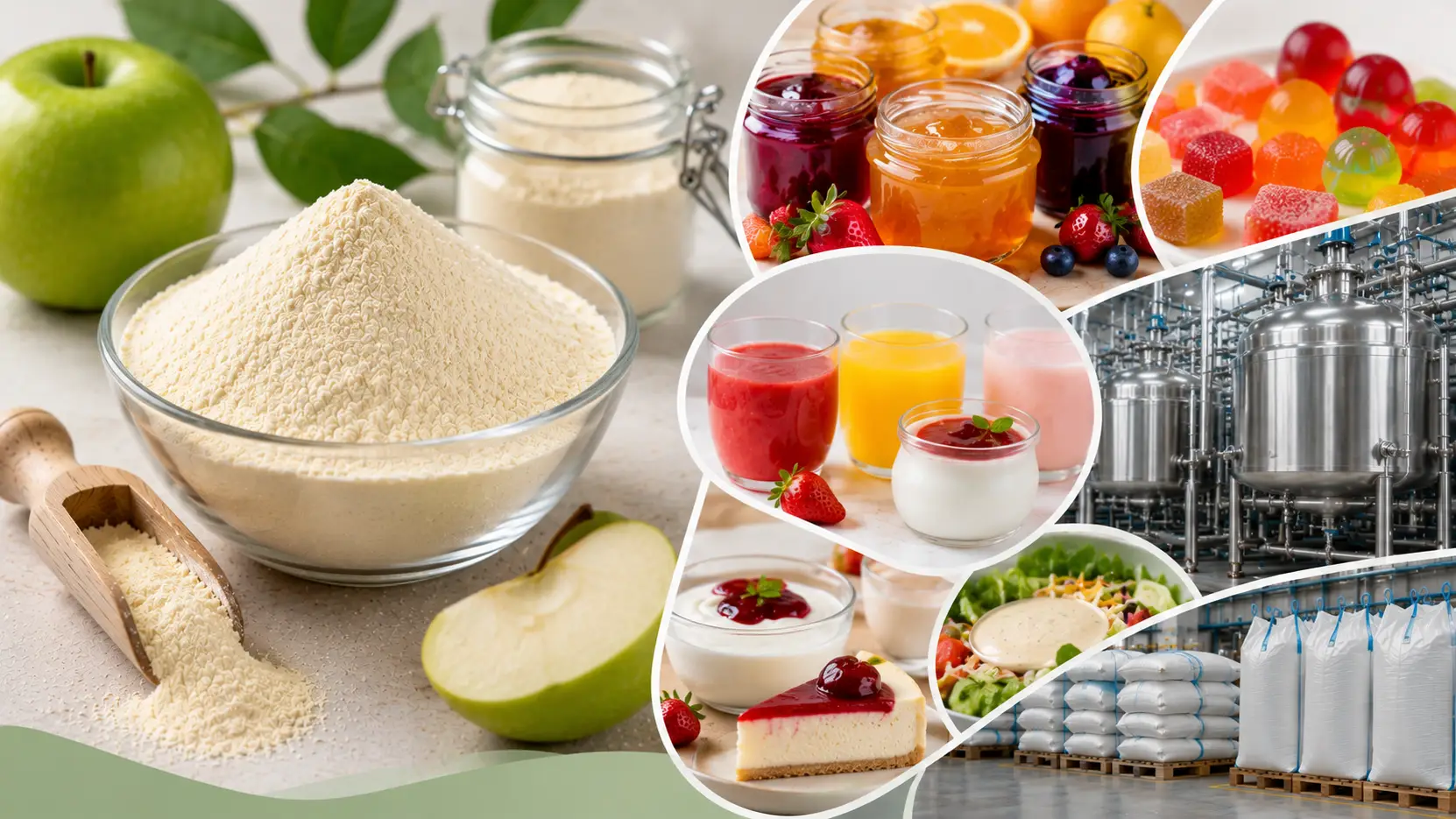
Understanding Pectin and Its Role in Industrial Applications
Growing Demand for Pectin Across Food and Beverage Markets
Key Industrial Applications of Pectin for Manufacturers
Buyer Considerations When Sourcing Pectin Globally
Supply Chain Opportunities for Pectin Buyers and Distributors
Commercial Outlook for Pectin in Global Ingredient Markets
Pectin is a naturally occurring polysaccharide commonly extracted from citrus peels and apple pomace. It is widely used as a functional ingredient because of its ability to form gels, improve texture, stabilize formulations, and enhance product consistency. According to technical information from the Food and Agriculture Organization of the United Nations, plant-derived hydrocolloids such as pectin play an important role in food formulation by improving stability and quality characteristics.
The commercial importance of pectin comes from its multifunctional performance in industrial formulations. High methoxyl pectin and low methoxyl pectin provide manufacturers with different options depending on sugar content, calcium requirements, texture targets, and processing conditions. These characteristics make pectin suitable for applications where controlled viscosity, gel strength, and mouthfeel are required.
Food manufacturers evaluate pectin based on functional parameters such as degree of esterification, viscosity performance, purity, and compatibility with other ingredients. Technical guidance from the International Food Information Council highlights the importance of ingredient functionality in developing consumer food products with consistent quality.
The growing preference for natural and plant-based ingredients has increased interest in pectin as a clean-label functional ingredient. Manufacturers in processed food, beverage, and nutraceutical sectors increasingly consider pectin as an alternative to synthetic texturizers and stabilizers when developing new formulations.
For industrial buyers, understanding pectin functionality is essential because application requirements directly influence sourcing specifications. Companies purchasing pectin need suppliers capable of providing consistent quality, documentation, and technical support for large-scale manufacturing operations.
The demand for pectin continues to expand as food and beverage manufacturers develop products requiring improved texture, stability, and consumer-friendly ingredient labels. According to market analysis from Mordor Intelligence, demand for functional food ingredients has been supported by trends such as clean-label products, plant-based foods, and increasing interest in healthier formulations.
One major factor influencing pectin demand is the expansion of processed fruit products, including jams, spreads, fillings, and confectionery products. These categories rely on pectin’s gelling capabilities to achieve desired texture and product stability during storage and distribution.
The beverage sector has also contributed to increased demand for pectin applications. Manufacturers use pectin in juice-based drinks, functional beverages, and dairy-alternative products to improve suspension, mouthfeel, and overall product quality. Industry reports from Grand View Research identify functional ingredients as a growing area within the global food ingredient market.
Consumer preferences are also shaping procurement strategies. Food producers increasingly seek ingredients that support natural positioning, plant-based formulations, and improved nutritional profiles. Pectin aligns with these trends because it is derived from renewable plant sources and offers multiple formulation benefits.
For B2B buyers, these market changes create new sourcing requirements. Ingredient distributors, food manufacturers, and product developers must evaluate suppliers based on reliability, regulatory compliance, technical capabilities, and the ability to support changing formulation demands.
Pectin serves multiple industrial purposes across food and beverage manufacturing due to its ability to control texture, viscosity, and stability. Its application range allows ingredient suppliers and distributors to serve diverse customer segments, from large-scale food processors to specialty product developers. Technical references from the National Center for Biotechnology Information describe pectin as a valuable plant-based polymer with significant functional potential in food and biotechnology applications.
In food processing, pectin is widely used in products such as fruit preserves, jams, jellies, confectionery fillings, and bakery preparations. It helps manufacturers achieve consistent gel formation while maintaining product quality during production and storage.
Pectin is also increasingly used in dairy and dairy-alternative applications. Plant-based yogurt, beverages, and dessert products may require stabilizing ingredients to improve texture and consumer acceptance. The ability of pectin to interact with proteins and other components makes it useful in complex formulations.
Beverage producers use pectin for applications requiring improved suspension and texture. It can help maintain consistency in fruit drinks, nutritional beverages, and specialty formulations where manufacturers aim to deliver a premium sensory experience.
From a procurement perspective, different applications require different grades and specifications. Buyers must assess factors such as product type, processing conditions, regulatory requirements, and supplier capability before selecting a pectin source.
Industrial buyers sourcing pectin must consider more than product availability. Quality consistency, technical documentation, supply reliability, and supplier expertise influence purchasing decisions, especially for manufacturers operating large production facilities. According to guidance from the United States Food and Drug Administration, food ingredient manufacturers must comply with applicable safety and quality requirements to ensure consumer protection.
Quality specifications are among the most important factors when purchasing pectin. Buyers typically review parameters such as food-grade compliance, application performance, batch consistency, and documentation supporting regulatory requirements.
Supply chain reliability is another important consideration. Food manufacturers require stable ingredient availability to avoid production interruptions and maintain customer commitments. Global sourcing platforms help connect buyers with suppliers that can support international procurement requirements.
Tradeasia provides a marketplace environment where industrial buyers can explore sourcing information and connect with supply partners. Companies evaluating pectin availability can review the Pectin sourcing page to understand product information and supplier opportunities.
Supplier comparison is also driven by commercial factors including pricing, logistics capability, minimum order requirements, and technical support. Buyers often compare multiple suppliers to identify the best combination of quality, reliability, and supply flexibility.
The global ingredient supply chain requires coordination between manufacturers, traders, distributors, and end users. Pectin represents an opportunity for businesses involved in ingredient distribution because demand is supported by multiple downstream industries, including food processing, beverage production, and functional nutrition.
B2B marketplaces help simplify sourcing by improving visibility between buyers and suppliers. For international ingredient procurement, marketplaces can support supplier discovery, product evaluation, and communication between companies across different regions.
For manufacturers and distributors, access to reliable ingredient supply is essential for responding to changing market requirements. Businesses that work with dependable suppliers can better support customers developing new food and beverage products.
Tradeasia / Chemtradeasia positions itself as a B2B chemical and ingredient marketplace supporting industrial buyers seeking supply chain connections. The platform approach helps procurement teams identify suitable sourcing options while improving access to international suppliers.
The Pectin product page provides additional product information for companies researching pectin availability, applications, and sourcing considerations.
Pectin is expected to remain commercially relevant as manufacturers continue developing products focused on natural ingredients, functional benefits, and improved consumer experiences. Growth opportunities are connected to expanding applications in food processing, beverages, and specialty nutrition products.
The future demand landscape for pectin will likely be influenced by innovation in plant-based foods, functional beverages, and clean-label formulations. Manufacturers that understand application requirements can identify new opportunities for product development and market expansion.
Ingredient buyers are also becoming more focused on supply chain transparency and supplier reliability. Companies increasingly evaluate partners based on quality systems, documentation, sustainability considerations, and long-term supply capability.
For distributors and procurement teams, pectin represents a versatile ingredient category with applications across multiple industries. Understanding market trends and customer requirements can help businesses make better sourcing decisions.
By connecting product knowledge with reliable supplier networks, B2B marketplaces can support companies looking for efficient ingredient procurement solutions. Businesses exploring industrial pectin opportunities can use the Pectin supplier information page as a starting point for sourcing discussions.
We're committed to your privacy. Tradeasia uses the information you provide to us to contact you about our relevant content, products, and services. For more information, check out our privacy policy.


 English
 Indonesian
 简体字
简体字
 العربية
 Español
 Français
 Português
 日本語
日本語
 한국어
한국어
 Tiếng Việt



















