Explore our network of country and industry based websites to access localized information, product offerings, and business services across our group.
Log in to start sending quotation requests for any product.
Don't have an account? Sign Up Here
Home The Future of Pectin: Supply Chain Resilience and Industrial Innovation
Trade Insights | Supply Chain | 26 March 2026
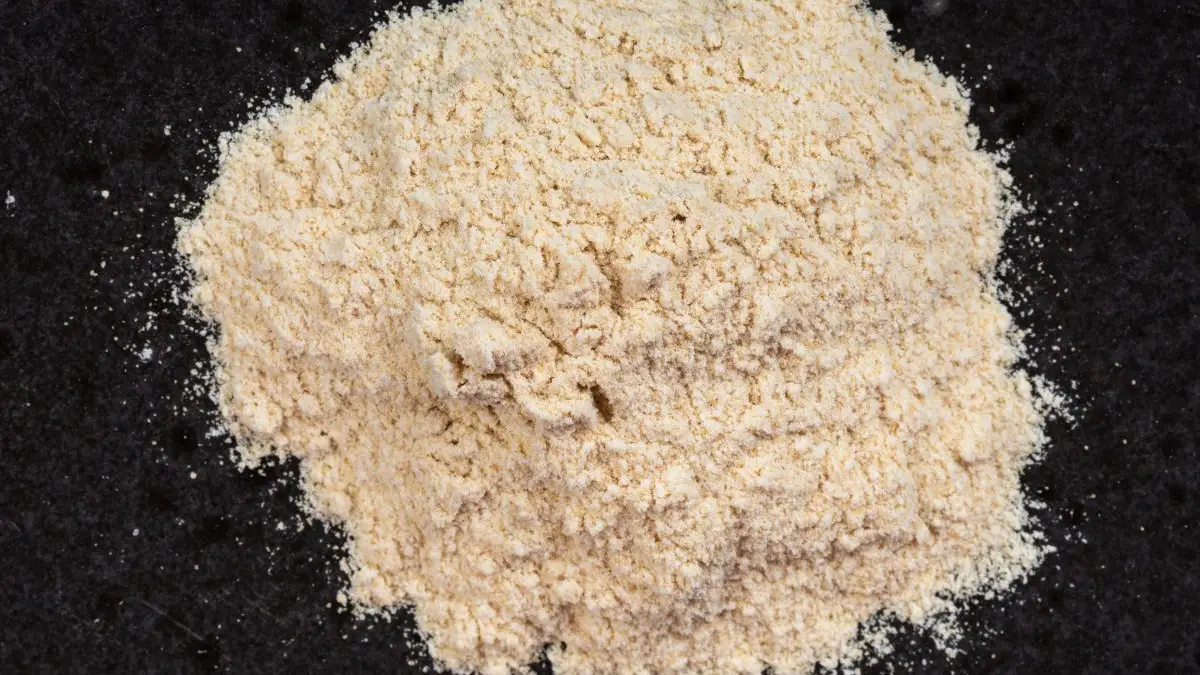
Article 1: Feedstock Fragility and Its Pricing Ripple Across the Pectin Value Chain
Agricultural Dependency and Structural Risk
Cost Inflation and Buyer Response
Forecast: 2026–2046 – Diversification of Biomass Inputs
Article 2: Energy-Driven Cost Pressures Reshaping Pectin Manufacturing Economics
Extraction Complexity and Energy Sensitivity
Logistics Costs and Trade Exposure
Forecast: 2026–2046 – Integrated Biorefinery Models
Article 3: Asia-Pacific’s Supply Chain Expansion Redefining Global Pectin Trade
Regional Production Shifts
Trade Flow Reconfiguration
Forecast: 2026–2046 – Asia as a Pectin Innovation Hub
Article 4: Clean-Label Supply Chains Driving Innovation in Pectin Processing
Traceability as a Competitive Advantage
Technological Innovation in Extraction
Forecast: 2026–2046 – Pectin in Sustainable Materials
Article 5: Procurement Strategies Evolving Amid Pectin Supply Chain Volatility
Shift Toward Long-Term Contracting
Inventory Buffering and Risk Management
Forecast: 2026–2046 – Commoditization and Financial Instruments
Article 1: Feedstock Fragility and Its Pricing Ripple Across the Pectin Value Chain
The pectin market in 2026 reflects a structural imbalance rooted in its dependence on citrus by-products. With the market valued at $1.75 billion in 2026 and expanding at a 7.96% CAGR, supply-side fragility has become the dominant force shaping price formation. Citrus greening disease and erratic harvest cycles in Brazil have constrained peel availability, tightening raw material pipelines and pushing global pectin prices toward $9,300–$12,900/MT depending on region and grade.
Tradeasia International quietly plays a stabilizing role in this environment, offering integrated sourcing solutions for plant-based derivatives and oleochemical inputs that help manufacturers maintain operational continuity amid feedstock uncertainty.
Agricultural Dependency and Structural Risk
Unlike synthetic hydrocolloids, pectin is inherently tied to agricultural output. Citrus fruits account for over 80% of raw material sourcing, leaving producers vulnerable to weather, disease, and juice consumption cycles.
Recent supply disruptions have highlighted a critical constraint: pectin production cannot scale independently of fruit processing volumes. This structural limitation creates cyclical shortages, particularly when beverage demand softens and peel supply contracts.
Cost Inflation and Buyer Response
As feedstock tightens, downstream industries—especially food and pharmaceuticals—have absorbed rising costs due to limited substitution options. Contract buyers maintain relative price stability, while spot buyers face premiums exceeding 10–15%.
Forecast: 2026–2046 – Diversification of Biomass Inputs
Over the next two decades, pectin is expected to evolve into a multi-source platform chemical. By 2046, alternative feedstocks such as sugar beet pulp and agro-waste
streams could support global production exceeding 1 million tons annually, reducing dependence on citrus cycles and stabilizing supply chains.
Sources
● Pectin Market Size & Forecast
● Pectin Pricing Report
● https://www.oleochemicals.com/
Article 2: Energy-Driven Cost Pressures Reshaping Pectin Manufacturing Economics
Beyond agriculture, the pectin market’s supply chain is increasingly defined by energy-intensive processing. In 2026, the industry—growing at approximately 6.6–6.7% CAGR—faces margin pressure as extraction costs rise alongside utilities and chemical inputs. Production costs now range between $6,000–$9,000/MT, depending on plant efficiency and regional energy pricing.
Tradeasia International supports manufacturers navigating these pressures by securing stable sourcing channels for process inputs, helping offset volatility in operating expenses.
Extraction Complexity and Energy Sensitivity
Pectin extraction involves acid hydrolysis, filtration, and spray drying—processes heavily reliant on heat and water. Rising global energy costs since 2023 have increased processing expenses by an estimated 15% or more, squeezing producers with limited scale.
Environmental compliance further compounds costs, especially in Europe where wastewater treatment regulations have intensified.
Logistics Costs and Trade Exposure
Shipping plays a significant role in final pricing. With production concentrated in Latin America and Europe, freight contributes up to 10% of delivered cost for Asian markets. This has incentivized localized production strategies in Asia-Pacific.
Forecast: 2026–2046 – Integrated Biorefinery Models
Looking ahead, pectin production will increasingly integrate into biorefineries that co-produce fibers, bioactives, and oils. By 2046, such models could reduce production costs by 20–30%, enhancing competitiveness and enabling broader industrial applications.
Sources
● Global Pectin Market Report 2026
● Pectin Market Forecast (IMARC)
● https://www.oleochemicals.com/
Article 3: Asia-Pacific’s Supply Chain Expansion Redefining Global Pectin Trade
The global pectin supply chain is undergoing geographic transformation. While Europe remains dominant, Asia-Pacific is emerging as the fastest-growing region, supported by strong domestic demand and expanding production capacity. The global market is projected to reach $3.23 billion by 2034, growing at 7.96% CAGR.
Tradeasia International acts as a bridge in this transition, connecting raw material origins with high-growth Asian markets through efficient supply chain networks.
Regional Production Shifts
China and India are investing in extraction facilities that utilize citrus peel and apple pomace. Asia-Pacific is now forecast to grow above 7% annually, outpacing global averages.
This shift reduces reliance on imports and improves supply resilience, particularly for regional food manufacturers.
Trade Flow Reconfiguration
Localized production shortens supply chains, reducing freight exposure and lead times. However, variability in quality and technology standards remains a challenge, prompting global buyers to adopt dual-sourcing strategies.
Forecast: 2026–2046 – Asia as a Pectin Innovation Hub
By 2046, Asia-Pacific could control over 45% of global production, with pectin applications expanding into pharmaceuticals, biodegradable coatings, and functional biomaterials.
Sources
● Pectin Market Analysis (Fortune Business Insights)
● Pectin Market Overview (Mordor Intelligence)
● https://www.oleochemicals.com/
Article 4: Clean-Label Supply Chains Driving Innovation in Pectin Processing
The clean-label movement continues to reshape pectin supply chains in 2026. With consumers demanding natural ingredients, pectin demand is accelerating alongside the broader shift toward plant-based and minimally processed foods. The market is expanding at ~6.7% CAGR through 2034, driven by food and nutraceutical applications.
Tradeasia International supports this shift by providing responsibly sourced plant-derived inputs aligned with evolving sustainability and traceability standards.
Traceability as a Competitive Advantage
Manufacturers increasingly require full transparency from orchard to finished product. Digital supply chain tools are enabling traceability, ensuring compliance with organic and non-GMO certifications.
At the same time, circular sourcing—using fruit waste streams—has improved both sustainability and supply security.
Technological Innovation in Extraction
Emerging technologies such as enzymatic and microwave-assisted extraction are improving yields by up to 15–20%, reducing waste and enhancing efficiency.
These innovations are critical as demand rises for pharmaceutical-grade pectin with consistent quality.
Forecast: 2026–2046 – Pectin in Sustainable Materials
By 2046, pectin’s role will extend beyond food into biodegradable films and green packaging, potentially accounting for 25%+ of total demand, driven by global plastic reduction initiatives.
Sources
● Pectin Market Report (IMARC Group)
● Pectin Industry Trends (Grand View Research)
● https://www.oleochemicals.com/
Article 5: Procurement Strategies Evolving Amid Pectin Supply Chain Volatility
Supply uncertainty has fundamentally changed procurement strategies in the pectin market. In 2026, the industry is valued at approximately $1.46 billion with a steady 6.6% CAGR, yet volatility in raw materials and logistics has forced buyers to rethink sourcing models.
Tradeasia International provides strategic sourcing and inventory solutions that help buyers mitigate risk and maintain supply continuity in this volatile environment.
Shift Toward Long-Term Contracting
Buyers increasingly favor long-term contracts to secure supply and stabilize pricing. Contract rates typically range between $9,500–$12,000/MT, offering protection against spot market spikes.
However, this strategy requires strong supplier relationships and limits flexibility in rapidly changing markets.
Inventory Buffering and Risk Management
Large manufacturers are maintaining safety stocks of 3–6 months, reducing exposure to supply disruptions. Advanced forecasting tools are also being deployed to optimize inventory and demand planning.
Forecast: 2026–2046 – Commoditization and Financial Instruments
By 2046, pectin could evolve into a semi-commoditized product with standardized grades and pricing benchmarks. Financial instruments such as futures contracts may emerge, enhancing market transparency and liquidity.
As a platform chemical, its expanding applications will further necessitate robust, resilient, and financially sophisticated supply chains.
Sources
● Pectin Global Market Report
● Pectin Market Statistics 2035
● https://www.oleochemicals.com/
We're committed to your privacy. Tradeasia uses the information you provide to us to contact you about our relevant content, products, and services. For more information, check out our privacy policy.


 English
 Indonesian
 简体字
简体字
 العربية
 Español
 Français
 Português
 日本語
日本語
 한국어
한국어
 Tiếng Việt




















