Explore our network of country and industry based websites to access localized information, product offerings, and business services across our group.
Log in to start sending quotation requests for any product.
Don't have an account? Sign Up Here
Home Regional Supply Strength Supports Liquid Glucose Market Amid Shipment Delays
Trade Insights | Supply Chain | 27 March 2026
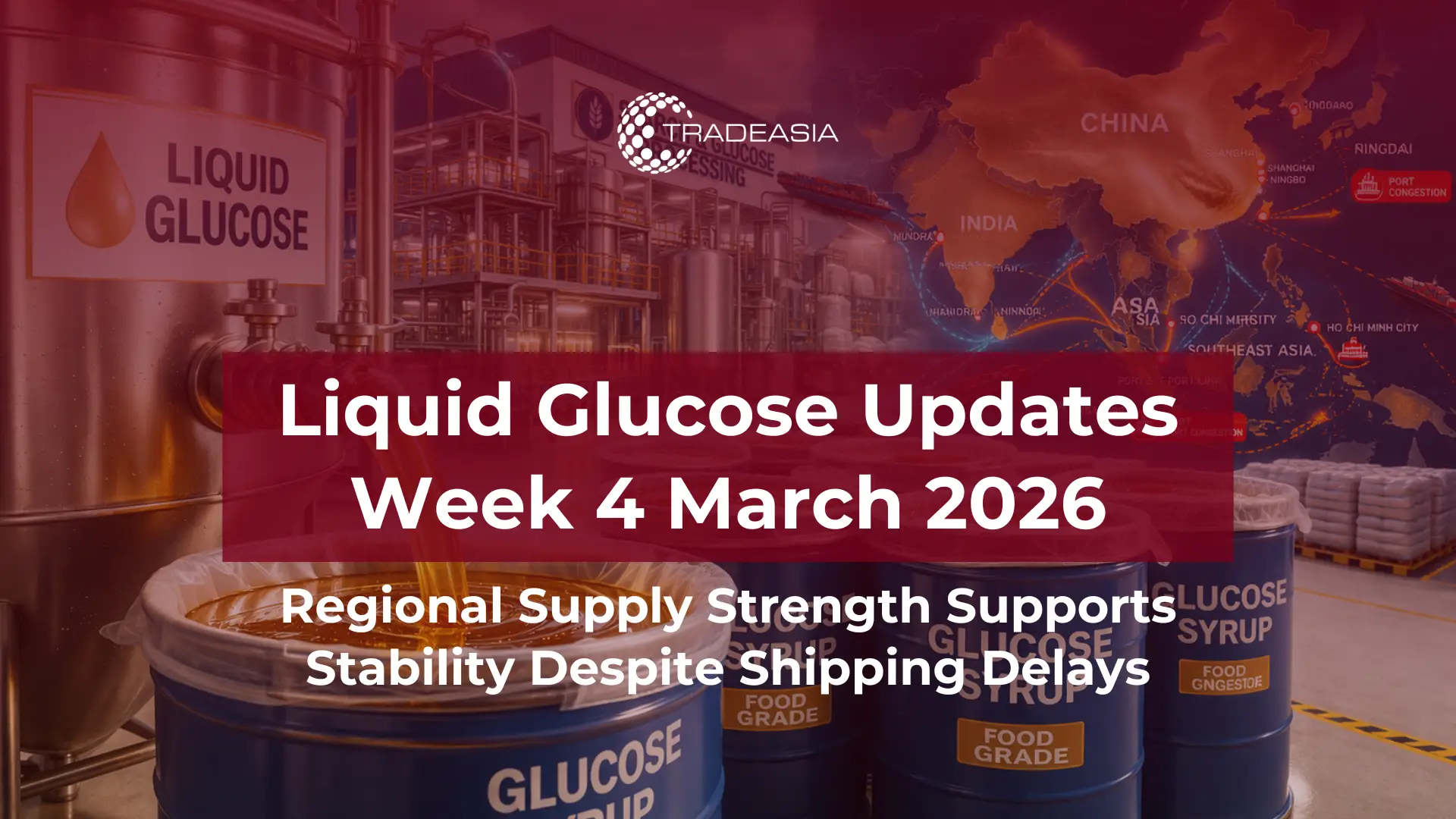
Liquid Glucose Market 2026 Remains Fundamentally Stable
China India Glucose Supply Anchors Regional Resilience
Global Logistics Disruption Food Ingredients Still Raises Risk
Demand from Food and Industrial Users Supports Market Continuity
Buyers Are Shifting Toward Regional and Reliable Supply Models
Procurement Strategy for a More Resilient Liquid Glucose Market
Conclusion
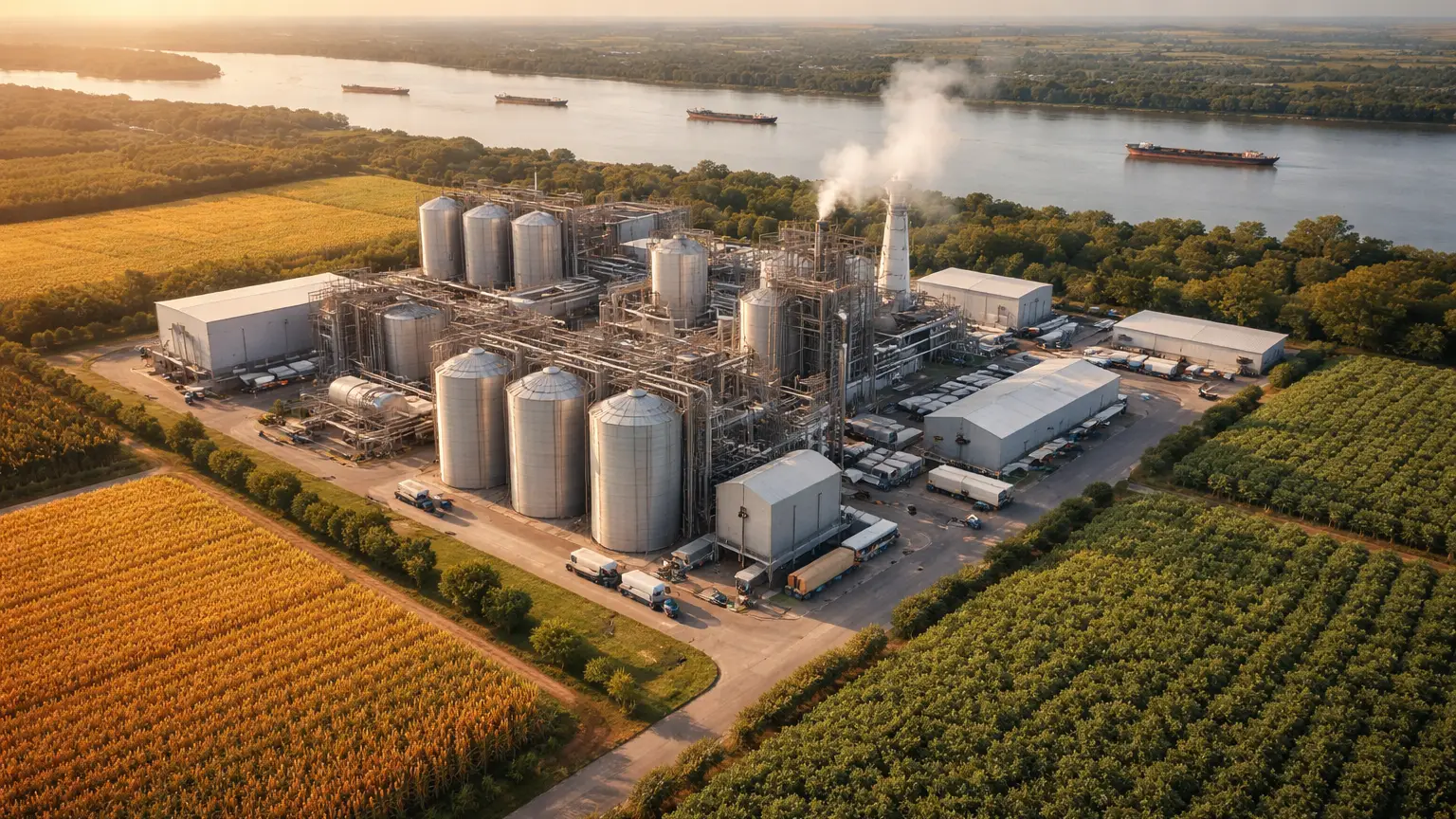
The liquid glucose market 2026 is showing more resilience than many other traded food ingredients because its production base is concentrated in Asia, where starch processing capacity remains strong. China and India continue to serve as major production anchors, while Southeast Asia is becoming increasingly relevant as a regional balancing zone for supply continuity and shorter-haul trade. Based on market analysis published by IndexBox, the Asia glucose and glucose syrup market remains a large, strategically important segment of the regional food supply chain. (IndexBox)
Unlike highly energy-exposed petrochemical products, liquid glucose benefits from relatively steady corn starch availability in key Asian processing economies. That does not eliminate volatility, but it does mean the market is supported by stronger production fundamentals than many commodities whose output depends more directly on oil and gas disruptions. This is why the liquid glucose price trend has been more stable than freight-sensitive chemicals, even when delivery conditions remain difficult. (IndexBox)
According to UNCTAD, global shipping continues to face volatility, rising transport costs, and congestion-related inefficiencies, all of which affect cargo predictability even when manufacturing output is intact. In practical terms, this means liquid glucose food ingredient suppliers may have product ready at origin, but buyers can still face extended lead times, vessel rollovers, and inventory timing issues at destination. (UN Trade and Development (UNCTAD))
For import-dependent buyers, the main challenge in 2026 is not necessarily product scarcity, but synchronization. Supply remains available, yet container shortage supply chain problems, congestion, and booking uncertainty are tightening effective availability in certain markets. That is why more buyers are prioritizing reliable regional partners instead of relying purely on the lowest quoted price. (Independent Customs Services)
China remains one of the largest glucose syrup production centers in Asia because of its vast corn processing infrastructure and integrated industrial base. India also holds a strong position thanks to its large starch-conversion sector and expanding domestic food manufacturing demand, making China India glucose supply a central stabilizing force in the regional market. Based on industry market reporting, Asia’s glucose and glucose syrup ecosystem is built around these two high-volume origins. (IndexBox)
This concentration matters because regional buyers can shorten transit exposure when sourcing within Asia instead of depending on longer-haul trade lanes. In a market shaped by freight uncertainty, proximity becomes a commercial advantage. That is helping Asia-based suppliers protect continuity for the liquid glucose market 2026 even while other food ingredient flows remain under pressure. (IndexBox)
Buyers seeking established supply bases can evaluate the Liquid Glucose India supply page, which is relevant for purchasers looking at South Asian sourcing options with shorter regional routing. This becomes especially important when buyers want to reduce transit uncertainty and improve replenishment planning in fast-moving food manufacturing cycles.
For comparison with East Asian sourcing, buyers can also assess the Liquid Glucose 85 China product page, which aligns with the continued commercial role of China as a large-scale source in the liquid glucose market Asia. In a volatile logistics environment, these two origins increasingly function as reference points for balancing price, lead time, and supply continuity. (IndexBox)
Even in a relatively stable glucose syrup market, global logistics disruption food ingredients remains a real commercial problem. Current 2026 freight reporting shows that geopolitical shocks, route changes, and port bottlenecks continue to put pressure on scheduling and cost control, particularly for import-dependent buyers that cannot rely on local production. (The Wall Street Journal)
Hapag-Lloyd’s 2026 warning about disruptions linked to Middle East shipping instability shows how broader maritime stress can spill over into many cargo categories, not only energy shipments. When carriers suspend or adjust routes, the impact is felt across container availability, sailing reliability, and final landed cost. This directly affects liquid glucose because buyers often operate on tight inventory cycles and predictable replenishment windows. (The Wall Street Journal)
According to current freight-forwarder updates and port analyses, 2026 port congestion and inspection delays are adding friction across international cargo flows. This is especially relevant for food ingredients that require planned inventory rotation and timely customs processing, because delays can reduce commercial flexibility even when product is technically in stock. (Independent Customs Services)
This is also why buyers are increasingly consulting regional market commentary such as the Liquid Glucose March 2026 logistics market insight when assessing risk exposure. Freight inflation, container shortage supply chain issues, and congestion do not always create outright shortage, but they do weaken delivery certainty and raise the cost of continuity. (Independent Customs Services)
The reason the market has not broken down is that global liquid glucose demand remains broad-based and structurally supported. Liquid glucose continues to serve as a sweetener, humectant, texturizer, and anti-crystallization agent in confectionery, bakery, beverages, pharmaceuticals, and selected industrial applications. Multiple market reports continue to identify food and beverage demand as the main driver behind glucose syrup consumption. (datainsightsmarket.com)
This diversified end-use base helps protect the market from sudden collapse. Even when logistics become strained, buyers in confectionery, processed food, and beverage production still need regular intake volumes, which keeps baseline demand intact. That is a key reason the liquid glucose food ingredient market remains commercially active despite shipping disruption. (datainsightsmarket.com)
The liquid glucose confectionery and beverage segments remain especially important because they require repeat-volume purchasing and consistent formulation quality. In these sectors, buyers are less likely to stop purchasing altogether; instead, they shift ordering patterns by increasing safety stocks, splitting cargoes, or moving earlier in the procurement cycle. (datainsightsmarket.com)
That behavior supports market continuity, but it also reinforces the advantage of having a dependable bulk liquid glucose distributor. When buyers are forced to hold higher inventories to offset lead-time uncertainty, they prefer suppliers that can offer both documentation consistency and better visibility into shipment timing. (UN Trade and Development (UNCTAD))
One of the clearest 2026 trends is the move away from purely price-led sourcing toward reliability-led sourcing. Buyers are increasingly willing to pay a reasonable premium for origins or suppliers that reduce transit uncertainty, shorten route exposure, and offer clearer communication on dispatch, documents, and expected lead time. This is a direct response to congestion, freight inflation, and uneven vessel reliability. (Independent Customs Services)
That shift favors Asian suppliers because the region combines scale with proximity for many demand centers across South Asia, Southeast Asia, and parts of the Middle East. Instead of pursuing the absolute lowest-cost cargo, buyers are adopting resilience-focused strategies designed to protect production continuity. In that sense, supply chain resilience is becoming a measurable commercial value in the liquid glucose market 2026. (IndexBox)
Technical and regulatory readiness are now part of sourcing competitiveness. Buyers that need to move quickly during tight freight periods often prioritize suppliers that can provide prompt specifications, product documents, and compliance support. The Food Additives Asia download center is relevant here because it supports pre-shipment document review and smoother internal procurement approval.
The same logic applies to direct commercial access. In a market where freight windows can shift quickly, the Food Additives Asia contact page becomes commercially useful for discussing availability, shipment planning, and regional alternatives before a delay turns into a production issue. This is especially important for companies that need a responsive bulk liquid glucose distributor rather than a passive transactional seller.
In 2026, successful procurement is less about forecasting the cheapest quarter and more about building a workable delivery model under uncertain logistics conditions. Buyers should structure orders around realistic lead times, evaluate origin proximity, and maintain a safety-stock buffer appropriate to their production cycle. In other words, continuity planning now matters as much as unit cost management. (Independent Customs Services)
A resilient approach also means separating raw-material risk from freight risk. Corn starch supply may remain steady, but delivery risk can still distort actual plant availability. That is why the liquid glucose price trend should be read not only through commodity fundamentals, but through landed-cost volatility, congestion exposure, and supplier responsiveness. (IndexBox)
The strongest procurement model for this market is a regional one: diversify between established Asian origins, confirm documentation early, and avoid leaving purchases too close to production deadlines. This reduces exposure to shipping slippage and gives buyers more room to respond if a sailing is delayed or a container allocation changes. (Independent Customs Services)
For many food and industrial users, the lesson of 2026 is clear. Stable production does not guarantee stable arrival, so purchasing teams need stronger timing discipline, closer supplier coordination, and more freight-aware planning. That is the commercial logic behind the current shift toward regional sourcing and continuity-based buying behavior in the liquid glucose market Asia. (IndexBox)
The liquid glucose market 2026 remains more stable than many freight-sensitive commodities because Asia continues to provide strong production support, especially through China India glucose supply. However, that stability is being tested by congestion, higher transport costs, and longer lead times that affect buyers in import-dependent regions. (IndexBox)
For buyers, the practical response is to prioritize resilient sourcing over purely opportunistic pricing. Using the Liquid Glucose India supply page, the Liquid Glucose 85 China product page, the Food Additives Asia download center, the Food Additives Asia contact page, and the Liquid Glucose March 2026 logistics market insight, companies can build a more reliable sourcing framework that supports continuity in both food and industrial applications.
We're committed to your privacy. Tradeasia uses the information you provide to us to contact you about our relevant content, products, and services. For more information, check out our privacy policy.


 English
 Indonesian
 简体字
简体字
 العربية
 Español
 Français
 Português
 日本語
日本語
 한국어
한국어
 Tiếng Việt