Explore our network of country and industry based websites to access localized information, product offerings, and business services across our group.
Log in to start sending quotation requests for any product.
Don't have an account? Sign Up Here
Home How SHP Supply Chains Adapt to Global Demand Changes
Trade Insights | Supply Chain | 07 May 2026
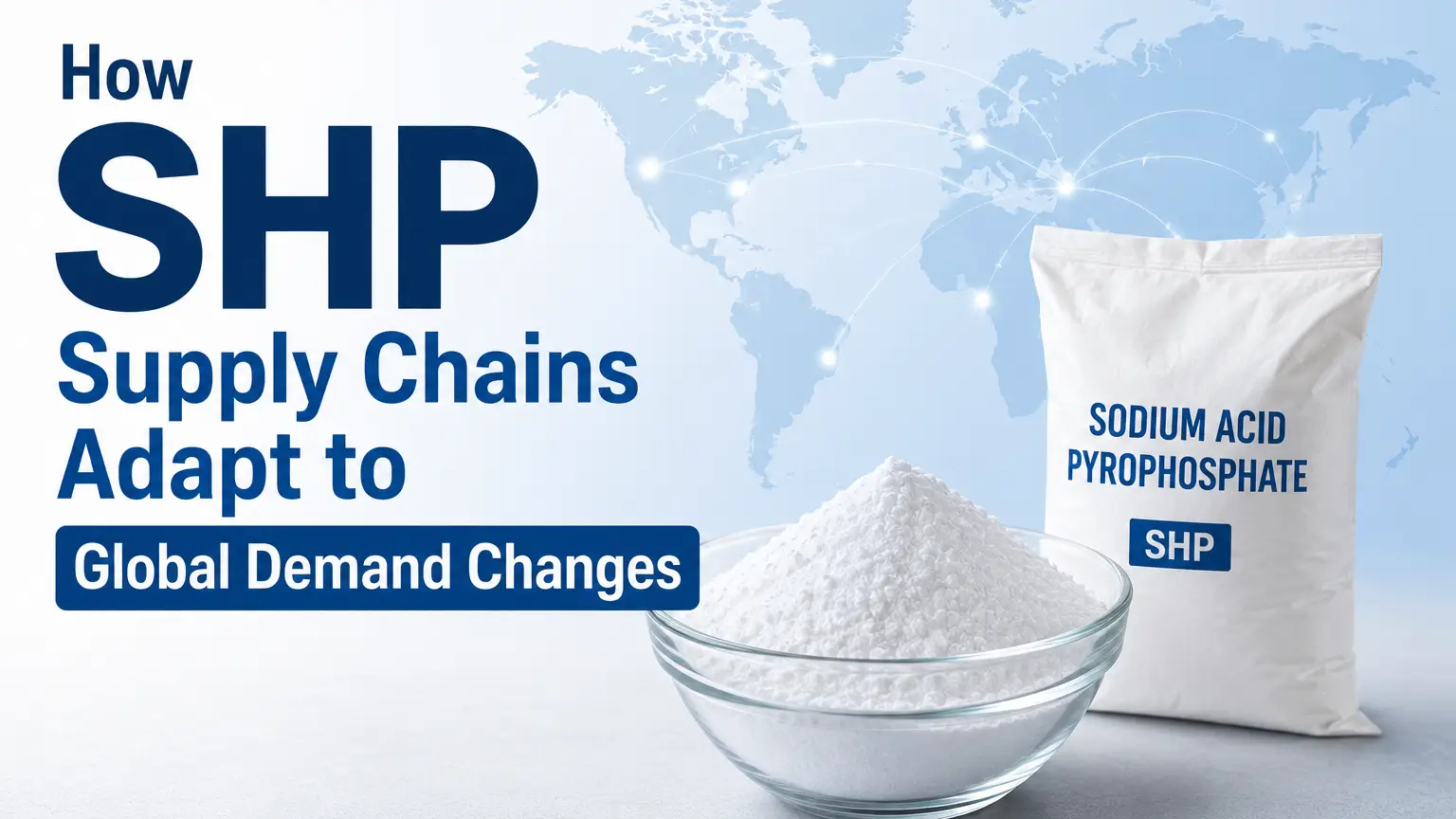
Rising Global Demand for SHP
Diversification of Raw Material Sources
Logistics Challenges and Freight Volatility
Digitalization in Chemical Supply Chains
Sustainability and Regulatory Compliance
Regional Market Shifts and Future Opportunities
Conclusion
Sodium Hydrogen Phosphate (SHP) has become an essential industrial chemical used across food processing, water treatment, pharmaceuticals, and detergent manufacturing. As industrial demand fluctuates across regions, manufacturers and distributors are under increasing pressure to maintain stable procurement channels and efficient logistics operations. Global trade disruptions, rising transportation costs, sustainability concerns, and evolving regulations are reshaping how SHP moves through international markets. Companies operating in this sector are now focusing on resilient sourcing strategies and smarter supply chain management to remain competitive in an increasingly volatile business environment.
The global demand for Sodium Hydrogen Phosphate continues to expand as industries seek reliable phosphate compounds for manufacturing and processing applications. In the food sector, SHP is widely used as an acidity regulator and stabilizer, while pharmaceutical companies rely on it for formulation processes. Emerging economies in Asia-Pacific and the Middle East are witnessing rapid industrial growth, which further strengthens market consumption.
This rising demand has encouraged suppliers to improve inventory planning and establish stronger international distribution partnerships. Businesses that can accurately forecast demand patterns are better positioned to minimize supply shortages and price instability.
One of the most significant changes in the SHP industry involves the diversification of phosphate raw material sourcing. Traditionally, many manufacturers relied heavily on limited mining regions, creating vulnerabilities during geopolitical tensions or export restrictions.
Today, chemical producers are expanding procurement networks across multiple countries to reduce dependency risks. This strategic diversification enables companies to maintain production continuity even during supply disruptions. As a result, multinational distributors are investing in regional supplier partnerships and long-term sourcing agreements to secure stable material availability.
Global shipping disruptions over recent years have exposed weaknesses in chemical supply chains. Freight congestion, container shortages, and fluctuating fuel prices continue to affect the movement of SHP across international markets.
To address these challenges, many suppliers are adopting flexible logistics models that include multi-port shipping routes and regional warehousing hubs. Businesses are also increasing safety stock levels to avoid production downtime caused by delayed deliveries. Efficient logistics planning has become a critical factor in maintaining customer trust and operational stability.
Digital transformation is playing an increasingly important role in SHP supply chain management. Advanced analytics, real-time shipment tracking, and automated procurement systems are helping companies improve transparency and responsiveness.
Chemical distributors now use predictive demand analysis to optimize inventory and reduce unnecessary storage costs. Digital platforms also enhance communication between suppliers, freight operators, and industrial buyers, enabling faster decision-making during market fluctuations. As supply chains become more data-driven, companies gain stronger control over procurement efficiency and operational risks.
Environmental sustainability is becoming a major consideration within the phosphate industry. Governments worldwide are implementing stricter regulations regarding chemical handling, emissions, and wastewater management.
SHP manufacturers are responding by investing in cleaner production technologies and sustainable sourcing practices. Companies that prioritize environmental compliance not only reduce regulatory risks but also strengthen their reputation among global buyers. Sustainable supply chain practices are increasingly viewed as a competitive advantage in international chemical trade.
Regional demand patterns for SHP are evolving rapidly. Asia-Pacific remains a dominant manufacturing hub, while demand in Africa and the Middle East is growing steadily due to expanding industrial infrastructure and water treatment investments.
These regional shifts are encouraging global suppliers to establish localized distribution centers and strategic trade partnerships. Businesses that can adapt quickly to regional demand fluctuations will gain stronger market positioning and long-term growth opportunities in the competitive phosphate industry.
The Sodium Hydrogen Phosphate supply chain is undergoing significant transformation as industries respond to changing global demand, logistical pressures, and sustainability expectations. Companies that embrace diversified sourcing, digital innovation, and flexible logistics strategies are better prepared to navigate uncertainty and maintain market resilience.
As global chemical markets continue evolving, reliable sourcing and international distribution partnerships become increasingly important. Tradeasia International supports businesses worldwide with integrated chemical supply solutions, extensive regional networks, and consistent product availability tailored to industrial market needs.
We're committed to your privacy. Tradeasia uses the information you provide to us to contact you about our relevant content, products, and services. For more information, check out our privacy policy.


 English
 Indonesian
 简体字
简体字
 العربية
 Español
 Français
 Português
 日本語
日本語
 한국어
한국어
 Tiếng Việt



















