Explore our network of country and industry based websites to access localized information, product offerings, and business services across our group.
Log in to start sending quotation requests for any product.
Don't have an account? Sign Up Here
Home Sodium Lactate Supply Chain Market Trends and Outlook 2026
Trade Insights | Supply Chain | 17 April 2026
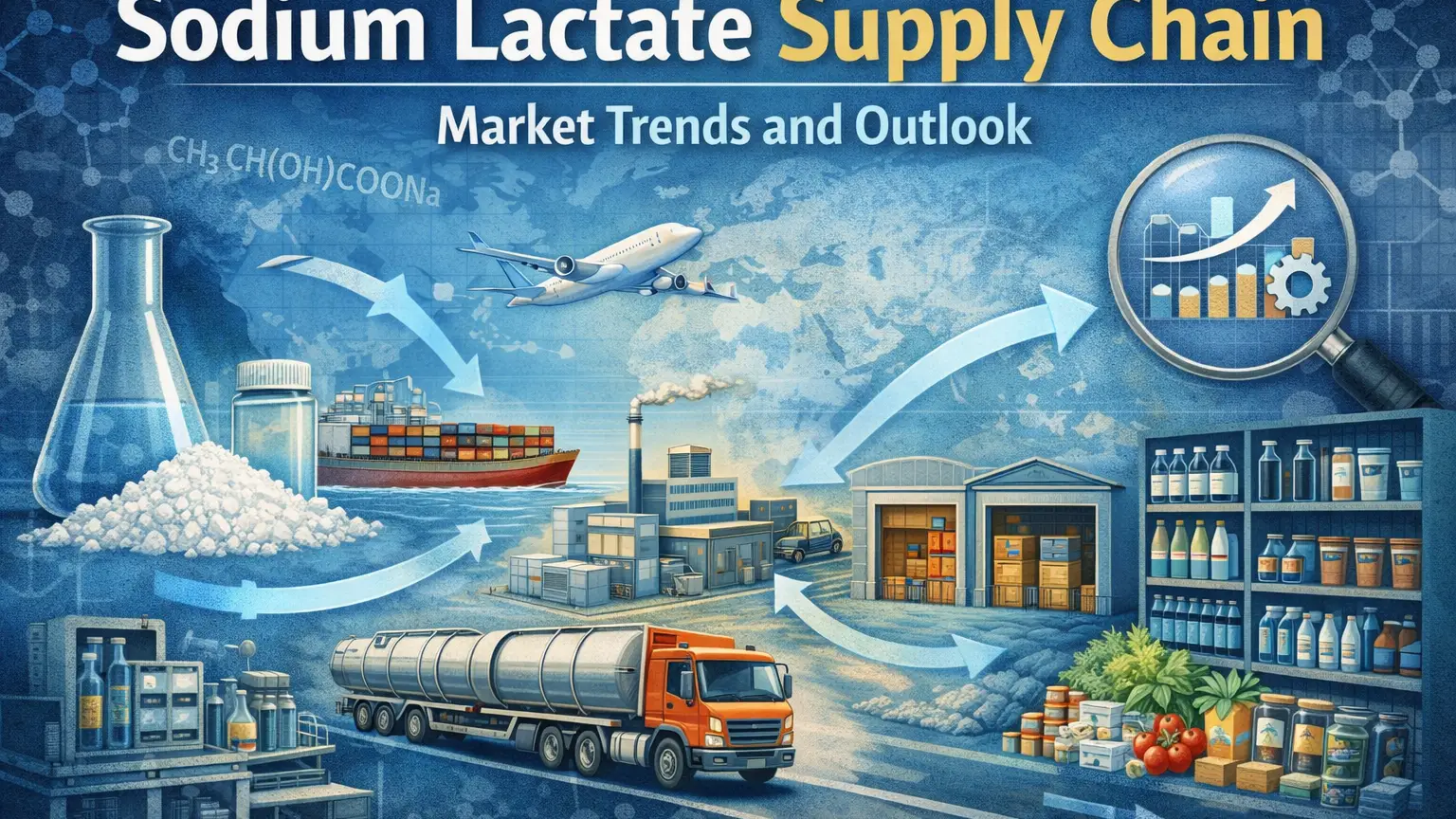
The global sodium lactate supply chain is entering a dynamic phase in 2026, driven by rising demand across pharmaceuticals, food processing, and personal care industries. As a multifunctional compound with preservative, humectant, and buffering properties, sodium lactate has become a critical ingredient in modern manufacturing ecosystems. With the market projected to surpass USD 455 million in 2026 and continue strong growth, supply chain optimization has become a strategic priority for producers and distributors alike.
Demand for sodium lactate is being propelled by its wide applicability in high-growth sectors. The pharmaceutical industry increasingly relies on it for IV solutions and electrolyte balance treatments, while the food sector uses it as a preservative and flavor enhancer. Meanwhile, the cosmetics industry continues to dominate usage due to its moisturizing properties. These diverse applications are pushing global demand upward, with a projected CAGR of over 8% through the next decade.
Sodium lactate production is closely tied to fermentation-based processes using sugar-derived feedstocks such as corn or beet. This bio-based origin aligns well with the growing preference for clean-label and sustainable ingredients. However, supply chain stability depends heavily on agricultural output and feedstock pricing. Manufacturers are increasingly investing in backward integration and advanced fermentation technologies to ensure consistent quality and cost control.
Global supply chains for sodium lactate are characterized by strong regional hubs. North America leads due to its advanced pharmaceutical sector, while Europe benefits from established chemical manufacturing infrastructure. Meanwhile, Asia-Pacific—particularly China and India—is emerging as a key production and consumption hub, driven by expanding food processing and personal care industries. Efficient logistics and partnerships with regional distributors are critical to maintaining supply continuity.
Despite positive growth, the sodium lactate supply chain faces challenges including raw material price volatility, regulatory compliance, and transportation disruptions. Additionally, increasing demand for high-purity grades in pharmaceuticals requires stringent quality control across the value chain. In response, companies are adopting digital supply chain tools, diversifying sourcing strategies, and enhancing storage and handling infrastructure to maintain resilience and competitiveness.
As the sodium lactate market evolves in 2026, supply chain efficiency and adaptability are becoming decisive factors for success. Businesses seeking reliable sourcing, consistent quality, and global distribution support are turning toward experienced partners. Tradeasia International positions itself as a trusted global solution provider, offering integrated chemical supply chain services backed by strong regional networks and technical expertise.
Sources:
We're committed to your privacy. Tradeasia uses the information you provide to us to contact you about our relevant content, products, and services. For more information, check out our privacy policy.


 English
 Indonesian
 简体字
简体字
 العربية
 Español
 Français
 Português
 日本語
日本語
 한국어
한국어
 Tiếng Việt



















