Explore our network of country and industry based websites to access localized information, product offerings, and business services across our group.
Log in to start sending quotation requests for any product.
Don't have an account? Sign Up Here
Home Tartaric Acid Supply Chain: A B2B Guide to Sourcing and Market Demand
Trade Insights | Supply Chain | 03 September 2026
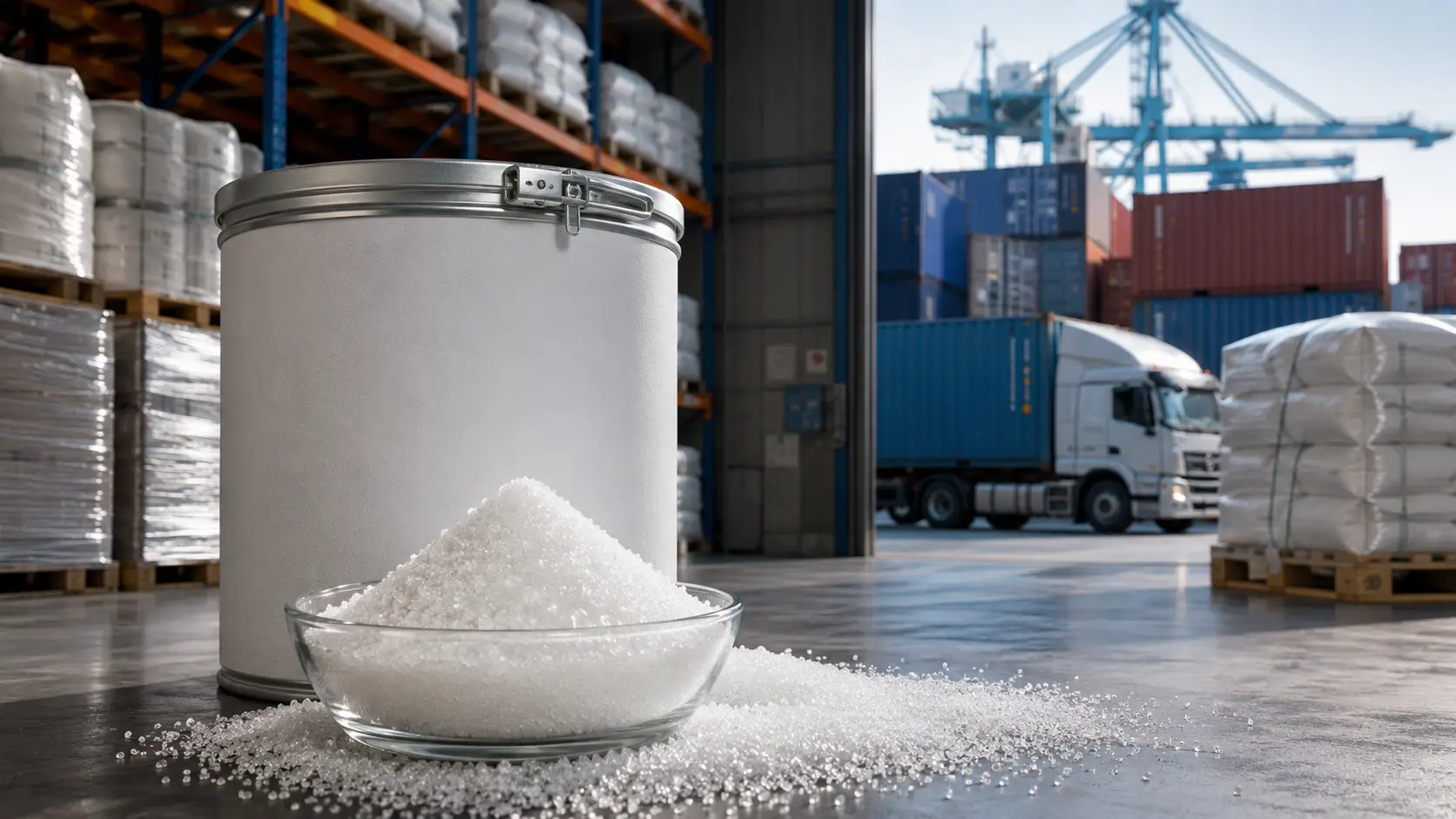
Tartaric Acid’s Role in the Global Supply Chain
Product Specifications and Quality Considerations
Food and Beverage Applications Driving Demand
Pharmaceutical and Industrial Application Opportunities
Procurement Priorities for Tartaric Acid Buyers
Supplier Evaluation and B2B Sourcing Strategy
Logistics, Documentation and Supply Continuity
Conclusion: Building a Reliable Tartaric Acid Supply Strategy
Sources
Tartaric Acid is a multifunctional organic acid with relevance across food, beverage, pharmaceutical, and selected industrial applications. L(+)-Tartaric Acid is identified as INS 334, with the chemical formula C₄H₆O₆ and a formula weight of 150.09. JECFA specifications describe it as a colourless or translucent crystalline material or white crystalline powder, making physical consistency an important consideration for commercial handling and formulation.
From a supply-chain perspective, the value of Tartaric Acid extends beyond simply moving material from manufacturer to buyer. Procurement teams must connect product identity, grade, purity, documentation, packaging, shipment requirements, and intended application. JECFA's specification for L(+)-Tartaric Acid, for example, identifies an assay of not less than 99.5% on a dried basis, demonstrating why specification management matters when buyers compare potential sources.
The product's established food-additive role creates demand for dependable supply among ingredient distributors, food manufacturers, beverage companies, and formulation businesses. JECFA identifies functions including acid, sequestrant, flavouring agent, and antioxidant synergist, while food-additive databases identify Tartaric Acid as a recognized food ingredient with defined specifications.
For international B2B trade, this means purchasing decisions are increasingly linked to supply reliability and documentation quality. A competitive Tartaric Acid sourcing strategy should therefore evaluate not only commercial terms but also specification conformity, consistency between lots, export readiness, packaging suitability, and the supplier's ability to support recurring procurement requirements.
Quality assurance begins with clearly defining which form and grade of Tartaric Acid is required. L(+)-Tartaric Acid carries CAS 87-69-4 and INS 334, while DL-Tartaric Acid is separately identified with CAS 133-37-9 in the JECFA database. Buyers should therefore avoid treating every Tartaric Acid offer as technically interchangeable without checking identity and intended application.
For food-oriented procurement, specification alignment is particularly important because the material can perform several technological functions. JECFA's published specification describes L(+)-Tartaric Acid as very soluble in water and freely soluble in ethanol, with defined limits for characteristics such as loss on drying and sulfated ash. These parameters provide useful benchmarks for technical purchasing and supplier qualification.
A professional procurement process should connect the commercial offer with the relevant technical documentation. Buyers may need a certificate of analysis, product specification, safety documentation, lot information, country-of-origin details, packaging information, and other documents required by their internal quality system or destination market. The exact documentation package should correspond to the application and applicable regulations.
This is especially relevant when Tartaric Acid crosses borders through distributors or chemical marketplaces. A low quoted price can lose its commercial advantage if documentation is incomplete, product specifications are unclear, or additional qualification is required after purchase. Consequently, quality transparency becomes part of the total landed value of the material rather than an administrative issue handled after the order.
Food and beverage manufacturing remains a central commercial application area for Tartaric Acid. JECFA classifies L(+)-Tartaric Acid as an acid, sequestrant, flavouring agent, and antioxidant synergist, while the U.S. regulatory information recorded through PubChem identifies functions including flavour enhancement, leavening, humectancy, pH control, firming, drying, and anticaking applications.
These functions make the ingredient relevant to formulation teams seeking controlled acidity and specific processing characteristics. Its use is not limited to a single finished-product category, which gives distributors and suppliers access to a broad customer base across food-processing segments. The commercial opportunity therefore depends on matching grade, specification, regulatory status, and packaging to the needs of individual manufacturers.
Tartaric Acid's acidity and flavour-related functions can support formulations where controlled tartness and pH adjustment are important. Codex GSFA records Tartaric Acid as INS 334 within the tartrate group and provides food-category-specific provisions, demonstrating that use levels can differ according to application. The Codex database is updated through the 48th Session of the Codex Alimentarius Commission in 2025.
For B2B suppliers, this creates an important commercial distinction: buyers are not simply looking for "Tartaric Acid," but for material appropriate to a particular formulation and regulatory environment. Suppliers that can clearly communicate product identity, specifications, documentation, and application suitability are better positioned to support food manufacturers with repeat procurement rather than one-off transactions.
Tartaric Acid also has pharmaceutical relevance, where its chemical functionality can support formulation and processing requirements. PubChem records applications associated with pharmaceutical aids and describes its role in generating carbon dioxide through interaction with sodium bicarbonate in certain pharmaceutical contexts.
For pharmaceutical-oriented buyers, however, commercial sourcing requires greater attention to specification and intended use than a generic industrial purchase. Grade selection, purity, analytical requirements, traceability, documentation, and applicable regulatory standards can materially influence supplier qualification. The procurement process should therefore begin with a clearly defined technical specification.
Beyond food and pharmaceutical applications, Tartaric Acid and related tartrate chemistry have applications across areas such as cosmetics, cleaning products, ceramics, metal-surface treatment, photography, tanning, and other industrial processes. PubChem's compiled use information also identifies applications involving tartrates and related derivatives in areas such as lacquers and textile printing.
This application diversity can strengthen the resilience of the broader Tartaric Acid demand base because purchasing requirements can originate from multiple industries. For suppliers and distributors, the opportunity lies in segment-specific sourcing: understanding whether a customer requires food-grade material, pharmaceutical-oriented quality, or another technical specification can prevent mismatched offers and improve conversion from inquiry to order.
Tartaric Acid procurement should not be evaluated solely on the lowest nominal price. Buyers need to consider the relationship between specification, packaging, order quantity, freight, lead time, documentation, and supply reliability. Two quotations with apparently similar pricing may produce materially different total procurement costs once logistics and qualification requirements are considered.
For recurring industrial consumption, consistency between shipments can be just as important as the initial purchase price. A procurement team may prefer a supplier capable of maintaining stable specifications and predictable delivery schedules because formulation changes, production interruptions, or repeated quality investigations can carry costs that are not visible on the purchase order.
Demand planning is another important component of Tartaric Acid sourcing. Food manufacturers and distributors should establish purchasing schedules that reflect production cycles, inventory policies, shipping lead times, and seasonal fluctuations in downstream demand. The appropriate stock position will differ substantially between a high-volume manufacturer and a smaller specialty buyer.
For international buyers, supplier diversification can also become a risk-management tool. Establishing qualified alternative sources can reduce exposure to unexpected production, freight, or documentation disruptions. A B2B marketplace can support this process by making it easier for procurement teams to compare commercial offers while maintaining attention to technical and regulatory requirements.
Supplier evaluation should begin with product identity and technical suitability, followed by commercial and operational assessment. Buyers can request specifications, certificates of analysis, packaging details, available quantities, lead times, and shipment terms before committing to larger recurring volumes. This creates a structured basis for comparing suppliers instead of relying on price alone.
For Tartaric Acid, the distinction between L(+)-Tartaric Acid and other forms is particularly relevant. JECFA maintains separate records for L(+)- and DL-Tartaric Acid, reinforcing the need for buyers to specify the required form when sending an inquiry.
Digital B2B marketplaces can simplify the initial supplier-discovery process by bringing product information, sourcing inquiries, and commercial discussions into a more accessible procurement environment. For international chemical buyers, this can reduce the time required to identify potential suppliers and compare sourcing options across markets.
For Tradeasia, Chemtradeasia, and Tradechem Marketplace, the commercial opportunity is to connect product knowledge with practical sourcing support. A buyer searching for Tartaric Acid can move from application and specification evaluation toward supplier engagement while maintaining a clearer understanding of the technical requirements that should accompany the inquiry.
Tartaric Acid logistics should be planned around product packaging, shipment quantity, destination requirements, storage conditions, and delivery timelines. The physical characteristics of the material—described by JECFA as crystalline solid or crystalline powder—make packaging integrity important during storage and transportation.
International shipments also require coordination between supplier, freight provider, importer, distributor, and end user. Purchase orders should clearly define product description, grade, quantity, packaging, delivery terms, documentation requirements, and destination information. This reduces ambiguity and helps procurement teams maintain continuity from order confirmation through receipt.
A resilient supply chain depends on more than maintaining inventory. Buyers should monitor supplier performance, lot consistency, documentation accuracy, delivery reliability, and responsiveness to technical questions. These indicators can reveal potential supply risks before they become production problems.
Tartaric Acid's presence across food, beverage, pharmaceutical, and industrial applications makes dependable sourcing commercially valuable. For distributors and manufacturers, maintaining qualified supplier relationships can support continuity during changes in demand or logistics conditions. The strongest procurement strategy therefore combines competitive commercial terms with quality assurance, supplier transparency, and long-term supply planning.
Tartaric Acid is a versatile ingredient and industrial chemical whose commercial importance comes from the combination of acidity, formulation functionality, and applicability across multiple sectors. Its recognized food-additive functions and established technical specifications make specification accuracy essential for B2B buyers.
The supply-chain opportunity extends across manufacturers, food processors, beverage companies, pharmaceutical businesses, distributors, and industrial users. For each segment, the optimal sourcing strategy depends on the required Tartaric Acid form, grade, specification, quantity, documentation, delivery schedule, and destination-market requirements.
In this environment, buyers benefit from suppliers and marketplaces that can bridge technical requirements with practical commercial sourcing. Tradeasia International, Chemtradeasia, and Tradechem Marketplace can serve as a sourcing pathway for businesses evaluating Tartaric Acid requirements, supplier options, and international chemical procurement.
For procurement teams, the objective is ultimately straightforward: secure the right Tartaric Acid specification from a dependable supply source while maintaining quality, documentation, logistics visibility, and commercial efficiency. A disciplined B2B sourcing approach turns Tartaric Acid procurement from a simple purchase into a more resilient component of the overall supply chain.
We're committed to your privacy. Tradeasia uses the information you provide to us to contact you about our relevant content, products, and services. For more information, check out our privacy policy.


 English
 Indonesian
 简体字
简体字
 العربية
 Español
 Français
 Português
 日本語
日本語
 한국어
한국어
 Tiếng Việt



















