Explore our network of country and industry based websites to access localized information, product offerings, and business services across our group.
Log in to start sending quotation requests for any product.
Don't have an account? Sign Up Here
Home Xylose Applications Driving Growth in Food, Pharma, and Biorefineries
Trade Insights | Supply Chain | 05 June 2026
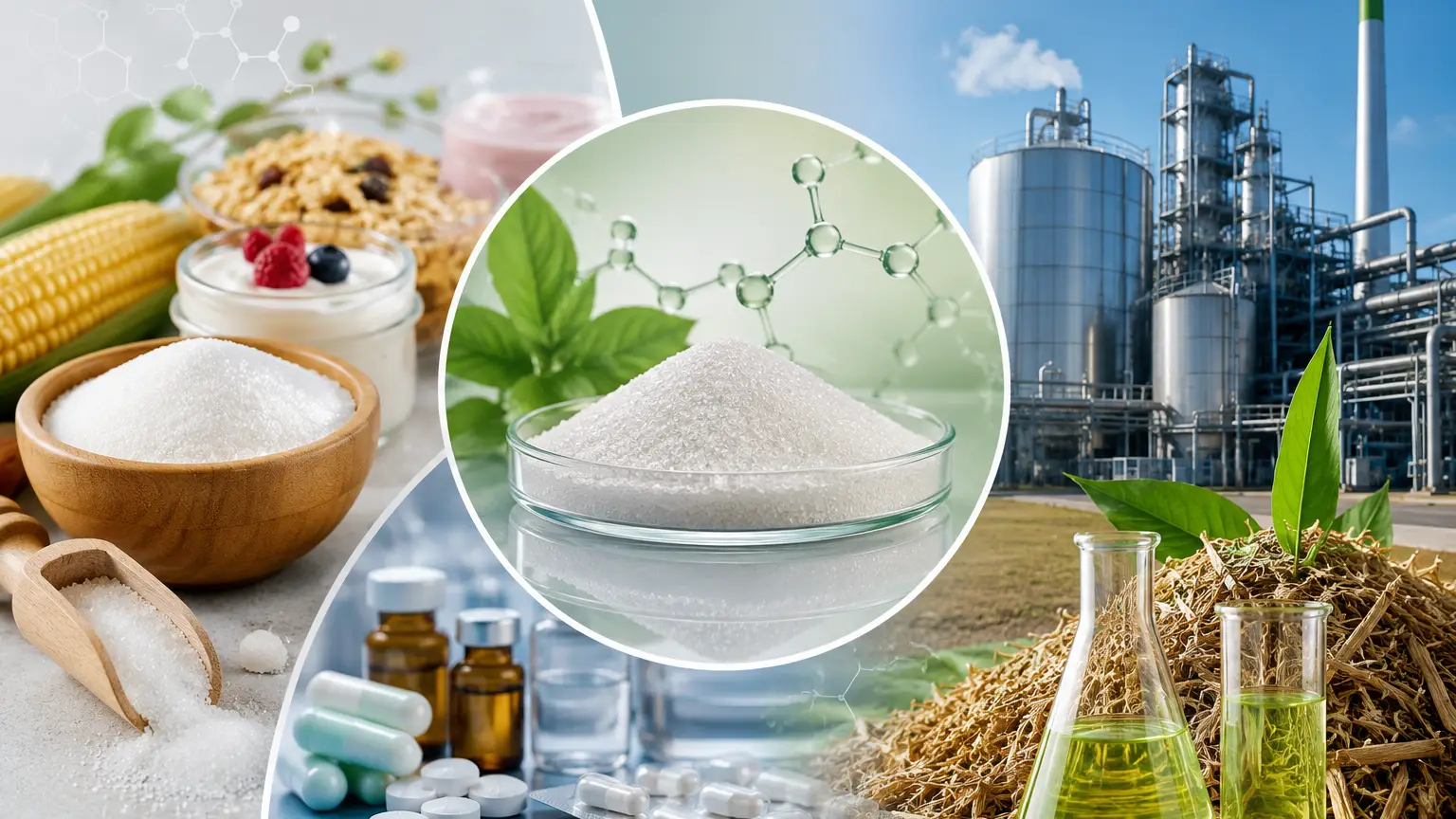
Understanding Xylose and Its Commercial Importance
Key Industrial Applications of Xylose
Market Trends Influencing Xylose Demand
Buyer Intent and Procurement Considerations
Global Supply Chain and Sourcing Strategies
Commercial Positioning of Xylose in B2B Markets
Conclusion
Xylose is a naturally occurring five-carbon sugar that is widely recognized as one of the most abundant pentose sugars found in plant biomass. It is commonly derived from hemicellulose fractions of agricultural residues, hardwoods, and lignocellulosic materials. Its commercial relevance has expanded significantly due to increasing demand for renewable and bio-based raw materials.
The growing interest in sustainable manufacturing has positioned xylose as an important feedstock in multiple industries. As manufacturers seek alternatives to petroleum-derived ingredients and conventional sugars, xylose offers opportunities for value-added production pathways.
According to scientific and industrial research published by the USDA and other biotechnology institutions, xylose serves as a critical intermediate for the production of xylitol, specialty chemicals, and bio-based products. It is also considered one of the major sugars obtained from lignocellulosic biomass streams.
The increasing utilization of agricultural residues and renewable feedstocks has strengthened the commercial importance of xylose within global supply chains. Industries focused on sustainability are actively exploring new applications that can leverage its availability and functional characteristics.
Beyond its role as a sugar molecule, xylose contributes to the broader transition toward circular economies and biorefinery operations. Companies involved in food ingredients, biotechnology, and renewable chemicals continue to evaluate its potential as a versatile raw material.
As investment in bioeconomy initiatives expands globally, xylose is becoming increasingly relevant for procurement teams seeking scalable and sustainable feedstock solutions that support long-term production objectives.
The versatility of xylose has enabled its adoption across several industrial sectors. While traditionally associated with sweetener production, its applications now extend into pharmaceuticals, biotechnology, and renewable chemical manufacturing.
One of the most significant commercial uses of xylose is its conversion into xylitol, a sugar alcohol widely used in food, oral care, and pharmaceutical formulations. This application continues to drive substantial demand within global markets.
Technical information from USDA research highlights that xylose serves as the primary precursor for xylitol manufacturing through chemical or biotechnological conversion processes. Xylitol remains an important ingredient in sugar-free products, chewing gums, oral hygiene products, and specialty nutritional formulations.
As consumer demand for alternative sweeteners grows, manufacturers increasingly rely on stable xylose supplies to support production efficiency and product development strategies.
Biotechnology companies utilize xylose as a fermentation substrate and as a feedstock for producing bio-based chemicals. Research published by Nature indicates that lignocellulosic biomass-derived xylose is playing an expanding role in advanced bioprocessing systems and sustainable manufacturing initiatives.
In integrated biorefineries, xylose contributes to the valorization of agricultural waste streams, improving overall resource efficiency and supporting the development of renewable industrial products.
The global market environment for xylose is being shaped by sustainability initiatives, consumer preferences, and industrial innovation. Companies are increasingly investing in bio-based ingredients and renewable feedstocks that can reduce environmental impacts while maintaining commercial viability.
Growing interest in circular economy models has further elevated the strategic importance of biomass-derived sugars such as xylose. Manufacturers are seeking new ways to optimize resource utilization and create higher-value products from agricultural residues.
Market analysis supported by agricultural and biotechnology research suggests that demand for xylitol and related products continues to encourage investment in xylose production technologies. Improved fermentation techniques and biomass processing methods are helping expand commercial opportunities.
The trend toward reduced-sugar and sugar-free consumer products is expected to remain a key demand driver for industries relying on xylose-derived ingredients.
Research published in scientific journals has demonstrated the potential of agricultural residues such as corn cobs, wheat straw, and other biomass resources as sources of xylose. These developments align with broader industry efforts to improve sustainability and resource efficiency.
As technologies mature, greater availability of biomass-derived xylose may support wider adoption across industrial sectors and geographic markets.
Organizations purchasing xylose typically operate in sectors where ingredient quality, supply consistency, and regulatory compliance are essential. Procurement teams often evaluate multiple technical and commercial factors before selecting suppliers.
Buyers seek suppliers capable of delivering reliable product specifications, transparent sourcing practices, and scalable supply capabilities. These requirements become increasingly important as production volumes and quality expectations rise.
Typical buyers include food ingredient manufacturers, xylitol producers, pharmaceutical companies, biotechnology firms, specialty chemical manufacturers, and biorefinery operators. Each buyer group evaluates xylose based on application-specific requirements and production objectives.
For these organizations, access to dependable supply networks can directly influence operational continuity and product quality standards.
Procurement professionals commonly assess product purity, manufacturing standards, logistics capabilities, documentation support, and supplier reliability. They also compare pricing structures, supply security, and long-term sourcing flexibility before making purchasing decisions.
A well-structured product page on a B2B chemical marketplace helps buyers compare specifications, understand applications, evaluate supplier capabilities, and make informed sourcing decisions aligned with business requirements.
The global xylose supply chain involves biomass processors, ingredient manufacturers, distributors, and industrial buyers. Effective sourcing strategies require visibility into raw material availability, production capacity, and logistics infrastructure.
As demand expands across multiple industries, procurement teams are placing greater emphasis on supplier diversification and regional sourcing flexibility to mitigate supply chain risks.
Production economics, feedstock availability, transportation costs, and manufacturing technology all influence xylose supply dynamics. Agricultural biomass availability can also impact sourcing strategies in specific regions.
Industry research has shown that advancements in biomass conversion technologies are improving the efficiency of xylose production from renewable resources.
B2B chemical marketplaces help buyers streamline supplier discovery, compare sourcing options, and access broader supplier networks. This approach can improve procurement efficiency while supporting supplier evaluation and risk management efforts.
For international buyers, marketplace platforms provide a centralized environment for identifying qualified suppliers and exploring sourcing opportunities across multiple regions.
Xylose occupies a strategic position within the broader bio-based chemicals and specialty ingredients market. Its commercial value is closely linked to growing demand for sustainable products, alternative sweeteners, and renewable manufacturing inputs.
Applications in food, pharmaceutical, and biotechnology industries continue to support long-term market relevance. As these sectors expand, reliable access to xylose remains an important consideration for procurement teams and production planners.
The ability of xylose to serve as a precursor for high-value products such as xylitol significantly enhances its commercial attractiveness. Demand patterns are influenced not only by ingredient consumption but also by innovation in renewable chemical production.
This combination of established and emerging applications creates opportunities for manufacturers, distributors, and industrial buyers throughout the value chain.
As a B2B chemical marketplace participant, Tradeasia, Chemtradeasia, and Tradechem Marketplace can help connect buyers with verified sourcing opportunities, technical product information, and international supplier networks. Such marketplace positioning supports informed procurement decisions without requiring buyers to navigate fragmented supply channels independently.
For organizations seeking dependable xylose supply chain partners, marketplace-based sourcing can improve transparency, efficiency, and supplier accessibility across regional and global markets.
Xylose has evolved from a specialty sugar into a strategically important industrial feedstock supporting food, pharmaceutical, biotechnology, and biorefinery applications. Its role in xylitol production and renewable manufacturing continues to strengthen commercial demand worldwide.
As sustainability initiatives, biomass utilization, and alternative ingredient markets expand, xylose is expected to remain an important component of industrial supply chains. Buyers, manufacturers, distributors, and procurement teams that understand evolving market dynamics will be better positioned to capitalize on emerging opportunities while maintaining reliable sourcing strategies.
Sources
We're committed to your privacy. Tradeasia uses the information you provide to us to contact you about our relevant content, products, and services. For more information, check out our privacy policy.


 English
 Indonesian
 简体字
简体字
 العربية
 Español
 Français
 Português
 日本語
日本語
 한국어
한국어
 Tiếng Việt



















