Explore our network of country and industry based websites to access localized information, product offerings, and business services across our group.
Log in to start sending quotation requests for any product.
Don't have an account? Sign Up Here
Home Understanding the Types of Lecithin: Classification and Methods
Trade Insights | Applications and Buyers | 14 November 2025
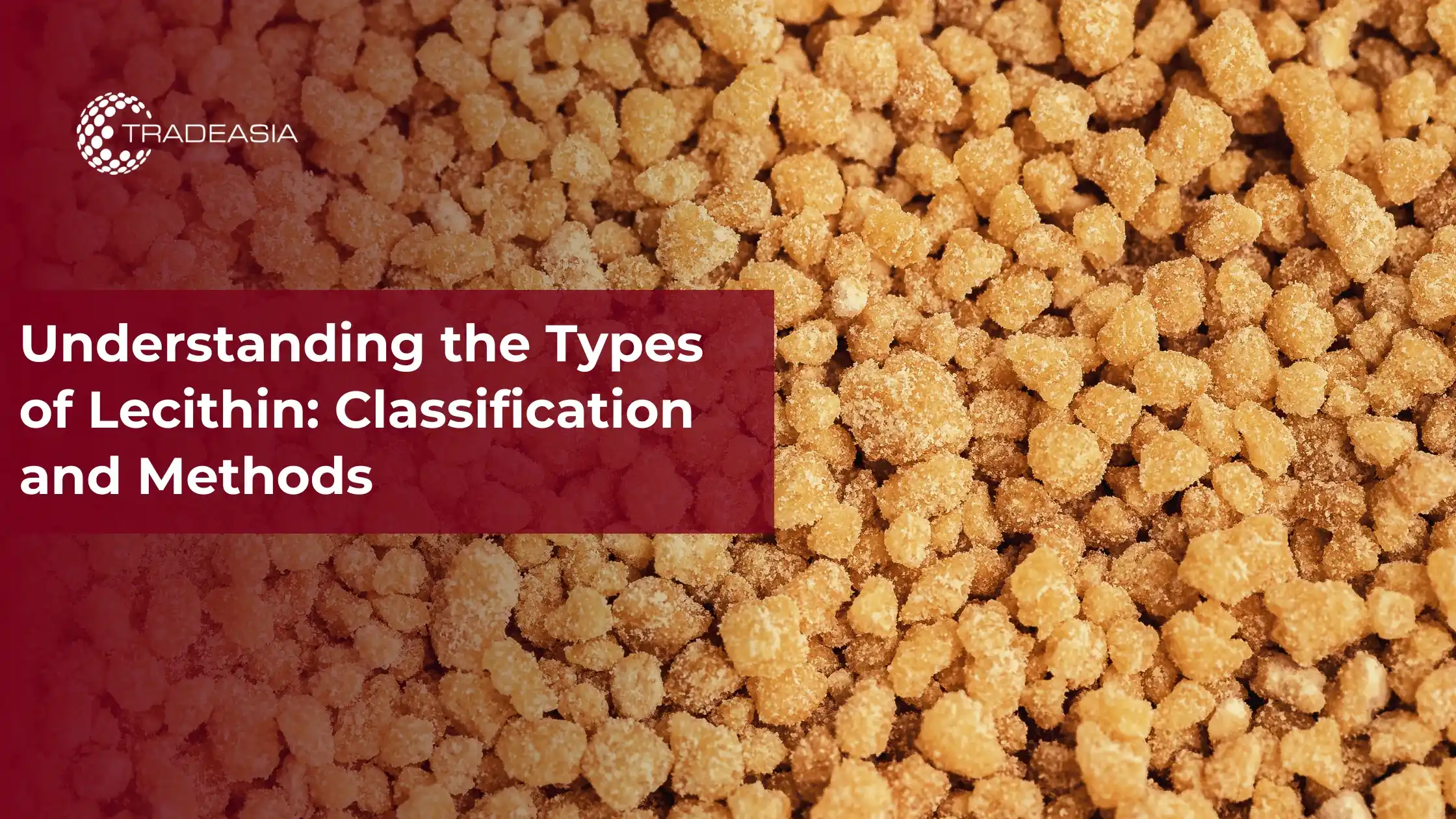
Lecithin, a naturally occurring emulsifier, is essential in many food, pharmaceutical, and cosmetic applications. It can be classified in multiple ways according to its source, physical form, and processing methods. Understanding these classifications helps manufacturers choose the right lecithin for their specific needs.
Lecithin is primarily sourced from plants and animals:
Soy Lecithin: The most common commercial lecithin, extracted from soybeans. It is versatile, cost-effective, and widely used across industries.
Sunflower Lecithin: An allergen-friendly, non-GMO alternative derived from sunflower seeds, increasingly popular for clean-label products.
Rapeseed (Canola) Lecithin: Known for its specific fatty acid composition, suitable for unique food formulations.
Egg Lecithin: Extracted from egg yolk, used mainly in pharmaceuticals and specialized food or cosmetic products.
Lecithin is available in several physical forms:
Liquid Lecithin: The most commonly used form in food production, easy to handle and effective as an emulsifier.
Powdered or Granulated Lecithin: Used in dry mixes or baking applications, offering easier storage and handling.
De-oiled Lecithin: Contains a reduced oil content, suitable for formulations requiring lower fat.
The quality and properties of lecithin can be tailored through different processing techniques:
Refined Lecithin: Purified to remove impurities, suitable for food and pharmaceutical uses.
Unrefined Lecithin: Contains higher amounts of non-phospholipid material; used mainly in animal feed or industrial products.
Modified Lecithins: Chemically or enzymatically altered to enhance specific functional properties such as emulsification or solubility.
Fractionated Lecithin: Enriched fractions containing higher levels of phospholipids like phosphatidylcholine, often used in nutritional supplements.
Lecithins are also characterized by technical attributes such as:
Acetone Insolubles: Represent the surface-active phospholipid content, essential for emulsifying capacity.
Acid Value: Indicates free fatty acid content and acidity, affecting lecithin stability.
Color: Typically measured on the Gardner scale ranging from light honey to dark amber, indicating purity and processing level.
Viscosity: Important for processing behavior, especially for liquid lecithin applications.
Understanding these types and parameters enables manufacturers to tailor lecithin selection to application-specific needs, ensuring optimal performance, regulatory compliance, and consumer acceptance.
We're committed to your privacy. Tradeasia uses the information you provide to us to contact you about our relevant content, products, and services. For more information, check out our privacy policy.


 English
 Indonesian
 简体字
简体字
 العربية
 Español
 Français
 Português
 日本語
日本語
 한국어
한국어
 Tiếng Việt